Pearl and Diamond Earrings: The Complete Buying Guide
Earring pearl diamond styles are fine jewelry pieces that pair a lustrous pearl with diamond accents in a single design. Prices span roughly $270 to $18,800 depending on pearl type, metal, and brand.
Key Takeaways
- Pearl type is the single largest driver of price: Akoya cultured pearls command higher prices than freshwater, while South Sea and Tahitian pearls sit at the top of the market.
- Diamond accents range from subtle pavé to full halos; always check total carat weight (ct. tw.) when comparing pieces.
- Metal fineness changes price dramatically: the same 7.4mm pearl stud with diamonds costs $395 in sterling silver and $995 in 18K yellow gold at David Yurman.
- Entry-level earring pearl diamond pieces start around $270 in sterling silver; luxury Tahitian and South Sea designs reach $18,800 at Tiffany.
- Return policies vary widely: The Pearl Source offers 60-day free returns, Diamonds Factory offers 30 days, and some sale pieces at Stephanie Gottlieb are final sale.
- Proper care, including gentle cleaning and separate storage, extends the life of both the pearl and the diamond setting.
What Defines an Earring Pearl Diamond Combination?
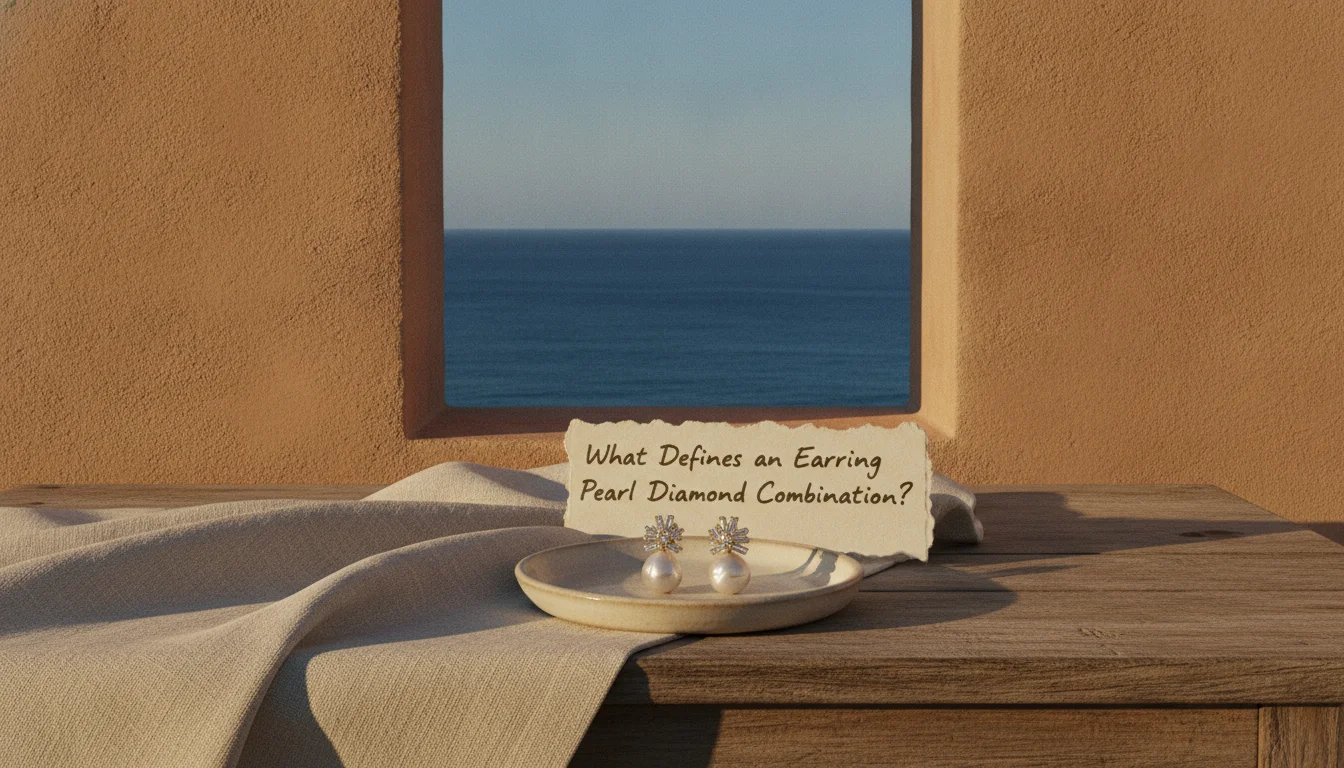
An earring pearl diamond piece is any earring that incorporates at least one pearl and at least one diamond element. That diamond element can be a full halo, a pavé accent on the setting, a diamond-encrusted post, or a single accent stone placed above or below the pearl. This combination is not one style; it is a material pairing that shows up across studs, drops, hoops, huggies, and statement earrings.
The Anatomy of a Pearl and Diamond Earring
The visible parts of a pearl and diamond earring include the pearl itself, the diamond accent or setting, the metal foundation, and the backing. In some designs, the pearl is drilled and held by a post or prong; in others, the pearl hangs from a diamond-embellished chain or hoop. A pavé setting is a style in which small diamonds are set closely together to create a continuous sparkle, and it is common in pearl earring settings. Understanding these parts matters because each one affects durability, comfort, and price.
Why the Combination Works
Pearls are naturally organic and soft in visual texture, while diamonds are hard, bright, and refractive. When the two are paired, the diamond’s sparkle frames the pearl’s glow instead of competing with it. This contrast explains why the combination remains a staple in fine jewelry even as trends shift toward minimal or sculptural designs. It also explains why retailers from luxury houses to accessible online stores all maintain earring pearl diamond catalogs year-round.
Common Design Variations
The most common design variation is the diamond-accented pearl stud, where a small diamond sits above or beside the pearl. Drop earrings extend the silhouette with a pearl suspended below a diamond-embellished cap or link. Hoop and huggie designs integrate pearls as drops attached to diamond-set hoops. Cluster earrings group multiple pearls with diamond accents, while halo styles surround the pearl with a ring of diamonds. Because the earring pearl diamond category is broad, approach it by style first, then evaluate pearl type and metal.
Pearl Types Used in Pearl and Diamond Earrings
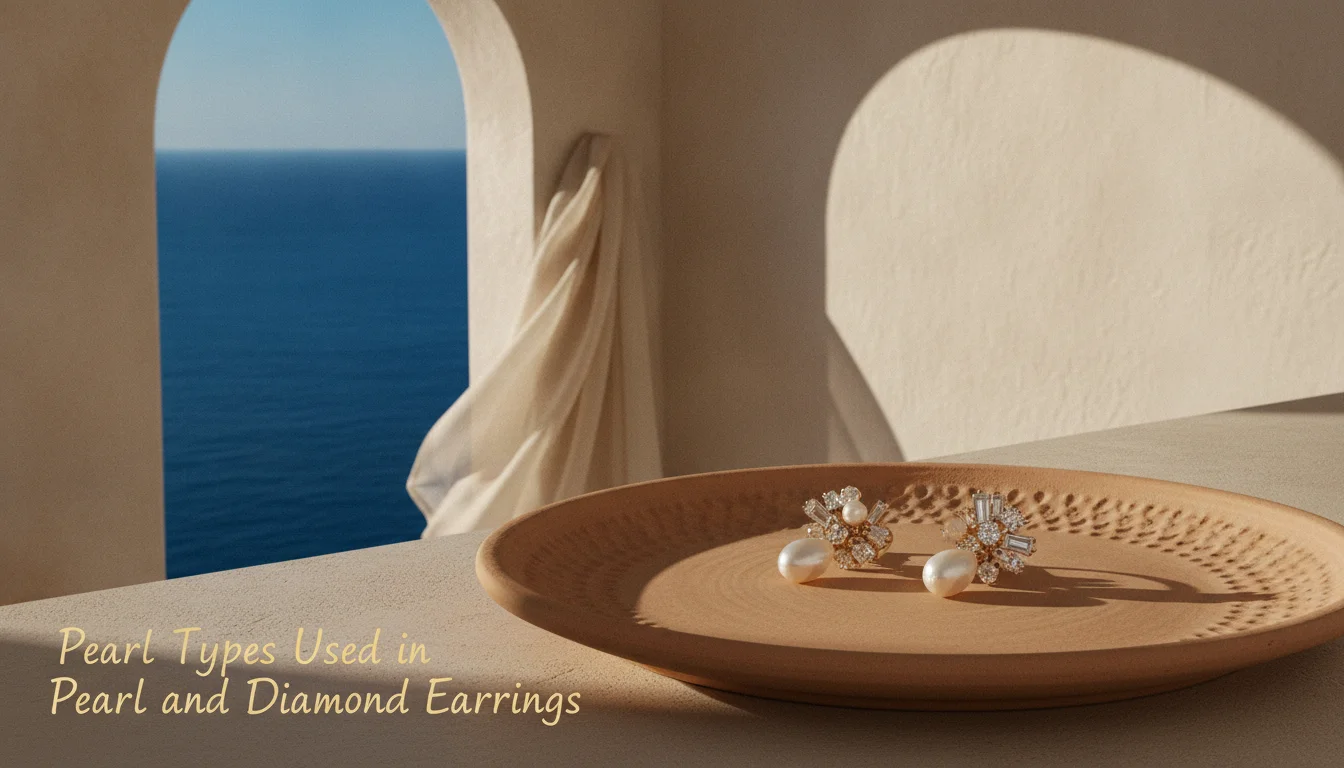
Pearl type is the single largest driver of appearance and price in most earring pearl diamond designs. Each pearl type has a different luster, size range, shape profile, and value ceiling. When a retailer listing does not specify pearl type, the product almost always uses a generic cultured pearl rather than a specific saltwater variety.
Akoya Cultured Pearls: Mikimoto’s Benchmark
An Akoya cultured pearl is a saltwater bead-nucleated pearl grown primarily in Japan and valued for sharp luster, round shape, and high polish. According to The Pearl Source, Akoya pearls are known worldwide for their unmatched quality and exceptional luster. Mikimoto is the reference point in this category: its earring catalog lists multiple Akoya cultured pearl and diamond earrings in 18K white, yellow, and pink gold. The presence of Akoya often signals a higher price than freshwater, even before diamond weight is considered.
Pearl Grading: What A, AA, and AAA Actually Mean
Pearl grading scales matter when comparing earring pearl diamond pieces at similar price points. Mikimoto uses a proprietary grading system with A, A+, AA, and AAA designations, and the difference is visible in both luster and price. Through Windsor Fine Jewelers, a Mikimoto 18K white gold 7.5-8.0mm A+ stud is $1,700, a 7.5-8.0mm AA stud is listed separately, and a 7.5-8.0mm AAA stud reaches $2,950. Higher grades reflect fewer surface blemishes, deeper luster, and more consistent nacre thickness. When a listing does not disclose a grade, ask the retailer directly before purchasing.
Freshwater Pearls: Accessible Warmth
A freshwater pearl is a pearl grown in mussels, often non-bead nucleated, with a wide range of shapes, sizes, and surface textures. Freshwater pearls are frequently used in accessible earring pearl diamond designs because they deliver a soft glow at a lower cost. Diamonds Factory lists freshwater pearl diamond accented stud earrings from $677 and freshwater pearl hoop earrings from $1,006. Helzberg lists freshwater cultured pearl and diamond hoop earrings in sterling silver at $349.99. Freshwater pearls can be round, off-round, button, or baroque, which gives designers flexibility in shape and silhouette.
South Sea and Tahitian Pearls: The Rarest Options
South Sea pearls are large saltwater pearls grown in white, golden, and black varieties, while Tahitian pearls are darker saltwater pearls known for peacock and gray tones. These pearls appear at the high end of the retail spectrum. Tiffany lists a Tiffany Titan by Pharrell Williams Tahitian Pearl Earrings in Gold with Diamonds at $18,800 and a Tiffany Jazz South Sea Pearl Earrings design at $9,100. Helzberg also lists South Sea pearl and diamond drop earrings in 14K white gold at $1,699 and a South Sea pearl and diamond cross stud in 14K yellow gold at $5,000. The larger pearl size and limited supply push these earring pearl diamond pieces well above Akoya and freshwater equivalents.
Metal Choices and Why They Matter
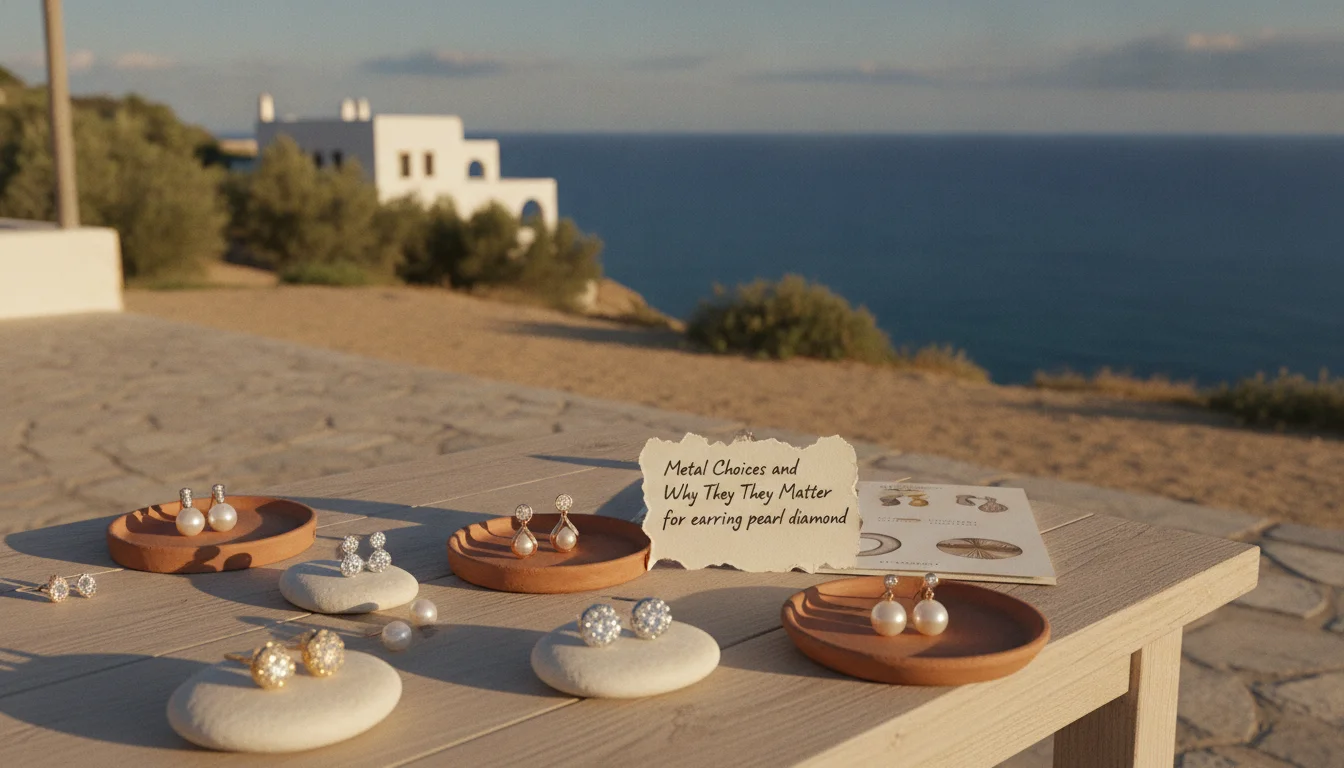
Metal fineness affects price, durability, color, and whether the earring can support a heavier pearl. A pearl diamond earring in sterling silver will almost always cost less than the same visual design in 10K, 14K, or 18K gold, even when the diamond accent and pearl size are similar. This is one of the clearest patterns across the retailer data.
Sterling Silver vs. Gold
Sterling silver is an alloy of 92.5% silver and 7.5% other metals, and it is a common entry point for diamond-accented pearl studs. David Yurman lists its Pearl Stud Earrings 7.4mm at $395 in sterling silver with diamonds and at $995 in 18K yellow gold with diamonds. That is a visible price gap for the same pearl size and diamond concept. Sterling silver is also used in David Yurman’s Pearl Classics Stud Earrings 6.6mm with diamonds at $595. The tradeoff is that silver is softer and tarnishes faster than gold, which matters for everyday wear.
10K, 14K, and 18K Gold
Gold karatage describes the proportion of pure gold in the alloy: 10K is 41.7% gold, 14K is 58.3% gold, and 18K is 75% gold. Higher karatage means richer color and a higher price. Helzberg’s listings show the progression clearly: a freshwater cultured pearl and diamond stud in 10K white gold with 1/3 ct. tw. is $799.99, while comparable 14K options move higher depending on pearl type and diamond weight. Windsor Fine Jewelers lists numerous Mikimoto 18K white and yellow gold Akoya pearl and diamond earrings from $790 to $7,300. Mikimoto’s own earring category includes 18K pink and white gold variations, showing that metal color is a design decision, not an afterthought.
Platinum, Rose Gold, and Two-Tone Options
Platinum is a dense, naturally white metal that is more expensive than gold and highly durable. Diamonds Factory offers platinum, white gold, yellow gold, rose gold, and silver across its pearl diamond earring catalog. Rose gold appears in select designer lines and in Diamonds Factory’s filter set. Two-tone designs may combine a yellow gold setting with white gold diamond accents, but the majority of premium listings stay in one metal color. For most shoppers, the practical choice is between the visual warmth of yellow or rose gold and the cool finish of platinum or white gold.
Earring Styles: Studs, Drops, Hoops, and Clusters
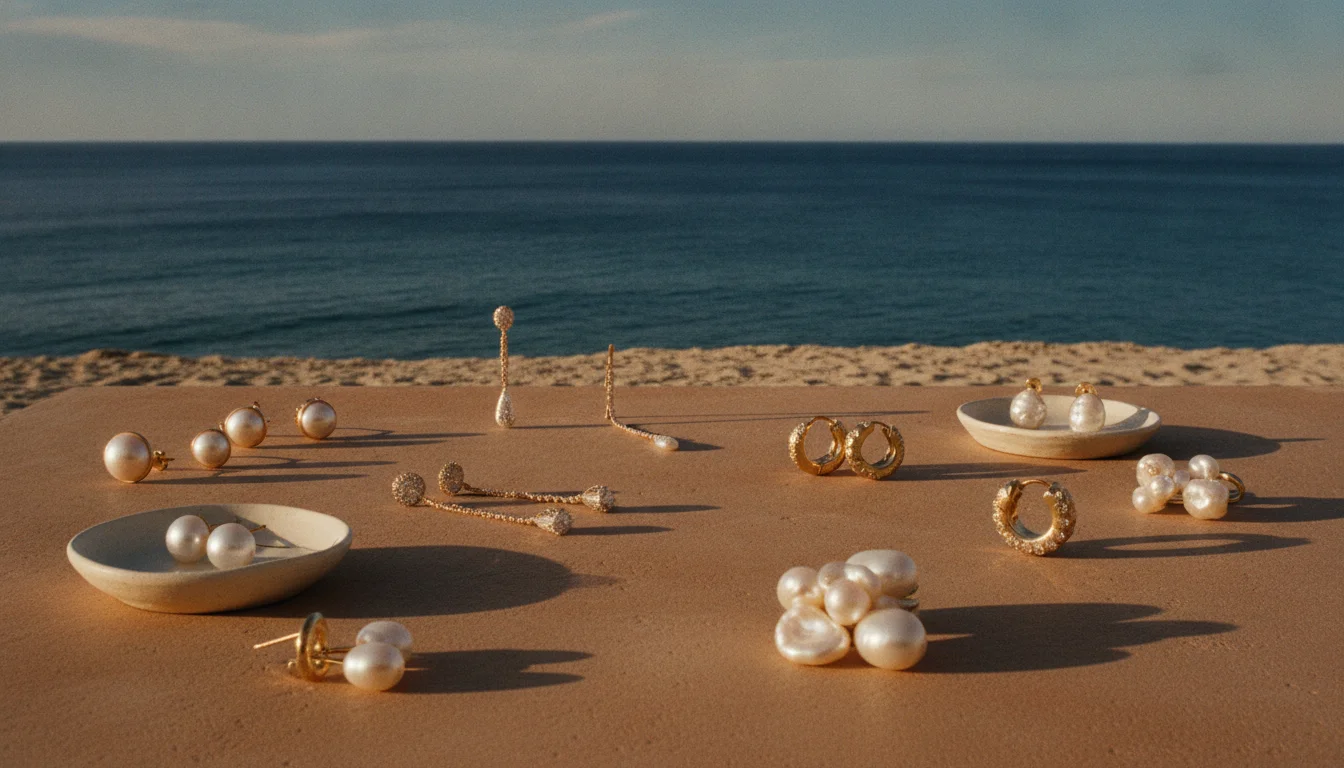
The earring pearl diamond category spans far more than the classic solitaire pearl stud. Style determines how the pearl sits on the ear, how much the diamond accent is visible, and whether the earring works for daily wear or special occasions. Different retailers organize these styles differently, but the core silhouettes are consistent across the market.
Stud Earrings
Pearl studs are the most classic format. They hold the pearl directly on the earlobe and use the diamond as an accent above, below, or around the pearl. Mikimoto’s Akoya cultured pearl stud earrings in 18K yellow and white gold are a benchmark for this style. David Yurman’s Pearl Stud Earrings appear in 7.4mm and 14mm sizes, with diamond-accented sterling silver and 18K gold versions. The Pearl Source lists a 7.0-7.5mm white Akoya round pearl stud earring at $240 regular price and $192 sale price, with 405 reviews at the time of catalog capture. Studs are usually the safest choice for first-time earring pearl diamond buyers because they are comfortable, secure, and easy to wear daily.
Drop and Dangle Earrings
Drop and dangle styles suspend the pearl below the earlobe, often with a diamond-embellished cap, chain, or setting. Ring Concierge’s Diamond + Pearl Drop Earrings are $498, while its Pearl Station Drop Earrings are $298.50 after a 25% discount. Stephanie Gottlieb’s Grace Pearl and Diamond Graduated Drop Earring is $5,215 on sale from $7,450, with 14K white gold construction. Tiffany’s Elsa Peretti Pearls by the Yard chain earrings start at $900 and use a more linear drop approach. Drop earrings add movement and are more visible in styled photographs, but they require a secure backing or latch.
Hoop and Huggie Earrings
Hoop and huggie earrings integrate pearls as attached drops or threaded elements around a diamond-set metal circle. Diamonds Factory lists freshwater pearl hoop earrings from $1,006 and freshwater pearl diamond hoop earrings from $1,720. Helzberg lists a freshwater cultured pearl and diamond hoop earring in sterling silver at $349.99 and a freshwater cultured pearl and diamond hoop drop earring in 10K white gold at $599.99. Mikimoto also lists an Akoya Cultured Pearl and Diamond Hoop Earrings design. Hoops can feel heavier than studs, so ear lobe comfort and closure security are worth checking before purchase.
Pros and Cons of Earring Pearl Diamond Styles
Pros
- Timeless visual contrast: The diamond’s sparkle frames the pearl’s organic glow in a way that feels both classic and current.
- Wide price range: Genuine earring pearl diamond pieces are available from roughly $270 in sterling silver to investment-level designs above $10,000, making the category accessible at multiple budgets.
- Versatility: Pearl studs with diamond accents move from a morning meeting to a candlelit dinner without a wardrobe change.
- Longevity: A high-quality Akoya or South Sea pearl earring, properly cared for, outlasts many fashion jewelry cycles.
- Strong resale and gifting appeal: Brands like Mikimoto, Tiffany, and David Yurman hold strong recognition, which supports long-term value.
Cons
- Pearls require careful maintenance: Unlike all-diamond earrings, pearl and diamond pieces are sensitive to perfume, hairspray, and ultrasonic cleaners.
- Vague listings make comparison difficult: Many retailers list pieces as simply “pearl” without disclosing type, grade, or origin, which makes price comparison unreliable.
- Pavé settings need periodic checks: Small accent diamonds in pavé settings can loosen over time and require professional inspection.
- Final sale risk: Some designer pieces, such as Stephanie Gottlieb’s Grace Pearl and Diamond Graduated Drop Earring, are marked final sale, removing the ability to return.
Price Reality: What the Evidence Shows
The price of an earring pearl diamond piece can vary by more than $18,000 across the retailers in this comparison. The main variables are pearl type, metal fineness, diamond accent weight, and brand positioning. Comparing actual product listings shows that similar styles can sit in completely different price bands depending on who sells them.
Entry-Level: Under $500
At the entry level, shoppers can find freshwater pearl studs with diamond accents in sterling silver or vermeil. Helzberg lists a white sapphire and freshwater pearl stud earring in sterling silver at $99.99, a freshwater cultured pearl bow stud in vermeil at $120, and a freshwater cultured pearl stud in 14K yellow gold at $149.99. David Yurman’s 7.4mm pearl stud earrings with diamonds in sterling silver are $395, and its 14mm sterling silver version with diamonds is $750. These pieces prioritize accessible price over large pearl size or high diamond weight.
Mid-Range: $500 to $2,500
The mid-range is dominated by freshwater and Akoya pearls in 10K, 14K, and 18K gold with modest diamond accents. Diamonds Factory’s freshwater pearl diamond accented stud earrings start at $677, and its freshwater pearl diamond accented drop earrings start at $673. Ring Concierge’s Baroque Pearl and Diamond Earrings are $748, while David Yurman’s Pearl Classics Stud Earrings 6.6mm in 18K yellow gold with diamonds are $1,400. Mikimoto’s 18K white gold 7.5-8.0mm A+ pearl stud earrings are listed at $1,700 through Windsor Fine Jewelers. In this band, the pearl is larger and rounder, and the diamond accent may be a small pavé detail rather than a single stone.
High-End: Over $2,500
Above $2,500, the pearl type shifts toward high-grade Akoya, South Sea, and Tahitian varieties, and the diamond accent becomes more substantial. Stephanie Gottlieb’s Grace Pearl and Diamond Graduated Drop Earring is $5,215 on sale from $7,450. David Yurman’s Renaissance Pearl Stud Earrings 16.5mm in 18K yellow gold with diamonds are $3,300, and its Renaissance Pearl Trillion Drop Earrings 26mm in 18K yellow gold with diamonds are $7,300. Tiffany’s Victoria Pearl and Diamond Earrings are $13,900, and its Titan by Pharrell Williams Tahitian Pearl Earrings in Gold with Diamonds reach $18,800. These prices reflect brand equity, larger or rarer pearls, higher diamond carat weight, and full precious-metal construction.
| Retailer / Brand | Example Earring | Pearl Type | Metal | Price Listed |
|---|---|---|---|---|
| Diamonds Factory | Freshwater pearl diamond accented stud earrings | Freshwater | Options include platinum, gold, silver | From $677 |
| Ring Concierge | Diamond + Pearl Drop Earrings | Pearl | Not specified in listing | $498 |
| David Yurman | Pearl Stud Earrings 7.4mm | Pearl | Sterling Silver with Diamonds | $395 |
| David Yurman | Pearl Stud Earrings 7.4mm | Pearl | 18K Yellow Gold with Diamonds | $995 |
| Windsor Fine Jewelers / Mikimoto | 18KWG Akoya Cultured Pearl and Diamond Tassel Drop Earrings | Akoya cultured pearl | 18K White Gold | $4,500 |
| Stephanie Gottlieb | Grace Pearl and Diamond Graduated Drop Earring | Pearl | 14K White Gold | $5,215 sale from $7,450 |
| Tiffany & Co. | Tiffany Victoria Pearl and Diamond Earrings | Pearl | Not specified in listing | $13,900 |
| Tiffany & Co. | Tiffany Titan by Pharrell Williams Tahitian Pearl Earrings in Gold with Diamonds | Tahitian pearl | Gold with Diamonds | $18,800 |
How to Buy an Earring Pearl Diamond Piece: A Step-by-Step Process
Buying an earring pearl diamond piece is easier when you separate aesthetic preference from technical value. The process below uses information visible on retailer product pages, including pearl type, metal fineness, diamond carat weight, and return terms.
Pre-Purchase Decision Points
Before comparing products, decide whether the earring is for daily wear, formal occasions, or a gift. Daily wear favors secure backings and lower profiles, while formal styles can handle longer drops and larger diamonds. Set a budget range before browsing because the price spread is too wide to comparison shop without one.
Step-by-Step Purchase Checklist
- Step 1: Identify the pearl type. Check whether the listing says Akoya, freshwater, South Sea, Tahitian, or simply pearl. If it says pearl only, ask the retailer for cultured pearl type and origin.
- Step 2: Confirm pearl size in millimeters. Pearl size is a measurable value; smaller studs may be 5.5mm to 7.4mm, while larger drops can reach 14mm to 26mm. Larger pearls cost more.
- Step 3: Check diamond accent weight. If total carat weight is listed as ct. tw., that is the combined diamond weight in the piece. Compare like-for-like rather than assuming a larger stone.
- Step 4: Verify metal fineness. Confirm whether the earring is sterling silver, 10K, 14K, 18K, or platinum. The same design can vary by hundreds or thousands of dollars based on metal alone.
- Step 5: Read the return and warranty terms. The Pearl Source offers free 2-day shipping and free 60-day returns. Diamonds Factory advertises a 30-day free return and lifetime guarantee. Ring Concierge highlights free returns and a complimentary warranty.
- Step 6: Compare at least two price points. After checking specifications, compare equivalents at a multi-brand retailer and a direct-to-consumer retailer to see whether the premium is brand-driven or material-driven.
Red Flags and Return Policy Checks
If a listing does not disclose pearl type, metal fineness, or diamond weight, treat that as a red flag. Vague descriptions like “gold” without karatage or “diamond accent” without carat weight make comparison impossible. Also check whether sale items are final sale. Stephanie Gottlieb’s Grace Pearl and Diamond Graduated Drop Earring is explicitly marked final sale, while other retailers allow returns. The return window matters because pearl color and diamond sparkle look different under home lighting than on a screen.
Retailer and Brand Comparison for Earring Pearl Diamond Pricing
The same earring pearl diamond concept is sold by luxury houses, multi-brand jewelers, and direct-to-consumer e-commerce stores, but the price positioning is not the same. Understanding who you are buying from explains a large part of the price difference.
Luxury Designers: Mikimoto, Tiffany, David Yurman
Mikimoto is the most pearl-specific luxury name in the market, with multiple Akoya cultured pearl and diamond earrings in 18K white, yellow, and pink gold. Tiffany uses strong collection branding: Elsa Peretti, Paloma Picasso, Tiffany T, Tiffany HardWear, Tiffany Titan, and Tiffany Victoria all appear in the pearl earring category. David Yurman pairs pearls with its signature cable and Renaissance motifs, with prices from $395 in sterling silver to $7,300 for a 26mm Renaissance Pearl Trillion Drop in 18K yellow gold with diamonds. These brands command premiums for design recognition and polished retail presentation.
“Akoya pearls are known the world over for their unmatched quality and exceptional luster.” – The Pearl Source
Multi-Brand and Direct-to-Consumer Retailers
Windsor Fine Jewelers carries 50 pearl earrings and mixes Mikimoto, David Yurman, Gabriel & Co, John Hardy, Shy Creation, and Windsor Collection pieces in one catalog. Helzberg lists 27 pearl earring styles, including Laure by Aurate and Luxe Jewelry, and often specifies total carat weight. Diamonds Factory takes a direct-to-consumer approach with 18 diamond earrings in its pearl category, advertising a price match guarantee, 30-day free returns, and a lifetime guarantee. The Pearl Source focuses heavily on Akoya pearl education and publishes a Trustpilot rating of 4.8 out of 5 based on 17,652 reviews. Each retailer optimizes for a different shopper: brand prestige, variety, or value.
“These aren’t your grandma’s pearls. Expect modern designs that make these classic pearl earrings feel new and exciting.” – Ring Concierge
What Separates Price Points
When prices differ for similar visual styles, the separating factors are usually pearl grading, diamond carat weight, metal fineness, and brand margin. Mikimoto’s A, A+, AA, and AAA grade distinctions appear throughout Windsor’s listings, with an 18K white gold 8-8.5mm A+ stud at $2,100 and an 18K white gold Akoya A+ 8.0mm pearl and diamond huggie at $7,300. The same pearl size does not mean the same luster or surface quality. Diamond accents are another quiet cost driver: a 1/5 ct. tw. hoop at Helzberg sells for $349.99, while a 3/8 ct. tw. South Sea diamond cross stud reaches $5,000. Brand markup is real, but so is the underlying material difference.
Styling Your Earring Pearl Diamond Pieces
An earring pearl diamond pair is one of the most versatile fine jewelry investments you can make. The key is matching the earring’s scale and metal to the rest of your look, not just the occasion.
Small Akoya pearl studs with a diamond pavé accent work beautifully against a linen shirt or a silk slip dress. They are the earring you reach for when you want to feel polished without trying too hard. For evening, a South Sea pearl drop with a diamond-embellished cap adds the kind of quiet drama that reads across a candlelit room. Yellow gold settings feel warm and sun-soaked, pairing naturally with tawny skin tones and warm-toned wardrobes. White gold and platinum read crisper and more contemporary, complementing cooler palettes and minimal styling.
According to style editors at Vogue and Harper’s Bazaar, pearl jewelry has moved firmly out of the formal-only category. Stylists recommend pairing baroque pearl and diamond drops with relaxed tailoring or even a well-cut blazer over a swimsuit cover-up for a resort-ready look. The contrast between the organic pearl and the precision of a diamond accent is exactly what makes the combination feel current rather than dated.
If you wear multiple earrings, a small earring pearl diamond stud in the first hole pairs well with a simple gold hoop or a tiny diamond stud in a second piercing. Keep the rest of your jewelry restrained so the pearl remains the focal point.
Care, Wear, and Long-Term Value
Pearls are organic and softer than diamonds, so an earring pearl diamond piece requires different care than an all-diamond earring. Proper storage, cleaning, and occasional professional checks extend the life of both the pearl and the diamond setting. This is especially important for earrings with pavé work, where losing a small accent diamond is a common repair issue.
Cleaning and Storage
Clean pearl diamond earrings with a soft, damp cloth after wear, and avoid ultrasonic cleaners unless the retailer explicitly says the setting can handle them. Pearls can be damaged by harsh chemicals, perfume, and hairspray, so apply cosmetics before putting on earrings. Store each earring separately or in a fabric-lined box to prevent the diamond accents from scratching the pearl surface. Mikimoto and other retailers provide jewelry care guidance that emphasizes gentle cleaning and separate storage.
Warranty and Insurance
Warranty terms vary. Diamonds Factory advertises a lifetime guarantee, while Ring Concierge highlights a complimentary warranty. These warranties typically cover manufacturing defects, not accidental loss or wear-and-tear damage. For high-value pieces over $5,000, consider a jewelry insurance rider that covers loss, theft, and damage. Ask whether the retailer provides an appraisal or valuation document with the purchase, as this supports insurance coverage.
Styling and Longevity
Pearl diamond earrings work with tailoring, eveningwear, and casual dressing, but the metal color should match the rest of your jewelry. Yellow gold feels warm and traditional, white gold and platinum feel brighter and more contemporary, and rose gold sits between the two. The most durable everyday choice is usually a smaller pearl stud with a secure post, while drop and hoop styles are better for lower-frequency wear. If cared for properly, a high-quality Akoya or South Sea pearl earring can outlast many fashion jewelry cycles, making the diamond accent a lasting detail rather than a trend-driven one.
Final Thoughts on Earring Pearl Diamond Selection
When you evaluate an earring pearl diamond piece, the decision comes down to three aligned factors: pearl type, metal fineness, and diamond accent weight. The retailer data shows that entry-level freshwater pearl and diamond earrings can be found under $350, while rare Tahitian or South Sea pearl designs from Tiffany and Mikimoto climb above $10,000. Instead of chasing a single best price, match the pearl grade and metal to how often you will wear the earrings. A smaller Akoya pearl in 18K gold with a precise diamond accent may offer more daily satisfaction than a larger freshwater pearl in sterling silver, especially if longevity matters. Use the step-by-step process above, verify return policies, and compare at least two retailers before buying. The category is broad, but the strongest purchase is the one where you can clearly see what you are paying for.
Explore the full collection at lexazi.com and find your perfect earring pearl diamond pair. Free shipping on orders over $75.
Frequently Asked Questions
What is the difference between pearl and diamond earrings and an earring pearl diamond style?
Both terms describe the same pairing of pearl and diamond in a single earring. The phrase earring pearl diamond is a search-style ordering, while pearl and diamond earrings is the conversational product name used by most retailers. The underlying piece is the same: a fine jewelry earring that combines a cultured pearl with at least one diamond element.
Are pearl diamond earrings suitable for daily wear?
Small pearl studs with secure backings and low diamond accents are generally comfortable for daily wear. Pearl is softer than diamond, so avoid exposure to perfume, hairspray, and hard knocks. A well-made Akoya pearl stud in 18K gold with a pavé diamond accent is one of the most wearable fine jewelry formats available.
Which pearl type is best for diamond earrings?
Akoya cultured pearls offer the most consistent round shape and high luster for diamond accents, which is why Mikimoto uses them extensively. Freshwater pearls are a more affordable alternative with a softer glow, while South Sea and Tahitian pearls offer larger, rarer centerpieces at a significantly higher price point.
Why does the same pearl stud cost more in 18K gold than sterling silver?
18K gold contains 75% pure gold and is more expensive to produce than sterling silver. David Yurman lists the same 7.4mm pearl stud with diamonds at $395 in sterling silver and $995 in 18K yellow gold, showing the material premium directly. The gold version also tends to be more durable and resistant to tarnish over time.
What does ct. tw. mean in pearl diamond earrings?
Total carat weight, abbreviated ct. tw., is the combined diamond weight in a piece, not the weight of each individual accent stone. Helzberg uses this label on earrings so shoppers can compare total diamond content across designs. Always compare ct. tw. figures on pieces with similar pearl sizes for an accurate price-per-value assessment.
Can pearl diamond earrings be returned or repaired?
Return policies vary by retailer. Diamonds Factory advertises a 30-day free return, The Pearl Source offers free 60-day returns, and some sale items from Stephanie Gottlieb are final sale with no returns accepted. Repairs for missing pavé diamonds or loose pearl settings should be handled by the original retailer or a qualified jeweler who works with both organic and precious stone materials.