Polymer clay earrings are lightweight, handcrafted jewelry pieces made from oven-bake PVC-based clay that hardens into vivid, durable shapes. Think bold botanical hoops, speckled confetti studs, and marbled arches that feel like nothing else in your jewelry box.
Key Takeaways
- clay earrings are made from PVC-based clay that must be baked to cure and harden permanently.
- Essential materials include polymer clay, a rolling pin, cutting tools, jewelry findings, and super glue.
- Beginner-friendly kits like The Clayful Co’s offer everything you need to make up to 40 pairs.
- Popular design techniques include marbling, the confetti effect, and mokume gane.
- Handmade this type of earrings are available on Etsy and from boutique brands like Crafted From Faith, priced from $14 to $38.
- Proper care means wiping gently with a damp cloth, avoiding perfumes, and storing flat to prevent warping.
What Are Polymer Clay Earrings?

Definition and Characteristics
this kind of earrings are jewelry pieces crafted from a versatile modeling material composed of PVC particles, plasticizers, and pigments. Unlike air-dry clays, polymer clay must be baked in a home oven to cure and harden, as confirmed by the Paper n Stitch blog. The result is a durable, lightweight piece that holds vivid color and intricate pattern with surprising resilience. Because the clay can be shaped, textured, and layered in countless ways, each pair becomes a miniature work of art. The final pieces are typically attached to hypoallergenic metal findings like stainless steel posts, jump rings, or hooks, making them a comfortable choice for sensitive ears. According to Paper n Stitch, leading brands include Sculpey, Fimo, Kato Polyclay, and Cernit (Paper n Stitch).
History and Popularity
The resurgence of handmade jewelry has brought polymer clay firmly into the spotlight. Social platforms like Pinterest and Instagram overflow with inspiration, and creators like MyClayCo and Jessama Tutorials share techniques through detailed YouTube tutorials. The DIY movement, combined with the material’s accessibility, has made crafting these earrings a genuinely rewarding hobby. Small businesses like Crafted From Faith in Lancaster County, PA produce limited-batch collections sold online, with prices typically ranging from $14 to $38 (Crafted From Faith). That blend of artisan appeal and DIY potential explains why clay earrings continue to trend season after season.
Pros and Cons of Polymer Clay Earrings
Pros
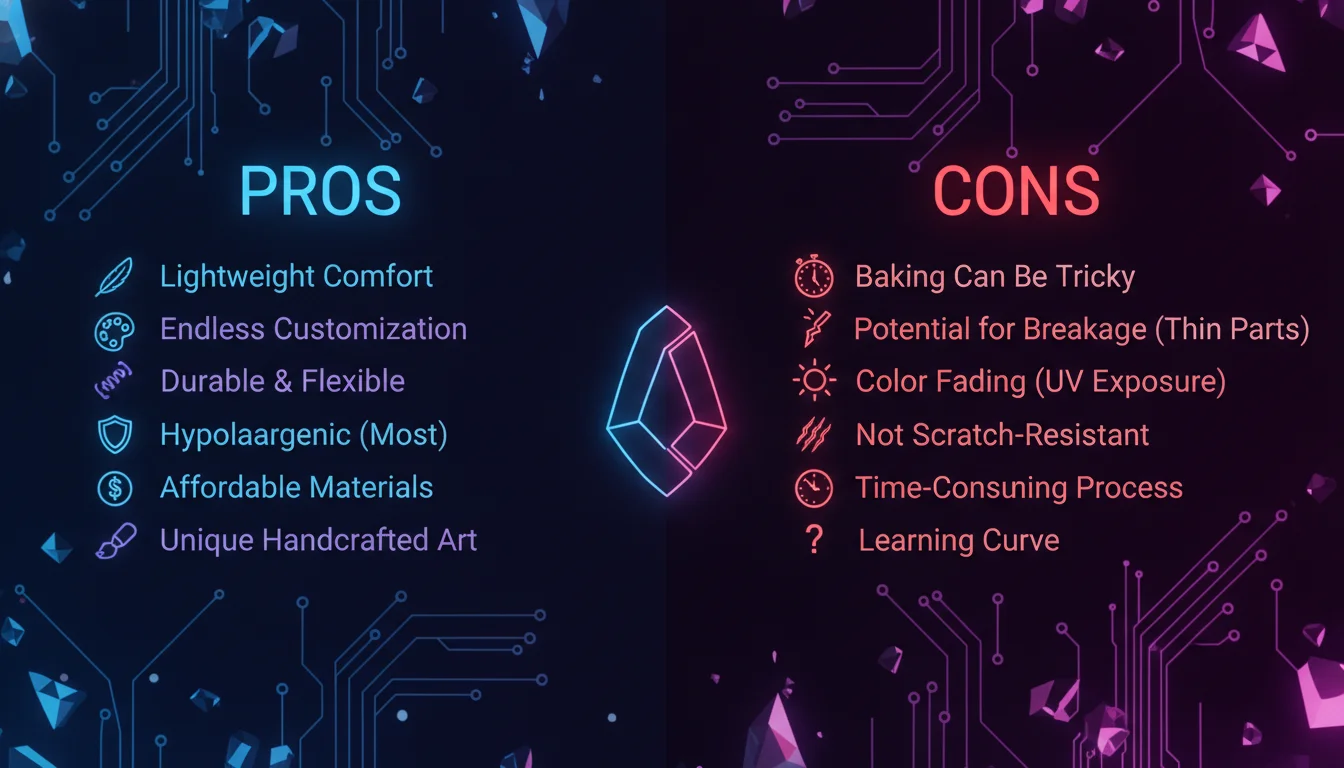
- Lightweight and comfortable for all-day wear, even with larger statement shapes.
- Endlessly customizable in color, texture, shape, and finish, from matte to glossy.
- Accessible price point whether you buy handmade ($14–$38) or make your own for roughly $2–$3 per pair with a kit.
- Hypoallergenic options are widely available using surgical stainless steel findings.
- Durable when cured correctly, lasting years with basic care.
Cons
- Sensitive to moisture and chemicals: perfumes, hairspray, and prolonged water exposure can degrade the surface or weaken the glue bond.
- Findings may need re-gluing if earrings are dropped repeatedly.
- Requires an oven and some practice to achieve consistent results, especially for beginners working without a kit.
Essential Materials and Tools for Making Polymer Clay Earrings
Polymer Clay
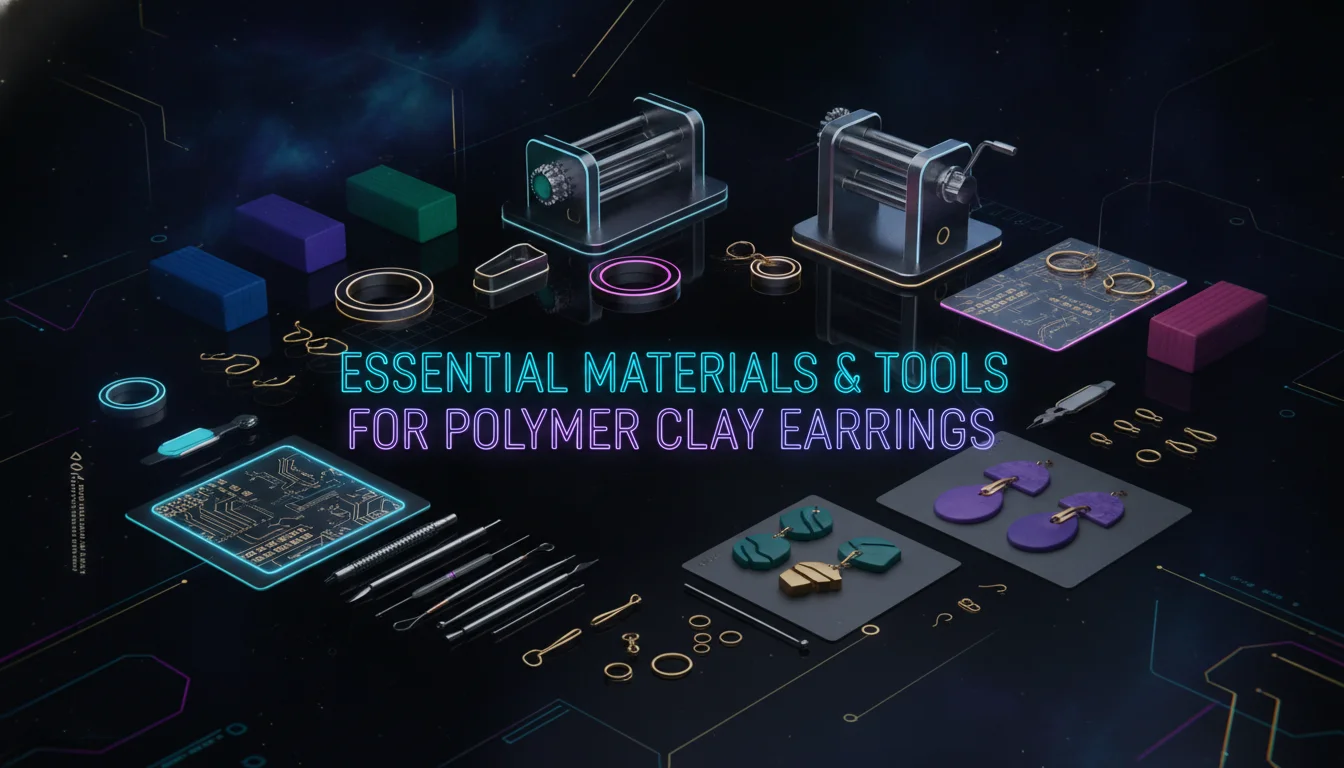
The core material is, naturally, polymer clay itself. It comes in a full spectrum of colors and can be mixed like paint to create custom hues. For earrings, choose a brand that balances ease of conditioning with firmness after baking. As Paper n Stitch recommends, starting with primary colors, red, yellow, and blue, plus black and white, means you can mix virtually any shade you need (source). A 2-ounce block of clay can yield multiple pairs of small earrings, making the material genuinely economical.
Tools
You’ll need a few basic tools: a rolling pin or acrylic rod to flatten the clay, a sharp blade or clay cutter for precise shapes, and a smooth work surface. Many crafters use a ceramic tile as a baking surface because it provides even heat distribution. The Clayful Co’s premium kit includes a ceramic baking tile and a roller with removable depth guides to ensure uniform thickness (The Clayful Co). Cookie cutters, texture sheets, and silicone molds round out a solid beginner toolkit.
Findings and Adhesive
this type of earrings require jewelry findings: earring posts, hooks, jump rings, and backs. For sensitive ears, opt for surgical stainless steel, which is hypoallergenic. The Clayful Co kit includes both silver and gold-plated stainless steel posts, hooks, and jump rings, along with silicone backs. Super glue (cyanoacrylate) attaches the baked clay pieces to the metal findings, and quality kits like The Clayful Co’s include a name-brand tube so you’re not left guessing.
How to Make Polymer Clay Earrings: Step-by-Step
Step 1: Condition the Clay
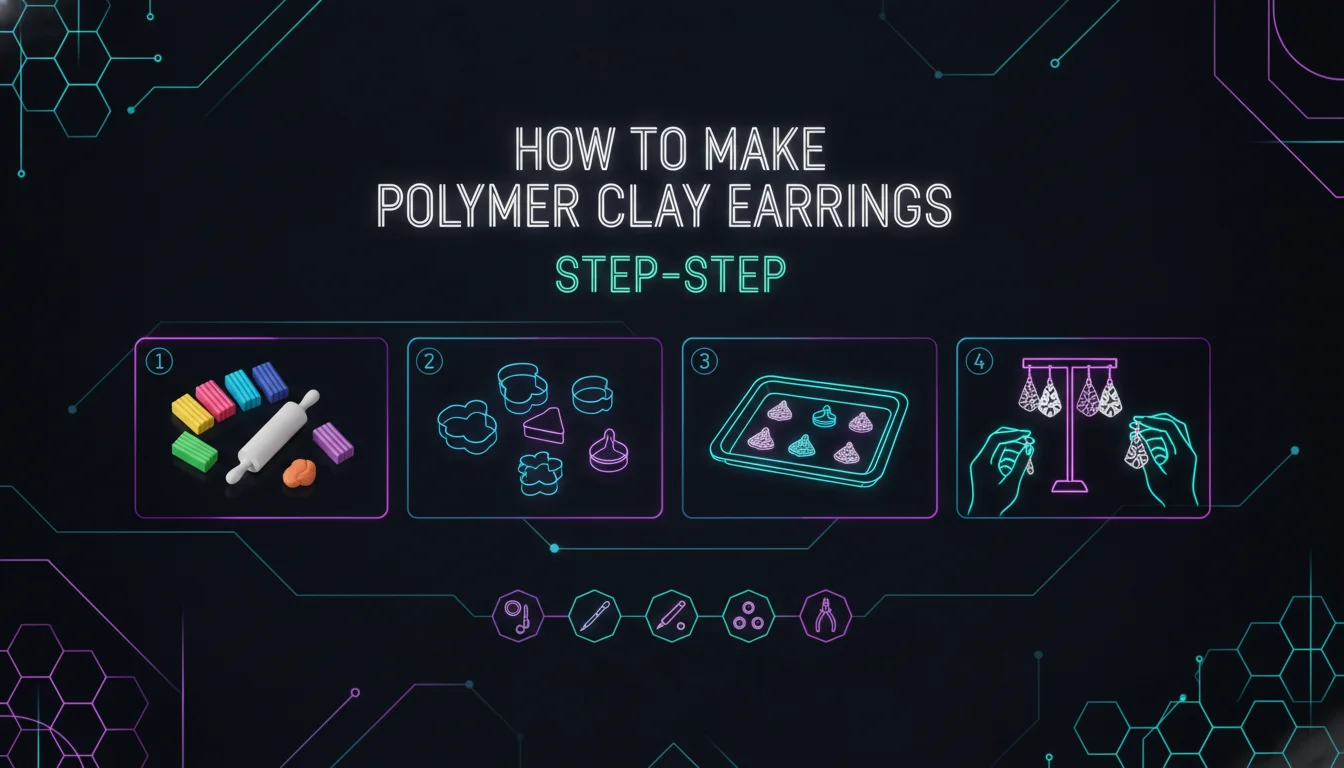
Start by kneading the polymer clay until it becomes soft and pliable. This conditioning process warms the clay and distributes the plasticizers evenly, preventing cracks during baking. If the clay feels too firm, work it with your hands for a few extra minutes or use a clay conditioning machine. The goal is a smooth, responsive dough that holds its shape without crumbling.
Step 2: Shape and Design
Roll the clay to your desired thickness, typically around 1/8 inch (3 mm) for earrings. Use cutters, blades, or free-form sculpting to create your shapes. This is where the real fun begins: you can apply marbling by twisting two or more colors together, try the confetti effect by sprinkling grated clay bits onto a base sheet, or explore mokume gane by stacking and slicing layers for intricate organic patterns. YouTube tutorials by Raising Nobles and Jessama Tutorials demonstrate many of these methods beautifully. Once shaped, use a needle tool or drill to create holes for jump rings, or plan to glue flat posts after baking.
Step 3: Bake and Finish
Place your clay pieces on a baking surface and cure them in a preheated oven according to the brand’s instructions. Most polymer clays bake at around 275°F (130°C); always follow the label for timing based on thickness. Let the pieces cool completely before handling. Then sand any rough edges with fine-grit sandpaper (320 to 1500 grit) if desired, attach the earring findings with super glue, and optionally apply a water-based varnish for a polished finish. Many artists prefer the natural matte surface of the clay exactly as it comes out of the oven.
Advanced Techniques for Unique Polymer Clay Earring Designs
Marbling and Swirls
Marbling is one of the easiest ways to add visual depth. Twist two or more colors of clay together, roll into a log, fold, and roll again until you achieve a marbleized effect. The key is stopping before the colors fully blend, which would muddy the result. Cut the slab into your chosen shapes and you have something that looks genuinely one-of-a-kind.
Confetti Effect
The confetti effect involves grating or finely chopping scraps of colored clay and pressing them onto a base sheet. After rolling to embed the bits, you get a speckled, playful surface that photographs beautifully. As Jessama Tutorials describes it: “It’s basically chopping or grating polymer clay into tiny pieces and then sprinkling them on top of another piece of clay. Easy, but effective” (Easy Modern Polymer Clay Earring Tutorial).
“The confetti effect is such a fun polymer clay technique. It’s basically chopping or grating polymer clay into tiny pieces and then sprinkling them on top of another piece of clay. Easy, but effective.” – Jessama Tutorials, YouTube
Mokume Gane
Mokume gane is a Japanese metalworking technique adapted beautifully for clay. Stack thin layers of different colors, then manipulate the stack by pushing objects into it or slicing through layers to reveal intricate patterns beneath. The results look like natural stone or wood grain, organic and completely unique. Tutorials from Jessama Tutorials and MyClayCo walk through the process in satisfying detail.
Using Silicone Molds
Silicone molds offer a fast route to consistent, detailed shapes. Press conditioned clay into the mold, smooth the back, and pop it out before baking. Molds are especially useful for floral motifs, geometric repeats, and textured surfaces that would take much longer to sculpt by hand. MyClayCo covers mold techniques in their beginner tutorial series on YouTube, and it’s a great next step once you’re comfortable with basic shaping.
Polymer Clay Earring Design Inspiration
Seasonal and Themed Earrings
Seasonal designs are one of the most charming corners of the this kind of earrings world. Crafted From Faith offers pieces like Christmas Tree Cake Earrings, Pumpkin Studs, and Clover Dangles, with prices ranging from $16 to $34 (Crafted From Faith). These themed collections show how the material can be both whimsical and genuinely stylish, never kitschy.
Nature-Inspired Designs
Floral motifs, leaf shapes, and botanical patterns are perennially popular, and for good reason. Using real flower petals as texture stamps or creating petal-like marbled slices results in earrings that feel like a garden in miniature. The Botanical Hoops and Hexagon Florals from Crafted From Faith exemplify this trend with a refined, editorial sensibility.
Minimalist and Geometric Styles
For a modern, understated look, simple geometric shapes like disks, arches, and triangles in solid colors or gentle marbling are a perennial go-to. These clean designs complement everyday outfits effortlessly and are often the first projects beginners tackle because they require minimal tools and deliver maximum impact.
Polymer Clay Earring Kits: A Complete Starter Solution
What’s Included in a Kit?
For beginners, a well-curated kit saves time and ensures you have exactly the right supplies. The Clayful Co’s DIY Polymer Clay Earring Making Kit is a strong example. It includes 5 bricks of name-brand clay (2 oz each), 30 color recipes, a ceramic baking tile, cutters, a color measuring tool, sandpaper, super glue, a precision knife, a hand drill, jewelry pliers, and hypoallergenic stainless steel findings, enough to create up to 40 pairs of polymer clay (The Clayful Co). Priced at $79.99 (regular $119.99), that works out to roughly $2 per pair.
“Curated by a professional polymer clay artist; high-quality earrings start with high-quality materials: name brand polymer clay, name brand super glue, stainless steel hypoallergenic earring findings, and the exact tools created and used by The Clayful Co.” – The Clayful Co product description
Benefits of Using a Kit
Kits are put together by experienced artists, so every tool and material is appropriate for earring making specifically. They often include exclusive color recipes and video tutorials tailored to the kit contents. The Clayful Co provides step-by-step videos that guide you from conditioning clay all the way through attaching findings. That kind of structured support can shorten the learning curve considerably and help you avoid common mistakes like over-baking or reaching for the wrong adhesive.
Other Popular Kits
Other retailers offer kits as well. Sculpey sells starter sets that include a variety of colored clays and basic tools. Etsy is also a source for independently assembled kits from small makers. When choosing a kit, look for one that specifies hypoallergenic findings and includes detailed instructions, ideally with video support.
How to Choose the Best Polymer Clay for Earrings
Key Factors to Consider
The best polymer clay for earrings depends on your priorities: conditioning ease, strength after baking, flexibility, and color range all matter. Earrings need to be durable yet comfortable to wear. Overly brittle clay may snap with daily use, while overly flexible clay may not hold crisp shapes. This season, stylists recommend starting with a well-reviewed brand and upgrading once you understand how different clays behave in your hands.
Brand Comparison Table
| Brand | Conditioning | Strength / Flexibility | Color Options | Best For |
|---|---|---|---|---|
| Sculpey | Very soft, easy to condition | Slightly flexible after baking; some lines can be brittle if thin | Wide range, including Soufflé line with suede finish | Beginners and intricate designs |
| Fimo | Firmer, requires more conditioning | Strong and holds fine detail well | Professional-grade pigment saturation | Detailed work and mixed media |
| Kato Polyclay | Very firm, best with a pasta machine | Very strong and durable once baked | Concentrated pigments; a little goes a long way | Jewelry that needs to withstand daily wear |
| Cernit | Medium firmness | Slightly flexible, durable | Beautiful translucent colors and pearl effects | Artisan pieces and special effects |
Data aggregated from manufacturer descriptions and community recommendations.
Recommendations for Beginners
If you’re new to making polymer clay earrings, Sculpey III or Sculpey Premo are great starting points because they’re widely available and genuinely easy to work with. As you gain confidence, exploring Fimo or Kato for their superior durability and finish is a natural next step.
Caring for Your Polymer Clay Earrings
Cleaning and Maintenance
Caring for polymer clay earrings is straightforward once you know the basics. Wipe them with a soft, damp cloth and avoid soaking in water or using chemical cleaners. Never submerge them, as moisture can weaken the bond between clay and findings. Keep them away from perfumes, hairspray, and lotions, which can stain or degrade the clay surface over time.
Storage Tips
Store polymer clay earrings flat in a dry place. Avoid hanging them by the findings for extended periods, as this can stress the glue joint. A jewelry organizer with individual compartments prevents pieces from scratching each other. If stacking is unavoidable, separate pairs with soft tissue.
Longevity
With proper care, polymer clay earrings can last for years. The clay itself remains stable and holds its color well. The glued findings may occasionally need reattachment if the earrings are dropped, but high-quality stainless steel findings resist tarnishing, keeping the overall look fresh season after season.
Where to Buy Polymer Clay Earrings and Supplies
Handmade Polymer Clay Earrings
If you’d rather purchase ready-made designs, numerous small businesses and platforms offer beautiful options. Crafted From Faith, based in Ephrata, Pennsylvania, sells seasonal collections priced between $14 and $38 (Crafted From Faith). Etsy is a global marketplace filled with independent artists selling everything from minimalist studs to bold statement dangles, with many pairs available under $30.
DIY Supplies
For making your own, craft stores like Michaels and JoAnn carry polymer clay and tools. Online, Amazon, Blick, and the Polymer Clay Superstore offer extensive selections. Sculpey’s official website (Sculpey.com) provides project ideas and direct purchasing. Kits like The Clayful Co’s are available on their website, and similar options can be found on Etsy from independent makers.
Digital Inspiration
Pinterest is a goldmine for polymer clay earring designs and color combinations. YouTube channels like MyClayCo, Raising Nobles, and Jessama Tutorials offer free, in-depth video tutorials covering everything from beginner basics to advanced pattern work. Many crafters also share their work on Instagram under hashtags like #polymerclayearrings, which is worth browsing before you start your next project.
Frequently Asked Questions
What are polymer clay earrings made of?
Polymer clay earrings are made from a PVC-based modeling material that is shaped by hand and baked in a conventional oven to harden permanently. The finished clay pieces are attached to metal findings, typically surgical stainless steel posts, hooks, or jump rings.
Are polymer clay earrings safe for sensitive ears?
Yes, provided they use hypoallergenic findings such as surgical stainless steel, which is commonly included in quality kits like The Clayful Co’s. Always check the earring post material before buying, especially if you have a known metal sensitivity.
Can I make polymer clay earrings without a kit?
Absolutely. You can purchase polymer clay, basic tools like a rolling pin and knife, and findings separately from craft stores or online retailers. A kit simply simplifies the process by bundling everything you need with curated color recipes and video guidance.
How long do polymer clay earrings last?
With proper care, they can last for years. The clay itself is durable and color-stable, though the glued findings may occasionally need reattachment if the earrings are dropped repeatedly. High-quality stainless steel findings resist tarnishing and extend the life of the piece.
Do I need a special oven to bake polymer clay?
No, a conventional kitchen oven works perfectly well. Use a dedicated baking surface like a ceramic tile, monitor the temperature carefully to avoid burning the clay, and always follow the specific brand’s baking instructions for time and temperature.
Can I wash polymer clay earrings?
It’s best to wipe them gently with a soft, damp cloth rather than washing them. Avoid submerging them in water, as prolonged moisture can affect the glue bond between the clay and the metal findings.
Ready to start your collection? Browse handmade and artisan jewelry at lexazi.com, where free shipping applies on all orders over $75.