Types of heels are the different heel silhouettes, from needle-thin stilettos to supportive wedges, that define a shoe’s height, stability, and overall aesthetic. Each shape changes how you stand, move, and feel in an outfit.
Key Takeaways
- Heel shape directly affects comfort and wearability. Wider bases like block and wedge heels offer more stability than slender stilettos.
- Platforms and lower heights reduce pressure on the ball of the foot, making them a smarter choice for all-day events.
- Material quality matters. Leather, suede, and cork breathe better and mold to your feet over time, extending the lifespan of your heels.
- Foot type should guide your choice. Arch support, width, and toe shape all influence which heel silhouette feels best.
- Proper care doubles durability. Protective soles, regular cleaning, and correct storage keep heels looking new for seasons.
- Resort and vacation dressing calls for specific of heels like wedges, mules, and espadrilles that handle sand, cobblestones, and warm-weather styling.
Heels have been a wardrobe power piece for centuries, transitioning from functional riding footwear in 10th-century Persia to status symbols in European courts and eventually to modern fashion essentials. According to Charles & Keith’s history of heels, the stiletto, invented in the 1950s, remains one of the most iconic silhouettes. As of June 2026, the variety of this type of heels available has never been wider, from sculptural cone heels on the resort runways to practical block-heel sandals built for cobblestone streets in Positano.
Understanding the Different Types of Heels
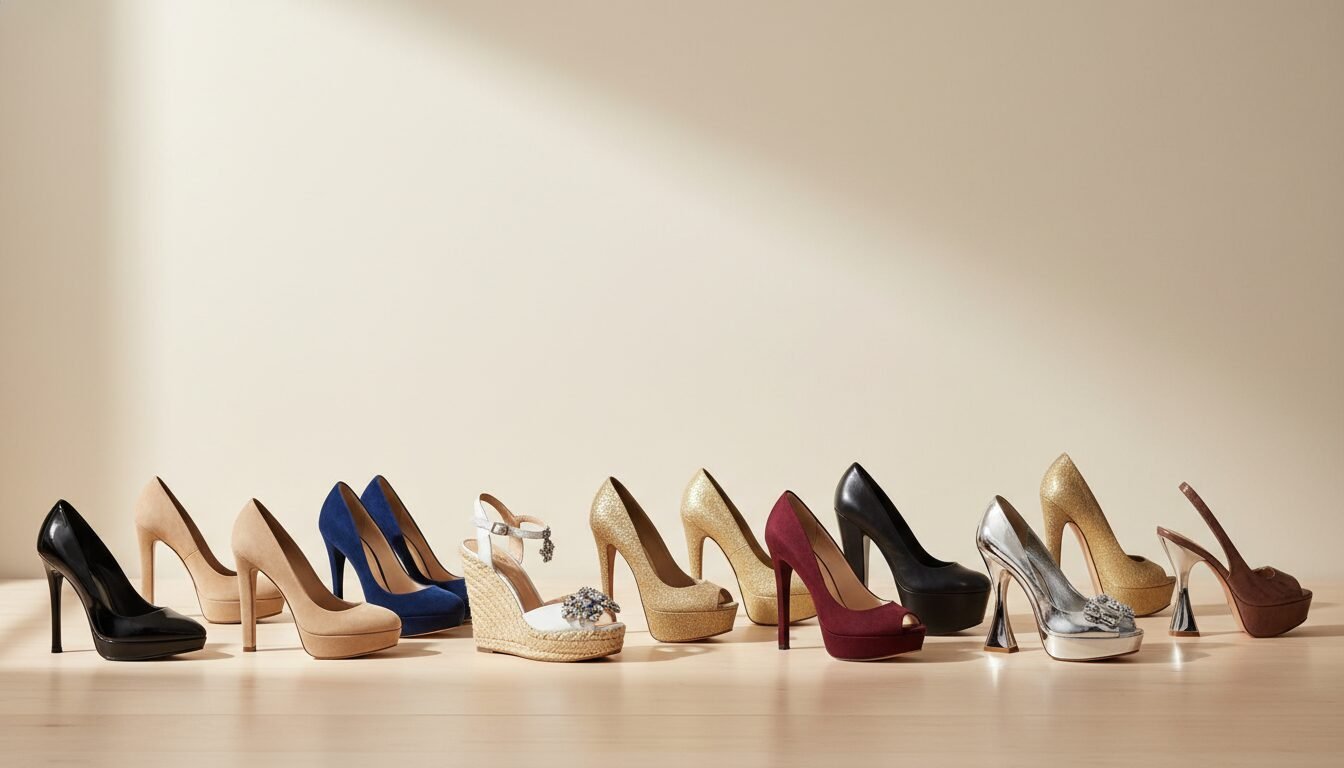
Every heel type is defined by three key elements: heel height, heel shape, and platform construction. These factors largely determine how the shoe feels on your foot, how long you can wear it, and which outfits it elevates. The table below compares the most popular this kind of heels by height, stability, and best use case.
| Heel Type | Average Height | Stability | Best For | Style Notes |
|---|---|---|---|---|
| Stiletto | 3–4+ inches | Low | Formal events, date nights | Tall, needle-thin heel; elongates legs dramatically |
| Kitten | 1.5–2 inches | Medium | Office, daytime events | Short, slim heel; polished yet walkable |
| Block | 2–3.5 inches | High | All-day wear, casual to semi-formal | Thick, square-shaped heel; maximum support |
| Wedge | 2–5 inches | Very High | Summer outings, resort wear | Continuous sole under foot; often cork or espadrille |
| Platform | 3–6 inches (total) | Medium-High | Parties, statement looks | Thick front sole reduces pitch; pairs with various heel shapes |
| Cone | 2.5–4 inches | Medium | Semi-formal, weddings | Wide at sole, tapered to point; retro-inspired |
| Spool | 2–4 inches | Medium-High | Vintage-inspired looks | Hourglass-shaped heel; wider top and bottom, narrow middle |
| Chunky | 2.5–4 inches | High | Day-to-night transitions | Thick, rectangular base; balances height and comfort |
Stiletto heels are a tall, narrow heel, often over 4 inches, that create a sharp, elegant silhouette. Kitten heels sit no higher than 2 inches, offering a slight lift with far less pressure on the ball of the foot. Block heels use a thick, square-shaped base that provides superior stability, making them one of the most comfortable types of for extended wear. Wedge heels extend into a continuous sole, distributing weight evenly across the foot. As Charles & Keith notes, wedges rank among the most comfortable of heels precisely because of that even weight distribution. Platform heels feature a thick under-sole at the front, which reduces the foot’s incline and can make a 4-inch heel feel closer to a 2.5-inch height.
Other notable this type of heels include cone heels, first popularized in the 1980s by French shoe designer Maud Frizon, which taper from wide to narrow like an ice cream cone. Spool heels are distinguished by an hourglass shape, wider at the top and bottom with a narrow waist in the middle. Chunky heels merge the block silhouette with a bolder, fashion-forward attitude. Heels with straps, like T-straps, ankle straps, and Mary Janes, add security and change the shoe’s overall look dramatically.
When shopping, it helps to understand which materials align with your lifestyle. Leather and suede uppers mold to your foot over time, while synthetic options offer more affordable variety. Brands like Jimmy Choo and Manolo Blahnik have popularized sculptural silhouettes like the D’Orsay pump, a style originally attributed to Count d’Orsay that exposes the arch of the foot for a flirtatious, leg-lengthening effect.
A Brief History of Heel Styles
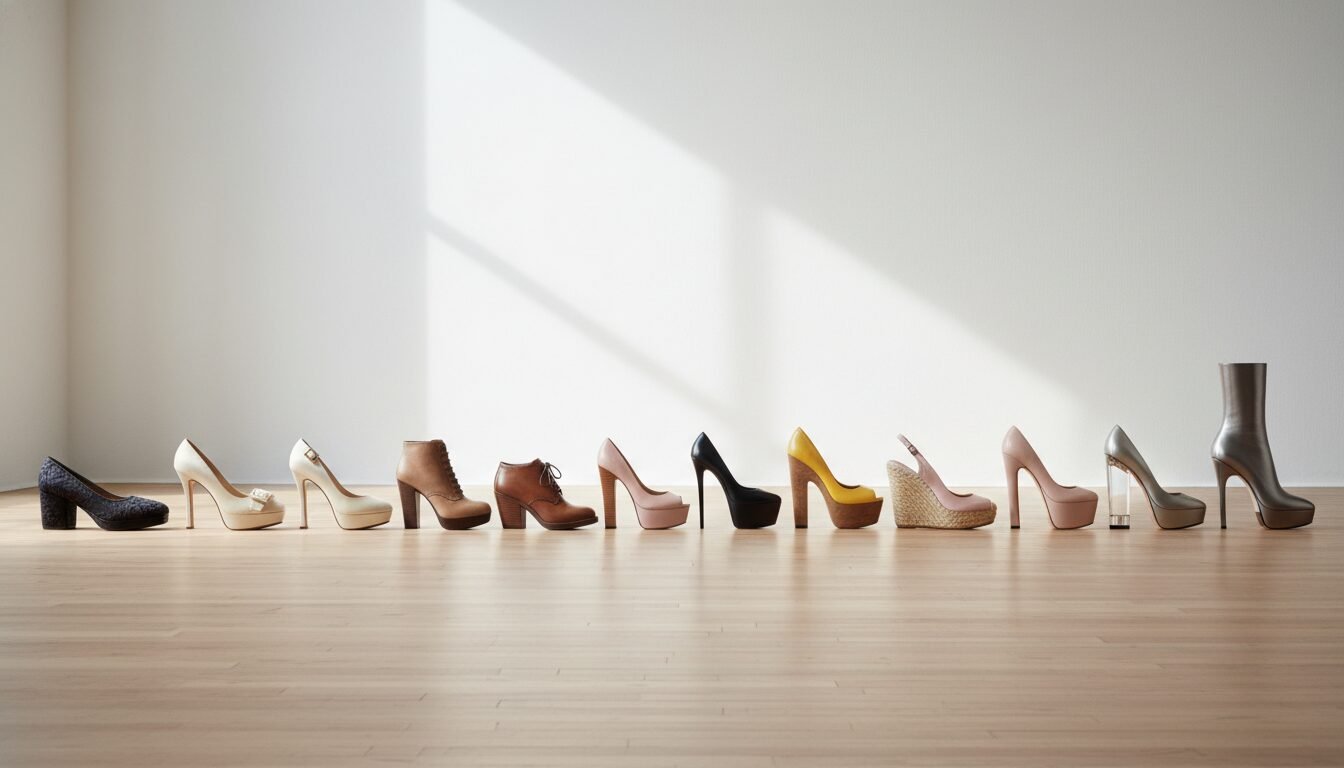
this kind of heels have a richer backstory than most people realize, and knowing that history makes choosing a pair feel even more intentional. Heels originated in 10th-century Persia as practical footwear for male cavalry riders, helping them lock into stirrups. By the 16th century, heels had traveled to European courts, where both men and women wore them as symbols of status and power. Louis XIV of France famously wore red-soled heels up to 4 inches high to project authority, a detail that fashion historians at Vogue have cited as an early precursor to today’s luxury heel culture.
The 1950s brought the stiletto, a silhouette that redefined femininity and glamour. Kitten heels gained widespread popularity around the same era, embraced by style icons of the period for their polished yet practical lift. Cone heels had their moment in the 1980s, and today, resort season 2026 is seeing a strong return of sculptural and architectural heel shapes across collections from Cult Gaia, Zimmermann, and SIR.
2026 Heel Trends: Colors, Materials, and Silhouettes
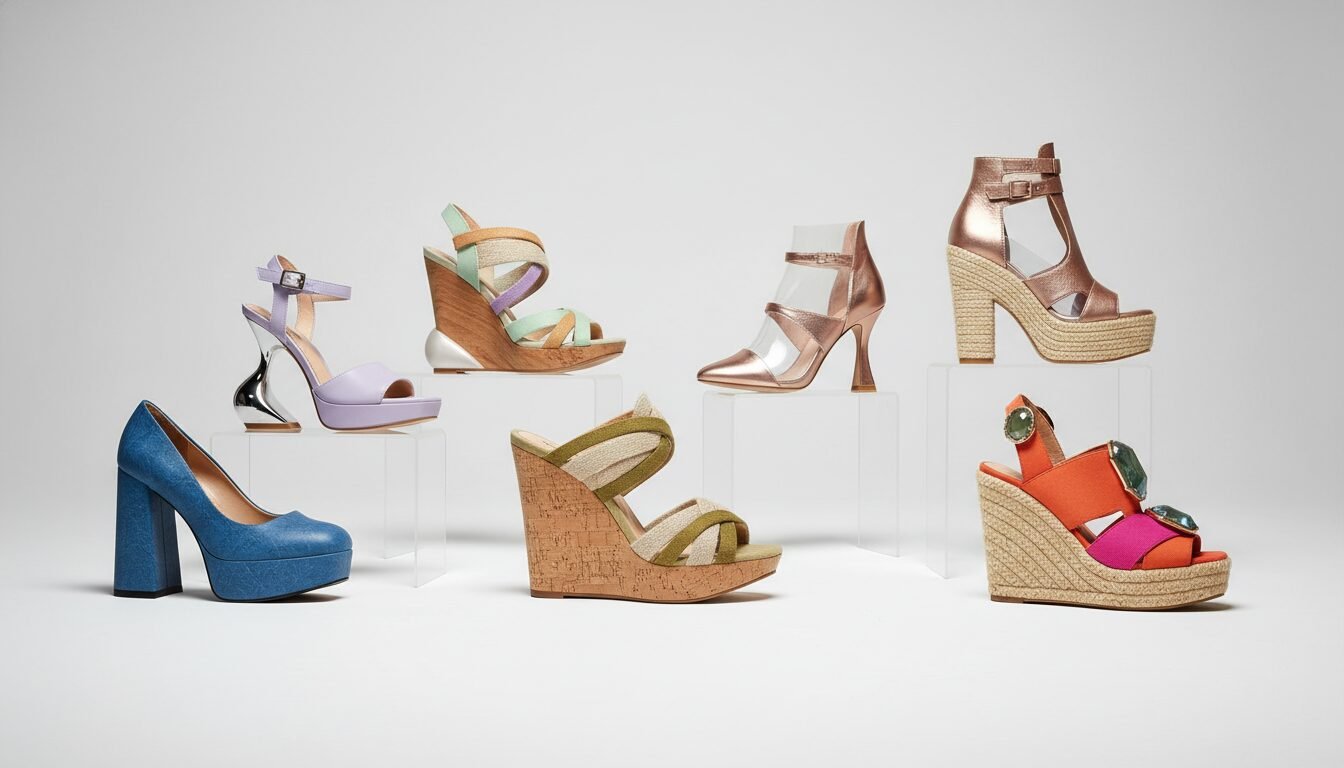
This season, the types of dominating resort and vacation dressing lean into natural textures and warm-toned palettes. According to trend reporting from Elle and Harper’s Bazaar, woven raffia, cork, and braided jute are the materials of the moment, particularly in wedge and mule silhouettes. Updated for Summer 2026, the key color stories are terracotta, warm white, and burnished gold, all of which photograph beautifully against Mediterranean backdrops.
Sculptural block heels in bold primary colors are also having a moment, inspired by the kind of confident, joyful dressing that brands like Cult Gaia and Faithfull the Brand have championed. Kitten heels are back in a big way too, reinterpreted in mule and slingback formats that feel modern rather than retro. If you’re building a resort shoe wardrobe this summer, investing in 2–3 versatile types of heels across different heights and materials gives you the most outfit flexibility.
How to Choose the Perfect Heel Type for Your Foot Shape and Comfort
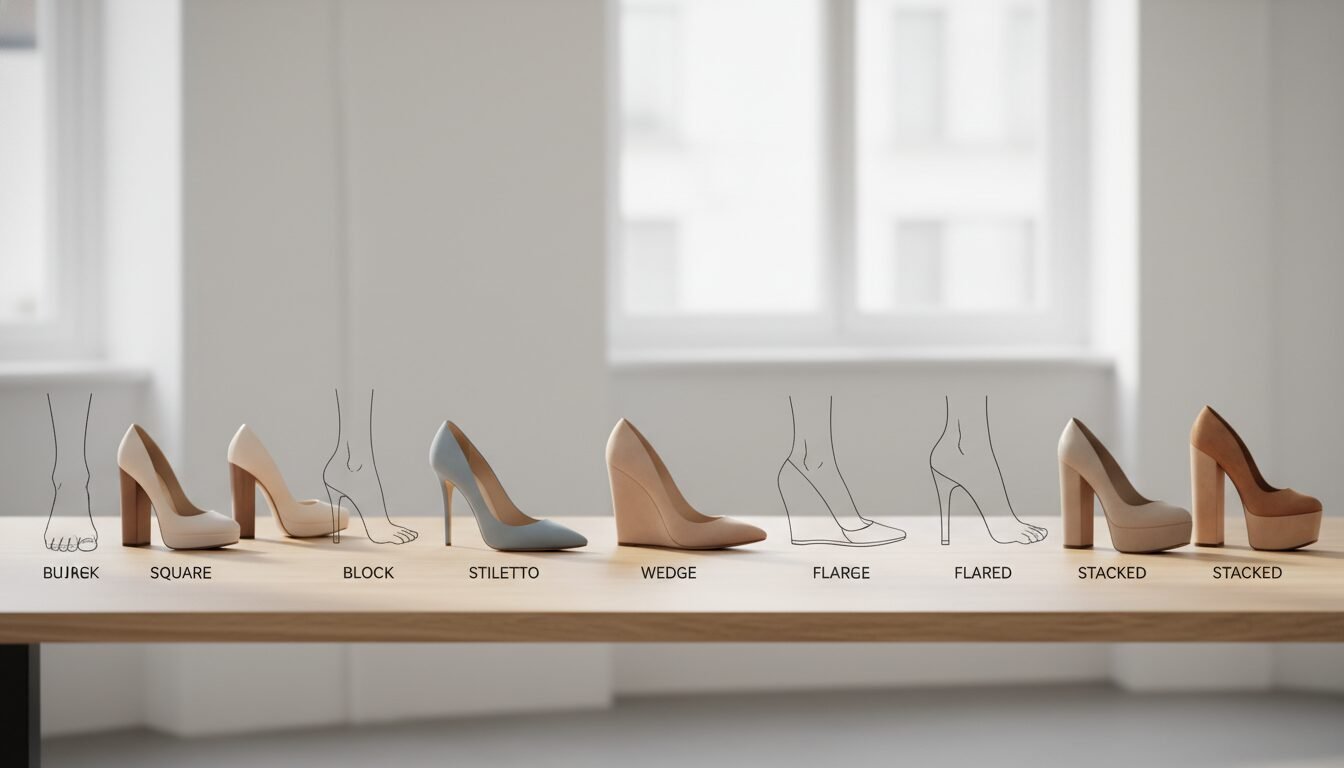
Choosing the right types of heels starts with understanding your own foot, not just the trend. Taking into account your arch type, foot width, and personal comfort threshold transforms a potentially painful purchase into a wardrobe staple you reach for again and again.
Assess Your Arch and Width
If you have flat feet, look for heels with built-in arch support or a platform that reduces strain. Women with high arches often feel more comfortable in a moderate heel, around 2–3 inches, that doesn’t force the foot into an extreme angle. For wide feet, avoid pointed toe boxes and instead choose almond or rounded toe shapes paired with block or wedge heels, which offer more lateral stability.
Heels for Specific Foot Conditions
Certain types of heels work better for common foot conditions. If you have bunions, wide toe boxes are non-negotiable: block heels and wedges in soft leather or stretch fabric minimize pressure on the joint. For those managing plantar fasciitis, stylists and podiatrists alike recommend a heel height between 1 and 2 inches with a cushioned insole, making kitten heels and low block heels the most practical options. Metatarsalgia, or ball-of-foot pain, responds well to platform styles that reduce the foot’s forward pitch. Always prioritize a shoe with a removable insole so you can swap in custom orthotics if needed.
Step-by-Step: Find Your Ideal Heel Fit
- Measure both feet at the end of the day, when they’re slightly swollen. Use a Brannock device or a printable sizing chart.
- Identify your arch type (flat, neutral, high) by examining your wet footprint or consulting a podiatrist.
- Choose a heel shape that supports your arch: high arches do well with a slight curve under the midfoot; flat feet need a sturdier heel base like block or wedge.
- Test the pitch: Stand on a hard floor and notice if your weight is evenly distributed or if you feel excessive pressure on the ball of the foot.
- Walk on different surfaces in-store or at home, both carpet and hard floor, to gauge grip and balance before committing.
Heel Height and Platform: What’s Your Comfort Zone?
A heel height under 2.5 inches is generally comfortable for all-day wear, especially when paired with a slight platform. Platforms reduce the effective heel gradient by 1–2 inches, meaning a 4-inch platform heel may feel closer to a 2.5-inch height. According to Clarks’ heel guide, block and wedge styles in the 2–3.5 inch range are among the easiest to wear because their wider base prevents wobbling.
How to Walk in Heels: Technique Tips
Walking confidently in different types of heels is a skill, and a few simple adjustments make a real difference. Start by placing your heel down first, then rolling through to your toe in a smooth, controlled motion. Many first-time heel wearers make the mistake of landing flat-footed, which creates a heavy, uncomfortable stride.
- Shorten your stride slightly. Heels naturally shift your center of gravity forward, so a shorter, more deliberate step keeps you balanced.
- Engage your core. A lifted posture, shoulders back and core lightly engaged, distributes your weight more evenly and reduces ankle fatigue.
- Practice on carpet first. Carpet provides grip and forgiveness while you build muscle memory before tackling cobblestones in Santorini.
- Choose the right surface match. Stilettos and thin heels sink into grass and soft ground. Block heels, wedges, and platforms handle outdoor terrain far better.
- Break them in at home. Wear new heels for 15–20 minutes daily for a week before a long event. Thick socks help stretch tight spots in leather styles.
“The secret to walking in heels isn’t the shoe, it’s the posture. Stand tall, keep your gaze forward, and let the heel do the work.” – Stylists at Vogue consistently recommend this approach for women new to higher heel heights.
Styling Different Types of Heels for Every Occasion
Different types of heels call for different outfit pairings. Mastering a few go-to formulas means you’ll never stare at your closet wondering what to wear, whether you’re heading to a rooftop bar in Tulum or a garden wedding in the Cotswolds.
Office-Ready Heels: Block and Kitten
For a polished 9-to-5 look, pair block-heel loafers or kitten-heel pumps with tailored trousers or a midi pencil skirt. Solid neutrals, black, beige, navy, keep the look professional, while a low-cut vamp elongates the leg line. Block heels in the 2–2.5 inch range offer enough lift to feel dressed up without causing fatigue during long commutes.
Evening Glamour: Stilettos and Platforms
Stiletto heels instantly dial up the drama. Team a classic black stiletto pump with a little black dress for a timeless cocktail look, or choose a metallic platform sandal to edge up a sleek jumpsuit. Keep in mind that stilettos concentrate pressure on a tiny point. A gel insert under the ball of the foot makes a real difference if you’ll be standing for hours.
Weekend Casual: Wedges and Chunky Heels
Wedge espadrilles and cork-soled sandals are made for Saturday brunch and farmers’ market strolls. Their solid, supportive base handles grass, cobblestones, and uneven terrain better than a thin heel. Pair with a floral sundress or cropped jeans and a linen blouse for an effortless daytime look that feels right at home in St. Barts or your own neighborhood.
Wedding Guest and Formal: Strappy Heels and Pumps
Ankle-strap heels and slender-strap sandals give a feminine, dressed-up feel without overwhelming the outfit. For outdoor ceremonies, a block-heel strappy sandal offers the same elegance with practical grip on grass. Metallic, patent leather, or satin finishes align perfectly with festive settings and photograph beautifully in natural light.
The Best Heel Types for Vacation and Resort Wear
Packing for a Mediterranean coastal escape or a tropical resort means choosing types of heels that marry style with suitcase smarts. Lightweight, packable, and versatile silhouettes top the list every time.
Why Wedges and Espadrilles Excel in Warm Climates
Wedge heels are the undisputed favorite of resort style. Their continuous sole stops you from sinking into sand or grass, while materials like braided jute and raffia echo seaside aesthetics perfectly. In destinations like Santorini or Capri, a cork wedge or espadrille mule slides easily from a daytime boat trip to a sunset dinner. Heel heights between 2 and 3.5 inches keep the look wearable, even on cobbled streets. Espadrille wedges under $100 are one of the best accessible-luxury investments you can make for a summer travel wardrobe.
Resort-Ready Heels: Mules, Slingbacks, and Open-Toe Options
When packing light, choose types of heels that work with multiple outfits. Mule heels (backless) slip on in seconds, making them ideal for beach-to-bar transitions. Slingbacks offer a secure fit with a delicate strap, pairing beautifully with linen trousers or a wrap dress. Open-toe heels in raffia or perforated leather promote airflow, keeping feet cool in humid climates. Stick to a color palette of tan, white, or metallic to maximize outfit pairings across your entire trip.
“Resort dressing is about editing down to pieces that work harder than one occasion. The right heel, a wedge or a strappy block, can carry you from the pool deck to a candlelit terrace without changing a thing.” – Editorial perspective, Harper’s Bazaar resort fashion coverage.
Caring for Your Heels: Maintenance and Longevity Tips
Investing in quality types of heels pays off, but only if you maintain them properly. With the right care, a well-made pair can last several seasons and still look polished on day one of your next trip.
Cleaning by Material
- Leather: Wipe with a damp cloth and use a matching polish to restore sheen. Condition every few months to prevent cracking.
- Suede: Brush gently with a suede brush and treat with a waterproofing spray before first wear.
- Fabric and Satin: Spot clean with a mild detergent. Avoid submerging in water, which can weaken adhesives and distort shape.
Protective Tips: Sole Guards, Heel Caps, Anti-Slip Pads
Apply a rubber sole guard to extend the life of leather soles. Heel caps protect the tip of stiletto heels from wearing down rapidly. Many cobblers replace these for under $15, making it one of the most cost-effective shoe care investments available. Anti-slip grip pads inside the shoe or on the sole add traction and prevent slipping on polished floors or wet surfaces.
Storage: Dust Bags, Shoe Trees, and Climate Control
Store heels in individual dust bags or a shoe cabinet away from direct sunlight, which can fade dyes and dry out leather. Insert cedar shoe trees to absorb moisture and maintain shape. Avoid stacking shoes, which can distort heels and uppers over time. If you live in a humid environment, a small dehumidifier in the closet protects leather and suede finishes from mold.
Pros and Cons of Wearing Heels
Pros
- Instant elevation, literally and figuratively. Even a 1.5-inch kitten heel changes your posture, lengthens your silhouette, and adds a polished finish to almost any outfit.
- Versatility across occasions. The range of types of heels available means there’s a silhouette for every setting, from a beach club in Tulum to a boardroom in Milan.
- Expressive styling potential. Heel shape, material, and color are powerful style signals. A sculptural cone heel in terracotta says something entirely different from a classic black stiletto pump.
- Investment value. Premium heels, particularly those with stitched soles and replaceable heel tips, can last 2–3 times longer than fast-fashion alternatives, making them a smarter long-term spend.
Cons
- Comfort trade-offs at height. Stilettos and heels over 3.5 inches concentrate significant pressure on the ball of the foot, which can cause fatigue during extended wear.
- Terrain limitations. Thin heels sink into grass, gravel, and sand. Certain types of heels, particularly stilettos and cone heels, are simply not built for outdoor events or cobblestone streets.
- Maintenance requirements. Leather, suede, and satin all require specific care routines. Neglecting them shortens lifespan significantly.
- Sizing complexity. Heel fit varies more than flat shoe fit. Width, toe box shape, and arch support all need to align, which can make online shopping more challenging.
Frequently Asked Questions
What are the most comfortable types of heels for all-day wear?
Block heels, wedge heels, and platforms with a pitch under 2.5 inches typically provide the best support for all-day wear. A wider base and softer insole reduce foot fatigue during extended standing or walking, making these types of heels the top choice for events, travel days, and long city explorations.
How do I choose between a stiletto and a block heel?
Stilettos are ideal for short, sit-down events where aesthetics take priority over endurance. Block heels suit longer outings where stability matters more, think office days, outdoor weddings, or exploring cobblestone streets in Positano. If you want the height of a stiletto with more comfort, a platform stiletto splits the difference nicely.
What heel height is best for beginners?
Start with a kitten heel at 1.5–2 inches or a low block heel around 2 inches. These heights let you practice balance and build confidence without the steep angle of taller options. According to Clarks’ styling guides, these are also the types of heels most recommended for women new to elevated footwear.
Can I wear heels if I have wide feet?
Yes, and you have plenty of great options. Opt for round or almond toe boxes and wider heel bases like block, wedge, or cone silhouettes. Brands like Clarks and Naturalizer offer wide-width fittings across multiple types of heels, making it easier to find a comfortable, stylish fit.
Which types of heels work best for resort and vacation packing?
Wedge heels, espadrille mules, and block-heel sandals are the smartest types of heels to pack for resort travel. They handle varied terrain, work across multiple outfit formulas, and tend to be lighter and more packable than structured pumps. Stick to neutral or metallic tones to maximize versatility across your entire trip wardrobe.
Are expensive heels worth the investment?
Premium heels use higher-grade materials, better construction such as stitched soles versus glued, and replaceable heel tips, which can extend lifespan by roughly 2–3 times compared to fast-fashion alternatives. For types of heels you plan to wear frequently, investing in quality pays off across multiple seasons.
Ready to find your perfect pair? Shop Lexazi’s curated sandal and heel collection at lexazi.com. Free shipping on orders over $75.