A moissanite engagement ring is a bridal ring set with a lab-created silicon carbide gemstone, prized for its extraordinary sparkle and accessible price. Discovered in a meteorite crater in 1893, moissanite rates 9.25 on the Mohs scale and outshines diamond in both fire and brilliance.
Key Takeaways
- Moissanite engagement rings cost up to 90% less than comparable diamond rings, with center stones starting around $300.
- Lab-created moissanite is fully conflict-free and produced without the environmental toll of traditional mining.
- At 9.25 on the Mohs scale, moissanite is the second-hardest gemstone used in jewelry and built for everyday wear.
- Moissanite’s refractive index (2.65–2.69) and dispersion (0.104) produce more fire and rainbow flash than diamond.
- Leading brands including Charles & Colvard, MSBLUE, and Kobelli offer styles from classic solitaires to fully custom bespoke designs.
The Origin and Science of Moissanite
A Meteorite Discovery
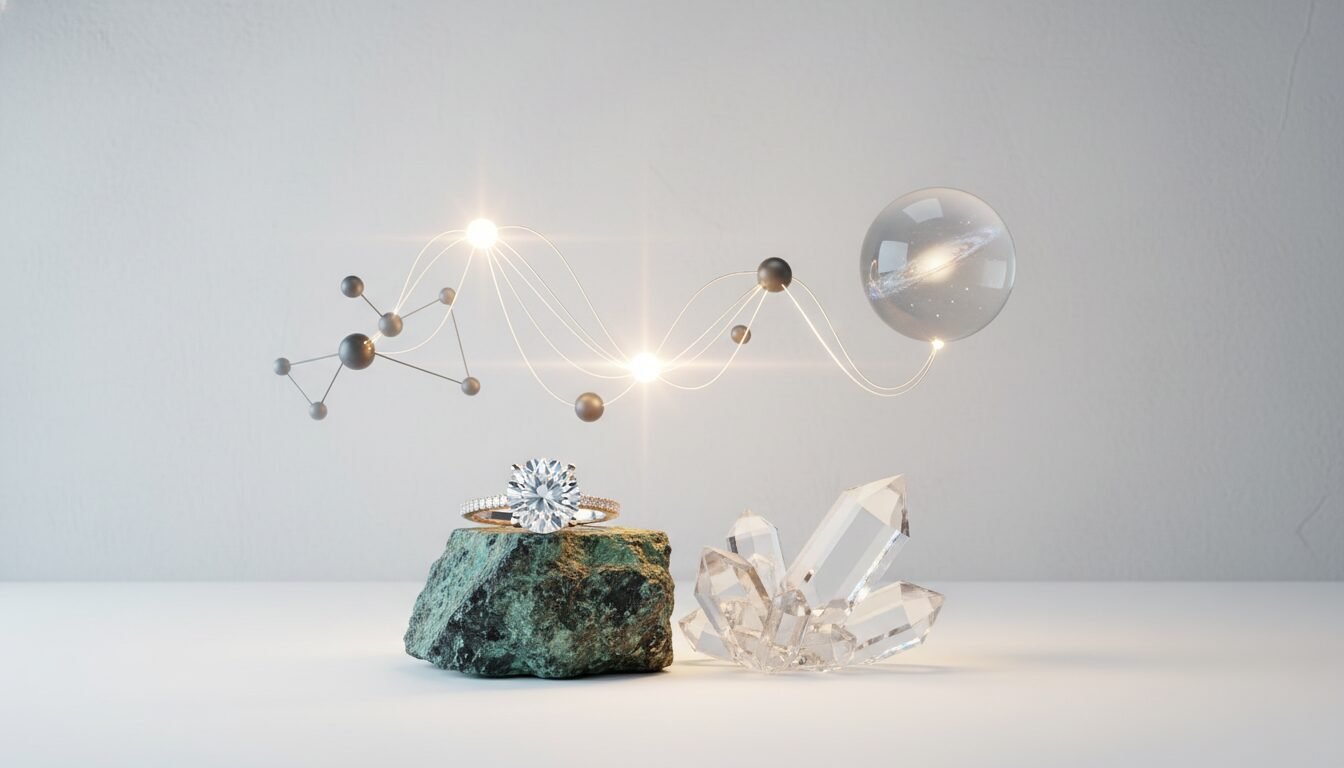
In 1893, French scientist Henri Moissan discovered tiny crystals inside a meteor crater in Canyon Diablo, Arizona. He initially mistook them for diamonds. The material was later identified as silicon carbide (SiC) and named moissanite in his honor. Natural moissanite is extraordinarily rare in the earth’s crust, so virtually every moissanite engagement ring you see today features a lab-created stone. Commercial production launched in the late 1990s, and Charles & Colvard brought the gemstone into the bridal market with their Forever One line in the early 2000s, a milestone that changed how couples think about fine jewelry.
Optical Properties: Fire, Brilliance, and Scintillation
Moissanite’s optical performance is defined by three qualities: brilliance, fire, and scintillation. Brilliance is the white light reflected back to your eye. Fire is the dispersion of light into rainbow colors. Scintillation is the lively sparkle you see when the stone moves. Moissanite’s refractive index ranges from 2.65 to 2.69, compared to diamond’s 2.42. Its dispersion is 0.104, more than twice diamond’s 0.044. In practical terms, a moissanite engagement ring flashes more colored light than a diamond of the same size, which is exactly why so many women fall in love with it the moment they see it in sunlight.
“Moissanite’s refractive index (2.65–2.69) and dispersion (0.104) exceed those of any other gemstone commonly used in jewelry, producing a rainbow effect that diamond cannot match.” — Gemological Institute of America, GIA Moissanite
Moissanite vs. Diamond: A Detailed Comparison
Appearance and Sparkle
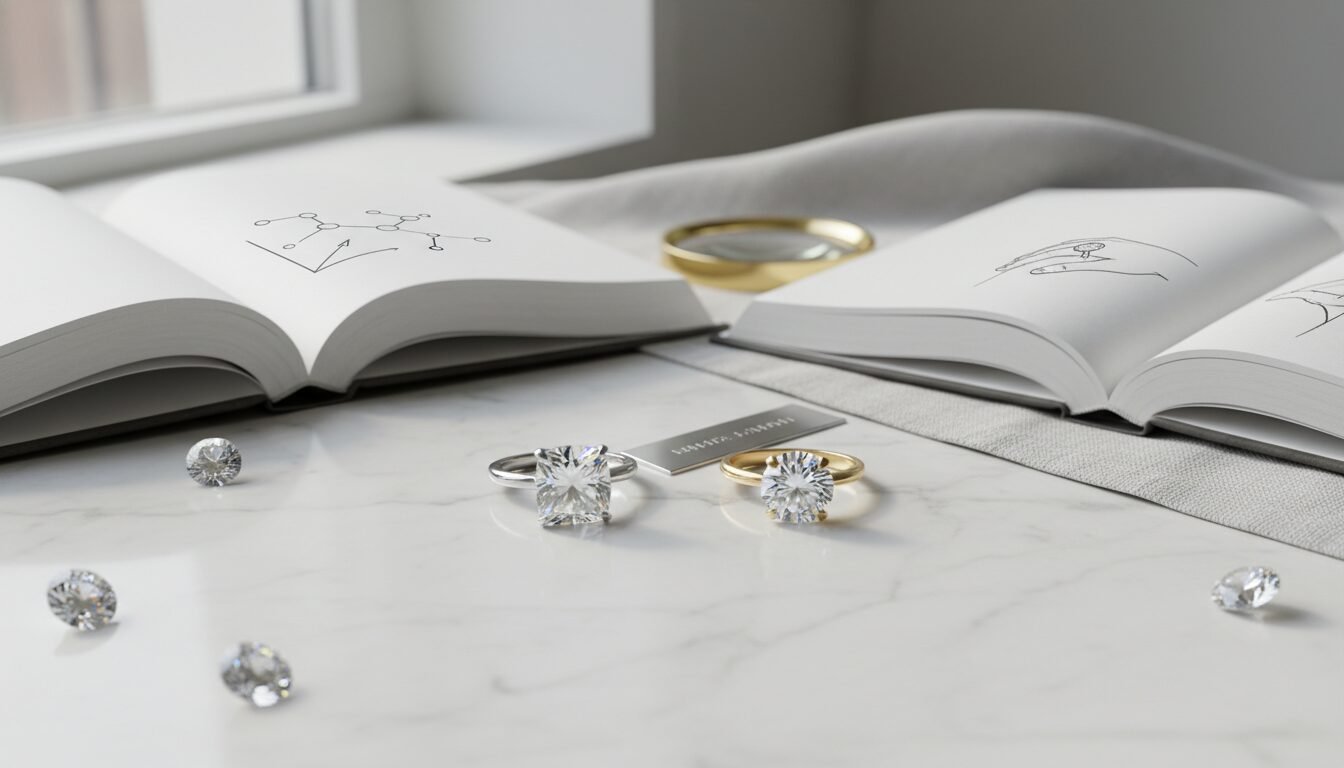
Under natural light, both stones can appear colorless, but lower-grade moissanite may carry a faint yellow or gray tint. High-quality Forever One moissanite from Charles & Colvard is graded in the D-E-F color equivalent range, meaning it reads as truly colorless to the naked eye. Because of its higher dispersion, a moissanite engagement ring emits noticeable rainbow flashes that many wearers adore. Some prefer the subtler white sparkle of diamond. That’s a matter of personal taste, not quality. One technical note: moissanite is doubly refractive, which can cause faint facet doubling visible only under magnification, not something you’d ever notice on your finger.
Hardness and Longevity
Diamond rates 10 on the Mohs scale, the hardest mineral on earth. Moissanite scores 9.25, making it the second-hardest gemstone used in jewelry. For context, sapphire and ruby sit at 9.0. That 0.25-point difference means moissanite is exceptionally scratch-resistant and built for decades of daily wear. According to the Gemological Institute of America, moissanite also has excellent toughness, meaning it resists chipping and breaking far better than many colored gemstones. Your moissanite engagement ring will look as brilliant on your 25th anniversary as it did the day you said yes.
Cost Comparison
A 1-carat diamond in the G-H, SI1 range typically costs between $4,000 and $6,000 for the stone alone. A moissanite center stone of equivalent size runs $300 to $600. Set in a 14K gold solitaire, a finished moissanite engagement ring often totals $800 to $1,600, compared to $4,500 to $7,000 for a comparable diamond ring. According to The Knot’s 2025 Real Weddings Study, the average engagement ring budget is $5,500. Choosing a moissanite engagement ring can free up thousands for the honeymoon, the wedding, or a down payment on your first home together.
Ethical and Environmental Benefits
Conflict-Free and Lab-Created
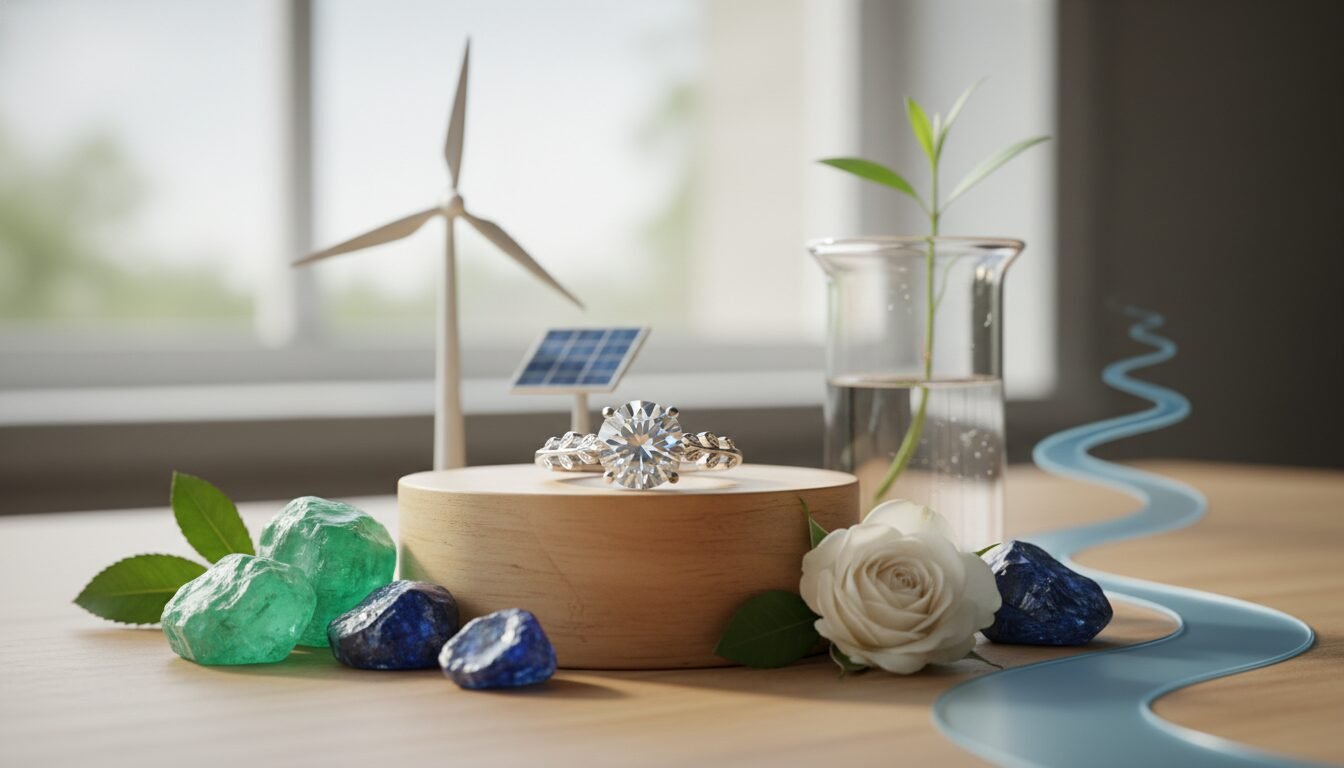
Every moissanite engagement ring sold today features a lab-created stone, which means zero connection to conflict zones or the human rights concerns tied to some diamond mining operations. The origin is fully transparent. Brands like MSBLUE and Gema&Co go further, crafting their rings using recycled precious metals to reduce the environmental footprint at every step. When you choose a moissanite engagement ring, you know exactly where your stone came from: a controlled laboratory, not a mine.
Sustainability and Resource Use
Lab creation of moissanite requires significantly less land disruption, water use, and energy than traditional mining. Charles & Colvard, the original pioneer of gem-quality moissanite, offers settings in recycled gold, reducing the ring’s overall environmental impact. For couples who care about the planet as much as they care about style, a moissanite engagement ring is one of the most responsible choices in fine jewelry today. As of mid-2026, sustainable bridal jewelry is one of the fastest-growing segments in the fine jewelry market, according to WWD’s annual industry report.
Durability and Everyday Wear
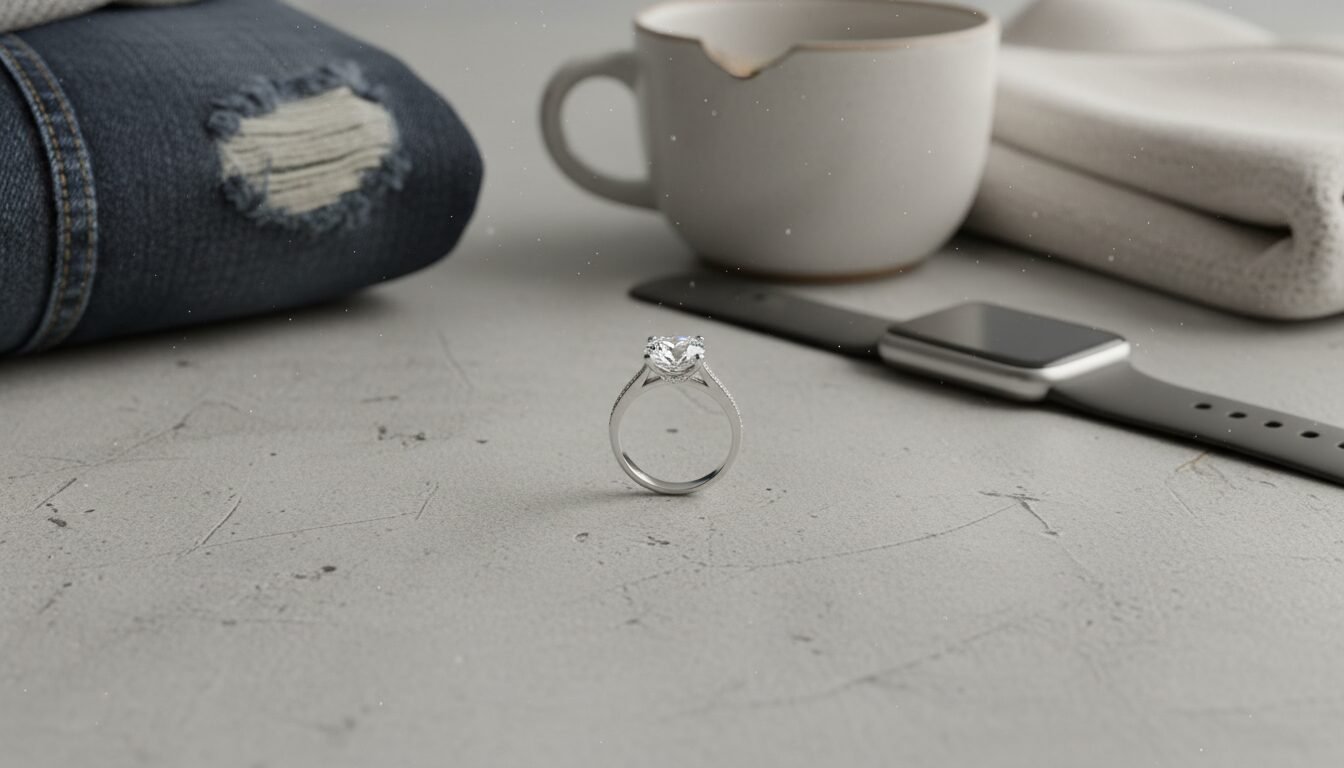
Mohs Hardness and Scratch Resistance
At 9.25 on the Mohs scale, moissanite handles real life beautifully. Daily activities like typing, gardening, cooking, or gym workouts are unlikely to leave a mark. Only diamond (10) and a handful of synthetic compounds like cubic boron nitride exceed it in hardness. The GIA confirms moissanite’s excellent toughness, meaning it resists chipping better than many popular colored gemstones. Your moissanite engagement ring is not just beautiful. It’s built to last.
Care and Maintenance
Keeping your moissanite engagement ring sparkling is simple. Soak it in warm water with a drop of mild dish soap, gently scrub with a soft toothbrush, and rinse clean. Avoid chlorine and harsh chemical cleaners. Because moissanite resists scratching, it holds its polish far longer than softer stones like emerald or morganite. Ultrasonic cleaners are safe to use as long as the setting is secure. A professional check every 12 months keeps prongs tight and your stone exactly where it belongs.
Styles and Settings for Moissanite Engagement Rings
Popular Ring Styles in 2026
This season’s most-wanted moissanite engagement ring styles lean into both romance and practicality. Hidden halo designs, where a ring of small accent stones sits beneath the center gem and peeks out from the side, are having a major moment. Toi et moi two-stone rings, symbolizing two lives joining, are rising fast. Bezel settings offer a sleek, modern silhouette while protecting the stone’s girdle. Classic solitaires and pavé bands remain perennial favorites. MSBLUE’s six-prong solitaire moissanite engagement ring has accumulated over 149 customer reviews, a strong signal that traditional styles still lead in demand.
Customization and Bespoke Designs
One of the great joys of choosing a moissanite engagement ring is how far your budget stretches when it comes to customization. Jewelers including Staghead Designs and Kobelli offer fully bespoke options. You can select the center stone shape from round, oval, cushion, emerald, pear, marquise, radiant, princess, or asscher, then choose your metal: 14K or 18K gold, platinum, or recycled silver. Hidden anniversary stones, hand engraving, and unique band textures like nature-inspired vines or art-deco geometric patterns add layers of personal meaning. East West Gem Co in Orange County, California, specializes in low-profile, flush-to-the-finger settings that are as practical as they are beautiful, ideal for active, hands-on lifestyles.
How to Choose the Perfect Moissanite Engagement Ring
Determining Your Budget
Moissanite engagement rings range from under $300 for sterling silver designs to over $4,000 for large carat weights in platinum. Most 14K gold settings with a 1 to 2 carat center stone fall between $800 and $2,500. Setting a clear budget early helps narrow your options quickly. Keep in mind that stone quality grade and setting complexity influence price more than carat size alone, so a beautifully cut 1-carat moissanite in a well-crafted setting often outshines a larger stone in a simpler mount.
Selecting the Right Stone Shape and Size
Shape changes everything about how a moissanite engagement ring looks on the hand. A 1-carat round moissanite measures approximately 6.5mm across. An elongated shape like oval or marquise reads as larger because of its length-to-width ratio, which is a smart trick for maximizing visual impact. Consider the wearer’s lifestyle and hand proportions: a low-profile bezel or half-bezel setting suits hands-on work, while a floating halo adds drama for special occasions. Charles & Colvard’s Forever One moissanite is available in calibrated sizes from 4mm (0.25 ct) up to 15mm (8 ct), giving you precise control over the final look.
Matching the Metal and Setting
Platinum and white gold amplify moissanite’s icy, brilliant sparkle. Yellow gold creates a warm, vintage-inspired contrast that feels deeply romantic. Rose gold sits somewhere in between, soft and feminine, with a warmth that flatters most skin tones. Two-tone rings offer the best of both worlds. Pay attention to setting height as well: a high-profile setting allows light to enter from all sides and maximizes fire, while a lower setting reduces snagging and suits an active lifestyle. Brands like Gema&Co offer online “build your own ring” tools so you can preview combinations before committing.
Pricing and Value: What to Expect
Price Ranges by Carat and Setting
Finished moissanite engagement ring prices depend on center stone carat weight, metal type, and setting complexity. At Helzberg, a 1-carat solitaire in 10K white gold retails around $1,299. At Moissanite Outlet, a 0.5-carat stone in 14K gold can start as low as $299. At the high end, Kobelli’s Shannon 3-Stone design at 6.7 total carats retails near $3,999. The range is wide, which means there is a moissanite engagement ring for nearly every budget without sacrificing beauty or quality.
“According to The Knot’s 2025 Real Weddings Study, the average engagement ring costs $5,500, so a moissanite ring can free up significant budget for the wedding or honeymoon.” — The Knot, Real Weddings Study
Moissanite vs. Diamond Price Comparison Table
| Attribute | 1-Carat Diamond (G-H, SI1) | 1-Carat Moissanite (Forever One) |
|---|---|---|
| Center Stone Cost | $4,000 – $6,000 | $300 – $600 |
| Setting (14K Gold Solitaire) | $500 – $1,000 | $500 – $1,000 |
| Total Ring Price | $4,500 – $7,000 | $800 – $1,600 |
| Brilliance (Refractive Index) | 2.42 | 2.65 – 2.69 |
| Hardness (Mohs) | 10 | 9.25 |
| Ethical Sourcing | Often mined; lab options available | Lab-created, conflict-free |
Pros and Cons of a Moissanite Engagement Ring
Pros
- Exceptional value: A moissanite engagement ring costs 70–90% less than a comparable diamond ring, freeing budget for other life priorities.
- Superior fire: With a dispersion of 0.104 versus diamond’s 0.044, moissanite produces more rainbow flash and visual drama.
- Outstanding durability: At 9.25 on the Mohs scale, it’s scratch-resistant and built for decades of daily wear.
- Fully ethical: Lab-created and conflict-free, with no mining-related environmental or human rights concerns.
- Wide style range: Available in every shape, metal, and setting style, from under $300 to custom platinum designs over $4,000.
Cons
- More colorful sparkle: The rainbow flash that many love can feel less diamond-like to those who prefer a subtler white brilliance.
- Double refraction: Under magnification, facet doubling is visible, a technical difference from diamond that trained eyes may notice.
- Resale value: Like most gemstones, moissanite does not hold resale value the way rare investment-grade diamonds can.
- Perception: Some people still associate moissanite with being a diamond alternative rather than a gemstone in its own right, though this perception is shifting fast.
Financing and Payment Options
Many moissanite engagement ring retailers offer flexible financing to make your purchase even more accessible. Helzberg, for example, provides credit financing options that let you spread payments over time. Brands like MSBLUE and Kobelli frequently run seasonal promotions and layaway-style payment plans. Because moissanite engagement rings start at accessible price points, from under $300 for a sterling silver design to around $1,600 for a 1-carat stone in 14K gold, many couples find they can pay in full without financing at all. Still, knowing options exist makes the decision feel less pressured.
Is a Moissanite Engagement Ring Right for You?
Choosing a moissanite engagement ring comes down to three things: budget, ethics, and aesthetic. If you want maximum fire, a larger stone, and the peace of mind that your jewelry is free from environmental and human harm, moissanite delivers on every count. The savings can fund a honeymoon in Positano, a first home, or simply a more elaborate setting than a diamond budget would allow. According to Elle and Harper’s Bazaar’s bridal coverage, moissanite’s share of the engagement ring conversation has grown significantly over the past three to four years, with more couples actively choosing it as a first choice rather than a compromise. This season, a moissanite engagement ring is not the alternative. It’s the choice.
Frequently Asked Questions
Are moissanite engagement rings real?
Yes, moissanite is a genuine gemstone with its own distinct properties and identity. It is not a fake diamond but a silicon carbide crystal with a documented history going back to Henri Moissan’s 1893 discovery. A moissanite engagement ring is as real as any fine jewelry piece set with sapphire, ruby, or emerald.
Do moissanite rings look like diamonds?
They look similar to the untrained eye, but a moissanite engagement ring produces more fire and rainbow flash than diamond due to its higher dispersion of 0.104 versus diamond’s 0.044. Under magnification, moissanite shows double refraction, which can create a faint hazy effect. In everyday wear, most people cannot tell the difference without a tester.
How much does a moissanite engagement ring cost?
Prices range from around $300 for simple sterling silver designs to over $4,000 for large, custom platinum creations. A typical 1-carat center stone in a 14K gold solitaire setting costs between $800 and $1,600, a fraction of the $4,500 to $7,000 you’d spend on a comparable diamond ring.
Can you wear a moissanite ring every day?
Absolutely. Its hardness of 9.25 on the Mohs scale makes a moissanite engagement ring resistant to scratches from daily activities. Regular cleaning with mild soap and water, plus a professional inspection every 12 months, will keep it secure and sparkling for decades.
Is moissanite ethical?
Yes. Every moissanite engagement ring features a lab-created stone, meaning it is conflict-free and produced without mining. When set in recycled metals, as offered by brands like Charles & Colvard and MSBLUE, it becomes one of the most sustainable choices in fine jewelry.
Does moissanite lose sparkle over time?
No. Moissanite does not fade, cloud, or lose its optical properties. Everyday oils and dirt can temporarily dull the surface, but a quick soak in warm soapy water restores the brilliance instantly. Your moissanite engagement ring will sparkle as brightly in 20 years as it does today.
Ready to find yours? Shop the collection at Lexazi and discover moissanite engagement rings crafted for women who want beauty, ethics, and value in one stunning piece. Free shipping on orders over $75.