Foot heel sore is pain or tenderness in the heel caused by overuse, unsupportive footwear, or biomechanical issues. It ranges from a dull ache to sharp, stabbing sensations that stop you mid-step.
Key Takeaways
- Plantar fasciitis is the most common cause of heel soreness, resulting from inflammation of the tissue along the bottom of the foot.
- Wearing unsupportive shoes, especially on hard surfaces, significantly increases your risk of developing heel pain.
- Most cases improve with nonsurgical care like rest, stretching, and supportive footwear within a few weeks.
- Persistent pain lasting more than three months often requires professional evaluation and custom orthotics.
- Simple home strategies, including night splints and calf stretches, can prevent and relieve foot heel sore.
What Causes Foot Heel Sore?
The Anatomy of the Heel and How It Absorbs Stress
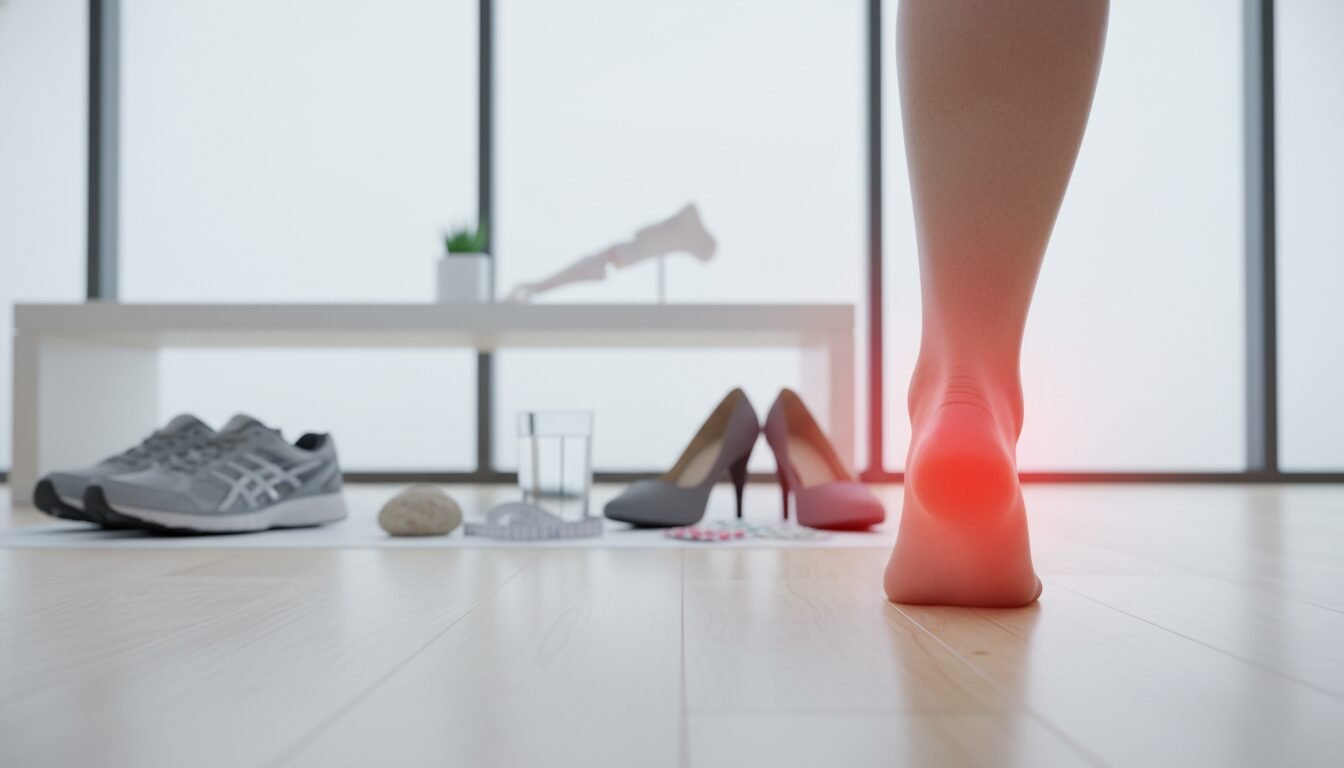
The heel is a complex structure designed to bear your body’s weight and absorb impact with every step. The calcaneus (heel bone) is cushioned by a fat pad and connected to the arch by the plantar fascia, a thick band of tissue running from the heel to the toes. When excessive strain is placed on these structures, microtears and inflammation lead to the sensation of a foot heel sore. According to the American Podiatric Medical Association (APMA), heel pain is generally the result of faulty biomechanics that place too much stress on the heel bone and surrounding soft tissues.
Overuse and Mechanical Factors
Sudden increases in activity are among the most common triggers. Starting a new running regimen, walking long distances on a Positano cobblestone tour, or standing all day on concrete floors at work can all provoke a foot heel sore. Even a simple wardrobe swap, like trading your supportive sneakers for completely flat sandals the moment you land in Santorini, can set off a cascade of strain. The repetitive damage accumulates over weeks before you feel it.
Medical Conditions That Contribute
Certain systemic conditions, including obesity, flat feet, high arches, and arthritis, alter foot mechanics and raise the likelihood of heel pain. Peripheral neuropathy from diabetes can cause burning or stabbing sensations in the heel that mimic other conditions, making accurate diagnosis especially important. Sever’s disease, a growth plate irritation, frequently causes foot heel sore in active children between the ages of 8 and 14.
“Heel pain is generally the result of faulty biomechanics (walking gait abnormalities) that place too much stress on the heel bone and the soft tissues that attach to it.” American Podiatric Medical Association (APMA)
Common Conditions Behind Heel Soreness
Plantar Fasciitis: The Leading Culprit
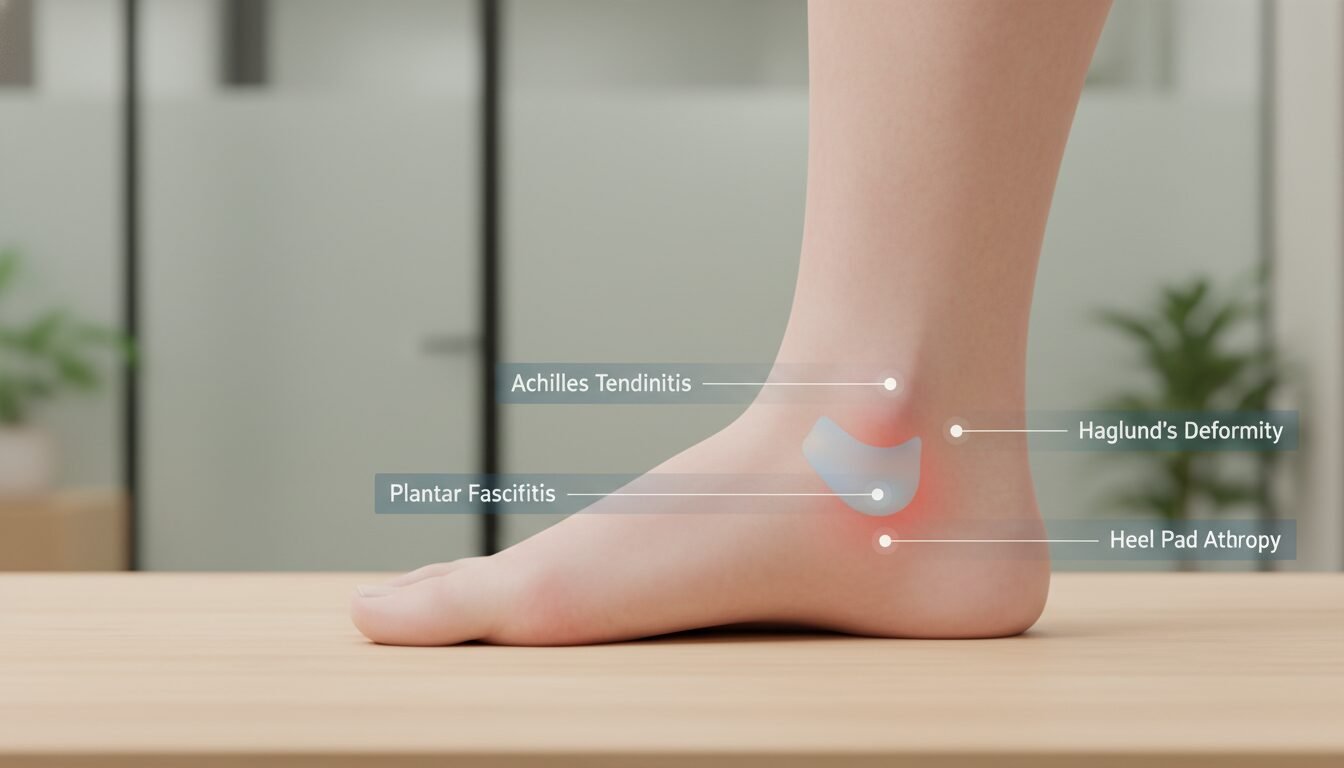
Plantar fasciitis is an inflammation of the plantar fascia, accounting for the majority of foot heel sore cases seen by podiatrists. It affects millions of people annually and is characterized by sharp pain during the first steps in the morning or after periods of rest. The pain often eases after moving but returns after extended standing. Overpronation, tight calf muscles, and wearing unsupportive shoes on hard surfaces are the most common contributors.
Achilles Tendinitis and Posterior Heel Pain
When the Achilles tendon, the body’s longest and strongest tendon, becomes irritated, pain concentrates at the back of the heel. This overuse injury is common among runners and basketball players, particularly after abruptly increasing training intensity. Morning stiffness and visible swelling are telltale signs. Left unaddressed, Achilles tendinitis can lead to chronic tendon thickening and persistent foot heel sore that takes months to resolve.
Heel Spurs, Bursitis, and Other Sources
Heel spurs are bony growths on the underside of the heel bone, often linked to chronic plantar fasciitis. Many spurs are painless, but some produce a knife-like sensation with each step. Bursitis involves inflammation of the fluid-filled sacs that cushion joints, causing tenderness and swelling at the back of the heel. Less frequently, stress fractures, tarsal tunnel syndrome (nerve compression), and fat pad atrophy can all mimic a foot heel sore. Getting the right diagnosis matters because each condition responds to different treatment.
Comparing Common Causes of Heel Pain
| Condition | Typical Pain Location | Key Symptoms | Common Triggers | First-Line Treatment |
|---|---|---|---|---|
| Plantar Fasciitis | Bottom of heel, near arch | Sharp morning pain, eases with activity | Overuse, flat feet, hard surfaces | Stretching, night splint |
| Achilles Tendinitis | Back of heel | Stiffness, swelling, pain when rising on toes | Sudden activity increase, tight calves | Rest, eccentric exercises |
| Heel Spurs | Underside of heel | Chronic dull ache or stabbing with weight-bearing | Long-term plantar fasciitis | Orthotics, anti-inflammatories |
| Bursitis | Back or bottom of heel | Tender, bruise-like swelling | Repetitive stress, ill-fitting shoes | Padding, rest |
| Stress Fracture | Side or back of heel | Gradual onset, persists at rest | Overtraining, osteoporosis | Immobilization, rest |
| Tarsal Tunnel Syndrome | Medial heel and arch | Burning, tingling, numbness | Nerve compression, ankle overpronation | NSAIDs, orthotics, possible surgery |
How Your Footwear Choices Affect Heel Pain
Unsupportive Sandals and Flats: A Summer Risk
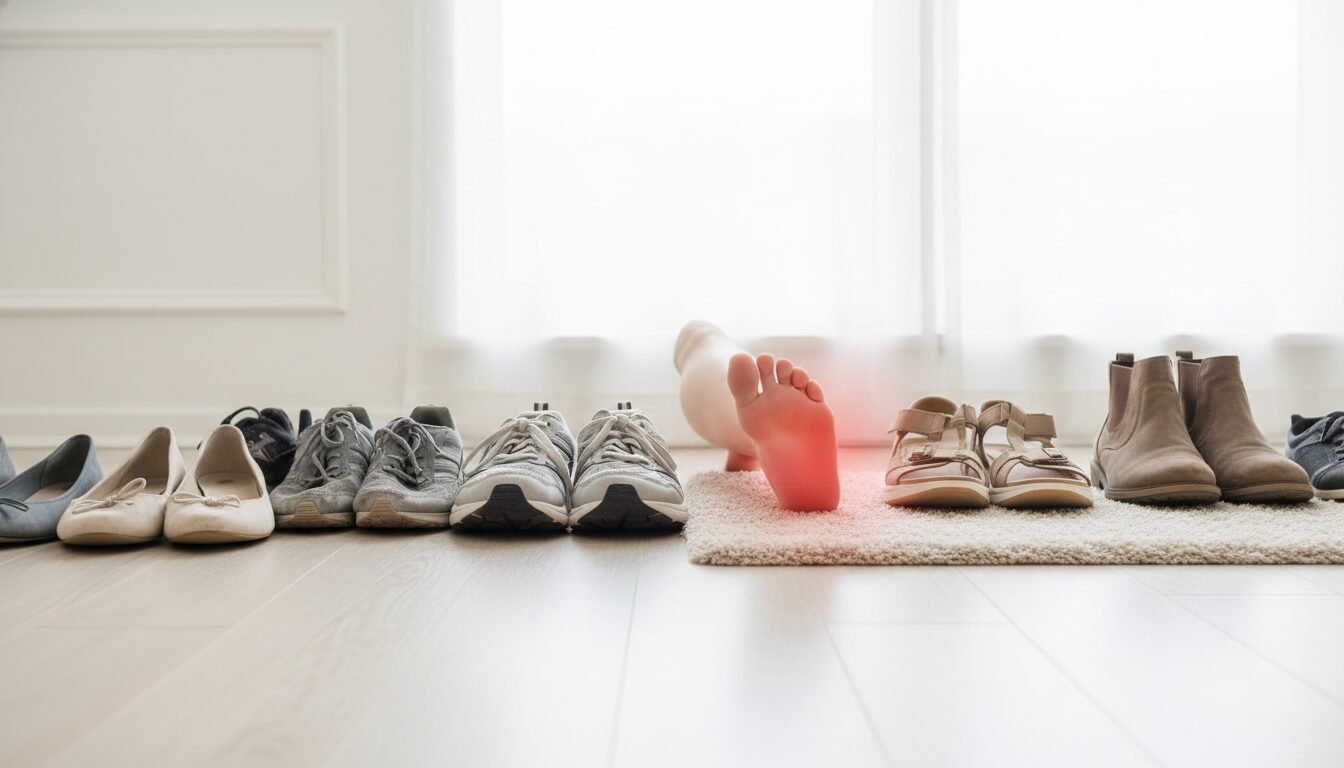
Flat, non-cushioned footwear like flip-flops or ballet flats provides minimal arch support, placing direct strain on the plantar fascia. In warm climates and resort settings, from the beaches of Tulum to the sun-bleached terraces of Mykonos, travelers often reach for the prettiest sandal without thinking about what’s underneath their foot. A foot heel sore can develop within days of walking extensively on pavement or tile in shoes lacking heel cups and contoured footbeds. For Mediterranean resort wear, look for espadrilles or sandals with built-in arch support and a slight heel lift to reduce tension on the fascia.
The Impact of Worn-Out Athletic Shoes
Even high-quality running shoes lose their shock-absorbing midsole after 300 to 500 miles of use. Continuing to exercise in compressed foam shifts impact forces directly to the heel, accelerating the onset of foot heel sore. Replacing shoes regularly, roughly every six months for frequent runners, is a simple preventive step that costs far less than treating chronic heel pain. Per guidance from sports medicine practitioners, checking the midsole for visible compression is a reliable way to know when it’s time for a new pair.
Selecting Resort-Ready Shoes with Arch Support
Vacation footwear doesn’t have to sacrifice style for comfort. Brands like Vionic and Birkenstock offer sandals with deep heel cups and orthotic-grade footbeds that look just as good on a St. Barts terrace as they feel underfoot. Wedge heels and platform espadrilles distribute weight more evenly than completely flat soles. When packing for a trip, include at least one pair of supportive walking shoes and alternate with fashion sandals to prevent continuous stress on the same soft tissues.
The Role of Vacation Activities in Triggering Heel Soreness
Walking on Sand and Uneven Surfaces
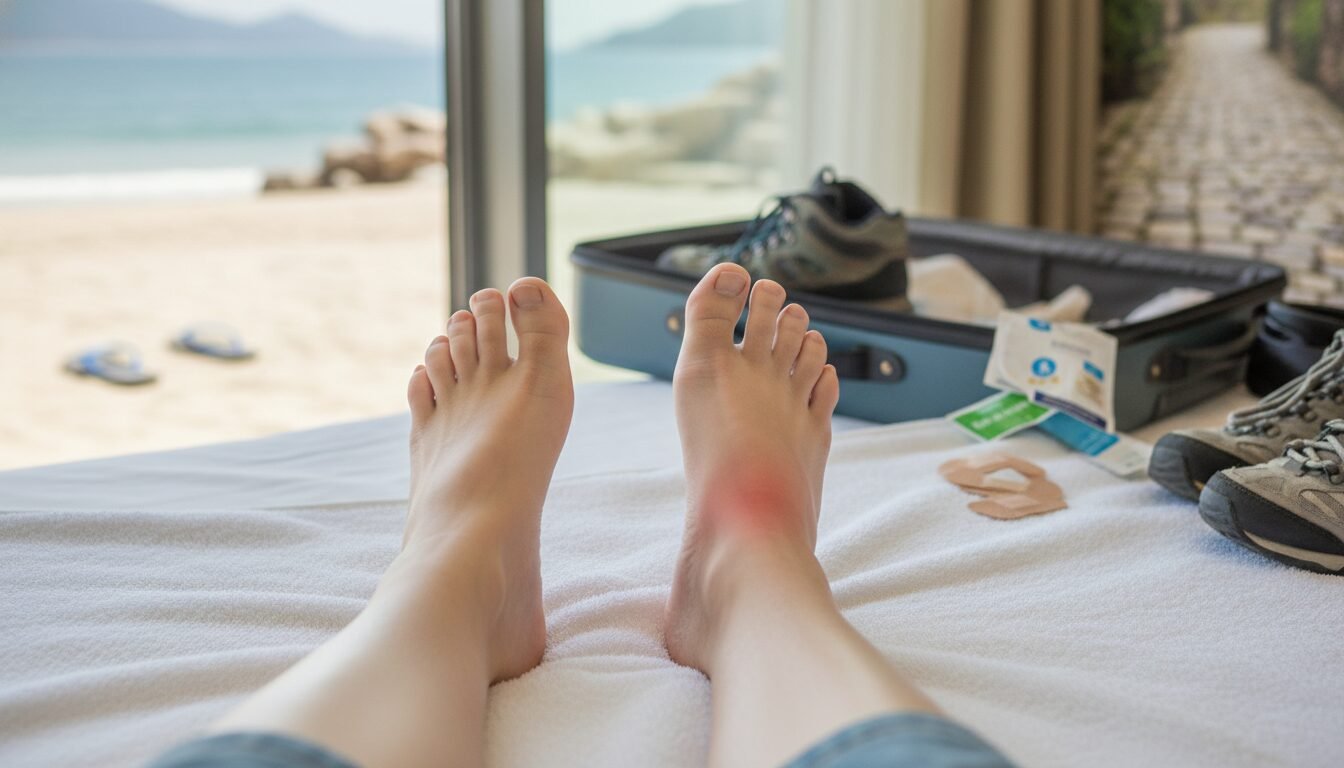
Strolling on soft sand forces your foot to work harder to stabilize, straining the plantar fascia and Achilles tendon. Beach walks are a common culprit behind sudden-onset foot heel sore, especially after a day spent barefoot. The irregular slope of a beach also alters your normal gait, increasing the risk of overuse injuries. Limiting barefoot beach time to 20 to 30 minutes at a stretch and wearing water shoes with a firm sole can make a real difference by the end of the day.
Sudden Increase in Sightseeing Miles
A busy day of sightseeing can easily push you past what your feet are conditioned to handle. This abrupt jump in activity without gradual conditioning often triggers heel inflammation, especially if you’ve been desk-bound for months before your trip. Wearing low-profile, cushioned sneakers designed for city walking, such as Hoka or New Balance models with plush heel padding, can reduce impact significantly. Taking short breaks and elevating your feet periodically also keeps swelling in check.
Barefoot Strolls and Pool Decks
Wet, slippery pool decks invite barefoot walking, but the hard, unyielding surface pummels the heel’s natural fat pad. Over time, fat pad atrophy can occur, leaving the bone less protected and more vulnerable to a foot heel sore with every step. Always slip on lightweight recovery sandals after swimming. They provide a protective layer and arch support that your feet genuinely need after hours in the water.
Simple Steps to Relieve Foot Heel Sore at Home
Follow these evidence-based steps to address mild to moderate heel pain without a doctor’s visit:
- Step 1: Rest, Ice, and Anti-Inflammatory Care. Reduce activities that involve heavy impact. Apply an ice pack wrapped in a towel to the sore area for 15 minutes, up to three times daily. Over-the-counter NSAIDs like ibuprofen can ease acute pain and reduce inflammation in the early stages.
- Step 2: Effective Stretching Exercises. Stretch the plantar fascia by pulling your toes back toward your shin while seated. For the calves, stand on a step with your heels hanging off and gently lower them down. Hold each stretch for a full 2 minutes and repeat three times per session, two to three times daily. Physical therapists note that shorter holds of 30 seconds are far less effective for tissue remodeling.
- Step 3: Night Splints and Supportive Braces. A night splint holds your foot at a 90-degree angle, keeping the plantar fascia gently stretched while you sleep. Wearing one consistently reduces the sharp first-step pain that makes mornings with a foot heel sore so miserable.
“It’s like death by a thousand cuts, not just one.” Dr. Sean Peden, foot and ankle surgeon at Yale Medicine, on the cumulative microtears that cause plantar fasciitis
When to See a Doctor for Heel Pain
Signs That Home Care Isn’t Enough
Mild foot heel sore often improves within 2 weeks of rest and home treatment. Pain that persists beyond 3 months is considered chronic and warrants a medical evaluation. Red flags include persistent swelling, an inability to bear weight, numbness, or pain that wakes you at night. Ignoring these signs can lead to compensatory gait changes that create secondary problems in your knees, hips, or lower back.
What to Expect During a Medical Exam
A foot specialist will review your medical history, assess your foot structure and gait, and palpate the painful area. X-rays may be ordered to rule out fractures or arthritis, though soft-tissue injuries won’t appear on imaging. In complex cases, an MRI or diagnostic ultrasound provides a clearer picture of tendon and fascia health. Based on the findings, a tailored treatment plan, usually starting with conservative measures, is developed.
The Role of Podiatrists and Orthopedic Specialists
Both podiatrists (DPMs) and orthopedic foot surgeons specialize in heel pain. Institutions like Cleveland Clinic and Yale Medicine offer comprehensive foot pain programs with access to advanced diagnostics and treatment. A specialist can prescribe custom orthotics, physical therapy, or procedures like shockwave therapy, so you’re not left guessing about what’s actually driving your discomfort.
Medical Treatments for Persistent Foot Heel Sore
Custom Orthotics and Physical Therapy
Custom orthotics are molded to your feet, correcting the biomechanical flaws that contribute to heel pain. Over-the-counter inserts typically cost $10 to $30, while custom devices range from $200 to $600 but provide targeted, lasting support. Physical therapy builds strength in the foot and calf muscles, improving stability and reducing strain on the plantar fascia over time.
Corticosteroid Injections and Shockwave Therapy
When inflammation is severe, a cortisone injection can deliver quick relief, though the effects are temporary and repeated injections carry risks. Extracorporeal shockwave therapy (ESWT) uses high-energy pulses to stimulate healing in chronic plantar fasciitis, a noninvasive option with solid clinical backing for stubborn cases. According to Cleveland Clinic, these treatments are typically covered by insurance when conservative therapies have already been tried and failed.
Surgery: A Rare Last Resort
Surgical intervention is necessary in fewer than 5% of heel pain cases, per orthopedic surgery guidelines. Procedures like plantar fascia release involve small incisions and require months of recovery and rehabilitation. Most patients successfully avoid surgery by diligently following nonsurgical protocols and addressing the root cause of their foot heel sore early, before the condition becomes chronic.
“Often, people think heel spurs are a cause of plantar fasciitis, but that’s not true. We have more and more evidence that shows plantar fasciitis is related to tightness, tension, and stress on what we call the heel cord, meaning the Achilles tendon and calf muscles.” Dr. Sean Peden, Yale Medicine
Preventing Heel Soreness: Long-Term Strategies
Daily Stretching and Strengthening Routines
Incorporating calf stretches and toe curls into your morning routine maintains tissue flexibility and reduces your risk of recurrence. Strong foot muscles act as natural shock absorbers, taking load off the heel with every step. Aim for at least 5 minutes of targeted exercises daily, increasing to 10 minutes if you have a history of foot heel sore. Consistency matters far more than intensity here.
Choosing Footwear for Work, Exercise, and Travel
Rotate between supportive athletic shoes, well-cushioned casual shoes, and activity-appropriate sandals. For those who stand for long hours on concrete floors, anti-fatigue mats and compression socks can meaningfully decrease heel impact over the course of a workday. When traveling to destinations like the Mediterranean or coastal resorts, pack footwear that blends style and support. Your heels will thank you after days of exploring uneven cobblestone streets in Dubrovnik or Amalfi.
Maintaining a Healthy Weight and Activity Level
Body weight has a direct and significant effect on heel stress. Maintaining a healthy BMI through low-impact activities like swimming or cycling reduces chronic strain on the plantar fascia and surrounding tissues. Gradually increasing exercise intensity, no more than 10% per week, gives your soft tissues time to adapt and helps you avoid sudden-onset foot heel sore after a period of inactivity.
Pros and Cons of Common Foot Heel Sore Treatments
Pros
- Most cases resolve fully with nonsurgical care, including rest, stretching, and supportive footwear.
- Home treatments like ice therapy and night splints are low-cost and easy to start immediately.
- Custom orthotics ($200 to $600) provide long-term biomechanical correction that addresses the root cause.
- Shockwave therapy (ESWT) offers a noninvasive option with strong clinical results for chronic cases.
- Preventive strategies like daily stretching and shoe rotation are free and highly effective.
Cons
- Recovery can be slow: mild cases take 2 weeks, while chronic foot heel sore may require 3 to 6 months of consistent treatment.
- Corticosteroid injections provide only temporary relief and carry risks with repeated use.
- Custom orthotics require a specialist visit and are not always covered by insurance.
- Surgery, though rare (under 5% of cases), involves months of rehabilitation and carries standard surgical risks.
- Without addressing the underlying cause, heel soreness frequently returns even after successful treatment.
Frequently Asked Questions
What causes pain in the heel of the foot?
Heel pain is most commonly caused by plantar fasciitis, an inflammation of the thick tissue band running along the bottom of the foot. Other causes include Achilles tendinitis, heel spurs, bursitis, stress fractures, and tarsal tunnel syndrome. According to the APMA, faulty biomechanics and unsupportive footwear are the most frequent underlying factors.
Why does the bottom of my heel hurt after standing all day?
Standing for extended periods on hard surfaces compresses the heel’s fat pad and strains the plantar fascia, leading to a foot heel sore by end of day. Unsupportive footwear accelerates this process. Anti-fatigue mats, compression socks, and shoes with contoured footbeds can significantly reduce this type of pain.
What is the fastest way to relieve a foot heel sore?
Rest, ice applied for 15 minutes up to three times daily, and gentle plantar fascia stretching usually provide noticeable relief within a few days. Wearing supportive shoes and using a night splint speeds recovery by reducing overnight tightening of the fascia. Over-the-counter NSAIDs like ibuprofen can help manage acute inflammation.
Can foot heel sore be a sign of something serious?
In rare cases, persistent heel pain may indicate a stress fracture, nerve entrapment, or a systemic condition like diabetes-related peripheral neuropathy. If pain is severe, accompanied by redness or fever, or lasts more than three months without improvement, seek a medical evaluation promptly.
Are high heels or flat shoes worse for heel pain?
Both extremes create problems. Flat shoes without arch support strain the plantar fascia directly, while high heels shorten the Achilles tendon and shift pressure forward onto the forefoot. A moderate heel of 1 to 2 inches with cushioning and arch support is generally the most comfortable option for someone managing heel soreness.
Can I still exercise with a foot heel sore?
Low-impact activities like swimming, cycling, and yoga are usually safe and keep you active during recovery. Avoid high-impact sports until pain subsides, and always wear supportive footwear even during cross-training. Returning to running too soon is one of the most common reasons heel pain becomes chronic.
Is foot heel sore more common in summer?
Yes. People tend to wear unsupportive sandals and walk barefoot more during warmer months, increasing strain on the heel. Sudden spikes in vacation activity, from beach walks to sightseeing tours, also contribute to a seasonal rise in heel pain complaints seen by podiatrists each summer.
Ready to protect your feet without sacrificing style? Shop supportive sandals at Lexazi and find resort-ready footwear that keeps you comfortable from the beach to the dinner table. Free shipping on orders over $75.