Key Takeaways
- Earrings types of piercings refers to the specific jewelry styles, studs, hoops, barbells, and more, designed for distinct ear anatomy locations.
- Lobe piercings are the most versatile and heal quickly, while cartilage piercings require longer healing and often use flat back studs or clicker rings.
- Earring back choice (butterfly, screw, flat, push-in) directly impacts comfort and safety for both healed and unhealed piercings.
- Standard lobe piercings typically use 20-gauge jewelry; cartilage piercings often start at thicker 16-gauge.
- After the initial healing phase, switching to high-quality fashion earrings lets you safely experiment with trends like ear cuffs and threader earrings.
Earrings types of piercings are the curated jewelry styles that complement specific ear anatomy placements, from delicate lobe studs to bold cartilage hoops.
What Are Earrings Types of Piercings?
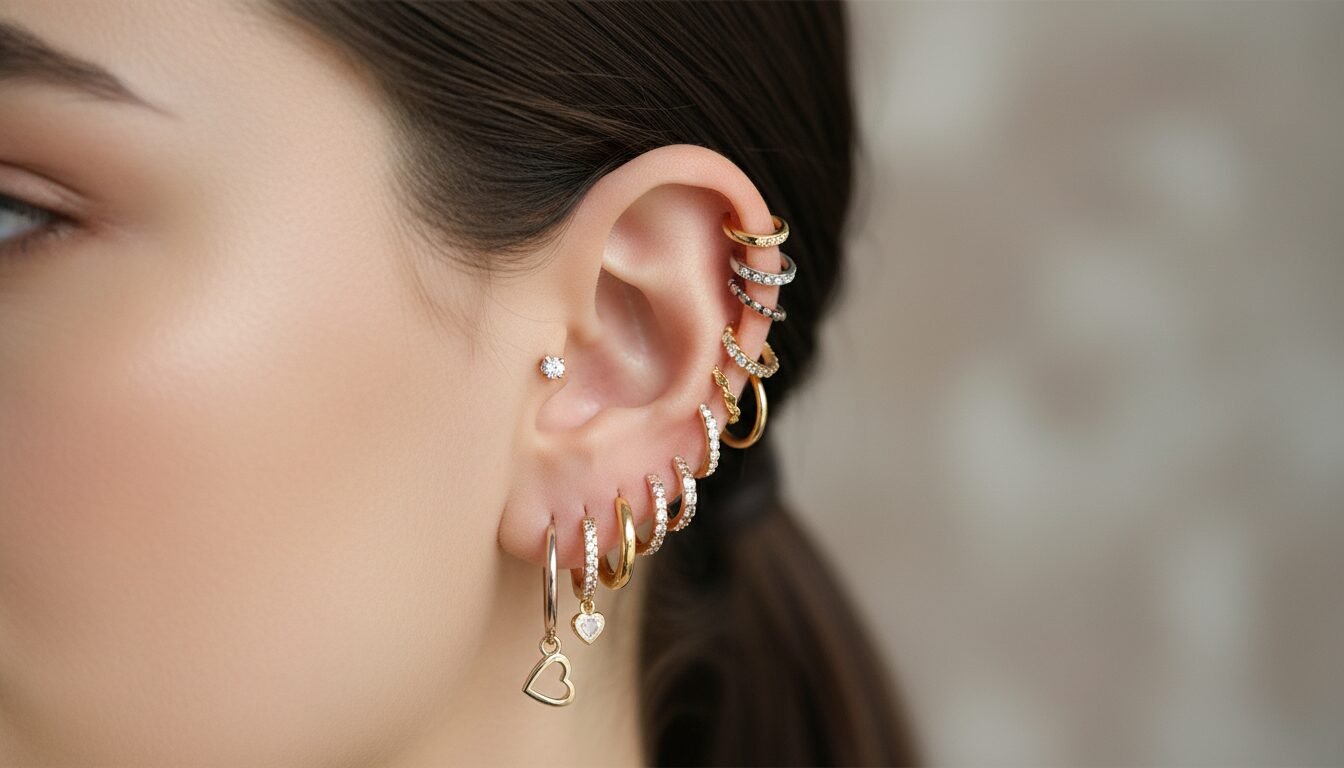
Understanding earrings types of piercings means recognizing how jewelry design matches piercing placement for both comfort and style. Think of it as the perfect pairing, like choosing the right sandals for cobblestone streets in Santorini. A piercing placement is your anatomical canvas: the soft lobe, the curved helix, the hidden daith. The earring type is your artistic choice: studs that catch Mediterranean light, hoops that move with evening breezes, or climbers that trace your ear’s natural curve.
Why Matching Earring to Piercing Matters
A poorly matched earring can slow healing, cause migration, or lead to infection. According to the Association of Professional Piercers, jewelry material, design, and fit directly affect piercing health. Cartilage piercings like the rook or conch need smooth, low-profile backs to avoid pressure during sleep, imagine trying to rest on a lumpy pillow. Lobes are more forgiving but still benefit from high-quality metals to prevent allergic reactions. By selecting the right earrings types of piercings, you create a foundation for endless styling possibilities once healed.
Essential Lobe Piercing Earring Styles
Classic Studs and Their Versatility
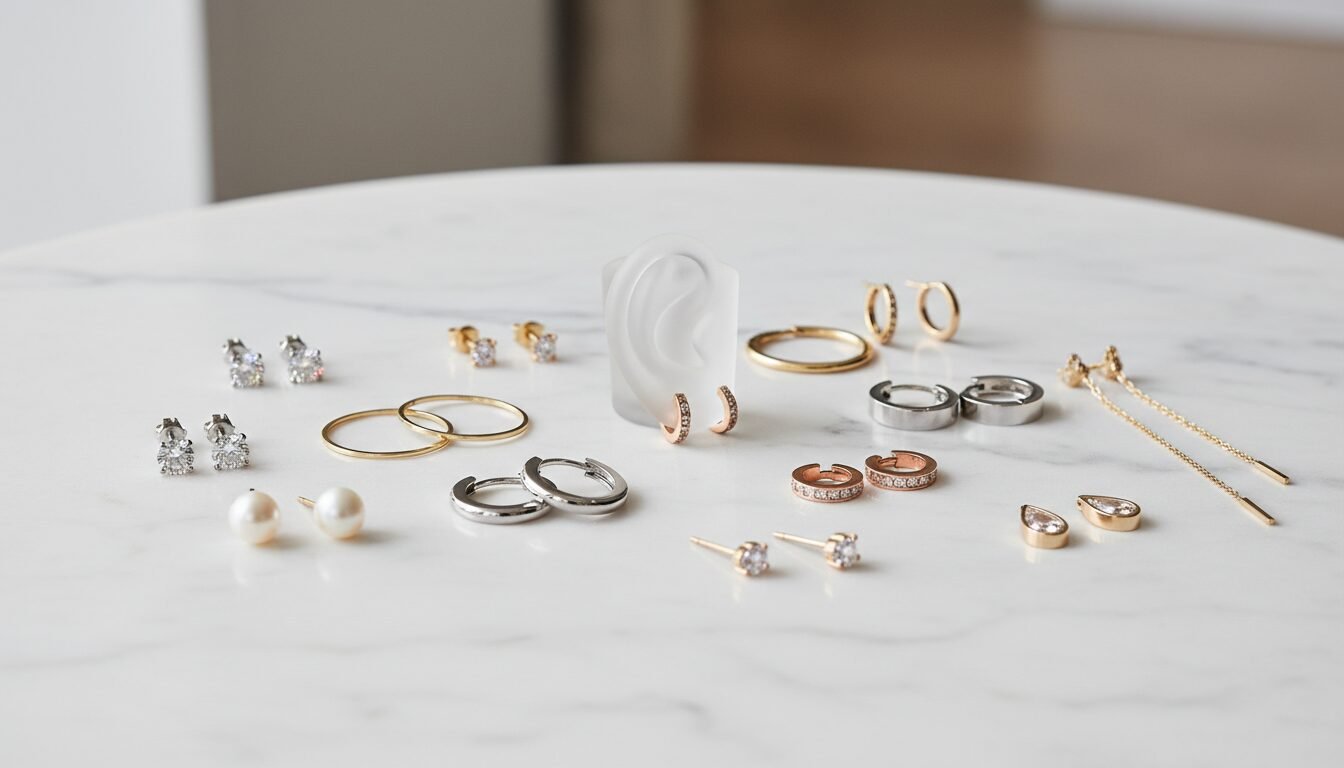
Stud earrings remain the most beloved choice for standard lobe piercings, and for good reason. A stud consists of a front ornament (gemstone, metal ball, or shape) attached to a straight post that passes through the piercing and secures with a back. The simplicity makes studs comfortable for everyday wear, from morning coffee runs to sunset dinners. Pain levels for lobe piercings are minimal, just 1–2 out of 10, and healing typically takes 6–8 weeks. This fast recovery means you can quickly enjoy a vast array of stud designs, from delicate diamonds that sparkle like sea spray to colorful enamel that echoes Mediterranean tiles.
Huggie Hoops: Small Size, Big Impact
Huggie earrings are tiny hoops that sit snugly around the earlobe, creating a clean, polished look that works from beach to bistro. Because they “hug” the lobe, they rarely snag on flowing fabrics or windswept hair. Most huggies use a hinge-and-clicker closure, which is easy to operate even on smaller ear spaces. This makes them a perfect introduction to hoop-style earrings. For lobes, huggies in 14k gold or hypoallergenic stainless steel are ideal. They can be worn alone for a minimal aesthetic or stacked in multiple lobe piercings for an edgy, curated effect that feels effortlessly European.
Dangle and Chandelier Earrings for Special Moments
Dangle earrings hang below the earlobe, swaying with movement like palm fronds in a coastal breeze. Chandelier earrings are their more elaborate cousins, featuring multiple tiers that catch light beautifully. These are best suited for fully healed, well-established lobe piercings because of their weight. Heavy earrings can gradually elongate the piercing channel over time. For everyday wear, choose lightweight drops with French wire hooks or lever backs. Save dramatic chandeliers for sunset cocktails and special occasions. Pair them with a simple stud in an upper lobe to balance the look.
Cartilage Piercing Earrings: From Helix to Rook
Flat Back Studs: The Gold Standard for Cartilage
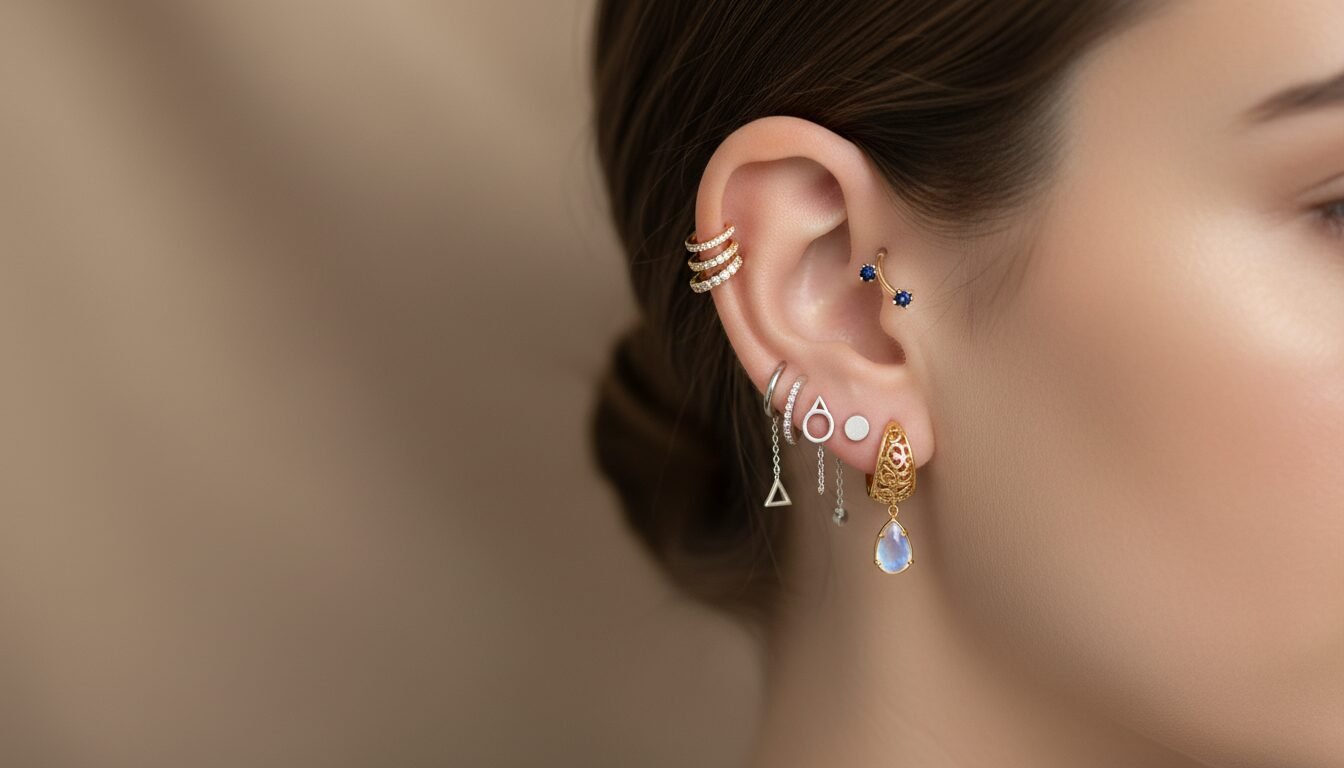
Nearly every professional piercer uses flat back labret studs for initial cartilage piercings, and once you understand why, you’ll never go back to traditional posts. A flat back stud has a smooth disc that sits flush against the skin behind the ear, drastically reducing irritation when sleeping or taking phone calls. The front is typically a threaded or push-pin top you can swap later for different looks. According to piercing experts, these cartilage piercings land beautifully on the edge or middle of the ear, and the flat back keeps the post from poking uncomfortably. Helix, forward helix, tragus, rook, and conch all heal best with this style, it’s like choosing the right foundation for a beautiful building.
Captive Bead Rings and Clicker Hoops
Once a cartilage piercing has fully healed (often 6–12 months), many wearers switch to hoops for a more dynamic look. A captive bead ring is a metal hoop with a small, removable bead that holds the ring closed. These are common in conch, helix, and daith piercings. A clicker hoop features a hinged segment that audibly clicks shut, making insertion much simpler than captive beads, no more fumbling with tiny parts. For daith piercings, a seamless or clicker ring sits beautifully in the inner ear fold, often highlighting the jewelry’s forward-facing details like tiny gems or intricate metalwork.
Curved Barbells and Circular Barbells for Rook and Daith
A curved barbell is shaped like a gentle banana and fits the natural curve of the rook or snug piercing perfectly. Each end has a removable bead or ball, often in contrasting metals or with gemstone accents. Circular barbells (horseshoe rings) are also popular in rook and daith placements. They offer a distinct edgy look and can be rotated through the piercing for easy cleaning. When selecting barbells for your earrings types of piercings collection, always check that the threading is internal or push-in style. External threading, with the screw thread on the bar itself, can scrape the delicate tissue, especially during insertion.
How Earring Back Types Affect Piercing Comfort and Safety
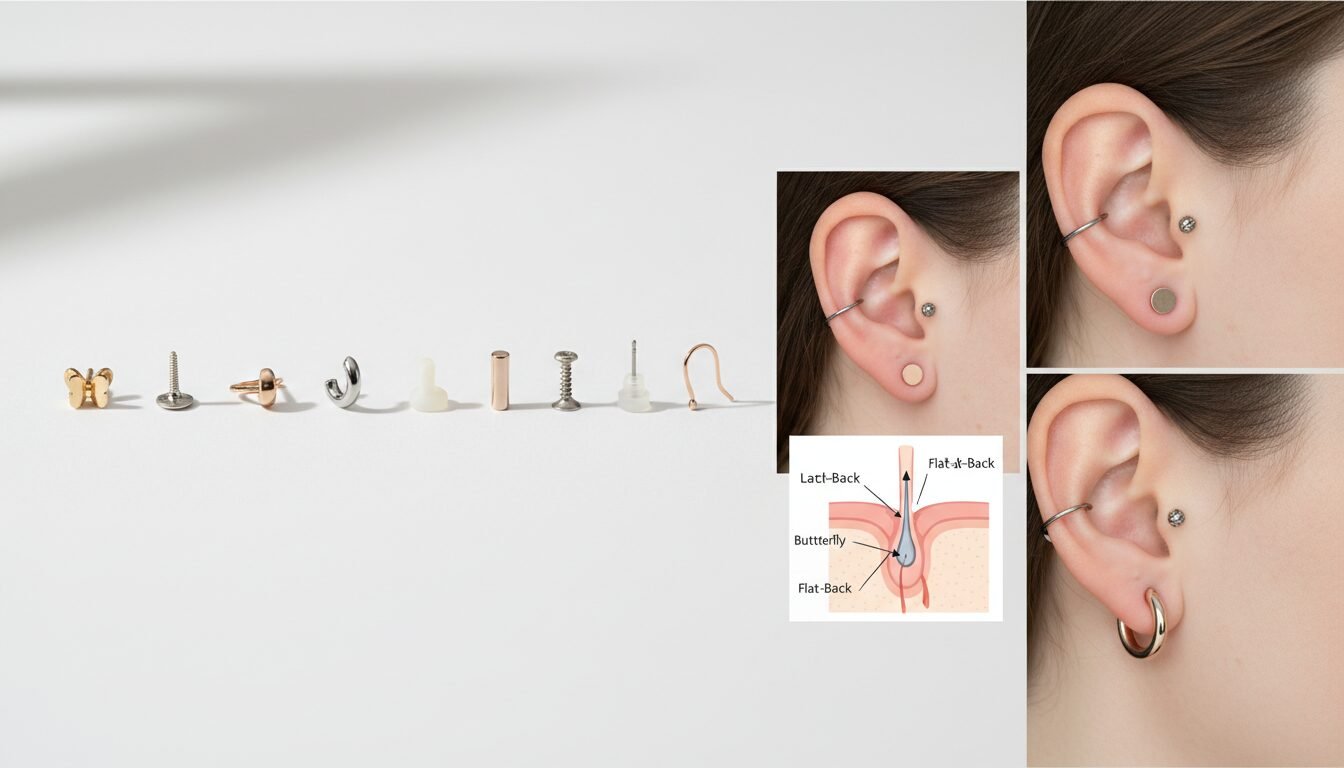
Comparison of Earring Back Systems
“A piercing is a wound, and you’re putting a foreign body through it. The easier the jewelry is to keep clean and the less it moves, the faster and safer it heals.” , Professional piercer at Lexazi
| Back Type | Pros | Cons | Best For |
|---|---|---|---|
| Butterfly (friction) Back | Inexpensive, widely available, easy to put on | Can loosen over time, traps debris, not ideal for unhealed piercings | Budget fashion studs, temporary wear in healed lobes |
| Flat Back (Push-Pin or Threaded) | Smooth profile, minimal snagging, comfortable for sleeping | Requires precise post length; can be tricky to install on self-threaded types | All cartilage piercings (helix, conch, tragus) and initial lobe piercings |
| Screw Back | Very secure, less likely to fall off during activity | Small parts can be hard to grip; threading may trap bacteria if not cleaned | High-value diamond studs or active individuals |
| Lever Back / Latch Back | Easy to operate with one hand, secure for heavier dangles | Can be bulky; the hinge may loosen over time | Drop and dangle earrings in healed lobes |
| Omega Back | Supports the weight of large statement earrings | Often more expensive; requires proper ear shape for a good fit | Chandelier earrings in firmly healed lobes |
Step-by-Step: How to Insert a Flat Back Stud Correctly
- Wash your hands thoroughly and clean the piercing with saline solution.
- Insert the flat back post from behind the ear, pushing it forward until the disc sits flush.
- Hold the flat back in place with one finger, then align the decorative top with the post.
- For a threaded top, gently turn clockwise until snug (do not overtighten). For a push-pin top, press firmly until you hear or feel a small click.
- Check that the top is secure and the flat back is not tilted.
Specialty Backs: Lox and Other Secure Systems
The Lox earring back is a locking mechanism that fits standard stud posts, even threaded ones. It adds a layer of security for expensive or sentimental studs without the fiddly nature of screw backs. According to the manufacturer, the system requires a brief practice period to operate smoothly but offers a lifetime guarantee against loss. For anyone who has lost a cherished diamond stud to a loosened butterfly back, a locking back like Lox provides considerable peace of mind, especially when you’re dancing until dawn at a beach club in Mykonos.
Gauge and Material Essentials for Earrings Types of Piercings
Understanding Earring Gauge Sizes
Earring gauge refers to the thickness of the post or wire, think of it as the foundation that determines what jewelry you can wear. Standard lobe earrings are usually 20 gauge (0.8 mm) or 18 gauge (1.0 mm), while most cartilage piercings start at 16 gauge (1.2 mm) to allow for safe healing and reduce the risk of tearing. A piercing made with a 16g needle will naturally accept a 16g earring; if you later insert a thinner 20g fashion earring, the hole can shrink slightly, making it harder to wear original jewelry again. Post length is equally critical for comfort: a 5.5 mm post often fits a healed thin helix or average lobe, a 6.5 mm post suits an average helix, tragus, or rook, and an 8 mm post is commonly used for initial piercings to accommodate swelling.
Hypoallergenic Metals: Gold, Titanium, and Surgical Steel
All earrings placed in healing or sensitive skin should be made from body-safe materials, your ears deserve the same quality as your favorite silk scarf. Here’s how the most common options compare:
- 14k or 18k solid gold (yellow, white, or rose): Hypoallergenic, nickel-free if high-quality. Recycled 14k gold is a popular sustainable choice that feels as good as it looks.
- Implant-grade titanium (ASTM F-136): The lightest and most biocompatible metal. Often used by professional piercing studios for initial piercings.
- Surgical stainless steel: Look for 316LVM or 316L steel; it’s durable but may contain trace nickel. Best for healed piercings only if you have metal sensitivities.
Avoid plated metals or mystery alloys that can cause allergic reactions. The Association of Professional Piercers notes that body jewelry should have a polished, scratch-free surface to minimize bacterial adhesion.
Healing Timelines and Earring Changes for Different Piercings
When to Switch from Healing to Fashion Earrings
Healing durations vary widely across different earrings types of piercings. Standard lobes heal in 6–8 weeks, while cartilage piercings like the helix take 6–12 months, and the daith or rook may require 6–9 months or more. Changing your jewelry too soon disrupts the healing tissue, often causing irritation bumps that can take weeks to resolve. A professional piercer can downsize your initial labret stud to a shorter post after 4–6 weeks to improve comfort, but the final style change should wait until the piercing is fully mature. Signs of a healed piercing include no tenderness, no discharge, and easy movement of jewelry when cleaned, like a perfectly broken-in pair of leather sandals.
Signs of Irritation and When to See a Piercer
If you notice redness, swelling, or a yellowish fluid that is not thick or malodorous, it’s often normal lymphatic fluid. However, persistent pain, hot skin, green discharge, or a bump that won’t resolve indicates possible infection. In such cases, avoid removing the earring yourself (this can trap the infection) and consult a professional piercer or dermatologist promptly. Certain piercing placements present unique challenges. The tragus, for example, can be irritated by earbuds, prolonging healing. Simple lifestyle adjustments, like using over-ear headphones during healing, make a big difference in your earrings types of piercings journey.
Pros and Cons
Pros
- Multiple styling options from delicate studs to statement hoops
- Ability to create curated ear stacks with different piercing placements
- Quick healing time for lobe piercings (6-8 weeks)
- Wide range of hypoallergenic materials available
- Can accommodate both everyday and special occasion looks
Cons
- Cartilage piercings require 6-12 months healing time
- Risk of infection if proper aftercare isn’t followed
- Some earring types can cause allergic reactions
- Heavy earrings may stretch piercing holes over time
- Initial piercing and quality jewelry can be expensive
Earring Trends for Curated Ear Stacks
Mixing Piercing Types with Stacked Lobe Earrings
The modern ear curation trend encourages multiple lobe piercings, often 3 to 5 on a single ear, filled with a mix of tiny studs, slim huggie hoops, and short drop earrings. This approach transforms earrings types of piercings into a deliberate, artistic composition that tells your personal style story. Narrow ear shapes, which typically have more lobe surface area, can comfortably host a stacked lobe array. Professional ear styling consultations help clients select a cohesive metal theme and stone color across all placements, creating a look that’s both intentional and effortless, like the perfect capsule wardrobe for your ears.
The Rise of Ear Cuffs and Threader Earrings
Ear cuffs require no piercing at all, they slip over the outer cartilage to mimic a helix or conch piercing. They’re an instant, commitment-free way to test the look of a new piercing before taking the plunge. Threader earrings consist of a fine chain with a thin bar on one end that threads through the piercing; the chain dangles beautifully from both the front and back of the lobe. These lightweight designs work wonderfully for fully healed lobes and add a delicate, modern feel that moves like liquid gold. Because threaders move freely, they’re less likely to pull on the piercing than fixed dangles, making them perfect for your earrings types of piercings rotation.
Frequently Asked Questions
Can you wear regular earrings in cartilage piercings?
It depends on the gauge and healing status. Most traditional fashion earrings have a 20–22 gauge post, which is thinner than the 16-gauge channel of a typical cartilage piercing. While it’s possible once the piercing is fully healed, the hole may shrink over time, making it hard to reinsert thicker jewelry. Always switch back to the original gauge occasionally to maintain the piercing size.
What is the most secure earring back for active lifestyles?
For high-value studs, a screw back or a locking Lox back offers the highest security. For everyday comfort in cartilage piercings, a push-pin flat back stud is extremely secure and rarely comes undone during sports or sleep. These backs are designed to stay put through beach volleyball games and ocean swims.
How do I know if my piercing has healed enough to change earrings?
Gently clean the area with saline; if there is no pain, no swelling, and no discharge for several weeks, the piercing is likely healed. A professional piercer can also examine it and confirm the tissue is mature. Think of it like checking if a cut has fully healed, the skin should feel normal and look healthy.
Are hoop earrings safe for a new helix piercing?
Not initially. Hoops move too much and can introduce bacteria, leading to irritation bumps. Flat back labret studs are recommended for the first 6–12 months. After healing, a snug clicker hoop works beautifully in the helix and becomes part of your signature earrings types of piercings style.
Why do some earrings cause my lobes to itch or turn green?
Itching and greenish discoloration are classic signs of a nickel allergy or a reaction to base metal alloys. Switching to solid 14k gold, titanium, or high-quality surgical steel usually resolves the problem. Your ears are telling you they deserve better quality materials.
Can I sleep in my dangle earrings?
It’s not advisable. Dangle earrings can twist in your sleep, causing the post to dig into the skin or even tearing the piercing. Save these for daytime wear and opt for flat back studs or small huggies overnight, your ears will thank you in the morning.