What Is a Bangle? Definition, Types, and Styling Tips
A bangle is a rigid, ring-shaped bracelet that slips over the hand without a clasp. Worn solo or stacked in multiples, these closed-circle pieces come in gold, silver, diamonds, and decorative finishes that move beautifully on the wrist.
Key Takeaways
- A bangle’s defining feature is its closed-circle construction: no clasp, no opening, just a continuous ring that slides over the hand.
- Three main forms exist: solid slip-on, hinged, and cuff-style, each offering a different fit and silhouette.
- Sizing depends on knuckle circumference, not just wrist size. When in doubt, size up or choose a hinged style.
- Stacking is the dominant styling method. Mix metals, textures, and one colorful accent piece for a curated wrist look.
- Price ranges from around $110 for fashion-bridge pieces to five figures for high-karat gold and diamond designs.
- As of Summer 2026, mixed-metal stacks and color-stone accents are the strongest trends across fine and bridge jewelry.
Because the form is closed, sizing matters more than it does with a clasped bracelet. The piece must fit over the widest part of the hand, usually the knuckles, and then rest comfortably at the wrist. Once on, a solid version moves more freely than a fitted bracelet, which creates that characteristic sound and sway that makes a stacked wrist so satisfying.
What Makes a Bangle Different from Other Bracelets
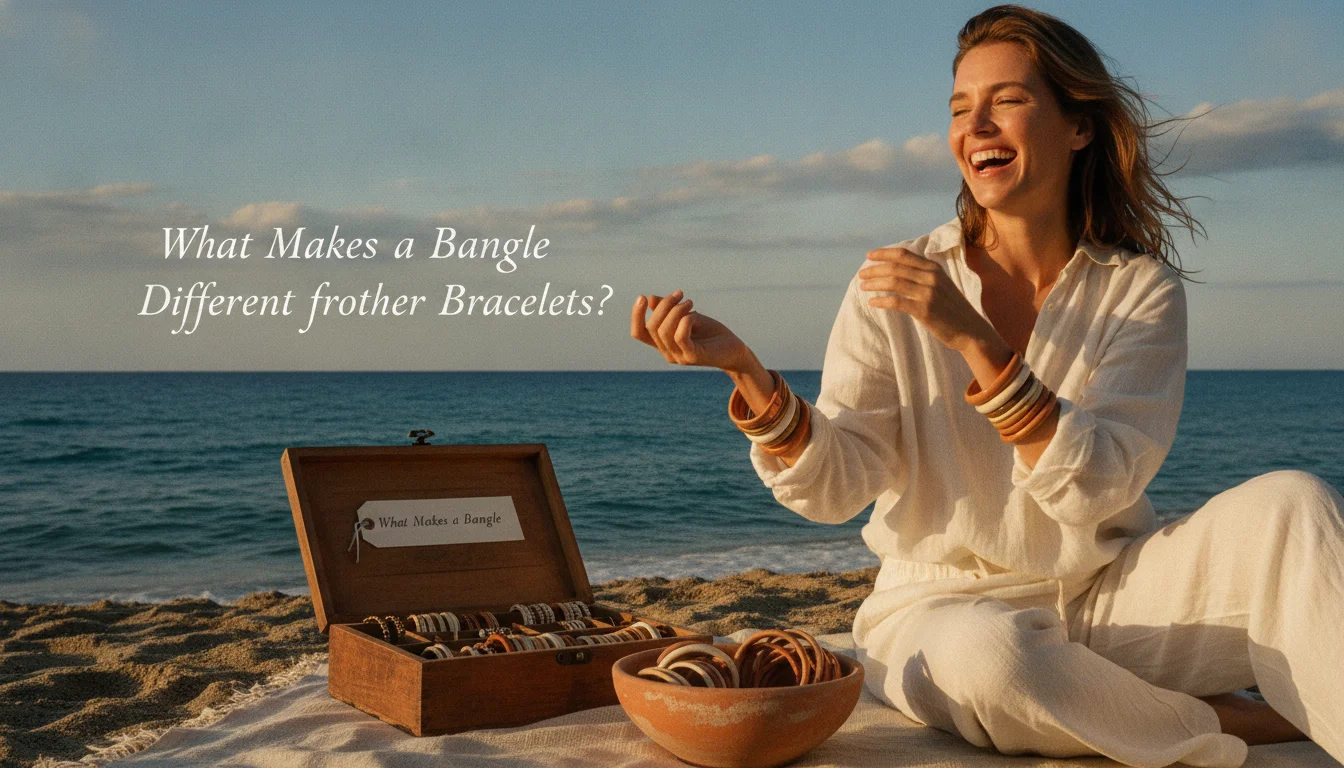
A bangle is defined by its continuous circle: no clasp, no hinge, no opening. As Lee Michaels Fine Jewelry states, a traditional design is a closed circular form lacking a clasp closure entirely. That structural simplicity is what separates it from chain bracelets, cuffs, and link styles.
The closed construction also gives it structural integrity. A well-made piece in solid gold or sterling silver does not rely on links or a tongue-and-groove mechanism to hold its shape. This makes it exceptionally durable over time. The tradeoff is that sizing requires more thought: the interior diameter must clear the knuckles before settling at the wrist.
Hollow construction, used in some fashion and entry-level fine jewelry, reduces weight and cost while keeping the circular silhouette intact. The visual read stays the same; the feel on the wrist is lighter. Hollow pieces can be more prone to denting under impact, but for everyday wear they are a practical and beautiful option.
How It Differs from a Cuff, Chain Bracelet, and Hinged Style
A cuff is an open bracelet with a gap that lets it slide onto the wrist from the side rather than over the hand. A chain or link bracelet typically has a clasp and conforms closely to the wrist. A hinged style is a circular bracelet that opens with a mechanism and secures with a hidden clasp, making it easier to put on while retaining the closed-circle look. The standard solid slip-on, by contrast, is a pure ring that must be large enough to pass over the hand.
These distinctions matter because each style produces a different silhouette and wearing experience. Hinged styles suit people with larger knuckles or hands. Solid slip-ons offer the most traditional profile. Understanding the closure type is the first step in choosing a piece that is both comfortable and visually right for you.
Types of Bangles by Closure and Form
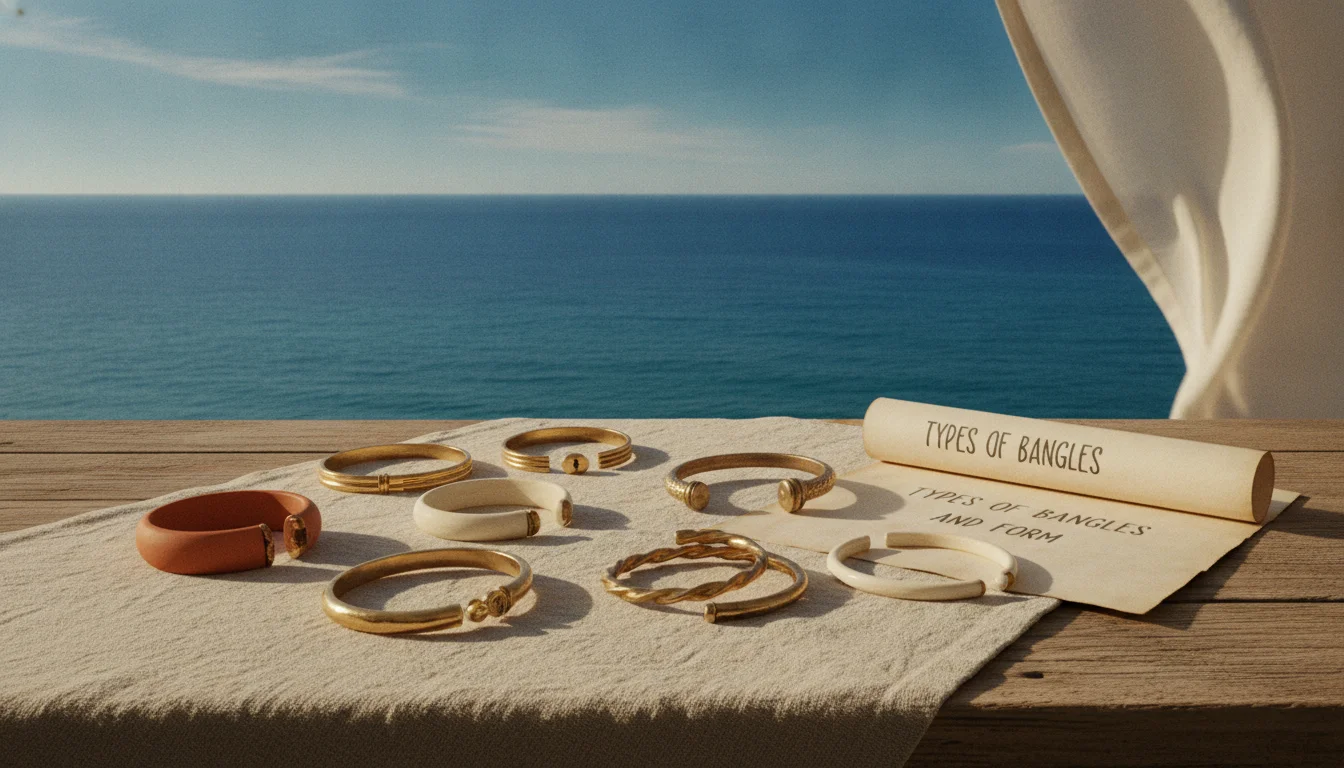
Not all bangles are the same shape. Within the category, closure mechanism and profile create meaningful differences. The main types found across retailer collections are solid slip-on, hinged, and cuff-style or open designs. Each affects how the piece goes on, how it sits, and how it layers in a stack.
Solid Slip-On Styles
The solid slip-on is the classic form: a continuous circle with no opening. It must be sized to fit over the hand, which means it will feel slightly loose at the wrist once on. This style is common across fine jewelry and fashion collections because it produces cleanly in different metals and can be plain, textured, or stone-set.
Solid slip-ons stack beautifully. Because there is no hinge or clasp, they rotate smoothly and create the characteristic movement and sound that many wearers associate with a full wrist stack. This style is often the natural first choice.
Hinged and Collapsible Designs
A hinged design includes a mechanism that opens and closes, allowing the piece to be sized closer to the wrist without needing to clear the hand. Julie Vos offers several hinged options, including the Cobblestone Hinge Bangle at $245, which combines a sculptural profile with easier on-off wear. Hinged styles can be round or oval and may include a safety catch for added security.
Collapsible designs, sometimes called expandable styles, use a similar concept: they flex open slightly to pass over the hand and then return to a round shape. These reduce the sizing challenge while keeping the continuous-circle look when worn.
Cuff-Style and Open Designs
Cuff-style pieces are open at the back or side, allowing the wearer to slip the bracelet onto the wrist without passing over the knuckles. They are often slightly adjustable. Gabriel NY lists split bangle bracelets and open silhouettes alongside closed styles, showing how the category has broadened. Cuff-style designs are popular for their ease of wear and their ability to fit a range of wrist sizes.
Comparing the main forms can help narrow your choice. The table below summarizes key differences using examples from brand and retailer listings.
| Form | Closure | Material Examples | Best For | Retailer Price Example |
|---|---|---|---|---|
| Solid slip-on | No clasp; closed circle | Sterling silver, 18K gold, 22K/24K gold | Classic styling, smooth stacking | Julie Vos Ravello Bangle at $120 |
| Hinged | Hinge and hidden clasp | 24K gold plate, sterling silver, gemstones | Easy on-off, closer fit | Julie Vos Cobblestone Hinge Bangle at $245 |
| Cuff-style/open | Open gap or split | Sterling silver, 14K gold, enamel | Comfort across hand sizes | Gabriel NY Bujukan Split Bangle from $675 to $875 |
| Diamond | Hinged or closed | 14K/18K gold, diamond accents | Elevated and evening wear | Lee Michaels Fine Jewelry listings from $135 to $28,000 |
| High-karat gold | Closed or hinged | 22K/24K gold | Sculptural statement, heirloom feel | GURHAN Hoopla 24K Gold Bangle Bracelet at $15,950 |
Pros and Cons of Wearing Bangles
Pros
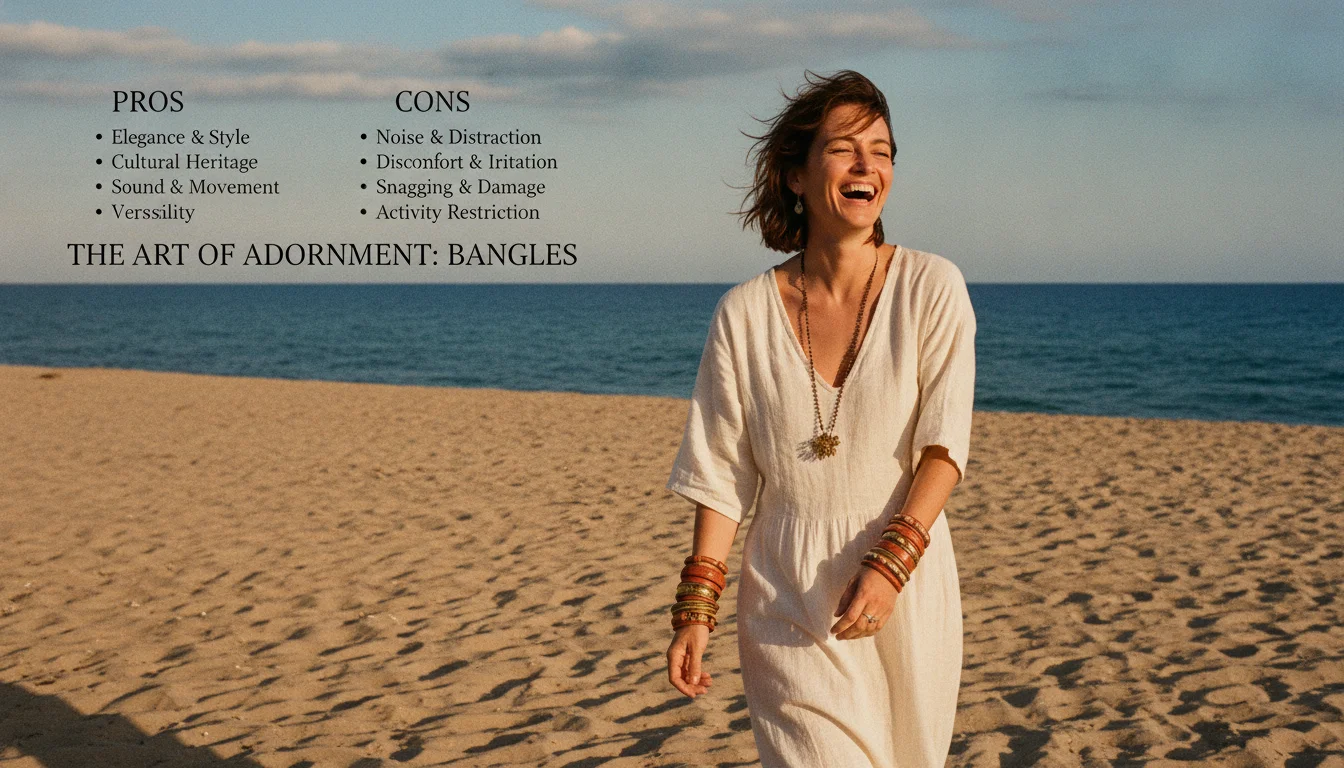
- Effortless to style: A single polished piece elevates a simple outfit. A stack transforms it entirely.
- No clasp to fumble with: Solid slip-on styles go on and stay on without fiddling with a mechanism.
- Stackable by design: The closed-circle form stacks cleanly, creating movement and sound that other bracelet styles cannot replicate.
- Wide price range: Accessible options start around $110 at the fashion-bridge level, making it easy to experiment before investing in fine pieces.
- Durable construction: A solid gold or sterling silver piece with no clasp has fewer points of failure over time.
Cons
- Sizing is less forgiving: Unlike a clasped bracelet, the piece must clear your knuckles. If your hand is much wider than your wrist, finding the right fit takes more effort.
- Hollow styles can dent: Entry-level pieces in hollow construction are more vulnerable to impact damage than solid ones.
- Can feel loose at the wrist: Because the interior diameter must clear the hand, solid slip-ons often move more than a fitted bracelet, which some wearers find distracting.
- Gemstone placement rotates: Because the piece moves freely, a decorative station may face down rather than up. Symmetrical or all-around designs solve this, but single-station styles require adjustment throughout the day.
Materials and Metal Choices in Bangle Design

Metal choice drives both the price and the character of a piece. Across the market, options span sterling silver, 18K gold, 22K and 24K gold, plated metals, and combinations with diamonds, pearls, and gemstones. The material also determines care requirements and how the piece feels against the skin.
High-Karat Gold and Gold Plate
High-karat gold and gold plate represent two different approaches to design. GURHAN works extensively in 22K and 24K gold, using the higher purity to create bold, sculptural pieces with hand-hammered texture. According to GURHAN, the collection includes designs in 22K and 24K gold with diamond accents and tactile surfaces. Higher karat gold is softer but richer in color, giving these pieces a distinctive warm presence on the wrist.
At the fashion-bridge level, Julie Vos uses 24K gold plate over base metal, paired with handset imported glass, pearls, and gemstones. According to Julie Vos, each piece is handcrafted and handset using 24K gold or pure silver plate. Gold plate delivers the visual warmth of gold at more accessible price points, while still allowing sculptural and colorful design.
Sterling Silver, Rhodium, and White Metals
Sterling silver and white-metal pieces provide a cool-toned alternative to yellow gold. LAGOS crafts its collection in premium sterling silver and 18K gold, often with signature Caviar detailing and diamonds. GURHAN extends some designs into Couture Silver, a white-metal expression finished with rhodium plating for a bright, tarnish-resistant surface.
White metal pieces are particularly useful for mixing with gold because the contrast makes each piece stand out. Silver also tends to be lighter and less expensive than gold of equivalent size, which makes it a practical entry point for building a stack.
Gemstone, Pearl, Enamel, and Decorative Accents
Color plays a major role in styling. Julie Vos pieces feature color stories inspired by jade, alabaster, tortoiseshell, mother of pearl, and vibrant gemstones, all handset into the metal to catch light differently than plain metal. Pearl accents add soft luminosity. Enamel finishes, seen in Gabriel NY’s Bujukan designs, introduce saturated color and graphic patterns.
Gemstone accents can range from clear quartz and cat’s eye to sapphire and diamond. The inclusion of stones increases visual complexity and can shift a piece from daytime simplicity to evening statement. Because the form rotates on the wrist, symmetrical or all-around designs are common and practical.
How to Choose the Right Size and Fit
Fit is more complex than bracelet length because the piece must clear the widest part of the hand. One that is too small will not go on; one that is too large may slide off or feel cumbersome. Many jewelry retailers provide sizing guidance, and listings often include small, medium, and large options.
Measuring Your Wrist for a Comfortable Slip-On Fit
The key measurement is not wrist circumference alone. It is the circumference around the widest part of the hand, usually at the knuckles, with the thumb tucked. The interior diameter must be large enough to pass over that shape. Some people have a hand size significantly larger than their wrist, which means the piece will naturally feel loose once on.
To decide between sizes, hold your hand as if sliding on a bracelet and measure around the knuckles. Compare that measurement to the retailer’s size chart. Julie Vos lists small, medium, and large options on many styles. If in doubt, choose the larger size or consider a hinged design that opens.
Width, Weight, and Wrist Profile Considerations
Width affects how the piece sits and how comfortably it stacks. A slim 3mm style is lightweight and easy to wear in multiples, while a wide 6.5mm or 10mm piece creates a bold focal point but may feel heavier. Weight matters because a heavy gold piece can fatigue the wrist over a long day. Some brands offer hollow construction to reduce weight without reducing visual width.
Wrist profile also matters. A person with a flatter or narrower wrist may prefer an oval or open cuff-style design, because a round piece may rotate excessively. Hinged styles often have a more controlled fit and can be shaped to hug the wrist more closely. Try on different profiles when possible, or review return policies before purchasing online.
How to Style Bangles: Stacking, Layering, and Mixing Metals
Stacking is the dominant styling method. Layering multiple pieces on one wrist creates movement, sound, and a personalized mix of color and texture. As of Summer 2026, mixed-metal stacks and color-stone accents are the strongest trends across fine and bridge jewelry collections. Lee Michaels Fine Jewelry suggests mixing and matching metals with and without diamonds or gemstones. Julie Vos recommends mixing textures, finishes, and colors throughout a stack, such as pairing a jade piece with polished gold for contrast.
“Build a look that reflects your personal style by mixing textures, finishes, and colors throughout your stack. Layer stacked bangles in complementary tones for a curated statement, or pair a jade bangle with polished gold bangles for a fresh pop of color and contrast.” – Julie Vos
Step-by-Step Process for Building a Bangle Stack
- Start with a base metal piece. Choose a polished gold or silver style that matches most of your wardrobe. A slim solid slip-on works well as the anchor.
- Add one colorful or stone-accented piece. Introduce jade, mother of pearl, tortoiseshell, or a gemstone style to create a focal point within the stack.
- Add a textured piece. A hammered, beaded, or Caviar-detailed design adds tactile contrast and prevents the stack from looking flat.
- Introduce a second metal tone. Pair gold with silver or white metal. Deliberate mixing is more interesting than a matchy-matchy approach.
- Cap the stack with a statement or hinged piece. A wider design, a diamond style, or a sculptural high-karat piece creates a defined end point and looks intentional.
- Test movement and comfort. Move your wrist, type, and lift your arm. The stack should move freely but not slide off; pieces should not pinch skin or catch on clothing.
Color Stories: Jade, Mother of Pearl, Tortoiseshell, and Gemstones
Color is one of the fastest ways to make a wrist stack feel current. Jade-inspired green adds freshness and pairs beautifully with yellow gold. Alabaster and mother of pearl offer soft, neutral luminosity that works with both gold and silver. Tortoiseshell brings a warm, organic pattern that pairs well with casual and resort wear. Vibrant stones such as blue topaz, lapis, and sapphire add saturated color and can be used to match or contrast with outfit tones.
Julie Vos specifically suggests layering a jade piece with polished gold for a fresh pop of color, and pearl styles for timeless elegance. Cool-toned silver can be layered alongside gold to create a balanced, modern alternative. The key is to use color intentionally rather than adding too many competing hues at once.
Price Ranges and What Affects Cost
Pricing varies widely based on metal, gemstones, brand, and construction. Fashion and bridge pieces may sit in the low hundreds, while high-karat gold and diamond designs can reach five figures. The spread is visible across a single multi-brand retailer: Lee Michaels Fine Jewelry lists examples from $135 for a diamond bracelet up to $28,000 for an 18K yellow gold David Yurman sculpted cable piece.
Entry-Level and Fashion Pieces
At the entry and bridge level, pieces often use gold plate, sterling silver, or gold over silver. Julie Vos examples in the reviewed listing range from $110 for the Essex or Cobblestone Stacking styles up to $295 for the Cobblestone Stone Hinge or Ravello Statement Hinge designs. These pieces rely on plating, handset glass, pearls, and semi-precious stones to achieve a designer look at accessible prices.
JCPenney shows fashion and fine options across a wide range, with 134 results in one filtered view. Some lab-grown diamond options start around $208.32 with promotional pricing, while solid karat gold pieces can be listed at $2,249.99 with code. The same category serves both budget-conscious buyers and those seeking finer pieces.
Fine Jewelry and High-Karat Investment Pieces
Fine jewelry replaces plating with solid karat gold and often adds natural diamonds or fine gemstones. At GURHAN, pieces in 22K and 24K gold are positioned as sculptural, hand-hammered statements. A GURHAN Couture Silver stacking piece is listed at $320, while a Hoopla 24K gold design 6.5mm wide is listed at $15,950. The higher gold content and handcrafted surfaces explain much of the price difference.
Gabriel NY’s collection also reaches the top of the fine jewelry range. The brand displays 821 pieces, including silver and 14K gold styles with diamond details. Examples include a 925 sterling silver black spinel Bujukan bead cuff at $455 and an 18K white gold diamond piece at $36,900. These price points reflect solid gold, diamond carat weight, and intricate setting work.
Popular Designer and Retailer Approaches
Different jewelers approach the form from different angles. Some focus on stacking-friendly everyday luxury; others emphasize high-karat sculptural gold. Recognizing these approaches helps you decide what matters most: color, texture, metal purity, or ease of wear.
LAGOS, Julie Vos, and Everyday Stacking Aesthetics
LAGOS positions its collection as refined women’s jewelry crafted in premium sterling silver, 18K gold, and diamonds, with signature Caviar detailing. The brand’s language emphasizes stacking, layering, and wearing beautifully for any occasion. bangle suits shoppers who want polished pieces that mix easily and read as elevated but not overly formal.
Julie Vos takes a color-driven, fashion-aware approach. The collection includes polished gold and silver styles as well as colorful designs inspired by jade, alabaster, tortoiseshell, mother of pearl, and vibrant gemstones. Its hinged and stacking pieces are directly positioned for building layered looks. With multiple sizes and styles priced from $110 to $295 in the reviewed listings, Julie Vos encourages experimentation without a fine-jewelry commitment.
GURHAN, Gabriel NY, and Sculptural High-Karat Statements
GURHAN designs each piece as a complete circle of presence, using 22K and 24K gold and hand-hammered surfaces. The brand’s language emphasizes proportion, surface, and permanence rather than passing trends. bangle is for buyers who want tactile weight and high-purity gold that will remain a permanent part of a jewelry wardrobe.
Gabriel NY combines fine materials with broad selection. The retailer displays 821 pieces and includes Bujukan designs featuring 925 sterling silver with white sapphire, enamel, black spinel, and other accents. Gabriel NY emphasizes a lifetime warranty and GIA verified diamonds, which adds a layer of quality assurance. Its mix of silver, 14K, and 18K pieces means a shopper can move from a $455 silver cuff to a $36,900 diamond piece within one brand.
“Bold yet refined, our bangles slip on with ease, ready to layer, move, and shine.” – Gabriel NY
Why the Bangle Remains a Versatile Jewelry Staple
The form persists because it is simultaneously simple and expressive. A single metal piece can anchor a minimalist wardrobe, while a stack of mixed styles can function as the outfit’s focal point. The closed-circle silhouette has remained relevant across fine jewelry and fashion categories because it layers, moves, and feels substantial on the wrist.
A Form That Works Across Personal Styles
Because options range from sleek sterling silver to bold 24K gold, there is a style for nearly every aesthetic. A polished silver piece reads modern and cool. A hammered 22K gold design reads warm and sculptural. A pearl or jade accent adds soft color. The closed-circle silhouette is recognizable without being ornate, which makes it a versatile foundation for any jewelry wardrobe.
Shop with Fit, Material, and Stacking in Mind
This season, prioritize fit first. A piece that cannot go over the hand is useless, no matter how beautiful. Then consider material: gold plate and silver for accessible color, solid gold and diamonds for long-term wear. Finally, think about how you will wear it. If you plan to stack, choose slim and mid-width styles that can coexist. If you want a single statement, choose a wider high-karat or diamond design that holds its own.
Whether you are drawn to LAGOS’s Caviar-detailed silver, Julie Vos’s jade and pearl color stories, GURHAN’s 24K gold hammered forms, or Gabriel NY’s diamond-set silhouettes, this remains one of the most flexible pieces in a jewelry wardrobe. Explore the full collection at lexazi.com, with free shipping on orders over $75.
Frequently Asked Questions
What is the difference between a bangle and a bracelet?
A bangle is a rigid, closed circular bracelet that slips over the hand and has no clasp. A bracelet is a broader category that includes chain, link, cuff, and clasped designs that may open fully. The closed-circle construction is the defining distinction.
What does a bangle symbolize?
Symbolism varies by culture and material. In many contexts, the form represents continuity, eternity, or personal style. In fine jewelry, it often serves as a lasting gift or milestone piece meant to be worn for years.
Are bangle bracelets in style in 2026?
Yes. Current retailer collections from Julie Vos, Lee Michaels, LAGOS, and Gabriel NY emphasize stacking, mixed metals, and colorful stone accents, all of which keep the style relevant for 2026. This season’s strongest trend is the mixed-metal stack with at least one color-stone accent piece.
How do I style bangle bracelets?
Stack slim and mid-width pieces together, mix gold and silver tones, and add one colorful or textured accent for contrast. Start with a polished base and build outward. A statement or hinged piece can anchor the stack and give it a defined end point.
How do I know my bangle size?
Measure the circumference around the widest part of your hand with your thumb tucked. Compare that measurement to the retailer’s size chart. If your hand is much larger than your wrist, choose a larger size or a hinged style that opens for easier wear.
What are some popular bangle brands or designers?
Popular brands in the reviewed market include LAGOS, Julie Vos, GURHAN, Gabriel NY, David Yurman, Ippolita, Roberto Coin, Marco Bicego, and Charles Krypell. Many are available through multi-brand retailers such as Lee Michaels Fine Jewelry.