A life alert bracelet is a wearable emergency button that connects the wearer to a 24/7 monitoring center. Lightweight, waterproof, and always ready, it gives you real peace of mind at home and in the yard.
Key Takeaways
- Life Alert’s wristband button is waterproof, never needs recharging, and connects to U.S.-based dispatchers 24/7.
- The in-home unit has a range of up to 1,000 feet, covering your home and yard.
- Medical ID bracelets are passive jewelry with engraved health information, not emergency buttons.
- Life Alert has operated since 1987, and its own study reports 95% of members feel protected at home.
- Retail alternatives on Amazon and Walmart range from $24.99 to $139.99 for one-time purchases.
- Fall risk is serious: geriatrician Dr. Warren Wong warns that lying on the floor for as little as an hour can cause rhabdomyolysis.
What Is a Life Alert Bracelet?

Definition and Core Function
A alert bracelet is a wearable emergency button designed to summon help when a person cannot reach a phone. Unlike a static medical ID tag, it actively transmits a signal to a base unit or monitoring center. According to Life Alert’s product page, one press connects the wearer to a trained dispatcher who can send help, call family, or stay on the line 24/7.
Active vs. Passive Emergency Response
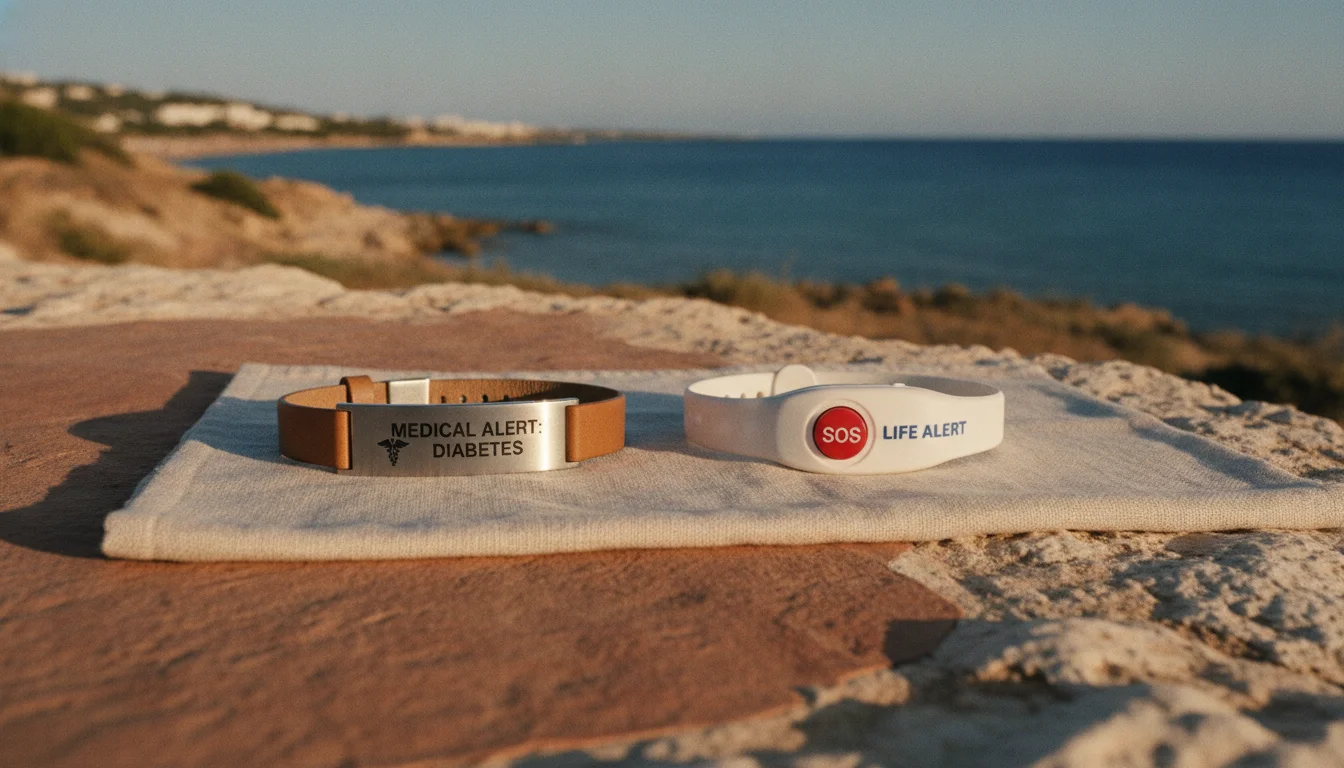
The term “this type of bracelet” often gets confused with a medical ID bracelet, but they serve very different purposes. A medical ID bracelet is passive: it contains engraved health information that emergency responders read if the wearer is unconscious. A this kind of bracelet is active: it sends an electronic alert the moment you press a button. The Life Alert Wristband Button is a specific branded product, while medical ID bracelets are available from many retailers, including American Medical ID.
The Life Alert Brand Legacy
Life Alert has been operating since 1987, giving it over 39 years of experience as one of the oldest personal emergency response system providers in the United States. The company markets itself as “America’s favorite” and, according to Life Alert’s own study, 95% of members feel they are protected at home, while 87% credit the service with their ability to live alone.
Life Alert Bracelet Features and How It Works
Waterproof, Recharge-Free Design
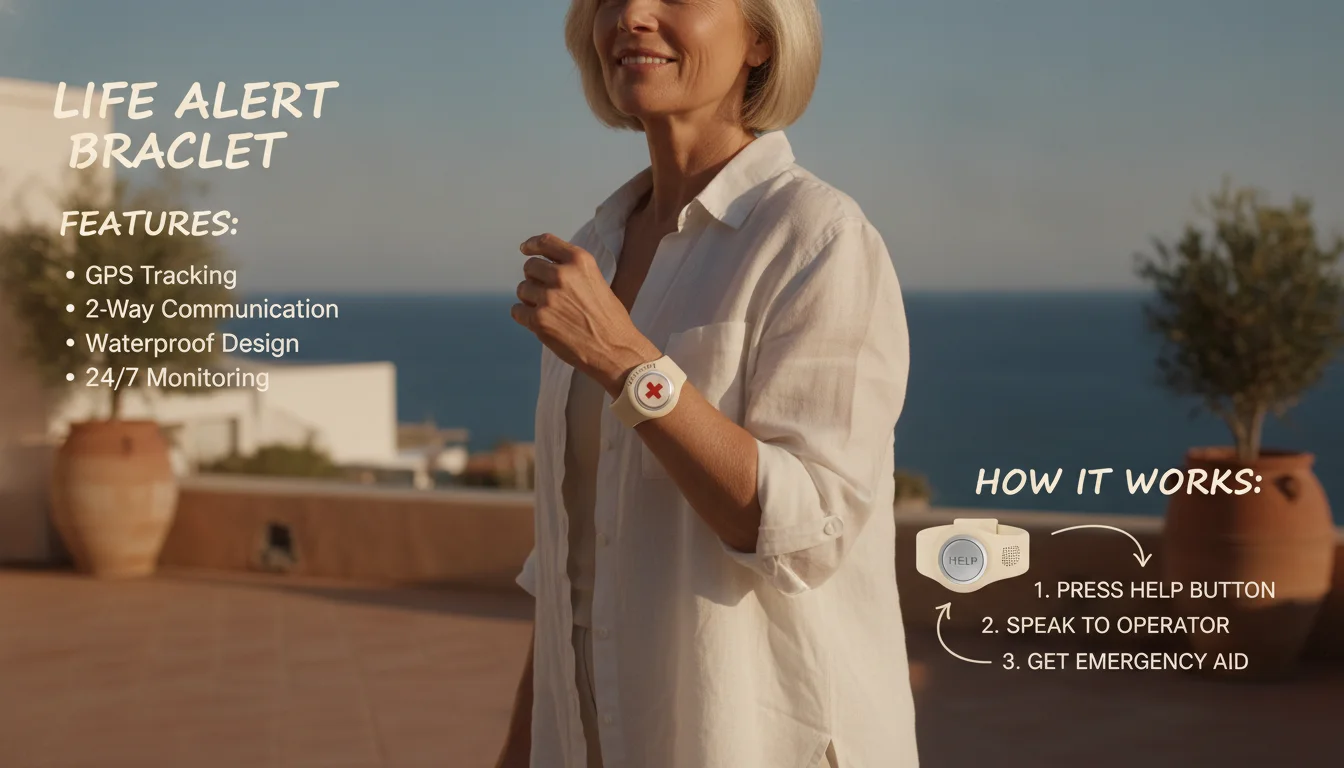
The Life Alert Wristband Button is 100% waterproof, so you can wear it in the shower, bath, or anywhere water is part of your daily routine. It also never needs recharging, which means the device is always ready, day or night. That matters because many falls happen in the bathroom, and a device you have to remove for showering leaves a real gap in protection.
Range and In-Home Connectivity
The in-home main unit connects with Life Alert devices up to 1,000 feet away, covering most homes and yards, including the garage and garden. The main unit acts as the central command center: it receives the signal from the wristband button and establishes a connection with the company’s U.S.-based monitoring center.
Two-Way Voice and USA-Based Monitoring
When you press the button, you are connected to a trained Life Alert dispatcher in the USA. The dispatcher talks directly to you through the device’s two-way voice function, assesses the situation, sends emergency services, and notifies your family or emergency contacts. They stay on the line until help arrives.
Medical ID Bracelets vs. Life Alert Bracelets
What a Medical ID Bracelet Does
A medical alert bracelet, in the generic sense, is worn around the wrist and contains information about your identity and medical conditions. According to Cigna Healthwise, this information helps emergency care providers know how to help if you cannot talk. Medical ID jewelry can be made of plastics, rubber, or metal, and temporary medical alert tattoos are also available.
Key Differences in Emergency Response
A life alert is an emergency response tool that requires power and a monitoring subscription. A medical ID bracelet requires no power and no subscription, but it cannot summon help on its own. The alert bracelet is for active emergencies; the medical ID bracelet provides background information to first responders. Many people with chronic conditions choose to wear both.
When You Might Need Both
If you have diabetes, severe allergies, or take multiple medications, a medical ID bracelet gives first responders critical information even when you cannot speak. A life alert bracelet then provides the active call for help. American Medical ID has been saving lives since 1994 and notes that its jewelry is recommended by doctors, EMTs, and nurses nationwide.
Temporary Medical Alert Tattoos and QR Code IDs
Beyond traditional jewelry, a few newer options are worth knowing about. Temporary medical alert tattoos offer a no-jewelry alternative for people who find bracelets uncomfortable. QR code medical IDs, available from retailers like American Medical ID, let first responders scan a code to access a fuller health profile than any engraved tag can hold. Neither replaces an active emergency button, but both can complement a life alert bracelet for people with complex medical histories.
How to Choose a Medical Alert System

Assess Mobility and Fall Risk
According to AARP, devices range from wearables to passive sensors, each suited to different needs and routines. A former fire captain with 33 years of experience with the Baltimore County Fire Department recommends that older adults or anyone with serious health conditions set up a medical alert device, especially if they live alone. “You don’t want to risk having a fall or sudden acute illness and be unable to get help,” he says.
Compare Device Types: Wearables, Help Buttons, Hubs, and Passive Sensors
AARP identifies several categories worth comparing before you buy. Wearable pendants and smartwatches may include automatic fall detection and GPS location tracking. Help buttons can be affixed to a wall or table in key spots like the bathroom. Hubs with two-way speakers let a call center or family member communicate directly. Smart speakers can be voice-prompted to make emergency calls. Video cameras allow visual remote monitoring. Passive fall detection uses radar or infrared technology to detect falls without requiring the person to wear anything. Sensors track motion, door activity, bed occupancy, and stove use. The Life Alert Wristband Button falls into the wearable button category.
Monitored vs. Direct-to-Contact Systems
Monitored systems connect to a call center where live agents can talk with you, assess the emergency, and contact family or emergency services. Some systems instead connect directly to 911 or to designated contacts without a professional monitoring center. Life Alert uses a monitored, U.S.-based dispatch center, which means a trained person is always available to assess your situation.
In-Car and Home Security Integration
Some medical alert systems go beyond the home. In-car devices can include GPS, vehicle emergency response, two-way communication, and crash detection, useful for active seniors who drive regularly. Home security monitoring can integrate an alarm system, video doorbell, and fire, smoke, and carbon monoxide detection alongside a personal emergency button. Life Alert’s On-the-Go + GPS unit is a small, wearable button that connects you directly to a Life Alert dispatcher from anywhere in the USA, bridging the gap between in-home and mobile coverage.
Cost and Where to Buy Life Alert Bracelets
Life Alert Pricing and Subscription
Life Alert does not publish a clear monthly price publicly. The company encourages potential customers to call 1-800-990-0595 for pricing and a free brochure. Life Alert’s homepage notes that new members may receive one month free, a free gift, free ground shipping, and free use of equipment. Because the service includes 24/7 professional monitoring, there is typically an ongoing subscription cost, but the exact amount is not disclosed in publicly available materials.
Retail Alternatives on Amazon and Walmart
For shoppers who want a one-time purchase or a no-monthly-fee option, several alternatives are available at major retailers. The table below compares the Life Alert Wristband Button with popular alternatives based on current listings.
| Product | Type | Key Features | Price |
|---|---|---|---|
| Life Alert Wristband Button | Monitored bracelet | Waterproof, no recharging, 1,000 ft range, two-way voice, U.S. dispatchers | Call for quote |
| SecuLife Medical Alert Pendant | No monthly fee pendant | Auto fall detection, GPS tracking, two-way calling, no contract, waterproof necklace | $89.00 |
| Bay Alarm Medical SOS Micro | Monitored medical alert | 24/7 monitoring, optional fall detection, location tracking, panic button | $109.00 |
| Life Alert System No Monthly Fee | WiFi call button | Caregiver pager, call button, app, 2.4GHz WiFi receiver, necklace and bracelet | $37.99 |
| We Send Help TOUCH | Cellular emergency device | 4G LTE, GPS location, two-way voice, professional monitoring | $24.99 |
| 911 Help Now Emergency Pendant | One-touch pendant | No monthly fees, one-touch direct connect, emergency communicator | $139.99 |
Free and Low-Cost Options
Low-cost one-time purchases do exist. Walmart lists the We Send Help TOUCH system at $24.99, and Amazon lists a no-monthly-fee system at $37.99. American Medical ID occasionally offers discounts, such as a 40% off code for select bracelets, but those are medical ID jewelry, not emergency response buttons. Always verify whether a listed price includes ongoing monitoring or is a one-time device cost.
Alternatives to the Life Alert Bracelet
GPS Mobile Alerts
Life Alert also offers the On-the-Go + GPS unit, a small, wearable button that connects to a Life Alert dispatcher from anywhere in the USA. This is a practical option for active seniors who leave home frequently. The in-home wristband button is designed for home and yard use, while the GPS unit extends coverage to wherever life takes you.
No-Monthly-Fee Panic Buttons
Several products on Amazon and Walmart advertise no monthly fees. Examples include the Life Alert System No Monthly Fee at $37.99 and the 911 Help Now Emergency Pendant at $139.99. These devices may connect directly to a caregiver’s pager or phone rather than a professional monitoring center. Read product descriptions carefully to understand exactly who receives the alert and how quickly.
Smartwatches and Passive Detection
AARP notes that smartwatches with automatic fall detection, GPS, and remote patient monitoring can be more appealing for people who resist wearing a traditional medical alert pendant. Passive fall detection systems use radar or infrared technology to detect falls without requiring the person to wear anything. These are generally wall- or ceiling-mounted and work silently in the background around the clock.
Bed and Chair Alarms for Higher-Risk Individuals
For people with dementia or very limited mobility, bed and chair alarms offer an additional layer of protection. These sensor-based devices alert a caregiver when someone attempts to get up unassisted, helping prevent falls before they happen. They work alongside, rather than instead of, a wearable life alert bracelet.
Step-by-Step: How to Set Up and Use a Life Alert Bracelet
Installation and Activation
- Step 1: Place the main unit. Put the Life Alert main unit in a central location in the home, such as the living room or bedroom. The unit acts as the command center and must be plugged in.
- Step 2: Wear the wristband button. Put the life alert bracelet around your wrist. It is waterproof, so it stays on in the shower or bath.
- Step 3: Test the connection. Press the button to confirm it reaches the main unit and the monitoring center. Life Alert recommends testing regularly.
- Step 4: Press for help in an emergency. One press connects you to a U.S.-based dispatcher. Speak through the two-way voice function and explain your situation.
- Step 5: Stay on the line. The dispatcher remains on the line until emergency responders arrive and will notify your family or emergency contacts.
Everyday Wear and Testing
Because the device never needs recharging, you can wear it continuously. Life Alert’s product page confirms the wristband button is 100% waterproof, so there is no need to remove it for showering. Testing the button monthly helps ensure the main unit and monitoring connection are working as expected.
What to Do in an Emergency
If you fall, experience chest pain, or face a home intrusion, press the button immediately. No searching for a phone, no waiting. The dispatcher will assess the situation, send emergency services, and stay on the line. Life Alert’s own testimonials include cases of falls, respiratory arrest, and severe nosebleeds where the dispatcher remained on the phone until paramedics arrived.
Pros and Cons
Pros
- Always ready: The Life Alert Wristband Button never needs recharging, so there is no risk of a dead battery in a crisis.
- Waterproof design: You can wear it in the shower, where many falls actually occur.
- Wide in-home range: Up to 1,000 feet of coverage reaches the garage, garden, and yard.
- Live, U.S.-based dispatchers: A real person answers 24/7, assesses your situation, and stays on the line until help arrives.
- Long track record: Life Alert has operated since 1987, with decades of real-world emergency response experience.
Cons
- Pricing is not transparent: Life Alert does not publish monthly costs online; you must call for a quote.
- Ongoing subscription required: Unlike one-time-purchase alternatives, professional monitoring comes with a recurring fee.
- In-home range only: The standard wristband button is designed for home and yard use; mobile coverage requires a separate GPS unit.
- No fall detection on the wristband: The device relies on you pressing the button; it does not automatically detect a fall the way some smartwatches do.
Expert Insight on Fall Risks and Monitoring
The Medical Risk of Lying on the Floor
Delayed help after a fall can have serious medical consequences. Dr. Warren Wong, a geriatrician in Honolulu, warns that lying on the floor for as little as an hour can lead to rhabdomyolysis, a life-threatening condition that occurs when muscle tissues break down and release their contents into the bloodstream. A wearable emergency button can make a critical difference in those situations.
“The last thing you want is for an older person to be on the floor for an extended period of time. Not only is it emotionally traumatic, but they could develop rhabdomyolysis, a life-threatening condition that occurs when muscle tissues break down and release their contents into the bloodstream. It can happen when lying on the floor for as little as an hour.”
– Dr. Warren Wong, geriatrician in Honolulu, via AARP
Who Should Wear an Alert Bracelet
Medical alert bracelets are often associated with older adults, but AARP notes they can be equally valuable for people of any age living alone with disabilities, chronic illness, or serious health conditions. A former fire captain with 33 years of experience with the Baltimore County Fire Department, quoted by AARP, recommends them for anyone with serious health conditions who lives alone.
“You don’t want to risk having a fall or sudden acute illness and be unable to get help.”
– Former Baltimore County Fire Captain (33 years of service), via AARP
Peace of Mind: What the Data Shows
Life Alert’s own study, referenced on its website, reports that 95% of members feel they are protected at home, and 87% credit the service with their ability to live alone. These figures come from the company itself, so treat them as directional rather than independent. That said, they reflect a consistent theme across medical alert system research: keeping people independent and safer at home is the core value these devices deliver.
A life alert bracelet is an active, waterproof, recharge-free emergency button backed by a professional U.S.-based monitoring center. It differs from a passive medical ID bracelet and from one-time-purchase panic buttons. By understanding the features, range, and cost considerations, you can decide whether the Life Alert Wristband Button or a retail alternative best fits your needs.
Frequently Asked Questions
Does Medicare pay for Life Alert bracelets?
Medicare coverage for life alert bracelets varies by plan, and the available competitor sources do not confirm specific coverage details. Contact Medicare directly or check with your plan administrator to find out whether personal emergency response systems are included under your benefits.
How much does Life Alert usually cost?
Life Alert does not publish its monthly cost publicly. The company asks potential customers to call 1-800-990-0595 for pricing information. Retail alternatives range from $24.99 to $139.99 for one-time purchases, though professional monitoring typically requires an ongoing subscription on top of any device cost.
How to get a free medical alert bracelet?
The reviewed sources do not confirm a way to get a completely free life alert bracelet. American Medical ID occasionally offers promotional discounts, such as a 40% off code, but those apply to medical ID jewelry rather than active emergency response buttons. New Life Alert members may receive one month free service along with a free gift and free ground shipping when they sign up.
What is the best Life Alert bracelet?
The Life Alert Wristband Button is the company’s dedicated bracelet offering. It is waterproof, never needs recharging, and works up to 1,000 feet from the home base unit. The best choice depends on whether you need in-home coverage only or mobile GPS protection when you are out and about.
Is a Life Alert bracelet the same as a medical ID bracelet?
No. A life alert bracelet is an active emergency button that connects you to a monitoring center when pressed. A medical ID bracelet is passive jewelry with engraved health information for first responders to read. They serve different functions and can be worn together for fuller protection.
Can I buy a Life Alert bracelet on Amazon?
The reviewed Amazon listings do not show an official Life Alert product available for direct purchase. Amazon lists third-party medical alert systems, including no-monthly-fee and GPS options from other brands. Life Alert products are typically obtained by calling the company directly at 1-800-990-0595.
Ready to explore your options? Shop the collection at lexazi.com – free shipping on orders over $75.