What Does Turning Heel Mean? Full Guide
What does turning heel mean in professional wrestling? It is the scripted shift of a heroic ‘face’ character into a villainous ‘heel,’ embracing rule-breaking, arrogance, or betrayal to draw boos from the crowd.
Key Takeaways
- heel mean at its core: a planned narrative pivot from hero to villain in professional wrestling.
- Heels draw ‘heat’ through cheating, arrogance, and rule-breaking, not simply through losing.
- The term now works in everyday slang to describe any sudden good-to-evil betrayal outside the ring.
- John Cena’s March 2025 turn at Elimination Chamber is one of the most discussed modern examples.
- According to Dictionary.com, the phrase dates to 1895–1900 as a skating term before entering wrestling vocabulary around 1990–95.
- The opposite of a heel turn is a face turn: a villain’s redemption arc back to heroic status.
What Does Turning Heel Mean in Professional Wrestling?
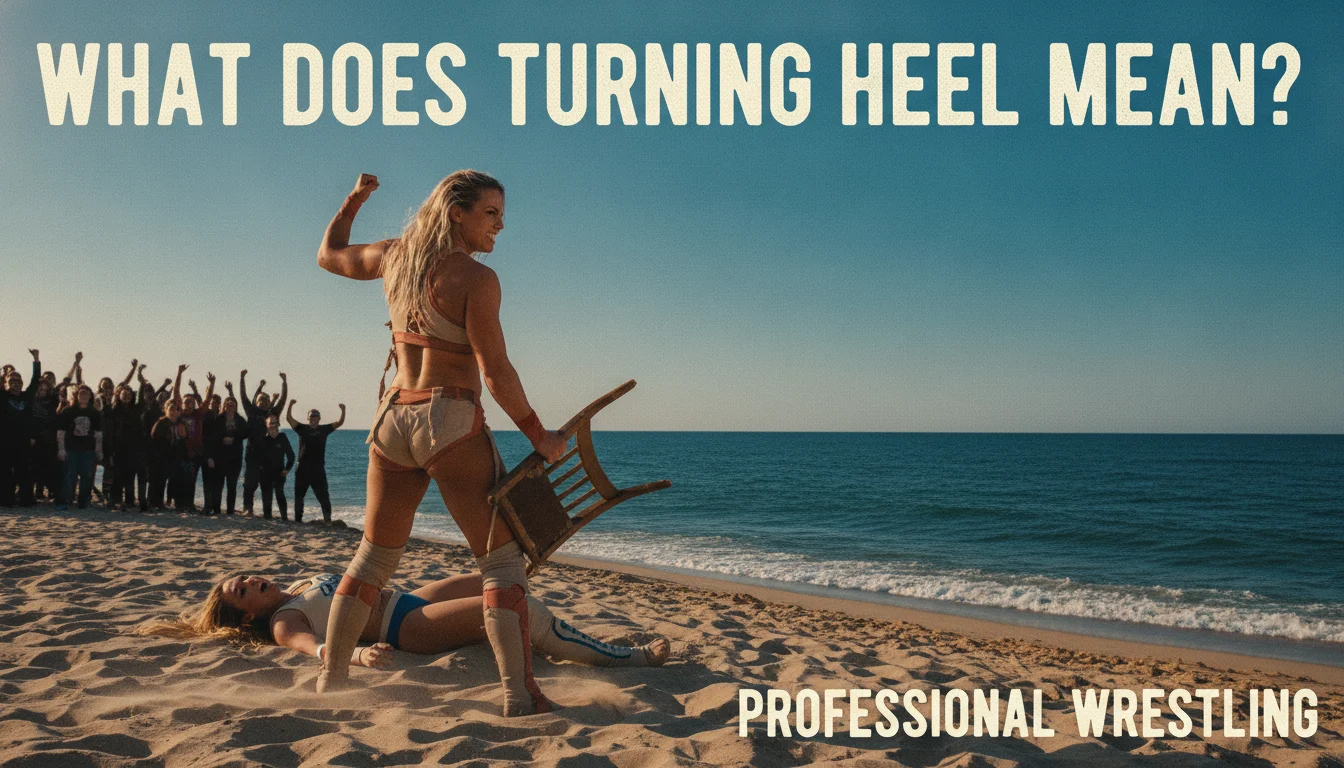
The Core Definition: Face vs. Heel
Understanding this type of mean starts with the face-versus-heel structure at the heart of professional wrestling. In professional wrestling, a heel is a wrestler who portrays a villain, ‘bad guy,’ ‘baddie,’ ‘evil-doer,’ or ‘rulebreaker,’ and acts as an antagonist to the faces, who are the heroic protagonist or ‘good guy’ characters. Wikipedia’s entry on heel (professional wrestling) notes that not everything a heel does must be villainous: heels need only to be booed or jeered by the audience to be effective characters. Most truly successful heels embrace other aspects of their devious personalities, such as cheating to win or using foreign objects.
The term turning heel describes the moment a performer switches from the face alignment to the heel alignment. It is a narrative pivot, not a real moral judgment. A face gives the crowd someone to support, while a heel gives that same crowd someone to oppose. The tension between those two roles is what makes professional wrestling emotionally compelling week after week.
How a Heel Turn Differs from a Face Turn
A heel turn is the direct opposite of a face turn. While a face turn sees a villain become a hero, a heel turn sees a hero become a villain. Dictionary.com defines heel turn as ‘a dramatic change of persona from a heroic face character to a villainous heel character.’ The reverse, a villainous heel character becoming a heroic face character, is the face turn.
Because wrestling promoters respond to audience reactions, a character may switch alignments multiple times across a career. The Undertaker, for example, switched between heel and face many times, as detailed by Wikipedia. If a given heel is cheered over the face, a promoter may opt to turn that heel to face or the other way around, or to make the wrestler do something even more despicable to encourage heel heat. Some performers display a mixture of both positive and negative character traits. In wrestling terminology, these characters are called tweeners.
Why Audiences Love to Hate a Heel
Heels exist to provide a foil to the face wrestlers. The most important role of a heel is that of the antagonist, because heels create the conflict that makes a match compelling. When fans ask this kind of heel mean, there is often an undercurrent of genuine disappointment, even though the turn itself is scripted entertainment.
In local American wrestling, it was common for the faces to be ‘local’ heroes such as Hulk Hogan, John Cena, and Stone Cold Steve Austin, while the heels were often portrayed as ‘foreign’ villains. Examples listed by Wikipedia include Gunther, Alberto Del Rio, Ivan Koloff, The Iron Sheik, Rusev/Miro, Jinder Mahal, and Muhammad Hassan. This dynamic gave fans a clear reason to boo the heel and cheer the hometown hero.
The Origin and Evolution of the Term ‘Heel Turn’
From Skating Maneuver to Wrestling Vocabulary
According to Dictionary.com, the phrase ‘heel turn’ was first recorded in 1895–1900 as a maneuver in skating. The wrestling-specific sense of the term emerged later, with the dictionary dating the professional wrestling definition to 1990–95. The broader figurative sense of a good-to-evil reversal appeared even more recently, around 2010–15. This timeline shows how a technical skating term became a wrestling vocabulary word and then a mainstream metaphor.
The shift from skating to wrestling is not accidental. In skating, a heel turn is a physical pivot on the heel. In wrestling, the word ‘heel’ already carried the meaning of a dishonorable or untrustworthy person, so a ‘heel turn’ naturally came to mean a pivot in moral alignment. The phrase’s evolution follows the way many sports terms migrate into general speech over time.
The 1940s and the Rise of Gorgeous George
Gorgeous George is generally regarded as one of the first wrestlers to implement a gimmick, let alone a ‘heel’ gimmick. Starting in the 1940s, he invented an extravagant, flamboyant ‘pretty boy’ persona with wavy blonde hair, colorful robes, and ritzy outfits. According to Wikipedia, the crowd widely jeered his persona and came to his matches hoping to see him defeated.
George relished this attention and exploded into one of the most famous and hated heels not only of his era but of all time. His example established a template that later theatrical heels would follow: dramatic outfits, an arrogant attitude, and valets or managers who amplified the audience’s dislike. Gorgeous George’s success proved that a compelling heel could draw as much interest as a heroic face.
Lucha Libre’s Rudo Tradition
In lucha libre, the Mexican professional wrestling style, a heel is known as a rudo. Most rudos are generally known for being brawlers and for using physical moves that emphasize brute strength or size, often wearing outfits akin to demons, devils, or other tricksters. This contrasts with heroic técnicos, who are generally known for using moves requiring technical skill, particularly aerial maneuvers.
The rudo and técnico distinction mirrors the heel and face dynamic in American wrestling, but with a stronger emphasis on visual symbolism. A rudo’s demonic or trickster outfit immediately signals the character’s alignment before a single move is executed. In this way, the question of what constitutes a good-to-bad turn is embedded in the visual language of lucha libre itself.
How a Heel Turn Works in Wrestling Storytelling
The Mechanics of a Good-to-Bad Turn
To understand what does turning heel mean in practice, it helps to follow a typical narrative sequence:
- Establish the face as trustworthy. The wrestler builds a reputation as a rule-following, crowd-pleasing hero.
- Introduce a stressor or temptation. A title opportunity, a grudge, or an authority figure applies pressure.
- Execute the betrayal. The face cheats, attacks a friend, or aligns with a villain during a high-stakes moment.
- Signal the turn visually. The wrestler’s demeanor, music, or alliances shift to underscore the new heel identity.
- Generate heat. The audience boos, and the wrestler leans into arrogance, cheating, or insults to sustain the reaction.
This sequence is not a rigid formula, but it captures the narrative logic. A heel turn works best when the audience feels the hero has abandoned something real, a friendship, a code, or a fanbase, so the turn produces genuine emotional heat rather than indifference.
Getting ‘Heat’ and Cheating to Win
The role of a heel is to get ‘heat,’ which means spurring the crowd to obstreperous hatred. Common heel behavior includes cheating to win, using the ropes for leverage while pinning, attacking with a weapon while the referee is looking away, employing dirty tactics such as blatant chokes or raking the eyes, attacking other wrestlers backstage, interfering with other wrestlers’ matches, insulting the fans or city, and acting in a haughty or superior manner.
Some heels do not or rarely break rules, but instead exhibit unlikeable, appalling, and deliberately offensive personality traits such as arrogance, cowardice, or contempt for the audience. Many heels do both, cheating as well as behaving nastily. The common thread is that the heel’s behavior is designed to make the audience want to see the face succeed against the odds.
The Undertaker and the Art of Reversibility
A heel turn is rarely permanent. The Undertaker, during his period as leader of The Ministry of Darkness, appeared as a priest of the occult in a hooded black robe and later switched back to face. This reversibility is central to understanding what does turning heel mean: it is a booking decision designed to refresh a character, not a fixed moral label.
WWE has been cited as a company that is doing away with the traditional heel/face format in part because audiences are willing to cheer for heels and boo babyfaces. When fans begin to cheer a heel, the alignment can blur, and a tweener character may emerge. This fluidity keeps wrestling storylines unpredictable and gives performers room to explore both light and dark character traits.
Pros and Cons of the Heel Turn as a Storytelling Device
Pros
- Refreshes stale character arcs. A well-timed heel turn resets a performer’s conflicts and opens up entirely new feuds that would be impossible in a face role.
- Maximizes emotional investment. Fans feel genuine shock and betrayal, which is far more powerful than a straightforward villain-versus-hero match.
- Extends a performer’s career longevity. Switching alignment gives a wrestler a new creative chapter, keeping audiences engaged across years or even decades.
- Drives pay-per-view interest. A high-profile heel turn, like John Cena’s in 2025, generates mainstream media coverage well beyond the wrestling fanbase.
Cons
- Risk of alienating the core fanbase. Turning a beloved face heel can backfire if the audience refuses to boo and continues cheering, undermining the intended narrative.
- Difficult to reverse cleanly. Once a performer is established as a villain, a face turn can feel unearned if the storytelling groundwork is not carefully laid.
- Can feel manipulative if overused. Repeated alignment switches erode the emotional stakes, making each subsequent turn feel less meaningful.
Key Roles in Professional Wrestling Compared
The table below summarizes the core alignments and terms associated with heel turns.
| Role/Term | Alignment | Typical Behavior | Audience Reaction |
|---|---|---|---|
| Face (babyface) | Heroic protagonist | Follows rules, fights fairly, champions the crowd | Cheers and support |
| Heel | Villainous antagonist | Cheats, breaks rules, insults fans, shows arrogance or cowardice | Boos and jeers |
| Tweener | In-between good and evil | Displays both positive and negative character traits | Mixed reactions |
| Rudo | Mexican heel | Brawler using brute strength, demonic or trickster outfits | Boos, especially in lucha libre |
| Técnico | Mexican face | Technical skill and aerial maneuvers | Cheers |
| Heel turn | Face to heel transition | Sudden betrayal or moral reversal | Shock, then boos |
| Face turn | Heel to face transition | Redemption or alliance with heroes | Cheers |
This table reflects definitions and descriptions from Wikipedia, Dictionary.com, and Urban Dictionary. In every alignment, the goal is narrative clarity: faces give the crowd someone to root for, heels give them someone to oppose, and tweeners keep the moral lines interesting.
What Does Turning Heel Mean in Slang and Pop Culture?
Heel Turn as Sudden Betrayal
Outside wrestling, what does turning heel mean has broadened into a vivid metaphor for real-world betrayal. Urban Dictionary defines a heel turn as when a person completely and suddenly, and often shockingly, goes from good to evil. The example from Disney’s Frozen, Hans revealing his plan to marry into the royal family and steal the throne, captures the emotional jolt perfectly.
The slang usage is not limited to wrestling fans. When a beloved fictional character betrays the protagonist, fans often describe the moment as a heel turn. The phrase works because it compresses a complex narrative beat into two words: sudden moral reversal and the audience’s feeling of shock. Dictionary.com’s example sentences show the term applied to politics and entertainment, including a governor’s heel turn on healthcare and a TV season finale described as ‘a heel turn for the ages.’
Turn Heel and Run: A Separate Older Idiom
There is an older idiom, ‘to turn heel and run,’ that means to run away or reverse direction immediately. WordReference forum users note that ‘to turn heel’ alone can mean to reverse direction and head back the way you came. This usage is entirely separate from the wrestling-alignment sense, but the two coexist in English.
In the WordReference thread, one user explains that the phrase ‘turn heel’ could mean ‘to turn heel and run,’ or could possibly, based on context, mean ‘turning into a heel.’ A heel is also a dishonorable, selfish, untrustworthy person in general English, so the two senses can overlap in literary or conversational usage. Context is everything.
What Does Turning Heel Mean in Knitting?
Turning the heel in knitting refers to a specific construction technique used when making socks. The heel turn is the section of short-row knitting that shapes the curved back of the heel cup, allowing the sock to fit the foot’s contour. It is a purely technical term with no connection to the wrestling or slang senses. Knitters searching for what does turning heel mean in a pattern context will find step-by-step short-row instructions rather than any reference to villains or betrayal. The shared vocabulary is a coincidence of the English language, nothing more.
John Cena’s Heel Turn: A Modern Case Study
The Elimination Chamber Moment in Toronto
For more than 20 years, John Cena established himself as one of WWE’s ultimate good guys, a 16-time world champion who preached hustle, loyalty, and respect. That changed at WWE’s Elimination Chamber event in Toronto on Saturday, March 1, 2025. After winning the men’s Elimination Chamber match to earn a shot at Undisputed WWE Champion Cody Rhodes at WrestleMania 41 in Las Vegas, Cena embraced Rhodes and then kicked him in the groin, following a throat-slashing gesture from The Rock.
According to Today.com, Cena then proceeded to hit Rhodes with objects including Rhodes’ championship belt. The live crowd reacted with shock, and the moment immediately became a talking point among wrestling fans and mainstream media alike. The presence of rapper Travis Scott added another layer of spectacle to the storyline.
‘For more than 20 years, John Cena established himself as one of WWE’s ultimate good guys, a 16-time world champion who preached hustle, loyalty and respect. That’s why it was so shocking when Cena did something so disrespectful at WWE’s Elimination Chamber event in Toronto.’ – Today.com, March 3, 2025
Why Cena’s Turn Shocked Fans
Cena’s turn was so shocking because he had been a babyface for his entire WWE run, a rarity in modern wrestling. The Urban Dictionary entry ‘John Cena Heel Turn,’ dated July 2, 2016, even described such a turn as fabled or extremely unlikely, which underscores how long fans had waited for the booking decision. The fact that it finally happened in 2025 gave the turn outsized cultural weight.
The emotional impact was not just about Cena. It was also about Cody Rhodes, the face champion who had refused The Rock’s demand to sell his soul. When Cena aligned himself with The Rock and attacked Rhodes, the story collapsed two heroic figures into one moment of betrayal. This is a textbook example of how a heel turn can reset multiple character arcs at once.
The Rock, Cody Rhodes, and the WrestleMania 41 Storyline
The angle tied directly to The Rock’s demand that Rhodes sell his soul, a plot point in WWE’s fictional universe. When Rhodes refused, Cena’s betrayal aligned him with The Rock and set up a high-stakes title match at WrestleMania 41 in Las Vegas. This case study answers what does turning heel mean in a contemporary context: it is a scripted allegiance shift engineered to maximize emotional response and pay-per-view interest.
The turn also demonstrates how wrestling uses alignment to build long-term stories. Cena’s victory in the Elimination Chamber gave him a legitimate claim to the title, but his heel turn transformed him from a fan favorite into a villain with a clear motive. The result is a match with richer emotional stakes than a simple title defense.
Famous Heels and Historic Heel Turns
Gorgeous George, The Iron Sheik, and Classic Foreign Heels
In local American wrestling, faces were often local heroes such as Hulk Hogan, John Cena, and Stone Cold Steve Austin, while heels were often portrayed as ‘foreign’ villains. Examples include Gunther, Alberto Del Rio, Ivan Koloff, The Iron Sheik, Rusev/Miro, Jinder Mahal, and Muhammad Hassan. The Iron Sheik and Nikolai Volkoff, managed by Freddie Blassie, taunted American crowds at Madison Square Garden in the 1980s.
These classic heels used nationalism and cultural stereotypes to draw heat. The crowd’s boos were part of the show, and the heel’s job was to make the audience want to see the local hero win. Gorgeous George, by contrast, drew heat through vanity and flamboyance rather than foreign menace. Both approaches illustrate that heel heat can come from many different character traits.
The Undertaker and Ministry of Darkness
The Undertaker is a dramatic example of a performer who switched between portraying a heel or a face on many occasions throughout his career. As leader of The Ministry of Darkness, he appeared as a priest of the occult in a hooded black robe, a far cry from his face personas. This ability to pivot back and forth is a recurring answer to what turning heel means for performers with long careers.
The Undertaker’s character work shows that a heel turn can be as much about visual presentation as behavior. A hooded robe, demonic makeup, or a change in entrance music can instantly communicate the new alignment. The Ministry of Darkness era remains one of the most memorable heel runs in WWE history precisely because it combined theatrical imagery with in-ring dominance.
The Rock and Modern Heel Turns
ESPN has covered WWE heel turns from The Rock to John Cena, listing top moments across the company’s history. The Rock himself has shifted between face and heel multiple times, often using his charisma to make the crowd cheer him even when he is supposed to be a heel. This blurring of alignment is why WWE has been cited as a company doing away with the traditional heel/face format in part because audiences are willing to cheer for heels and boo babyfaces.
Modern heel turns often depend less on clear good-versus-evil binaries and more on complex character motivations. Cena’s turn, for example, was rooted in frustration and ambition rather than outright evil. This complexity makes the story feel more contemporary, but the core mechanic remains the same: a face abandons the audience’s expectations and becomes the antagonist.
‘WWE has been cited as a company that is doing away with the traditional heel/face format due in part to audiences’ willingness to cheer for heels and boo babyfaces.’ – Wikipedia, Heel (professional wrestling)
What Does Turning Heel Mean for Wrestling Fans and Storylines?
Why the Turn Keeps Wrestling Fresh
A well-timed heel turn resets a character’s conflicts and creates new feuds. Without alignment shifts, storylines stagnate. The question of what does turning heel mean is therefore not just about vocabulary. It is about the engine of professional wrestling drama. A face who remains a face forever eventually runs out of fresh opponents, but a heel turn opens up a new set of rivalries and narrative possibilities.
The turn also refreshes the audience’s emotional investment. When a beloved hero turns villain, fans are forced to re-evaluate everything they thought they knew about the character. This re-evaluation is exactly what keeps weekly wrestling television compelling over years and decades.
How to Spot a Heel Turn Coming
Fans learn to read the signs: a sudden change in music, a lingering handshake, a post-match attack, or an alliance with a known villain. These storytelling cues build anticipation. When a promoter turns a face heel, the goal is to make the turn feel inevitable in hindsight but shocking in the moment. Cena’s turn followed this pattern, with the post-match embrace serving as the calm before the betrayal.
Not every heel turn is telegraphed, and some are designed to be complete surprises. The best turns balance foreshadowing and shock so that the audience feels both ‘I should have seen that coming’ and ‘I can’t believe that just happened.’ This balance is a hallmark of effective wrestling booking.
The Broader Cultural Metaphor
Because wrestling terms cross into everyday speech, what does turning heel mean can also describe political betrayals, corporate reversals, or celebrity scandals. The metaphor persists because it captures a universal narrative: trust broken in a single, visible moment. When a public figure abandons a previously held principle, commentators may reach for the wrestling term because it is vivid and instantly understood.
The phrase also carries a hint of performance. A heel turn in wrestling is scripted, and calling a real-world reversal a ‘heel turn’ can imply that the person is performing a role or making a calculated change rather than undergoing a genuine moral evolution. Dictionary.com dates the figurative sense to around 2010–15, which aligns with the rise of streaming TV antiheroes and social media debates about character arcs. As wrestling terms continue to enter everyday speech, the phrase is likely to become even more common outside the ring.
Frequently Asked Questions
What does turning heel mean in simple terms?
Turning heel means a professional wrestler changes from a heroic ‘face’ character to a villainous ‘heel’ character, often through a sudden betrayal or rule-breaking moment. The shift is scripted and designed to generate boos from the audience.
What is the opposite of a heel turn?
The opposite is a face turn, when a villainous heel becomes a heroic face, typically through redemption or aligning with the good guys. Both types of alignment shift are standard tools in professional wrestling storytelling.
Where did the term ‘heel turn’ come from?
According to Dictionary.com, ‘heel turn’ was first recorded in 1895–1900 as a skating maneuver. The wrestling definition emerged around 1990–95, and the broader betrayal sense entered common usage around 2010–15.
Is a heel turn real or scripted?
A heel turn is scripted. Professional wrestling is predetermined entertainment, so the turn is a planned character shift designed to create conflict and audience reaction. The emotional response from fans, however, is entirely real.
Why did John Cena turn heel?
In WWE’s storyline, John Cena turned heel at Elimination Chamber in March 2025 after aligning with The Rock and attacking Cody Rhodes, setting up a WrestleMania 41 title match. The turn was shocking because Cena had been a babyface for his entire WWE career.
What is a ‘rudo’ in wrestling?
A rudo is the Mexican lucha libre term for a heel. Rudos are often brawlers, using brute strength and wearing demonic or trickster-inspired outfits, contrasting with the aerial técnicos who play the heroic role.
What does turning heel mean in knitting?
In knitting, turning the heel refers to a short-row technique used to shape the curved heel section of a sock. It has no connection to the wrestling or slang senses of the phrase. Knitters following a sock pattern will find specific stitch instructions under this heading.