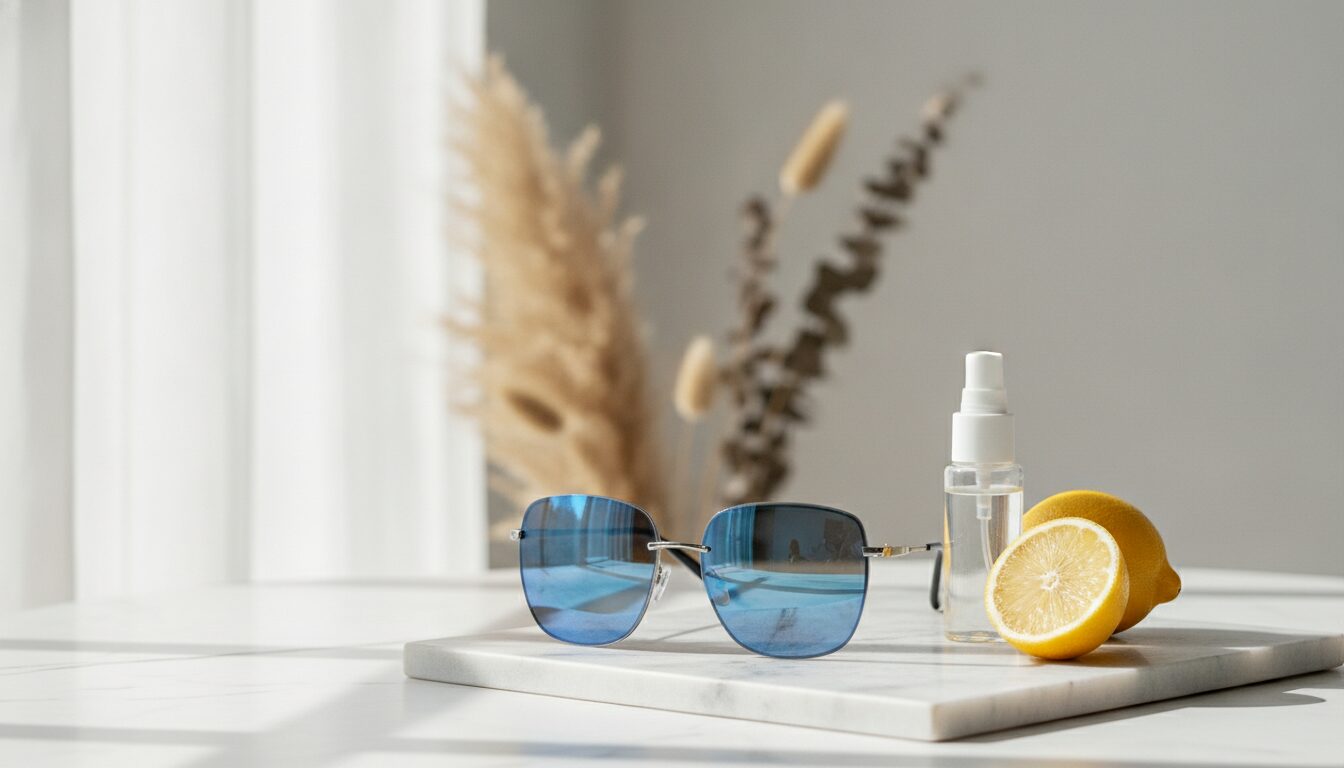
UV protector sunglasses are eyewear designed to block 100% of harmful UVA and UVB rays, certified to the UV400 standard. Think of them as the one accessory your eyes genuinely can’t afford to skip, whether you’re on a sun-drenched terrace in Positano or a snowy slope in the Alps.
Key Takeaways
- protector sunglasses block 100% of UVA and UVB rays, which is critical for preventing cataracts and long-term eye damage.
- Always look for the UV400 or “100% UV protection” label. Dark lenses alone offer zero guarantee of UV blocking.
- Polarized lenses reduce glare but don’t provide UV protection unless paired with a UV coating.
- Polycarbonate lenses offer natural UV absorption and impact resistance, making them ideal for travel, sport, and daily wear.
- Wraparound and oversized frames deliver better coverage by blocking peripheral UV light.
- Price is not a reliable indicator of UV protection. A $15 UV400-certified pair can perform as well as a $300 designer frame.
Why UV Protector Sunglasses Are a Necessity, Not a Luxury
The Invisible Threat of UV Radiation
UV radiation is a form of invisible electromagnetic energy emitted by the sun, and it reaches your eyes even when you can’t feel it. It penetrates clouds, bounces off water, sand, and concrete, and follows you from the beach in Tulum to a shaded café in Santorini. The World Health Organization estimates that up to 20% of cataract cases may be linked to UV exposure, which puts the stakes in sharp focus.
Long-Term Eye Damage Beyond Sunburn
Short-term overexposure causes photokeratitis, essentially a painful corneal sunburn. But the real concern is cumulative. UVA rays penetrate deep into the eye, damaging the macula and raising the risk of macular degeneration. UVB rays target the lens and cornea, accelerating cataract formation. According to vision care provider VSP, 5-10% of skin cancers occur around the eyes, often on the eyelids where sunscreen simply doesn’t reach. Your this type of sunglasses are the physical shield that fills that gap.
Why Ordinary Sunglasses Fall Short
Dark-tinted lenses without a UV filter can actually be worse than wearing nothing at all. They cause your pupils to dilate, letting even more UV radiation reach the retina. Genuine this kind of sunglasses need a built-in UV-blocking capability, not just a deep tint. Darkness is not defense. Certification is.
Understanding UV Radiation and Eye Damage
Types of UV Rays: UVA, UVB, UVC
UV radiation splits into three categories: UVA (320-400 nm), UVB (290-320 nm), and UVC (100-290 nm). UVC is completely absorbed by the Earth’s ozone layer and never reaches the surface. Both UVA and UVB do reach us, and UVA accounts for up to 95% of the UV radiation that hits the Earth’s surface on any given day.
How UV Rays Affect Different Eye Structures
UVA rays, though less energetic, penetrate deeper into the eye and can damage the retina and macula over time. UVB rays are more intense and primarily harm the lens and cornea. Years of unprotected exposure contribute to cataracts, macular degeneration, pinguecula, and pterygium, all conditions that can permanently impair vision.
Cumulative vs. Acute Exposure
One unprotected afternoon at the beach can leave your eyes red, gritty, and watery, classic signs of photokeratitis. Years of that same exposure compound the risk of sight-threatening disease. Children are especially vulnerable: their ocular lenses are clearer and admit significantly more UV radiation than adults’. Starting them in uv protector early is one of the most effective preventive steps a parent can take, as the World Health Organization recommends.
Altitude, Ozone, and Environmental UV Intensity
UV intensity isn’t constant. At higher altitudes, the atmosphere is thinner and filters less radiation. For every 1,000 meters of elevation gain, UV exposure increases by roughly 10-12%. Ozone layer thinning in certain regions compounds this further. If you’re hiking in the Dolomites or skiing above 2,000 meters, your protector sunglasses need to work harder than they do at sea level. Wraparound glacier glasses exist for exactly this reason.
UV Exposure Across Age Groups
Children absorb the most UV radiation over a lifetime simply because they spend more time outdoors. But the elderly face a different risk: the natural lens of the eye yellows with age and filters some UV, yet decades of accumulated damage mean conditions like macular degeneration are far more prevalent in adults over 60. According to the American Academy of Ophthalmology, cataracts affect more than half of Americans by age 80, with UV exposure cited as a key contributing factor. Consistent use of this type of sunglasses across every decade of life is the most straightforward way to reduce that risk.
Key Features of the Best UV Protector Sunglasses
The UV400 Standard and What It Means
UV400 certification means lenses block all light rays with wavelengths up to 400 nanometers, covering 100% of UVA and UVB. When you’re shopping for this kind of sunglasses, this label is the one thing that’s non-negotiable. It confirms the glasses meet ANSI Z80.3 or equivalent international standards for UV transmission.
Polarization vs. UV Protection: Clearing the Confusion
Polarization cuts glare reflected off horizontal surfaces like water or roads, but it does not inherently block UV radiation. Many polarized lenses do include a UV coating, but you should always verify. For complete eye safety, look for uv protector labeled as both UV400 and polarized if glare reduction matters to you.
Frame Design and Coverage
The best protector sunglasses aren’t only about lenses. Frame design dramatically affects how much protection you actually get. Wraparound styles block peripheral UV rays that slip in at the temples. Oversized frames and close-fitting designs minimize gaps. Brands like SunStoggles incorporate discreet side and top shields for near-360° coverage, which is ideal for long days on the water or at altitude.
“The frame is just as important as the lens. A UV400 lens in a small, loosely fitting frame still leaves the eye exposed to peripheral radiation. Coverage area matters.” – American Academy of Ophthalmology, patient education guidelines
Lens Materials and Their UV-Blocking Properties
Polycarbonate: The All-Rounder
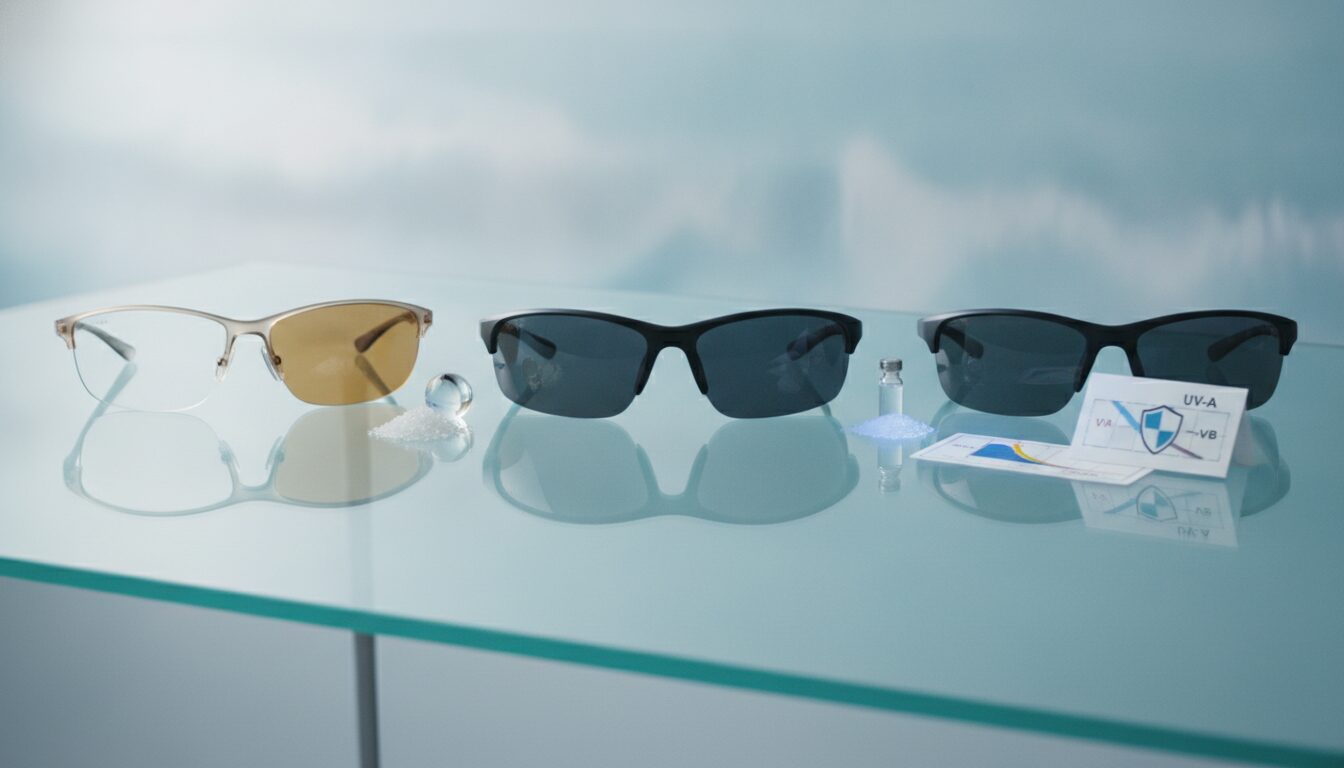
Polycarbonate is a lightweight, impact-resistant lens material that naturally absorbs UV radiation without needing an additional coating. It’s the standard choice for sports eyewear and children’s frames. You’ll find polycarbonate this type of sunglasses across every price point, from $10 pairs to $300+ designer frames, making it the most accessible UV-safe material on the market.
Glass Lenses: Clarity vs. Safety
Glass lenses offer superior optical clarity but are heavy and prone to shattering. They require a UV-treating coating to block rays, and that coating can degrade with time and heavy cleaning. If you choose glass this kind of sunglasses, confirm they still meet UV400 standards after extended use.
Acrylic and Other Plastic Lenses
Acrylic and basic plastic lenses are the most affordable option but also the least durable. They scratch easily and rely entirely on a UV coating for protection. Nylon lenses, common in performance eyewear, are flexible and highly impact-resistant but also require a UV coating to meet the UV400 standard.
| Lens Material | UV Protection | Impact Resistance | Weight | Typical Price Range |
|---|---|---|---|---|
| Polycarbonate | Naturally UV-blocking | High | Lightweight | $10–$300+ |
| Glass | Requires coating | Low (shatters easily) | Heavy | $50–$500+ |
| Acrylic | Requires coating | Moderate | Lightweight | $5–$50 |
| Nylon | Requires coating | High | Lightweight | $30–$200+ |
No matter which material you choose, always confirm your uv protector carry a UV400 sticker or engraving before you buy.
Tints and Coatings: Enhancing Protection and Comfort
Lens Tint Colors and Their Purposes
Tints don’t determine UV protection, but they do shape your visual experience in meaningful ways. Gray lenses preserve true color perception and are ideal for bright, open sun. Brown and amber enhance contrast and depth, making them perfect for driving and hiking. Green reduces glare and eye strain while keeping color balance natural. Blue-blocking tints work well in snowy or foggy conditions. Photochromic lenses darken in sunlight and clear indoors, offering real convenience for prescription wearers who move between environments.
Essential Coatings for Durability and Performance
Beyond UV coating, an anti-reflective (AR) coating minimizes bounce-back reflections, improving clarity and reducing squinting. Mirror coatings reflect additional light and can complement the protection of your protector sunglasses on particularly bright days. Hydrophobic and oleophobic coatings repel water, oil, and smudges, keeping lenses clear during outdoor activities, which matters whether you’re paddleboarding in St. Barts or hiking coastal trails in Portugal.
When to Choose Photochromic Lenses
If you move frequently between indoors and outdoors, photochromic this type of sunglasses eliminate the need to carry two pairs. One important caveat: most photochromic lenses don’t darken behind a car’s UV-blocking windshield, so a dedicated pair of polarized driving sunglasses is still worth having.
Prescription UV Protector Sunglasses: What You Need to Know
Prescription sunglasses are a fully viable option for anyone who wears corrective lenses. Most optical labs can apply UV400 coatings to prescription lenses in polycarbonate or Trivex materials, both of which offer inherent UV absorption. Trivex lenses, priced typically between $100 and $300 for a complete pair, are slightly lighter than polycarbonate and offer excellent optical clarity for prescription wearers. Many premium brands, including Ray-Ban and Maui Jim, offer prescription-compatible frames in their UV400 sunglass lines. If you wear contacts, pairing them with non-prescription this kind of sunglasses is equally effective, since UV protection comes from the lens, not the prescription.
“Prescription sunglasses with UV400 lenses are one of the most underutilized tools in preventive eye care. Patients who need vision correction often skip sun protection entirely because they don’t want to manage two pairs of glasses.” – Vision Council of America, annual eye health report
How to Test UV Protector Sunglasses at Home
Check the Label and Certification
Start here: look for a tag, sticker, or engraving that reads “100% UV protection,” “UV400,” or “UV absorption up to 400nm.” Reputable brands always include this information. If the label is missing, treat the glasses as unverified and shop elsewhere.
The Optical Distortion Test
Hold the sunglasses at arm’s length and look at a rectangular pattern, like a tiled floor or a window frame. Slowly move the lenses up, down, and side to side. If the lines distort, waver, or swirl, the lenses have optical imperfections that cause eye strain and may signal subpar UV coatings.
Using a UV Flashlight and Reactive Card (DIY Method)
For a more direct check, this simple at-home experiment takes about two minutes.
- Step 1: Get a UV flashlight (365nm or 395nm) and a UV-reactive object, such as a driver’s license or a banknote with a security thread that glows under UV light.
- Step 2: Shine the UV light on the object and note the glowing pattern.
- Step 3: Place the lens of your uv protector directly between the light and the object.
- Step 4: If the glow substantially fades or disappears, the lens is working. If there’s no noticeable change, the lenses likely lack adequate UV blocking.
This DIY method isn’t laboratory-grade, but it’s a fast, practical way to verify that your protector sunglasses aren’t just tinted glass.
Top Brands and Where to Buy UV Protector Sunglasses
Budget-Friendly Options
You don’t need to spend a fortune to get real protection. Amazon carries over 10,000 results for UV-blocking sunglasses, with brands like KALIYADI, FIMILU, and ZENOTTIC offering polarized UV400 pairs for under $25. Thousands of verified reviews confirm that affordable this type of sunglasses can absolutely meet safety standards.
Mid-Range Favorites: Knockaround and SunStoggles
Knockaround’s UV400 sunglasses start at $35 and come in a wide range of colors and frame styles. SunStoggles go further with built-in side and top shields that deliver more than 99% UV blockage from all angles, starting at $55. These uv protector sunglasses prove that serious coverage and real style aren’t mutually exclusive.
Premium Picks: Ray-Ban, Maui Jim, Oakley
For those who want the full package, Ray-Ban frames start around $150 and Maui Jim around $200, both renowned for optical clarity and robust UV400 coatings. Oakley’s sport-oriented uv protector sunglasses, many featuring High Definition Optics, meet ANSI Z87.1 standards for impact resistance alongside UV protection. VSP recommends these brands for comprehensive, long-term eye defense.
Pros and Cons of UV Protector Sunglasses
Pros
- Block 100% of UVA and UVB rays, directly reducing the risk of cataracts, macular degeneration, and photokeratitis.
- Available at every price point, from under $15 to $500+, with UV400 protection accessible regardless of budget.
- Polycarbonate and Trivex lenses offer natural UV absorption without relying on a coating that can degrade.
- Wraparound and oversized styles add peripheral coverage that standard frames can’t match.
- Prescription-compatible options mean vision correction and UV protection can coexist in a single pair.
Cons
- UV coatings on glass and acrylic lenses can degrade over 2-3 years, requiring replacement even if the frame looks fine.
- Polarization and UV protection are separate features. Buying polarized lenses doesn’t guarantee UV400 certification.
- Photochromic lenses don’t activate behind car windshields, limiting their usefulness for driving.
- Counterfeit or mislabeled UV400 sunglasses exist, particularly in unregulated markets, making label verification essential.
Common Myths About UV Protector Sunglasses
Myth 1: Darker Lenses Mean Better UV Protection
The darkness of a lens has zero correlation with its ability to block UV radiation. Dark, non-UV-blocking lenses actually increase retinal exposure by causing pupils to dilate. Always verify the UV400 label, regardless of tint depth.
Myth 2: Polarized Lenses Automatically Block UV
While most polarized lenses today include a UV filter, polarization is not a UV-blocking technology on its own. You can find polarized clip-ons with no UV protection at all. Always check for a separate UV400 indication on your uv protector sunglasses.
Myth 3: UV Protection Is Only Needed in Summer
UV rays are present 365 days a year, rain or shine. Snow reflects a significant portion of UV radiation, intensifying exposure at ski resorts and winter destinations. Skiers, hikers, and outdoor workers need uv protector sunglasses just as much in January as in July.
As of June 2026, the resort and travel accessories market continues to prioritize UV-certified eyewear as a core category, with stylists and editors at publications like Vogue and Harper’s Bazaar consistently recommending UV400 certification as the baseline standard for any sunglass purchase this season.
Ready to find your perfect pair? Shop the collection at lexazi.com, with free shipping on orders over $75.
Frequently Asked Questions
What does UV400 mean in sunglasses?
UV400 is a certification indicating that lenses block all ultraviolet light with wavelengths up to 400 nanometers, covering 100% of UVA and UVB rays. It’s the gold standard for uv protector sunglasses and the label you should always look for before purchasing.
Can I add UV protection to my existing glasses?
Yes. If your lenses are polycarbonate or Trivex, they already have built-in UV protection. For other materials, an optician can apply a UV-blocking coating, though factory-applied UV400 protection tends to be more durable and consistent over time.
How often should I replace UV protector sunglasses?
Replace your uv protector sunglasses every two to three years, or sooner if the lenses become scratched or the coating shows visible wear. Even high-quality UV coatings can degrade with heavy use and frequent cleaning.
Are expensive sunglasses better at blocking UV rays?
Not necessarily. The American Academy of Ophthalmology confirms that price is not a reliable predictor of UV protection. A $10 pair labeled UV400 can be just as effective as a $300 designer pair, provided the certification is genuine and the label is verified.
Do children need UV protector sunglasses?
Absolutely. Children’s eyes transmit more UV radiation than adults’, and damage accumulates over a lifetime. Wraparound polycarbonate uv protector sunglasses are the safest and most practical choice for kids, offering both natural UV absorption and impact resistance.
Can I test UV protection with my smartphone?
No. Smartphone screens don’t emit UV light and can’t measure UV transmission. The most reliable at-home method is using a UV flashlight paired with a UV-reactive card. For a definitive answer, visit an eyewear professional with a spectrophotometer.