Key Takeaways
- Supplies for necklace making include beads, wire, thread, findings, and specialized tools like pliers.
- Quality materials , such as sterling silver, gold-filled, or 316 stainless steel , ensure durability and a professional finish.
- Beginners should invest in a starter kit with chain-nose pliers, wire cutters, crimp beads, and beading wire.
- Online retailers like Halstead, Fire Mountain Gems, and JewelrySupply offer extensive catalogs with over 1,600 items each.
- A Mediterranean-inspired palette , turquoise, coral, gold, and shell , transforms simple necklaces into resort-ready statements.
Supplies for necklace making are the essential materials and tools, beads, wire, findings, and pliers, that you need to design and assemble custom necklaces.
Understanding Necklace Making as a Craft
The Art and Science of Stringing
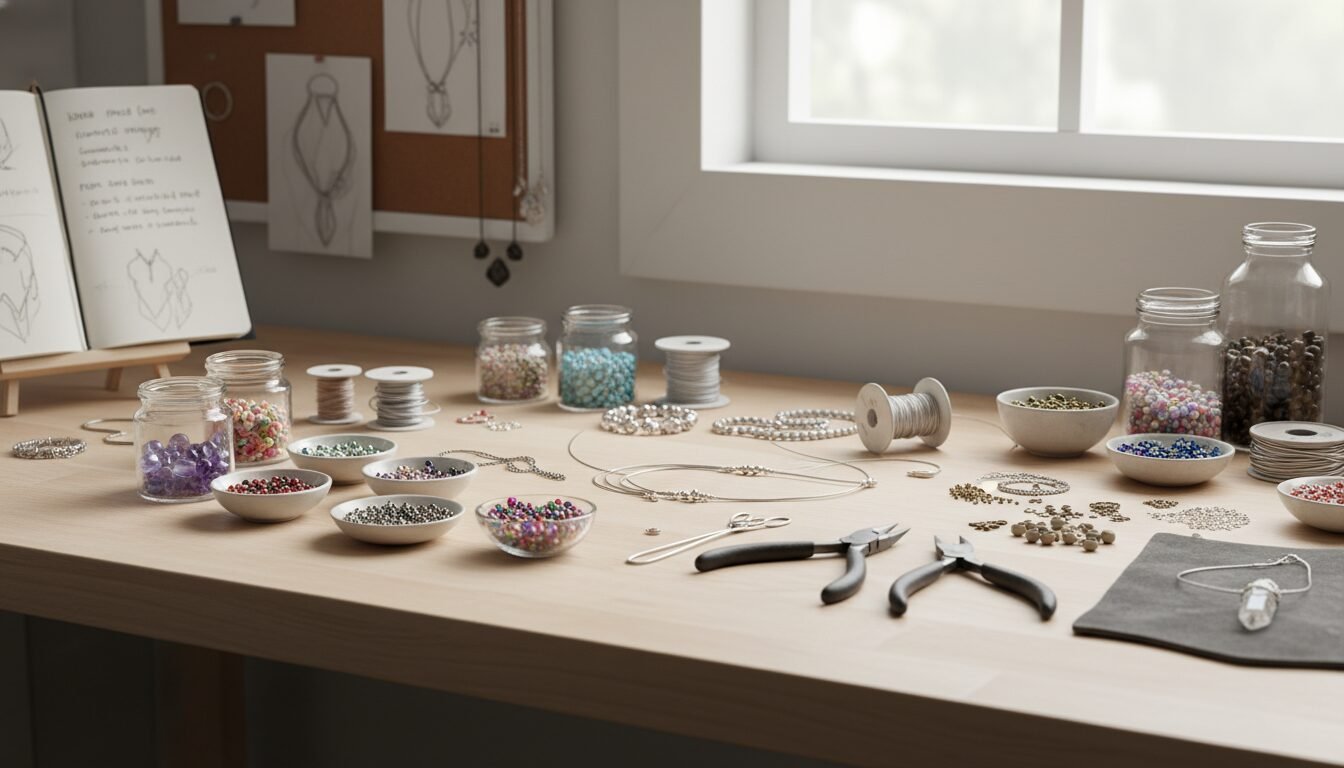
Necklace making blends artistic vision with technical precision. A well-constructed necklace requires an understanding of how materials interact , the weight of beads, the tensile strength of the stringing medium, and the security of the clasp. The process is more than threading beads onto a cord; it involves planning the layout, selecting the proper findings, and using the right tools to achieve a polished result. According to industry reports, the global jewelry-making market has grown steadily, with handmade accessories gaining popularity among style-conscious women. This reflects a rising interest in personalized, one-of-a-kind pieces that tell a story.
Essential Terminology Every Necklace Maker Should Know
Before shopping for the right supplies for necklace making, it helps to learn a few key terms. Findings are the functional components that hold a piece together , clasps, jump rings, crimp beads, and ear wires. Beading wire is a flexible, nylon-coated stainless steel cable used for stringing. Crimping is the technique of flattening a crimp bead to secure the wire and attach a clasp. Bead caps are decorative metal pieces that cradle a bead, adding detail. Headpins and eyepins are wires used to create dangles and links. Familiarity with these terms makes it easier to navigate supply catalogs and communicate with other artisans.
Core Supplies for Necklace Making
Beads and Focals: The Heart of Your Necklace
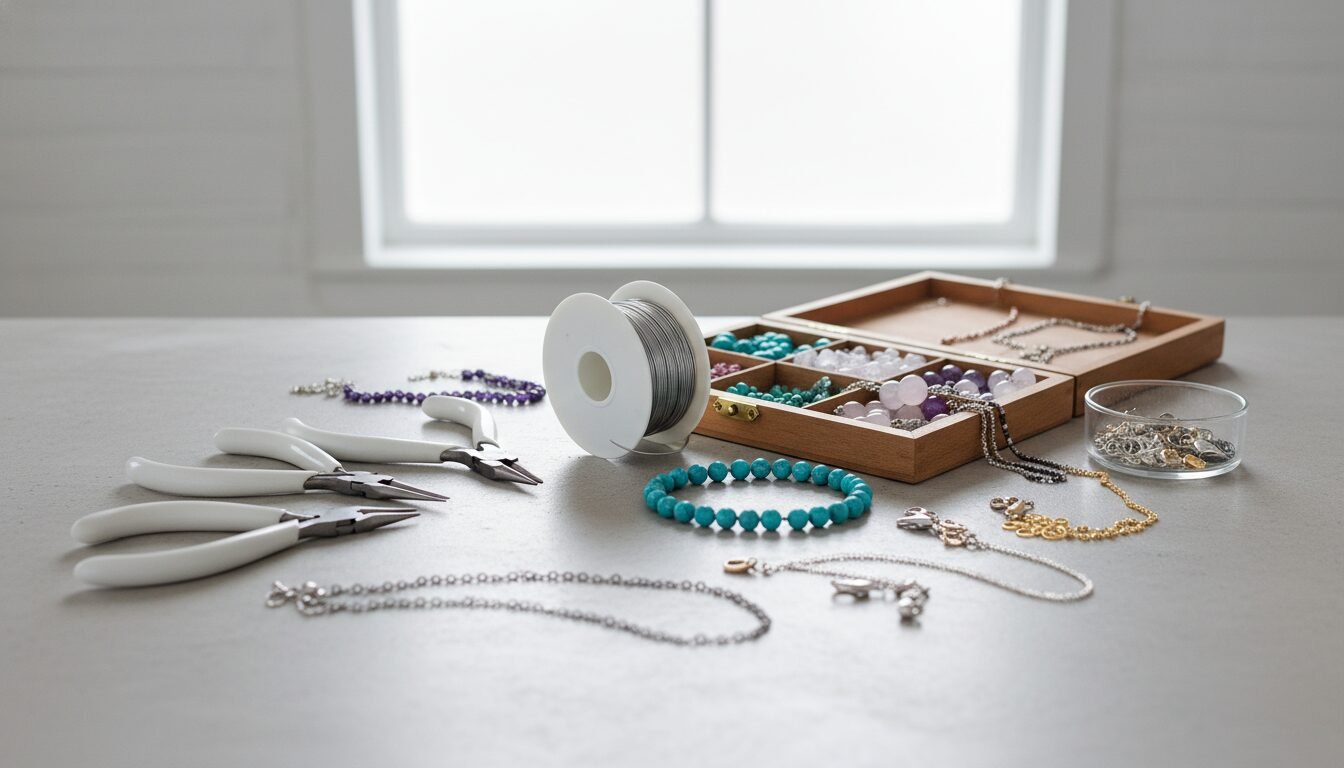
Beads define the look of any necklace. They come in countless materials , glass, gemstone, metal, wood, shell, ceramic, and resin. For a Mediterranean resort feel, consider natural turquoise, coral, or pearl beads, or earthy lava and wood tones. Focal beads, such as a large pendant or an artisan lampwork piece, anchor the design. When choosing beads, pay attention to hole size; it must accommodate your stringing material. Seed beads, often used in intricate weaving, require fine needles and thin thread. Halstead Bead stocks hundreds of bead shapes and materials, including sterling silver and 14k gold-filled options.
Stringing Materials: Wires, Threads, and Cords
The backbone of any necklace is the stringing medium. Beading wire (like Soft Flex or Beadalon) is a top choice for strength and flexibility; it resists kinking and holds its shape. Silk thread knots beautifully between pearls and creates a luxurious drape. Nylon cord works well for casual, knotted designs. Stretch cord allows for clasp-free styles. Each material has ideal applications, and the weight of your beads should guide your choice. For heavy gemstones, use a .024-inch or .030-inch wire; for delicate seed beads, a .010-inch silk is sufficient.
Findings: Clasps, Jump Rings, and End Caps
Findings are the unsung heroes when you’re gathering supplies for necklace making , they ensure your piece stays secure and looks professional. A lobster clasp or a spring ring clasp is standard; a toggle or magnetic clasp adds a decorative touch. Jump rings connect components, and crimp beads or crimp tubes finish the ends. Use split rings for heavier pendants. When sourcing findings, opt for materials that match your beads , sterling silver, gold-filled, or stainless steel. The Bead Chest recommends always having extra findings on hand, as they are small and easy to misplace.
Step-by-Step: Assembling Your First Beaded Necklace
Designing Your Layout
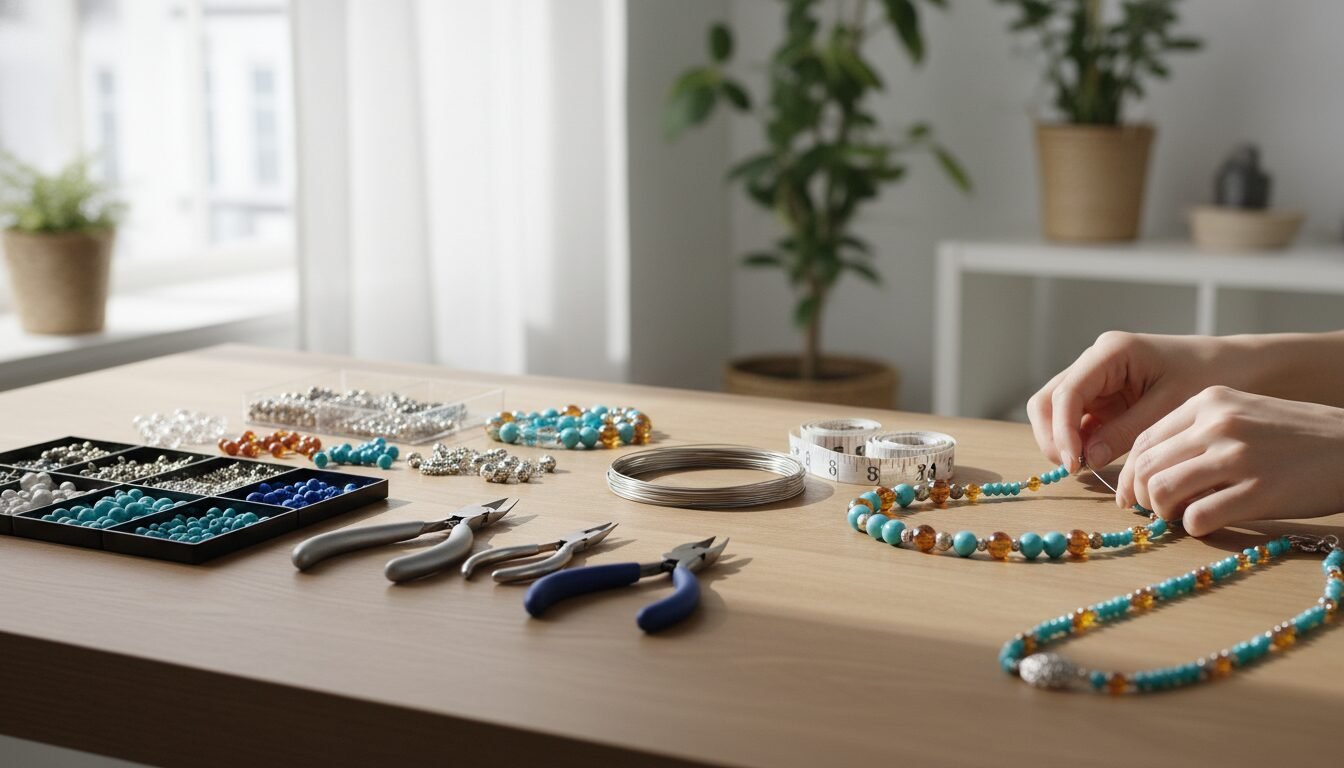
Start by laying out your beads on a bead board or a soft cloth. A bead board has numbered channels and compartments that help you arrange the pattern and measure length. Decide on a symmetrical or asymmetrical design, and place the focal bead at the center. For a balanced look, flank the focal with graduated smaller beads. This planning phase prevents mistakes and wasted materials.
Stringing, Crimping, and Securing
With quality supplies for necklace making on hand, stringing is straightforward. Cut a length of beading wire about 3 inches longer than your desired finished necklace. Thread a crimp bead and one half of the clasp onto the wire, loop the wire back through the crimp, and flatten it with chain-nose pliers. String your beads in the planned order, checking the length. When adding a pendant, attach it with a jump ring before stringing. At the other end, add a crimp bead and the other clasp half, then crimp securely. Use crimp covers for a neat finish.
- Step 1: Double-check your design layout and bead order.
- Step 2: Cut wire to length, adding 3 extra inches for finishing.
- Step 3: Thread a crimp bead and the clasp end; loop back and crimp.
- Step 4: String all beads, checking tension and drape.
- Step 5: Finish the other end with a crimp bead and the second clasp part.
- Step 6: Close the crimp securely with pliers and add a crimp cover for a polished look.
Adding the Clasp and Finishing Touches
After crimping, test the clasp several times to ensure it holds. Tug gently on the wire , there should be no slipping. If you used beading wire, the stiffer material may cause the necklace to resist lying flat; break it in by gently shaping the curve with your hands. Finally, examine the piece for sharp edges or uneven spacing and make adjustments. A completed necklace should feel comfortable and look exactly as you envisioned.
Choosing Quality Materials: A Buyer’s Guide
Metals: Sterling Silver, Gold-Filled, and Hypoallergenic Options
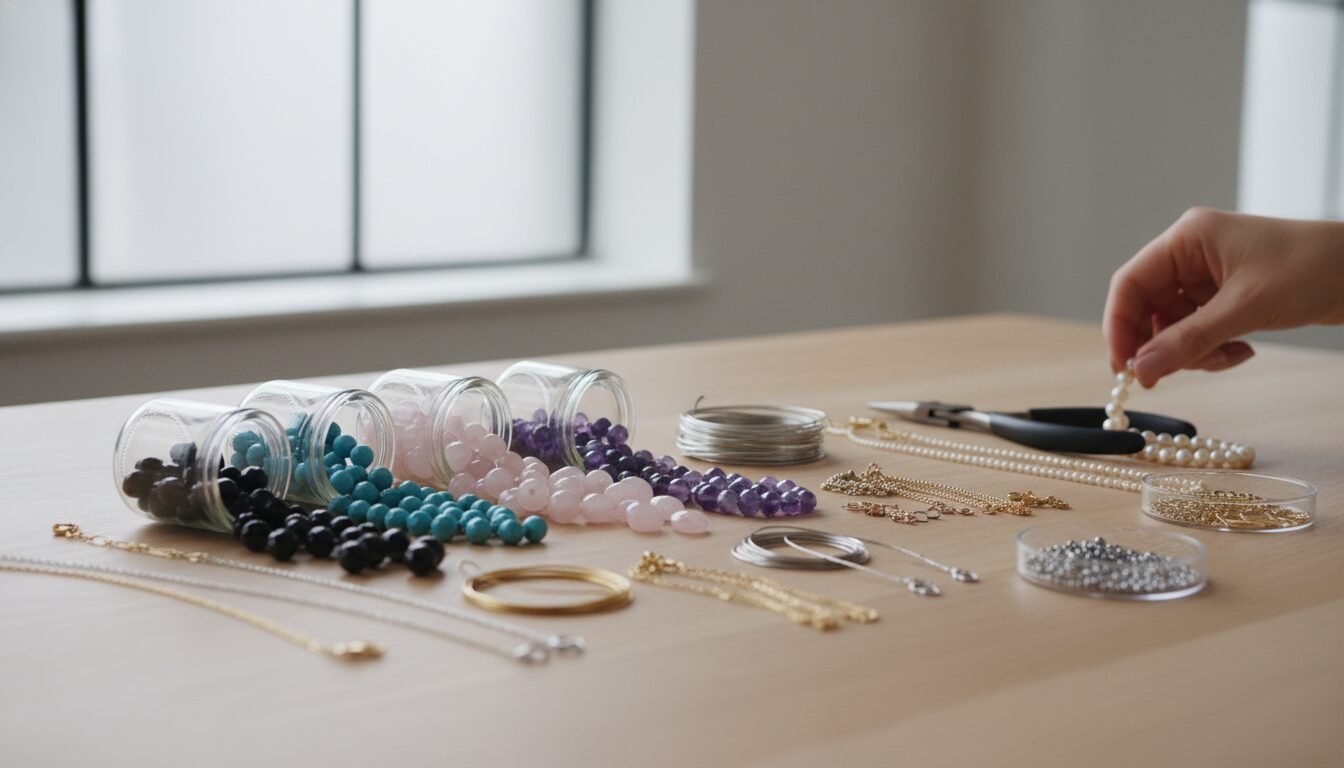
Metal components influence both the longevity and the skin-friendliness of your necklace. Sterling silver (92.5% pure silver) is a classic choice, tarnishing slowly with proper care. Gold-filled items have a thick layer of gold bonded to a brass core, offering durability at a lower cost than solid gold. For those with metal allergies, 316 surgical stainless steel is an excellent alternative , it is hypoallergenic, lead-free, and exceptionally tarnish-resistant. JewelrySupply.com states that their anti-tarnish tabs can protect metal components for up to 3 years when stored properly.
“For clients with sensitive skin, we recommend 316 surgical stainless steel. It’s hypoallergenic, durable, and resists tarnish for years,” explains a product specialist at JewelrySupply.com.
Gemstones, Crystals, and Glass: Elevating Your Design
Natural gemstones like turquoise, amethyst, and garnet add color and value. Austrian crystals from Swarovski® offer brilliant sparkle. Glass beads , Czech fire-polished or lampwork , provide endless variety. When using heavy gemstone beads, reinforce the stringing material and use a double strand or wire for extra support. Artbeads.com is known for its premium seed beads and vibrant Czech glass, often favored by designers seeking a professional finish.
Sustainable and Eco-Friendly Options
As sustainability gains importance, many artisans seek eco-conscious supplies for necklace making. Recycled sterling silver and gold-filled wire are available from brands like Halstead. Natural materials , wood, coconut shell, bone, and tagua nut , are renewable and lightweight. Using linen or hemp cord instead of synthetic fibers reduces plastic waste. Look for suppliers that disclose their sourcing practices; for example, Fire Mountain Gems partners with artisans worldwide to bring fair-trade beads to market.
Where to Buy Supplies for Necklace Making
Online Specialty Stores vs. Craft Retailers
When shopping for supplies for necklace making, you have two main routes: dedicated online bead stores and large craft chains. Online specialists like Fire Mountain Gems and Halstead Bead offer extensive catalogs, with Halstead alone listing over 1,600 products. They provide detailed filters, certifications, and wholesale options. Brick-and-mortar craft stores like Hobby Lobby allow you to see and touch materials but have a more limited selection. Both have their place; many seasoned makers buy basics locally and specialty items online.
Wholesale Jewelry Supplies: When to Buy in Bulk
If you plan to make necklaces to sell or gift, wholesale purchasing can significantly reduce costs per piece. Most online retailers require a minimum order or a resale certificate for wholesale access. The Bead Chest and JewelrySupply.com offer tiered pricing. Even hobbyists can benefit from buying findings in bulk , crimp beads, jump rings, and ear wires are used across many projects. Always check shipping policies; many suppliers offer free shipping above a certain threshold, such as $59 at Hobby Lobby.
Specialty Supplies for Advanced Necklace Techniques
Wire Wrapping and Metal Stamping
Wire wrapping transforms ordinary beads into intricate pendants without the need for soldering. Essential tools include round-nose pliers, chain-nose pliers, and wire cutters. Dead-soft wire in copper, sterling silver, or gold-filled is easiest to manipulate. Metal stamping allows you to personalize pendants with names or symbols; it requires a steel bench block, letter stamps, and a hammer. Both techniques open up creative possibilities and are popular at craft shows.
“Investing in high-quality pliers and cutters is the single most important decision a beginner can make. A good pair of chain-nose pliers will last years and make every project easier,” says Mia Russo, a jewelry designer based in Florence, Italy.
Memory Wire and Specialized Findings
Memory wire is a steel wire that holds its coiled shape, perfect for wrap-around bracelets and chokers. It requires special memory wire cutters , regular wire cutters will be damaged by the hardened steel. Memory wire end caps provide a finished look and prevent beads from sliding off. This technique creates effortless, adjustable pieces that work beautifully with Mediterranean-inspired beads like coral and turquoise.
Resin, Enameling, and Mixed Media
UV resin and epoxy resin allow you to embed dried flowers, glitter, or pigments into custom bezels. Beadaholique offers E6000 glue, a favorite among resin artists for its strong bond, along with G-S Hypo Cement for precise application. Enameling involves fusing powdered glass to metal in a kiln and requires specialized tools, but cold enameling (using resin-based paints) is accessible to beginners. Mixed media approaches combine fabric, leather, and metal for boho-style necklaces that fit the Mediterranean resort aesthetic perfectly.
Caring for Your Supplies
Storage Solutions for Beads and Findings
Proper storage prevents loss and extends the life of your supplies for necklace making. Use compartmentalized boxes with clear lids so you can quickly identify contents. Label each section by color, size, or material. Small zip-top bags work for travel kits. Avoid direct sunlight on gemstones and pearls; it can fade colors. Fire Mountain Gems sells organizer cases made in the USA, designed to hold thousands of beads securely. Store metal findings in airtight containers with anti-tarnish strips to minimize oxidation.
Extending the Life of Your Tools and Materials
Clean pliers with a soft cloth after each use to remove oils and debris. Sharpen wire cutters regularly or replace them when they become dull. Beading wire can be wiped with a dry cloth; never use chemical cleaners on coated wires. Keep threads and cords away from heat and moisture. With conscientious care, a set of basic tools can serve you for a decade or more, making them a worthwhile investment.
Pros and Cons
Pros
- Creative freedom to design unique, personalized pieces that reflect your style
- Cost-effective compared to buying finished jewelry from boutiques
- Therapeutic and meditative activity that reduces stress
- Ability to create gifts that are meaningful and one-of-a-kind
- Skill development that can lead to a profitable side business
Cons
- Initial investment in quality tools and materials can be substantial
- Learning curve requires patience and practice to master techniques
- Storage space needed for growing collection of beads and findings
- Time-intensive process, especially for complex designs
- Risk of creating pieces that don’t match your original vision
Comparison Table: Beading Threads vs. Wires
Choosing the right stringing material is one of the most important decisions when gathering supplies for necklace making. The table below compares common options.
| Material | Best For | Strength | Flexibility | Typical Necklace Use |
|---|---|---|---|---|
| Beading Wire (e.g., Soft Flex) | Heavy beads, everyday wear | Very high (49-strand) | Good | Strand necklaces with pendants |
| Silk Thread (e.g., Griffin) | Pearls, knots between beads | Moderate | Excellent drape | Classic pearl strands |
| Nylon Cord | Casual designs, macramé | Low–moderate | Very high | Knotted boho styles |
| Stretch Cord | Light beads, clasp-free | Low | Very high | Children’s necklaces, quick gifts |
| Leather Cord | Pendants, rustic looks | High | Stiff | Leather thong necklaces |
Frequently Asked Questions
Does Hobby Lobby carry jewelry making supplies?
Yes, Hobby Lobby stocks a wide variety of beads, findings, stringing materials, and tools across its Beads & Jewelry department, with free shipping on orders over $59.
What material can you use to make a necklace?
You can use metal chain, beading wire, silk thread, nylon cord, leather, or even ribbon. The choice depends on the style: wire for heavy beads, silk for pearls, and leather for a rustic pendant.
What do I need to start jewellery making?
At minimum, you need three essential tools: chain-nose pliers, wire cutters, and crimping pliers. Add a selection of beads, beading wire, crimp beads, and a clasp. A beginner kit from a retailer like The Bead Chest or Fire Mountain Gems is a smart first purchase.
What are the best supplies for necklace making for beginners?
Start with a bead board, round-nose and chain-nose pliers, wire cutters, 49-strand beading wire, assorted glass beads, crimp tubes, and lobster clasps. This core set allows you to make dozens of simple, elegant necklaces.
Where can I find wholesale supplies for necklace making?
Online retailers such as Halstead, JewelrySupply.com, and The Bead Chest offer wholesale pricing on bulk orders. You may need a resale certificate, but many sites provide tiered discounts for even small-quantity purchases.
How do I prevent tarnish on metal components?
Store findings in airtight containers with anti-tarnish strips. For finished pieces, use a polishing cloth and keep them dry. JewelrySupply.com’s anti-tarnish bags can protect metal for up to 3 years.
Selecting the right supplies for necklace making is the foundation of every beautiful, handcrafted piece. By understanding materials, investing in quality tools, and sourcing from trusted vendors, you can bring your creative visions to life , whether you’re making a simple beaded strand for a beach vacation or a statement pendant that echoes the colors of the Amalfi Coast. Start with the essentials, practice your techniques, and soon you’ll be designing necklaces that rival any boutique find.
Shop the collection at lexazi.com , free shipping on orders over $75.