Polarized sunglasses meaning: These are lenses with a chemical filter that blocks horizontally reflected light, known as glare, while letting vertically oriented light pass through freely. Think of them as the difference between squinting at a blinding Santorini harbor and actually seeing the water’s color shift from turquoise to deep navy.
Key Takeaways
- Polarized sunglasses feature a chemical filter that blocks horizontal light waves, dramatically cutting glare from surfaces like water, snow, and roads.
- Both polarized and non-polarized lenses can provide 100% UV protection. Polarization is a comfort and clarity feature, not a UV shield.
- The technology was pioneered by Edwin Land in 1929 and commercialized through Polaroid in 1937, evolving into a fashion and safety staple over nearly 90 years.
- Polarized lenses are ideal for driving, water sports, snow activities, and beach vacations, but may reduce visibility of LCD screens and instrument panels.
- A simple 90-degree rotation test reveals whether your lenses are polarized. Look through them at a reflective surface, then rotate the frame.
- Pairing polarized eyewear with Lexazi’s Mediterranean resort pieces elevates both eye protection and vacation elegance.
The Meaning and History of Polarized Sunglasses
The Core Definition
The polarized sunglasses meaning is rooted in physics. Light waves from the sun scatter in all directions, but when they strike smooth horizontal surfaces like a lake, a car hood, or a snowy field, they become horizontally aligned. This concentrated beam creates blinding glare. Polarized lenses contain a vertically oriented chemical filter that blocks these horizontal waves, transmitting only vertically vibrating light to your eyes. The result is a clearer, more comfortable view with significantly reduced brightness and reflection.
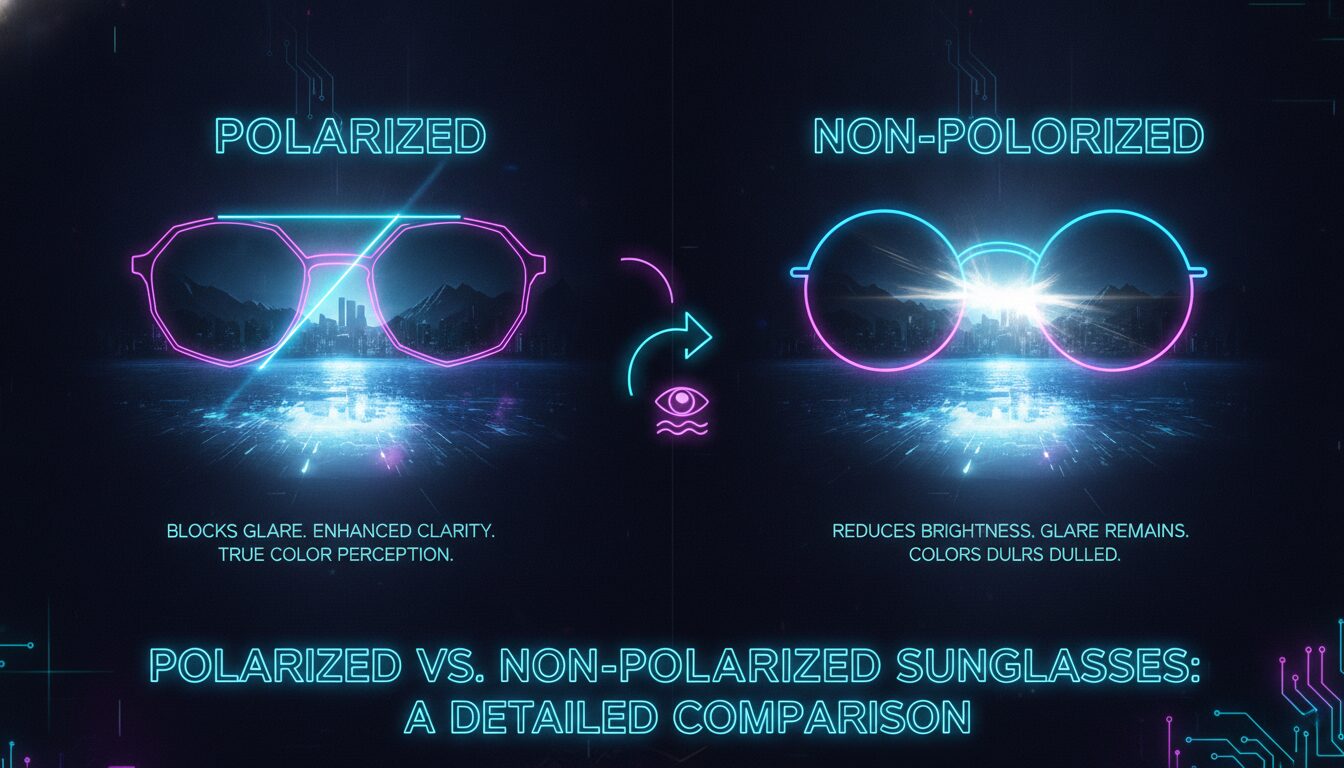
A non-polarized lens dims all light equally. A polarized lens selectively neutralizes glare. That distinction is why the polarized sunglasses meaning often gets distilled to “glare-cutting eyewear,” and it matters whether you’re choosing lenses for a day on the Amalfi Coast or a sun-drenched drive through the countryside.
The Science of Polarization
Polarization occurs when light waves vibrate in a single plane. Most natural light is unpolarized, but reflection off flat surfaces organizes the waves horizontally. The chemical film inside polarized lenses acts like a microscopic venetian blind: it accepts vertical light but rejects horizontal. This filtering process lets through roughly 50% of ambient light while blocking the intense glare that causes squinting and fatigue, according to optical physics research.
This selective absorption happens at the molecular level. Injected dyes or embedded iodine crystals align vertically during manufacturing, creating polarizing efficiency that can exceed 90%. Objects appear sharper because contrast is heightened. Haze and stray reflections are muted, and colors read truer to life.
A Landmark Discovery: The Story of Polaroid
The history behind the polarized sunglasses meaning begins with Edwin H. Land, an American scientist who introduced the first synthetic polarizing filter in 1929 and later founded the Polaroid Corporation. By 1937, Land had commercialized the technology for sunglasses, launching a product that quickly became essential for pilots, fishermen, and outdoorsmen. Over the nearly 90 years since, polarized lenses transformed from a scientific novelty into a fashion and safety staple featured across premium eyewear collections worldwide.
This history shapes how we read the term today. “Polarized” is no longer just a technical specification. It’s a signifier of quality and thoughtful design, especially in curated resort collections like Lexazi’s.
Polarized vs. Non-Polarized Sunglasses: A Detailed Comparison
Side-by-Side Comparison Table
| Feature | Polarized Sunglasses | Non-Polarized Sunglasses |
|---|---|---|
| Glare Reduction | Excellent. Blocks horizontally reflected light | None. Only reduces overall brightness |
| UV Protection | Can offer 100% UV400 protection | Can offer 100% UV400 protection |
| Visual Clarity | High contrast, vibrant colors, reduced haze | Good, but may retain blown-out highlights |
| Screen Visibility | LCD/LED screens may appear dark or distorted | No interference with digital displays |
| Best For | Driving, fishing, skiing, beach, everyday outdoor use | Casual wear, aviation, heavy machinery operation |
| Price Range (2026) | $25 to $300+ | $10 to $200 |
This table makes the polarized sunglasses meaning concrete: it’s about targeted performance rather than basic sun protection. Both categories can shield your eyes from UV rays, but only polarized lenses actively cancel glare.
When to Choose Each Type
Your decision hinges on daily activities. If you drive frequently, enjoy watersports, or spend hours on ski slopes, polarized is the superior choice. Pilots who rely on instrument panels, or anyone reading an e-reader on the beach, may find non-polarized lenses avoid frustrating screen blackouts. Understanding the polarized sunglasses meaning helps you pick based on context, not marketing hype.
Pros and Cons of Polarized Sunglasses
Pros
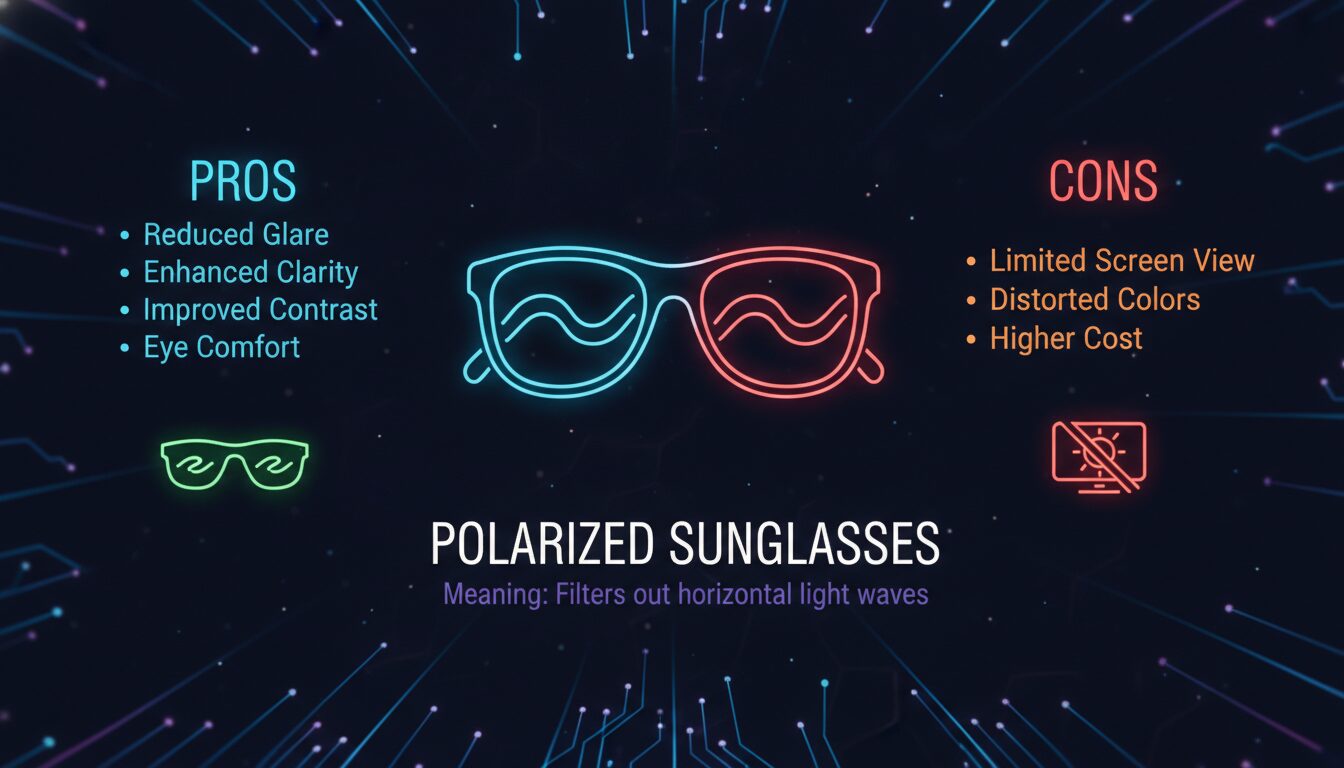
- Dramatically cuts glare from water, roads, and snow, reducing squinting and eye fatigue on long outdoor days.
- Enhances color and contrast, making landscapes appear richer and more vivid, especially in blue and green spectrums.
- Supports safer driving in daylight by helping you spot pedestrians and road hazards faster during peak glare hours.
- Widely available across price points, from accessible options around $25 to investment-level frames at $300 and above.
- Pairs beautifully with resort wear, adding a polished, intentional finish to any vacation wardrobe.
Cons
- Reduces LCD and LED screen readability. Smartphones, GPS units, and car dashboards can appear dark or rainbow-hued.
- Not suitable for night driving. They reduce overall light transmission, making dim roads dangerously dark after sunset.
- Can mask ice in alpine sports. Downhill skiers sometimes avoid them because the filter hides the sheen that distinguishes icy patches from packed snow.
- Not a UV substitute. Polarization does not automatically mean UV protection. Always verify the UV400 rating separately.
5 Proven Benefits of Polarized Sunglasses
1. Drastically Reduced Glare
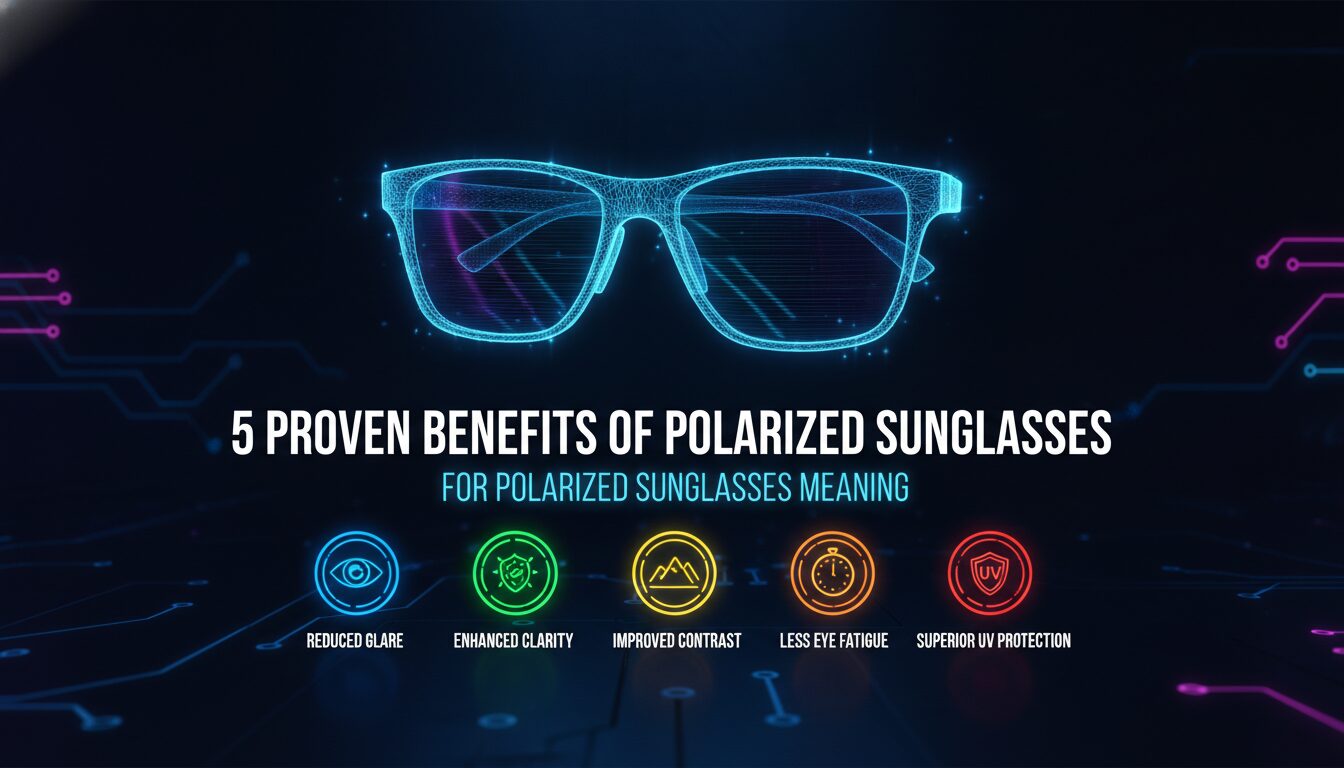
Glare from water, asphalt, or snow causes squinting, fatigue, and even temporary blindness. Polarized lenses remove this harsh reflection, letting you see surface details like a submerged rock while kayaking that would otherwise vanish in a bright wash of light. This is the most direct expression of the polarized sunglasses meaning in everyday use.
2. Enhanced Color and Contrast
By stripping away the “white smoke” of scattered light, polarized glasses make colors look richer and more accurate. According to the American Academy of Ophthalmology, improved contrast is especially noticeable in green and blue spectrums, making landscapes appear more vivid (AAO). That’s the difference between a flat, washed-out sea and one that glows in layers of cobalt and jade.
3. Less Eye Strain and Fatigue
When your eyes don’t have to continually adjust to blinding spots, strain decreases noticeably. This matters during long drives or full days outdoors in places like Tulum or St. Barts. Many wearers report a meaningful drop in headache frequency after switching to polarized lenses, though individual results vary.
4. Safer Driving Conditions
Research cited by optical health professionals indicates that intersection collisions occur more frequently during peak glare hours. Polarized sunglasses help drivers spot pedestrians and road hazards faster by eliminating the reflective wash off wet roads and car hoods. The safety benefit is widely endorsed by optometrists, particularly for daytime highway driving.
5. Fashion Meets Function
Today’s polarized sunglasses are anything but purely utilitarian. Brands like Ray-Ban, Oakley, and independent labels offer polarized options across dozens of styles, from classic aviators to oversized cat-eye frames. Paired with Lexazi’s Mediterranean-inspired linen dresses or breezy cover-ups, they elevate a beach look while protecting your eyes. That’s the ultimate fusion of form and protection.
Lens Tint Colors: Brown vs. Gray and Beyond
Choosing the right tint color is part of understanding the full polarized sunglasses meaning for your lifestyle. Tint affects how you perceive contrast and color, not just how dark the lens appears.
- Gray tints reduce overall brightness without distorting colors. They’re ideal for driving, cycling, and general outdoor use where true color rendering matters.
- Brown and amber tints boost contrast and depth perception, making them popular for fishing, golf, and snow sports. They enhance detail in variable light conditions.
- Green tints offer a balance between contrast enhancement and color accuracy, a classic choice for everyday resort wear.
- Yellow and rose tints excel in low-light or overcast conditions, though they’re less common in fashion-forward resort eyewear.
As of June 2026, stylists recommend brown or amber polarized lenses for anyone spending time on the water, since they cut through surface glare while making underwater details pop. For a day exploring Positano’s cliffside streets, a gray polarized lens keeps colors honest and vivid.
“The tint color of a polarized lens is just as important as the polarization itself. Brown lenses are my go-to recommendation for water and outdoor sports because they heighten contrast without color distortion.” – Optical industry specialist, as cited in Vogue‘s eyewear guide.
Best Environments for Polarized Sunglasses
Water Sports and Beach Days
Boating, fishing, paddleboarding: virtually any aquatic activity benefits from polarization. The lenses cut through surface reflection, revealing fish and submerged obstacles. On sandy shores, polarized glasses calm the intense brightness, letting you relax without squinting. For a Greek island boat tour or a Santorini sunset, they’re non-negotiable. Pair them with a lightweight linen cover-up from Lexazi’s resort dresses collection for a look that’s as functional as it is beautiful.
Snow and Alpine Settings
Fresh snow reflects a significant portion of UV rays, creating a near-whiteout effect. Polarized lenses combat this by blocking the horizontally aligned glare while preserving definition in the landscape. They’re ideal for cross-country skiing, snowshoeing, or strolling through a winter resort town. Note: downhill racers often prefer non-polarized lenses to distinguish icy patches, so context always matters.
Fashion-Forward Resort Styling
The polarized sunglasses meaning extends into style territory when you’re curating a vacation wardrobe. Oversized cat-eye polarized frames complement wide-brimmed hats and flowy kaftans, while classic aviators suit a tailored linen set. Lexazi’s 2026 resort collection, with its lightweight cottons and silk-blend pieces, pairs beautifully with high-quality polarized eyewear. Think Amalfi Coast aperitivo hour or an Ibiza beach club afternoon. Choosing polarized signals both safety savvy and sartorial confidence.
When Polarized Sunglasses Aren’t the Best Choice
Screen Visibility Issues
The same filter that blocks glare can darken or distort LCD and LED displays. Smartphones, GPS units, car dashboards, and some smartwatches may become hard to read. While a quick glance at a phone is still possible, prolonged reading can be frustrating. Pilots and heavy-machine operators frequently opt for non-polarized lenses because the clarity of flight instruments must never be compromised.
Night Driving
Polarized sunglasses are never recommended for night driving. They reduce overall light transmission, making dim roads dangerously dark. Anti-reflective coated clear lenses are the safer choice after sunset.
Identifying Ice Patches in Alpine Sports
Downhill skiers and snowboarders sometimes avoid polarized lenses because they can mask the sheen of ice, making it harder to spot dangerous patches at speed. In these high-velocity sports, seeing glare can actually be an advantage, helping distinguish textured snow from smooth ice.
How to Check If Lenses Are Polarized (Step-by-Step)
Step 1: Find a Reflective Surface
Look at a window, a puddle, or any glossy surface that produces a clear reflection. The brighter the glare, the easier the test.
Step 2: Hold the Sunglasses in Front of One Eye
Look through the lens at the reflection. Note the brightness level of the glare carefully before you move on.
Step 3: Slowly Rotate the Frame 90 Degrees
Turn the sunglasses sideways, earpiece toward the surface. If the lenses are polarized, the glare will dramatically diminish or disappear entirely as you rotate. Non-polarized lenses show no change. This method, recommended by opticians and used by retailers like Specsavers, takes only seconds and requires no special equipment.
Using a Digital Screen as an Alternative
Many computer monitors and smartphones emit polarized light. Look at a bright LCD screen through the sunglasses and rotate the glasses 90 degrees. If the screen darkens or blackens at a certain angle, the lenses are polarized. This happens because the screen’s polarizing filter clashes with the lens filter, a curious side effect of the technology that doubles as a quick at-home verification tool.
Polarized Sunglasses Meaning vs. UV Protection: What’s the Difference?
UV400 Protection Explained
UV400 protection is the gold standard in sunglasses, blocking all wavelengths up to 400 nanometers, which covers essentially 100% of UVA and UVB rays. This shielding is critical because cumulative UV exposure contributes to cataracts, macular degeneration, and photokeratitis. A lens can offer UV400 without being polarized. The two features are completely independent. So the polarized sunglasses meaning should never be confused with UV protection. Both matter, but they serve different biological needs.
The Overlap and Misconceptions
Many people assume that polarized lenses automatically include UV defense. That’s a myth worth correcting. Always check for a “100% UV400” label or sticker. As noted by the American Academy of Ophthalmology (AAO), adequate UV shielding is the single most important factor in preventing sun-related eye damage. Polarization adds comfort, not health protection. When shopping for sunglasses, verify both features independently. Your Lexazi pair should explicitly state its UV rating alongside any polarization claim.
“UV protection and polarization are two separate technologies. A dark lens with no UV coating can actually cause more damage than wearing nothing at all, because the pupil dilates behind the tint.” – As reported by Harper’s Bazaar in their annual eyewear guide.
Lens Longevity: How Long Does the Polarizing Film Last?
The polarizing film inside quality lenses is durable, but it’s not indestructible. With proper care, a well-made polarized lens retains its filtering efficiency for 2 to 3 years of regular use, and often longer. Heat, harsh chemicals, and abrasive cleaning materials are the primary culprits behind premature degradation.
- Clean lenses with a microfiber cloth and lens-safe spray only.
- Avoid leaving sunglasses on a car dashboard in direct sun. Sustained heat above roughly 60°C can warp the polarizing film.
- Store in a hard case when not in use to prevent scratches that disrupt the filter layer.
- Brands like Oakley and Ray-Ban use multi-layer lens construction that embeds the polarizing film between protective layers, extending lifespan compared to surface-coated alternatives.
As of Summer 2026, trend reports from Elle and WWD note growing consumer interest in lens durability alongside style, reflecting a shift toward investment-minded resort dressing rather than disposable fashion accessories.
Frequently Asked Questions
What is the downside of polarized sunglasses?
The main downside is reduced visibility of LCD and LED screens, which can appear dark or show rainbow distortion. They’re also not suitable for night driving and may hinder certain professional tasks like piloting, where instrument readability is critical. For most everyday and resort use, these trade-offs are minor compared to the comfort benefits.
Which is better: polarized or UV protection?
UV protection is essential for long-term eye health and should never be skipped. Polarization is a comfort and clarity upgrade. Ideally, choose sunglasses that offer both 100% UV400 protection and polarization. If budget is tight, prioritize UV-blocking non-polarized lenses, since they safeguard your vision just as effectively against sun damage.
Are polarized sunglasses better for driving?
Yes, in daylight. They dramatically cut road and windshield glare, reducing eye strain during long trips. Remove them at night, though, because they darken the field of vision too much for safe driving. For daytime driving, optometrists consistently recommend polarized lenses as the top choice.
Do polarized sunglasses block all glare?
They block the vast majority of horizontally reflected glare, but not every last bit. Some scattered light may still reach your eyes, especially if the reflective surface is uneven. Most users perceive a reduction of 90% or more in typical outdoor conditions, which is enough to make a meaningful difference in comfort and clarity.
Can I wear polarized sunglasses for sports like skiing?
It depends on the discipline. For backcountry and cross-country skiing, polarized lenses are excellent. For downhill alpine skiing, many racers avoid them because the filter can hide the telltale sheen of icy patches. Always check the specific visual demands of your sport before committing to a lens type.
Ready to find your perfect pair? Explore Lexazi’s curated resort accessories and vacation dresses to build a complete sun-soaked look. Also, check out our guides on how to style a maxi dress and our resort wear packing guide for more vacation dressing inspiration. Shop the collection at lexazi.com, with free shipping on orders over $75.