Key Takeaways
- Earring Magic Ken was a 1993 doll from Mattel that sparked controversy and unexpected popularity among gay men.
- The doll’s lavender mesh shirt, purple vest, and peculiar necklace turned it into an accidental LGBTQ+ icon.
- Today, it is a highly sought-after collectible with values often exceeding $100 on secondary markets.
- The doll’s legacy persists, influencing modern toy representation and even appearing in the 2023 Barbie movie.
Earring Magic Ken is a 1993 Ken doll featuring a lavender mesh shirt, purple vest, and controversial necklace that accidentally became a gay icon. The doll was quickly discontinued but remains a coveted collectible today.
The Origins and Design of Earring Magic Ken
Why Ken Got an Earring in 1993
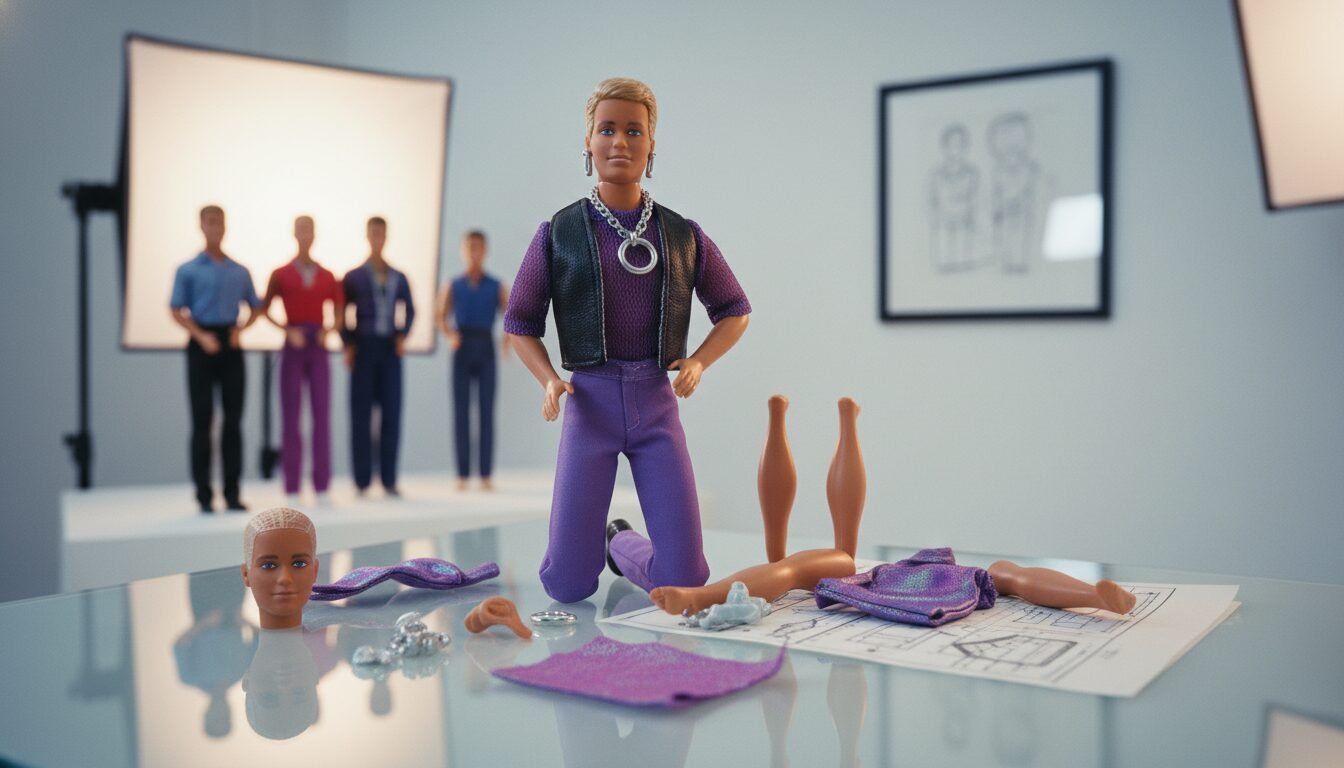
In the early 1990s, Mattel faced a challenge , girls surveyed about Ken said they wanted him to stay but look “cooler.” This feedback drove a dramatic redesign that resulted in a doll capturing the edgy, club-influenced fashion of the era. According to Lisa McKendall, Mattel’s manager of marketing communications at the time, “We tried to keep [Ken] as cool as possible.” The doll debuted at the American International Toy Fair in February 1993, alongside an entire line that included five dolls total.
The Controversial Details of His Outfit
The doll’s clothing choices became legendary. He wore a purple faux-leather vest, a lavender mesh shirt, black pants with pink stitching, and black lace-up dance oxfords. Most distinctive were his two-tone blonde-and-brown hair, a silver hoop earring in his left ear, and a necklace featuring a silver ring on a string. This particular accessory would later be interpreted as a reference to gay club culture , it resembled a cock ring, a common item in the rave and LGBTQ+ scenes of the 1990s.
Comparing Earring Magic Ken to Classic and Modern Versions
The design broke sharply with all previous Ken dolls. The table below highlights just how radical the departure was.
| Feature | Earring Magic Ken (1993) | Classic Ken (1961) | Totally Hair Ken (1992) | Sugar Daddy Ken (2009) | Fashionista Ken (2017+) |
|---|---|---|---|---|---|
| Earring | Silver hoop, left ear | None | None | None | Optional (some models) |
| Necklace | Silver ring on string | None | None | None | Varies |
| Outfit | Lavender mesh shirt, purple vest, black pants | Red swim trunks | Colorful printed shirt, shorts | White jacket, pink shirt, dog accessory | Diverse styles, casual to formal |
| Controversy | Gay aesthetic, necklace seen as sex toy reference | None | None | Name perceived as innuendo | None |
| Cultural Impact | Became gay icon, claimed highest-selling Ken | Established Ken as accessory | Highlighted extreme hair trend | Brief buzz, later normalized | Promotes diversity and inclusivity |
The Gay Icon Emerges
How the LGBTQ+ Community Embraced the Doll
Almost immediately after its release, the doll found an adoring audience among gay men. The combination of the earring, the lavender net shirt, and the infamous ring necklace made him a symbol of 1990s queer nightlife. Some reports claimed it became the highest-selling Ken doll of all time, though Mattel never confirmed exact sales figures. By October 1993, Donna Gibbs, a Mattel employee, told the San Francisco Examiner that the design team was genuinely surprised by the doll’s popularity with gay consumers.
Dan Savage’s Famous Critique
Sex columnist Dan Savage famously lampooned the doll’s look, writing that it appeared Mattel’s design team had “spent a weekend in LA or NY, dashing from rave to rave, taking notes and Polaroids.” His 1993 column in Newsday crystallized the idea that Ken’s new style was borrowed from gay club fashion. Savage also suggested that young girls’ perceptions of “cool” were shaped by homoerotic MTV videos and the outfits worn by ACT UP/Queer Nation activists at demonstrations.
“It would seem Mattel’s crack Ken redesign team spent a weekend in LA or NY, dashing from rave to rave, taking notes and polaroids.” , Dan Savage, Newsday, 1993
Media Frenzy and Public Reaction
Newspaper Headlines and Talk Shows
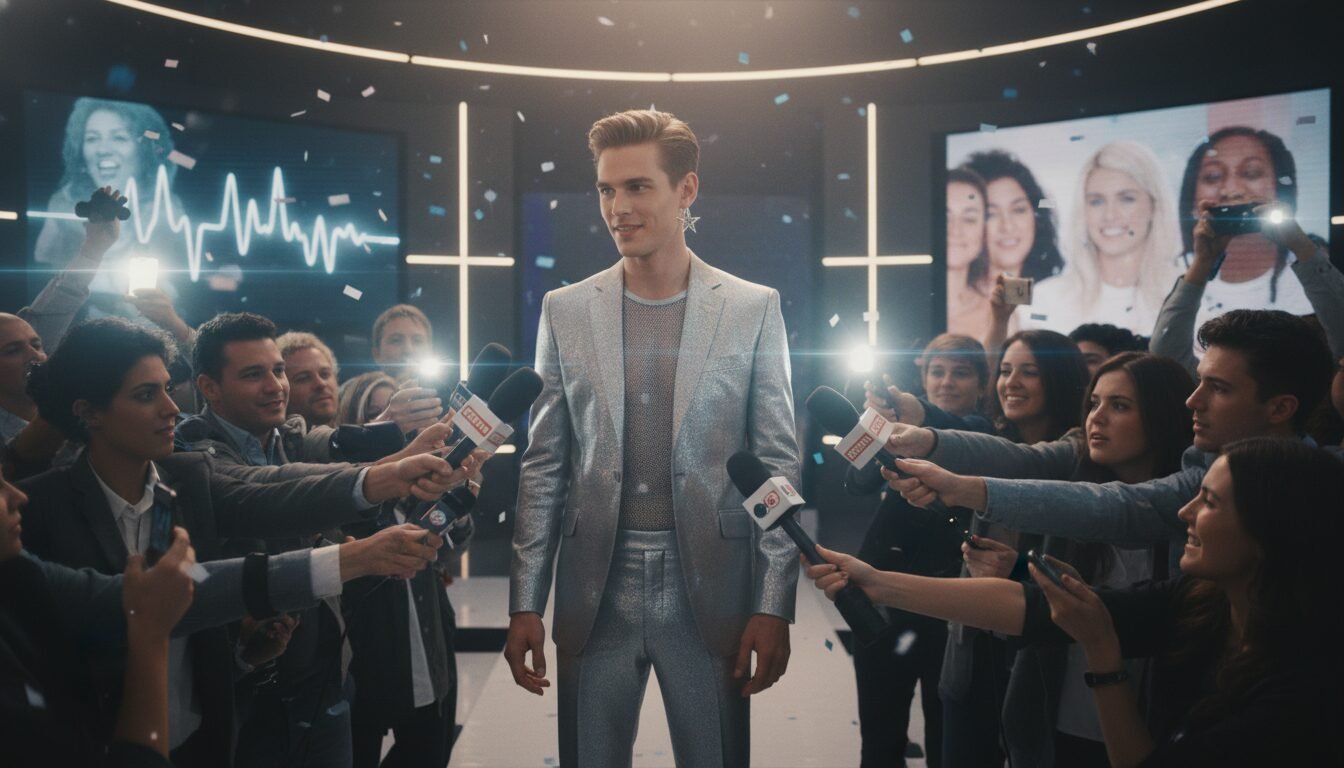
The doll’s debut stirred a national conversation. On February 11, 1993, The New York Times ran a story by Carol Lawson suggesting Mattel was attempting to “gender bend” Ken to appeal across gender lines. The article was syndicated across North America, appearing in outlets like the Seattle Post-Intelligencer and the Philadelphia Daily News. Frank DeCaro of Newsday soon followed with a column poking fun at the doll’s hidden-in-plain-sight coding. The coverage turned him into a pop culture phenomenon, discussed at water coolers and on talk shows.
Mattel’s Response and Discontinuation
Mattel’s official stance was that Ken was simply reflecting broader fashion trends , earrings on men were becoming more accepted, and rave culture had gone mainstream. However, the backlash from conservative parents and the sustained media mockery were too much. By the end of 1993, the doll had quietly vanished from store shelves. In a later interview with Mel Magazine in 2021, former Mattel designer Carol Spencer revealed that internal worries existed from the start: “The male Mattel designer – who was married with several children and working on the project – said to me: ‘They will turn Ken gay with this doll!'”
“The male Mattel designer… said to me: ‘They will turn Ken gay with this doll!'” , Carol Spencer, former Mattel designer, quoted in Mel Magazine (2021)
The Necklace Controversy Explained
What Was That Circular Charm?
The silver ring on a string around Ken’s neck became the focal point of the entire debate. To the uninitiated, it appeared to be a simple pendant. But in the early ’90s, wearing a metal ring on a chain was a known signal within gay club circuits , it mimicked a cock ring, a sexual accessory associated with leather and rave subcultures. Whether the designers put it there deliberately remains disputed, but its resemblance was undeniable to many adult observers.
The Symbolism in 1990s Club Culture
The necklace was not an isolated detail. Ken’s entire outfit , the net shirt, the Gaultier-inspired vest, the black lace-up shoes , mirrored the uniform of the era’s rave and queer scenes. As art historian Erica Rand and feminist scholar Ann Ducille would later argue in their academic critiques, the doll’s design was either a savvy appropriation of underground styles or a naive product of cross-cultural currents. Regardless of intent, this Ken became a coded object that spoke directly to a generation of gay consumers.
Pros and Cons
Pros
- Accidentally created positive LGBTQ+ representation in mainstream toys
- Sparked important conversations about gender expression and inclusivity
- Became a valuable collectible with strong market demand
- Influenced future toy design to be more diverse and inclusive
Cons
- Created controversy and backlash from conservative consumers
- Was quickly discontinued, limiting availability
- Unintentional coding may have reinforced stereotypes
- High current prices make it inaccessible to many collectors
Earring Magic Ken Today: Collector’s Holy Grail
Current Market Value and Rarity
Because the doll was pulled from production so quickly, surviving mint-in-box examples are scarce. On online marketplaces like eBay, prices for a specimen in good condition routinely range from $50 to $100 or more. A boxed example with all original accessories can fetch even higher sums. The doll’s notoriety and its limited availability make it one of the most sought-after Ken dolls for collectors. In 2026, the market remains robust, with dedicated collectors and LGBTQ+ history enthusiasts driving demand.
Where to Find Earring Magic Ken in 2026
Your best chances of acquiring this piece of toy history today are on secondary markets. eBay remains the primary platform, with several listings active at any given time. Other venues include specialty doll shops, estate sales, and online collector groups on Facebook and Reddit. Be prepared to pay a premium for a doll with its original box, earring, and necklace intact , loose, played-with versions are cheaper but harder to verify for completeness.
The Barbie Movie Connection
Did Earring Magic Ken Appear in the 2023 Film?
The 2023 Barbie movie, directed by Greta Gerwig, is packed with dozens of Ken variants, including a brief but unmistakable nod to this iconic doll. While no single actor was credited as playing him exclusively, a Ken wearing a purple vest, mesh shirt, and silver earring can be spotted in several crowd scenes. This visual Easter egg delighted fans and reignited interest in the doll’s backstory. The film’s self-aware humor even prompted some viewers to revisit the original controversy, leading to a spike in online searches and secondhand sales.
How the Film Revived Interest
After the movie’s release, Google searches surged, and eBay listings saw renewed attention. The doll’s ironic, campy legacy perfectly aligned with the film’s tone, cementing its status as a cultural artifact. Mattel, which now embraces diverse representations of Ken, never officially re-issued the doll, but the cinematic reference proved that this controversial figure remains fixed in popular memory.
The Lasting Legacy of Earring Magic Ken
Influence on LGBTQ+ Representation in Toys
Although Mattel did not intend for Ken to become a gay icon, the episode forced the company and the industry to acknowledge queer consumers. In the decades that followed, toy makers gradually introduced more inclusive products , from same-sex couple dolls to gender-neutral figures. The accidental queer coding helped pave the way for intentional representation. Today, you can walk into any major retailer and find dolls that celebrate diverse identities, a shift that many trace back to this 1993 break from conformist design.
How Ken Evolved After 1993
Post-controversy, Ken dolls became notably more varied. The 2000s saw sporty, casual, and metrosexual versions. In 2004, Mattel even released a “Breakup” narrative where Barbie and Ken split , a marketing move that some saw as an acknowledgment of Ken’s fluid identity. By the late 2010s, the Fashionistas line introduced Kens with different body types, skin tones, and hairstyles. None, however, generated the same level of discourse as the doll with the lavender mesh shirt and the infamous necklace.
Why the Doll Still Matters
Accidental Icon: A Symbol of Inclusivity
This Ken endures because it represents a moment when a mass-market product unintentionally validated an entire community. For gay men in 1993, seeing a piece of their culture reflected in a toy aisle , however imperfectly , felt like a wink of acknowledgment. The doll’s legacy is now studied in university courses on gender and consumerism, and it appears in museum collections, including the New-York Historical Society’s LGBTQ+ exhibits. As both a collectible and a cultural touchstone, its importance only grows with time.
The Power of Subversive Toys
Toys are rarely just toys. They carry societal values and sometimes challenge them. The short but fabulous life of this controversial Ken demonstrates how a plastic doll can become a canvas for broader conversations about sexuality, marketing, and authenticity. More than thirty years later, the doll continues to fascinate , proof that the best icons are often made by mistake.
Shop the collection at lexazi.com , free shipping on orders over $75.
Frequently Asked Questions
Was Earring Magic Ken discontinued?
Yes. Following intense media scrutiny and public controversy, Mattel quietly pulled the doll from production within the same year it was released, 1993. The doll had only a brief retail presence before disappearing from stores.
Is Earring Magic Ken rare?
Absolutely. Because the doll was produced for a limited time and recalled due to controversy, mint-in-box examples are scarce. Today, sealed dolls command prices between $50 and over $100 on the secondary market, making them prized collector’s items.
Who plays Earring Magic Ken in the Barbie movie?
No single actor is credited as playing him in the 2023 film. However, a Ken in a similar outfit , purple vest, mesh shirt, silver earring , appears in background scenes, paying homage to the original doll.
What does the Earring Magic Ken necklace mean?
The circular silver ring on a string necklace was widely interpreted as resembling a cock ring, a common accessory in early 1990s gay club and rave culture. Whether intentional or accidental, this detail fueled the doll’s reputation as a gay icon.
Why did Mattel create Earring Magic Ken?
Mattel’s research showed that girls wanted Ken to look “cooler” and more in line with contemporary fashion trends. Designers added the earring, two-tone hair, and rave-inspired outfit to modernize his image for a new generation.
How much is an Earring Magic Ken worth in 2026?
As of 2026, out-of-box dolls in good condition typically sell for $30–$60, while mint-in-box examples with all accessories can exceed $100. Values fluctuate based on condition and completeness, but demand remains strong.