Key Takeaways
- Mood necklace colours and meanings are directly tied to body temperature changes, detected by thermochromic liquid crystals inside the pendant.
- Black typically signals stress, cold, or damage; green suggests calm; blue means relaxation; purple and red indicate excitement or passion.
- Invented in 1975, mood jewelry saw a resurgence and is now a fashionable self-expression accessory for women who love versatile pieces.
- Readings can be influenced by room temperature, skin thickness, and moisture, so interpret them as fun indicators, not medical devices.
- Proper care, avoid water, store in dry places, can extend a mood necklace’s life to several years.
Mood necklace colours and meanings are temperature-sensitive color changes that reveal shifts in your emotional state. Picture this: you’re getting ready for a sunset dinner in Santorini, and your pendant shifts from calm green to passionate purple as anticipation builds, that’s the magic of thermochromic jewelry responding to your body’s subtle temperature changes.
What Is a Mood Necklace and How Does It Work?
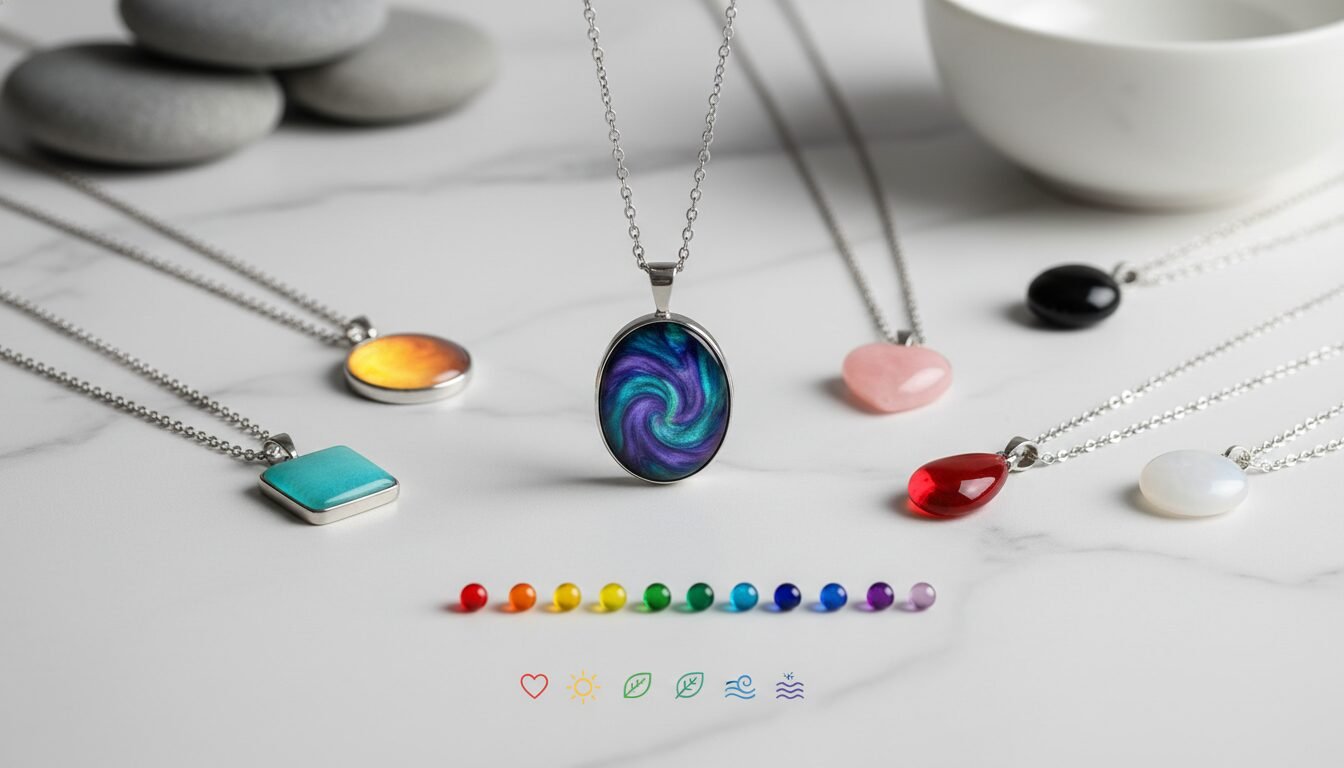
A mood necklace contains thermochromic liquid crystals that change color based on your skin temperature. These crystals are composed of elongated molecules that twist and untwist in response to temperature changes, creating the rainbow of hues that make and meanings so fascinating to interpret.
The Science Behind Thermochromic Crystals
When you’re warm, the molecular structure expands, reflecting shorter wavelengths of light, those dreamy blues and purples that appear when you’re relaxed on a beach in Positano. When you cool down, the structure contracts and reflects longer wavelengths like greens and ambers. It’s the same technology used in some digital thermometers, but infinitely more stylish draped around your neck.
“Mood rings contain thermochromic liquid crystals that change color in response to small changes in temperature. The amount of blood that reaches your skin depends on both the temperature and your mood,” explains Anne Marie Helmenstine, Ph.D. in her article for ThoughtCo.
Body Temperature and Emotional Links
Your emotional state directly affects peripheral blood flow, and this is where these meanings become genuinely intriguing. When you’re stressed or anxious, your body directs blood toward vital organs, leaving your extremities cooler. Picture yourself rushing through a busy market in Marrakech, your pendant might shift to gray or black as stress hormones redirect warmth from your skin. Conversely, when you’re excited or content, blood flow increases to the skin around your neck and chest, warming the pendant and creating those gorgeous blue and purple hues.
A Brief History of Mood Jewelry
The first mood ring was created in 1975 by New York inventors Maris Ambats and Josh Reynolds. The original silver-plated ring retailed for $45, while a gold version sold for $250, substantial investments at the time. The rings became an instant sensation, and the thermochromic technology quickly expanded to necklaces, bracelets, and more. Today’s mood necklaces feature improved pigments, better protective coatings, and sleek designs that pair beautifully with everything from linen sundresses to silk evening wear.
Complete Mood Necklace Color Chart and Meanings
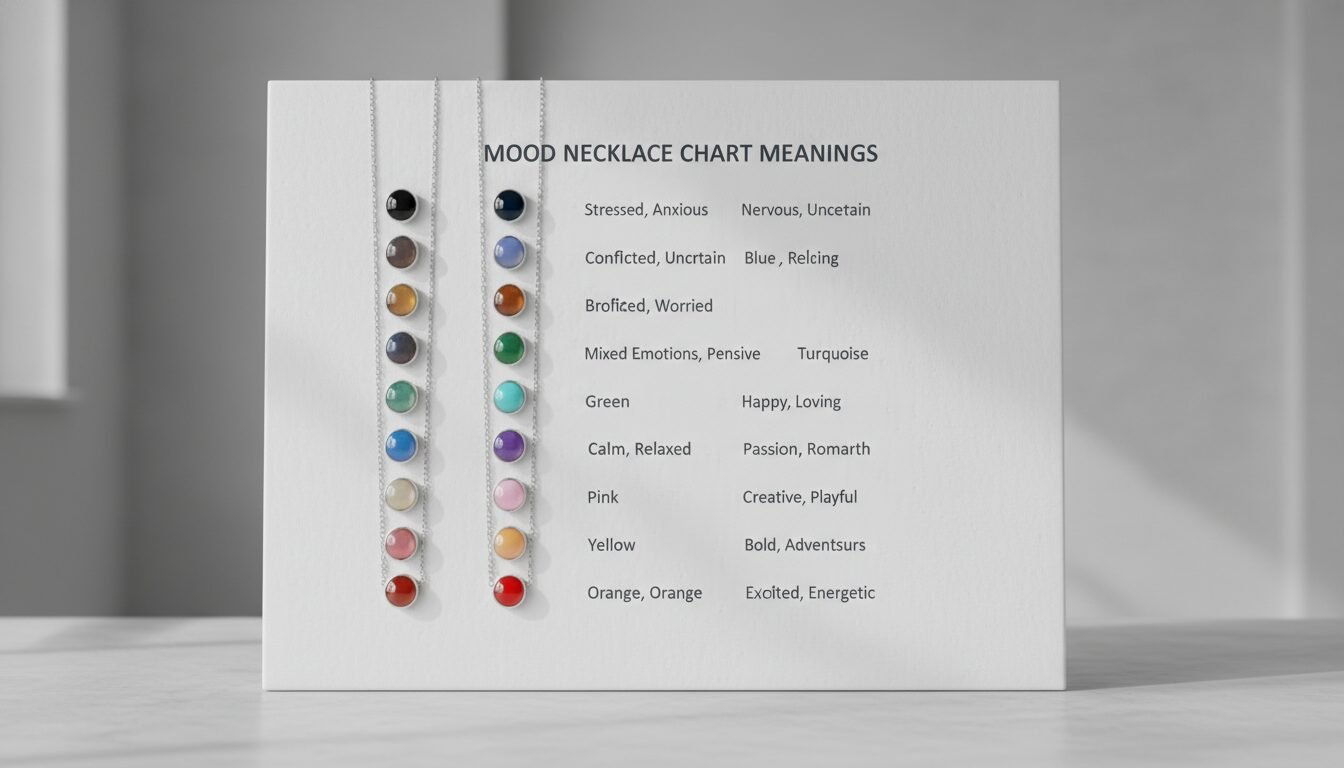
Understanding such and meanings requires knowing the full spectrum of hues your pendant can display. While vintage models followed a standard 6-color scale, today’s pendants can show up to 11 distinct shades, each reflecting a specific temperature range and emotional interpretation.
| Color | Typical Body Temperature Range | Emotional Meaning |
|---|---|---|
| Black | Below 28°C / 82°F | Stressed, tense, cold environment, or damaged crystal |
| Gray | Low (slightly warmer than black) | Anxious, nervous, strained, uncertain |
| Amber/Brown | Warm but below neutral | Mixed emotions, unsettled, cautious |
| Yellow | Approaching neutral | Active, alert, restless, curious |
| Green | 28–32°C / 82–90°F | Calm, balanced, average resting state |
| Blue | 32–36°C / 90–97°F | Relaxed, happy, peaceful, content |
| Dark Blue | High end of blue range | Deeply romantic, very happy, serene |
| Purple/Violet | 36°C+ / 97°F+ | Passionate, excited, creative, stimulated |
| Pink | Warm (similar to purple) | Affectionate, loving, warm-hearted |
| Red | High (above 37°C / 99°F) | Energized, adventurous, intense emotion |
Cool Shades: Black, Gray, and Amber
Black is the most misunderstood color in the necklace colours and meanings. While often labeled “stressed,” it can simply mean your pendant is cold, like when you first put it on during a chilly morning in the Greek islands. If black persists after wearing it for 15-20 minutes, it might indicate stress or that the thermochromic element needs replacing. Gray signals a transitional emotional state, hovering between anxiety and calm. Amber appears when you’re processing mixed feelings, perhaps deciding between the beach club or that charming taverna for lunch.
Neutral and Balanced: Yellow and Green
Yellow represents mental activity, your mind at work, alert but not distressed. It’s the color of curiosity, perfect for exploring new destinations. Green is the baseline “normal” for most wearers, signaling homeostasis and a calm nervous system. When your mood necklace settles into green during routine tasks, you’ve found your emotional center.
Warm and Passionate: Blue, Purple, Pink, and Red
As your temperature rises, the pendant shifts toward shorter wavelengths, creating the most beautiful colors in mood necklace colours and meanings. Blue indicates genuine relaxation and happiness, think lazy afternoons on a Tuscan terrace. Dark blue deepens into romance and serenity. Purple and violet appear during creative surges and passionate moments, while pink reflects pure affection. Red, the warmest color, emerges during high-energy states: dancing until dawn in Ibiza, adventure, or intense emotion.
Why Your Mood Necklace Reading Might Be Inaccurate
Several factors can influence mood necklace colours and meanings, making readings less reliable than you might expect.
Environmental Influences
External temperature plays a huge role in your pendant’s display. In a hot room or direct Mediterranean sunlight, your necklace warms rapidly and may show blue or purple even when your mood is neutral. Conversely, air conditioning or ocean breezes can turn it darker. Modern polymer-coated pendants resist water damage better than vintage versions, but humidity still affects accuracy.
Your Unique Body Temperature
Everyone’s baseline skin temperature differs. Some people naturally run warmer or cooler, so “green” for one person could be “blue” for another. The sternum area where a necklace rests is typically warmer than fingers, which is why mood necklaces often show more vibrant colors than rings on the same person.
“While mood rings are fun and stylish, they should not be taken as precise indicators of your emotional state,” advises Leslie H., jewelry specialist at HarperCrown.
Quality and Age of the Necklace
Inexpensive mood pendants may use low-grade liquid crystals with limited color ranges that degrade within months. Quality pieces feature high-grade thermochromic pigments and protective coatings. Signs of wear include pendants that stay permanently black, fail to respond to temperature shifts, or show patchy, erratic colors.
How to Interpret Your Mood Necklace Colors
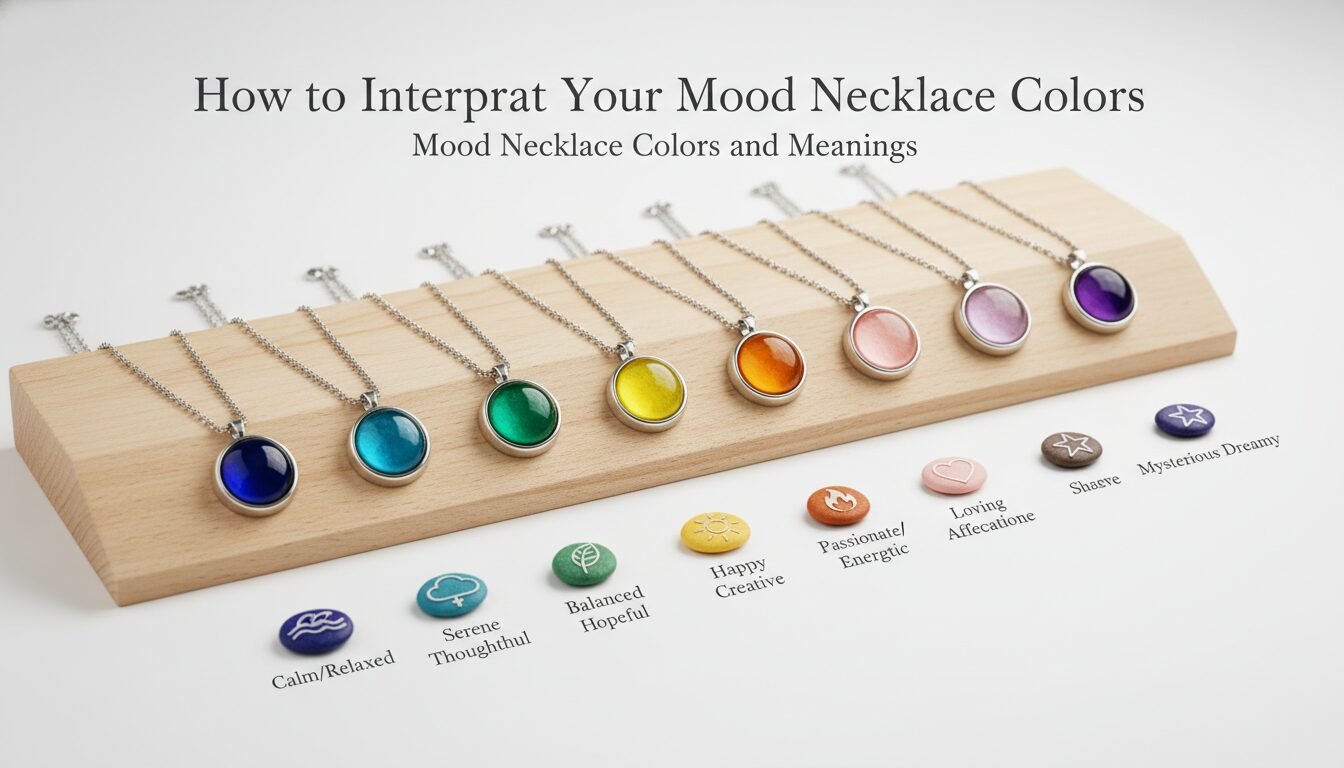
Getting accurate readings from mood necklace colours and meanings requires understanding your personal baseline and environmental factors.
- Establish your baseline. Wear your necklace for 10-15 minutes in a comfortable room temperature. Note the color when you feel emotionally neutral, for most people, this is a soothing green.
- Observe gradual changes. Pay attention when you laugh, feel stressed, or become active. The pendant should shift toward blue/purple when warm and toward amber/gray when cool.
- Account for ambient temperature. Outdoors in summer, expect faster warm-color shifts. In winter, wear your necklace closer to skin or under clothing for accurate readings.
- Check for crystal damage. If your necklace stays black regardless of conditions, the thermochromic element may be damaged and need replacement.
Reading Rapid Shifts
Modern thermochromic pigments can cycle through their color range in seconds. If your necklace flashes between purple and green during conversation, it reflects normal temperature fluctuations, not emotional instability. Multiple readings over time provide clearer insights than single snapshots.
When Colors Don’t Match Your Feelings
Remember that mood necklace colours and meanings aren’t medical instruments. If you feel calm but see black, the room might be cold or the pendant damaged. Trust your self-awareness first, your necklace is a beautiful conversation starter, not a diagnostic tool.
Styling a Mood Necklace for Every Look
Today’s mood necklaces are far from the chunky plastic pendants of the 70s. They come in sleek metals, minimalist designs, and layered styles that complement both casual beach days and elegant evening looks.
Choosing the Right Metal Finish
Silver-toned mood necklaces offer a cool, contemporary vibe that pairs beautifully with monochrome outfits or ocean-inspired blues and whites. Gold and rose gold versions add warmth and work gorgeously with earth tones, cream linen, and sunset hues. Stainless steel options are hypoallergenic and tarnish-resistant, perfect for everyday wear from poolside to dinner.
Layering with Other Pieces
Mood pendants are perfect for layering, try a short choker-length mood necklace with a longer, delicate chain. As your body heat changes the pendant’s color throughout the day, it creates a dynamic focal point that draws the eye. Avoid pairing with high collars or heavy scarves that insulate the chest and reduce color responsiveness.
Matching Your Wardrobe Palette
Because mood necklace colours and meanings shift throughout the day, your pendant acts like a living accessory that complements nearly any color scheme. Choose a metal that echoes your other jewelry and let the changing hues be your playful pop of color. Neutrals like beige, white, and navy allow the necklace’s shifting palette to take center stage.
Caring for Your Mood Necklace to Extend Its Life
Proper care ensures your mood necklace colours and meanings remain vibrant and responsive for years.
Keep It Dry and Clean
Moisture is thermochromic jewelry’s biggest enemy. Always remove your mood necklace before showering, swimming, or intense workouts. If it gets splashed, pat dry immediately with a soft, lint-free cloth. Never use chemical cleaners, a slightly damp cloth is sufficient for the metal components.
Storage Secrets
Store your mood necklace in a cool, dry place, ideally in a small zip-lock bag or jewelry box with anti-tarnish strips. Extreme heat, like a hot car dashboard, can permanently damage liquid crystals, locking your pendant into a single color.
When to Replace the Pendant
A well-cared-for mood necklace typically lasts 1-2 years of regular wear. Replace when the pendant stays permanently dark, colors appear muddy, or it stops responding to temperature changes. Many jewelry brands offer replacement pendants so you can keep your favorite chain.
Pros and Cons
Pros
- Unique, dynamic accessory that changes throughout the day
- Conversation starter and fun way to express personality
- Available in various metals and styles to match any wardrobe
- Relatively affordable compared to precious stone jewelry
- Can provide interesting insights into your body’s temperature responses
Cons
- Not scientifically accurate for measuring emotions
- Sensitive to environmental temperature and humidity
- Thermochromic crystals degrade over time and need replacement
- Can be damaged by water exposure
- Color interpretations are subjective and not standardized
The Cultural and Symbolic Meanings of Color
Beyond standard mood necklace colours and meanings, color carries deep cultural significance that adds personal meaning to your jewelry.
Red Across Cultures
In Western cultures, red symbolizes passion and energy, mirroring its warm-temperature appearance on mood necklaces. In China, red represents good fortune and joy, making a red-glowing pendant a symbol of positivity. When your necklace shifts to red, you’re tapping into universal, vibrant energy.
Blue and Tranquility
Blue is almost universally associated with calmness and trust. In color psychology, it’s said to lower heart rate and evoke serenity. When your mood necklace shifts to blue, you’re literally “cooling down” into a peaceful state, both scientifically and symbolically meaningful.
Green in Nature and Healing
Green symbolizes growth, healing, and balance across many traditions. Your pendant’s green resting state confirms you’re in sync with natural rhythms. It’s no coincidence that the “average, calm” reading is green, it’s the color of life and balance.
Frequently Asked Questions
What do the colors on a mood necklace stand for?
The colors indicate body temperature changes loosely linked to emotional states. Black and gray mean cool or stressed, green means calm and balanced, blue means happy and relaxed, and purple/red mean excited or passionate.
What are the 9 emotion colors?
The nine core emotion colors are: black (stressed), gray (anxious), amber (unsettled), yellow (active), green (calm), blue (relaxed), purple (passionate), pink (loving), and red (energized). Some charts also include dark blue for deep romance.
Are mood necklace meanings different for men and women?
No, the thermochromic technology is gender-neutral. While some brands offer designs marketed toward specific audiences, mood necklace colours and meanings remain the same regardless of who wears the piece.
How accurate are mood necklaces really?
They’re not scientifically precise because many external factors influence skin temperature. Enjoy them as fashionable accessories that offer glimpses into your body’s thermal responses rather than definitive emotional readings.
Can I wear a mood necklace every day?
Yes, but avoid exposing it to water, sweat, and extreme heat to extend its life. Remove before showering and swimming, and wipe down with a soft cloth after wearing.
Why does my mood necklace stay black all the time?
A permanently black mood necklace usually indicates damage from moisture or expired thermochromic pigments. Try drying it thoroughly; if colors don’t return, it’s time to replace the pendant.
Whether you wear a mood necklace for its playful color shifts, nostalgic charm, or genuine curiosity about your emotional patterns, understanding mood necklace colours and meanings transforms a simple accessory into a personal statement. From sleek stainless steel designs to gold-dipped pendants that warm to passionate red, there’s a mood necklace waiting to tell your story, one shade at a time.
Shop the collection at lexazi.com , free shipping on orders over $75.