Friendship bracelet patterns are step-by-step knotting guides that transform embroidery floss into handcrafted accessories perfect for resort styling. These designs range from simple two-color stripes to intricate pictorial patterns using dozens of colorful threads.
Key Takeaways
- Master two basic knots (forward and backward) to create any friendship bracelet design
- Start with candy stripe patterns , they require only forward knots and 20-30 minutes
- Alpha patterns create pixel-art images but need 2-5 hours and advanced skills
- Mediterranean color palettes (terracotta, olive, Aegean blue) elevate bracelets for resort wear
- DMC embroidery floss offers superior quality, while bulk packs work for practice
- Stack 5-7 thin bracelets for a sophisticated boho look that rivals designer pieces
Understanding Friendship Bracelet Patterns
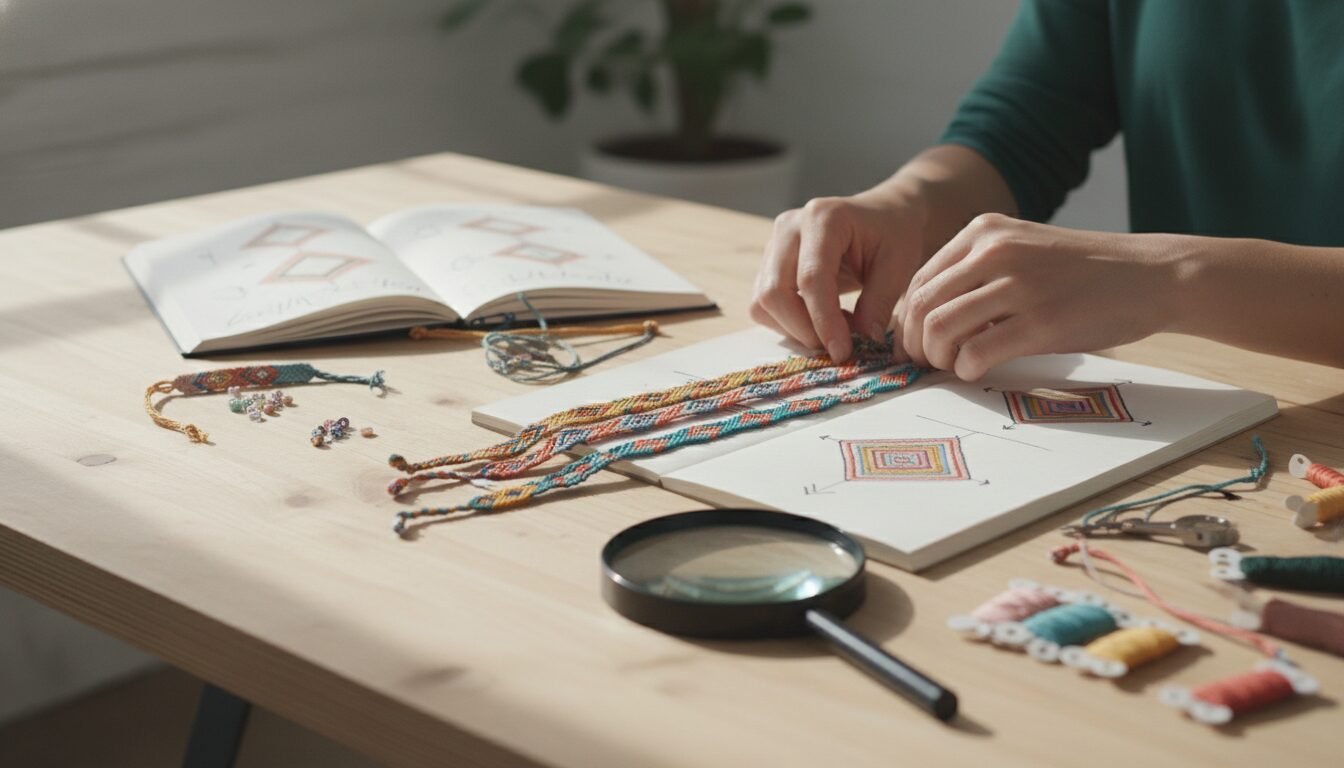
Reading friendship bracelet patterns becomes intuitive once you understand the fundamental building blocks. Every design, from simple stripes to complex geometric motifs, relies on just two basic movements , and the magic happens when you combine them with intention.
The Basic Knots: Forward and Backward
A forward knot forms the foundation of bracelet making. Create it by looping the working thread over the adjacent thread twice, then pulling tight. The backward knot mirrors this motion in the opposite direction. Together, these two knots form every traditional design. The Instructables tutorial by bekathwia demonstrates these basics clearly, showing how even complex patterns rely on just these motions.
How to Read a Friendship Bracelet Pattern Chart
Pattern charts use a grid where each square represents a knot between two threads. Arrows point in the direction the working thread must travel. Online platforms like BraceletBook host thousands of user-uploaded charts, each labeled with thread count and color codes. The chart’s left edge lists the string order, and each row indicates the knot sequence from left to right.
Common Symbols and Notations
Most community sites standardize symbols: a circle for an alpha pattern background, a forward slash for a forward-backward knot, and a backward slash for a backward-forward knot. Understanding these notations unlocks the ability to reproduce any design shared across forums and video tutorials.
Best Friendship Bracelet Patterns for Beginners
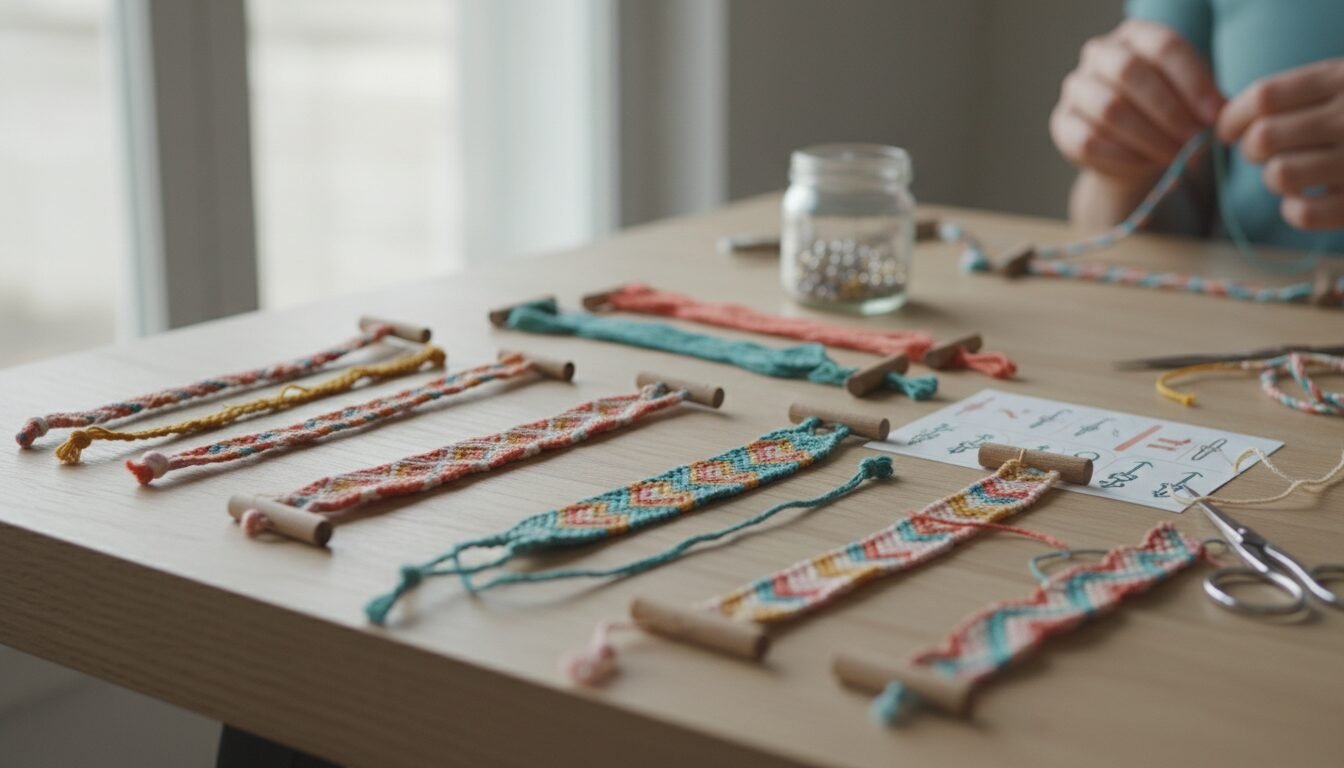
Beginner-friendly designs focus on repetitive motions and forgiving techniques. These patterns build confidence while creating beautiful accessories you’ll actually want to wear , whether you’re strolling through a coastal market or lounging poolside.
Candy Stripe Pattern Step-by-Step
The candy stripe is the simplest design, needing only forward knots. This pattern serves as the perfect introduction , it requires no pattern chart and can be finished in under 30 minutes.
- Cut 3–5 strands of embroidery floss, each about 24 inches long. Fold in half and tie a knot at the top, creating a loop.
- Secure the loop to a surface with tape or a safety pin. Arrange threads parallel.
- Take the leftmost thread (Thread A) and make a forward knot onto Thread B. Pull tight. Repeat the same forward knot on the same pair to complete the double hitch.
- Continue using Thread A to knot onto each thread to the right. After finishing the row, Thread A will now be on the far right.
- Repeat with the new leftmost thread. Continue until the bracelet reaches your desired length.
- Tie off the ends and trim.
Chevron Pattern for a Classic Look
The chevron creates a V-shape and introduces both forward and backward knots. Its symmetrical structure makes it a favorite among teens and adults alike. The pattern’s timeless appeal has made it a staple in crafting communities worldwide.
Spiral Staircase for Quick Results
The spiral staircase pattern uses a single working thread knotted repeatedly around a core bundle, producing a twisted helix. Because the entire bracelet can be made with only forward knots, it’s ideal for those who struggle with backward knots. According to crafting community trends, this design appears frequently in beginner tutorial requests.
Intermediate and Advanced Designs
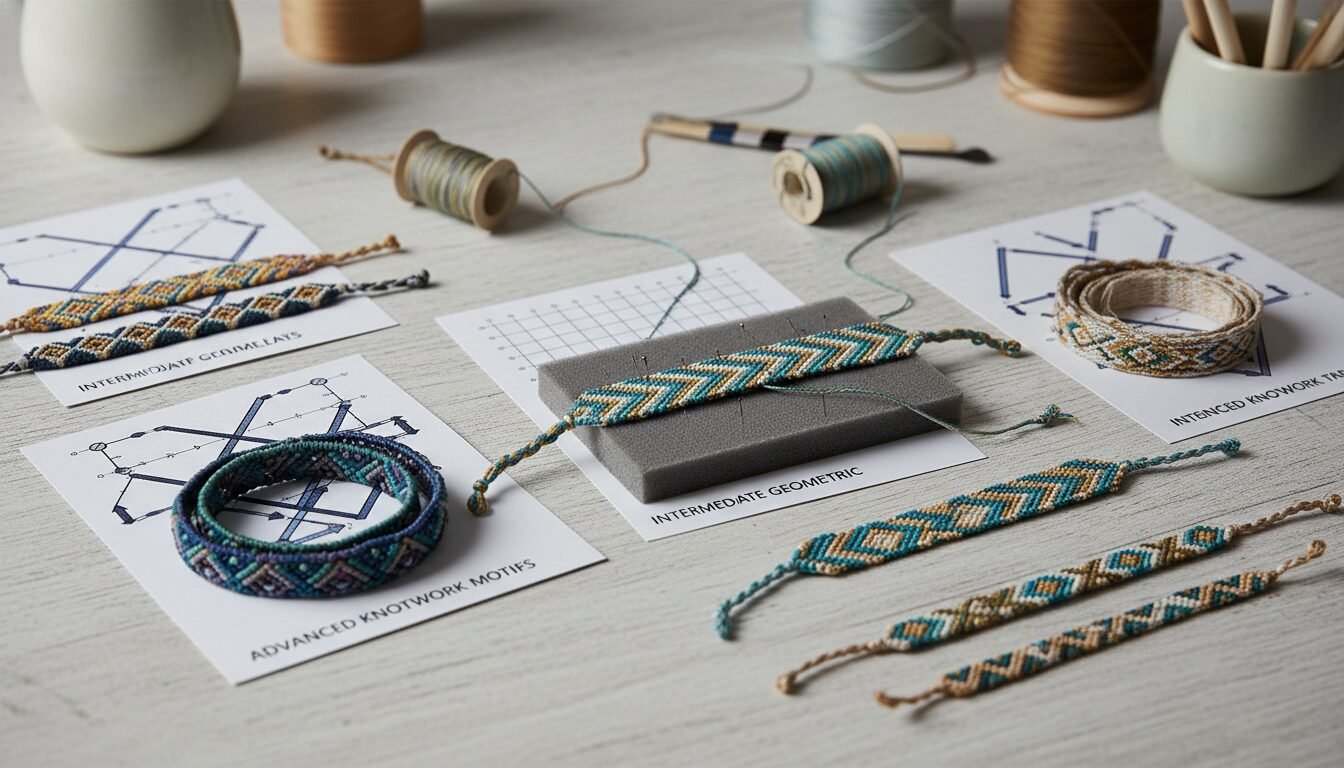
Advanced patterns challenge your skills while creating statement pieces worthy of any resort destination. These designs require patience and precision, but the results rival anything you’d find in a Mediterranean boutique.
Diamond and Arrow Patterns
These patterns expand on the chevron by incorporating knot combinations that create geometric shapes. A typical diamond pattern uses 6–8 colors and requires careful knot counting. These designs showcase your growing expertise while maintaining wearable elegance.
Alpha Patterns for Custom Images
Alpha patterns use horizontal knots to create pixel-art images, from letters to animal silhouettes. They require base threads and a leading thread that travels back and forth. These intricate designs allow for complete personalization , imagine your initials woven in sunset colors.
Using Multiple Colors to Create Depth
Mastering color placement is key to advanced patterns. Designs with 8+ threads can produce ombre effects or contrasting outlines. The interplay of color creates visual depth that transforms simple thread into sophisticated accessories.
Comparison of Pattern Types
| Pattern Style | Difficulty | Typical Time | Recommended Threads |
|---|---|---|---|
| Candy Stripe | Beginner | 20–30 min | 3–5 strands |
| Chevron | Beginner | 30–45 min | 4–6 strands |
| Spiral Staircase | Beginner | 15–20 min | 1 working + 3–4 core |
| Diamond | Intermediate | 1–2 hours | 6–10 strands |
| Alpha | Advanced | 2–5 hours | 1 leading + 10–20 base |
Friendship Bracelet Patterns for Resort Wear Styling
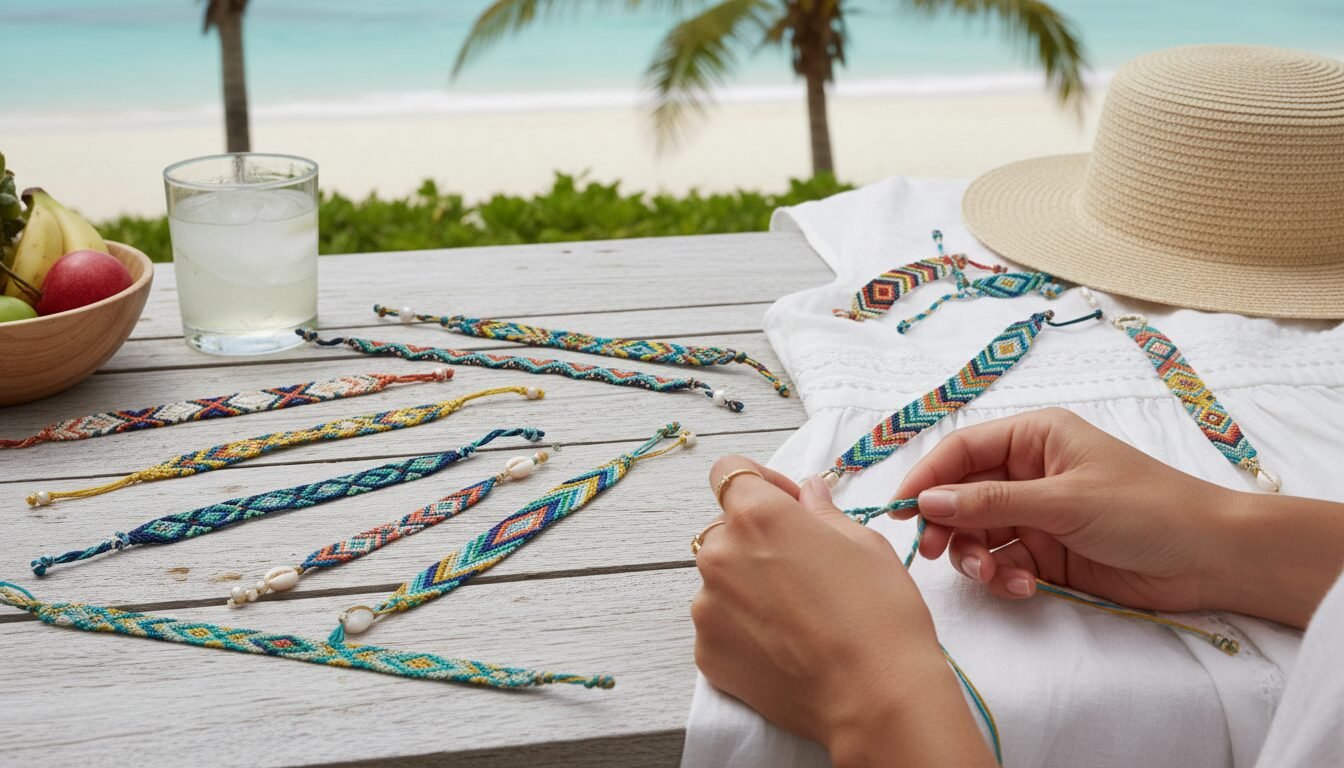
Handmade bracelets add personal charm to resort wardrobes, transforming simple vacation outfits into curated looks. The key lies in choosing colors and styling techniques that complement rather than compete with your clothing.
Styling Your Bracelets with Summer Outfits
Handmade bracelets add a personal touch to linen dresses and wide-brim hats, perfect for Mediterranean escapes. Stacking 5–7 thin bracelets in sandy tones mimics high-end designer stacks seen in Capri and Santorini boutiques. The handcrafted texture provides beautiful contrast against smooth silk or flowing cotton.
Mediterranean-Inspired Color Palettes
Opt for threads in terracotta, olive, Aegean blue, and sun-bleached white. These palettes echo the architecture and seascapes of the region, transforming a simple craft into a sophisticated accessory. Think of the whitewashed walls of Mykonos or the sunset hues over Positano , these natural inspirations create timeless color combinations.
Stacking Multiple Bracelets for a Boho Look
Mix patterns and textures , a micro-macramé bracelet next to a classic chevron, finished with a few bead accents. The layered effect aligns with current resort trends, where individuality and handcrafted details are prized. Start with your thinnest bracelet closest to your wrist, then build outward with varying widths and textures.
Choosing the Right Materials for Your Patterns
Material choice dramatically affects both the crafting experience and final result. Quality threads create bracelets that maintain their beauty through beach days and poolside lounging, while budget options work perfectly for practice and experimentation.
Embroidery Floss: DMC vs. Bulk Packs
DMC embroidery floss offers a silky texture and precise color matching, ideal for detailed patterns. Bulk rainbow packs from craft stores work well for practice and kids’ projects, though the threads may be slightly coarser. Quality matters for elegant bracelets with beads, while budget floss works perfectly for casual crafts and learning new techniques.
Exploring Luxury Threads: Silk, Linen, and Metallic
For a resort-ready upgrade, substitute cotton floss with 100% silk thread or fine linen. Metallic accents used sparingly can catch the sunlight, turning a bracelet into a statement piece. These materials are sold by specialty yarn shops and are gaining popularity among crafters seeking elevated results.
The Importance of Tension and Tools
Consistent tension ensures even knot rows and professional-looking results. A clipboard or macramé board helps maintain stability during longer projects. Beginners often pull too tightly, which warps the pattern; a relaxed hand yields a more fluid drape that moves beautifully with your wrist.
Tools and Setup for Perfect Results
Proper setup makes the difference between a frustrating crafting session and an enjoyable creative flow. Simple tools and smart organization techniques help you focus on the meditative rhythm of knotting rather than wrestling with tangled threads.
Essential Tools: Safety Pin, Tape, and Clipboard
A safety pin attached to your clothing or a piece of tape on a tabletop holds the work in place. For longer projects, a knotting board with a clamp keeps threads organized and prevents the frustration of constantly readjusting your setup.
Organizing Your Threads Efficiently
Label each color with its position in the pattern using small pieces of tape or numbered cardboard bobbins. Many crafters use zip-top bags to avoid tangles between sessions. This simple organization cuts setup time significantly and reduces mistakes that can derail complex patterns.
Creating a Workspace for Long Projects
Good lighting and a comfortable chair are essential for the 2–5 hours required by complex alpha patterns. A portable kit lets you knot during travel , perfect for long flights to your next resort destination or quiet evenings on a terrace overlooking the sea.
How to Fix Common Mistakes in Patterns
Even experienced crafters make mistakes, but knowing how to fix them saves time and prevents frustration. Most errors can be corrected without starting over, preserving hours of careful work.
Untangling and Re-knotting
If a knot is placed incorrectly, gently unpick it with a fine needle or safety pin. The Beginner’s Guide To Friendship Bracelets by Masha Knots recommends using a pin to loosen the knot without fraying the thread. Work slowly and patiently , rushing often creates more tangles.
Adjusting Tension Mid-Bracelet
Irregular tension can cause a bracelet to curve or pucker. To correct it, gently stretch the bracelet widthwise and re-tighten loose knots individually. This restores the straight silhouette without needing to restart, though it requires patience and a gentle touch.
When to Start Over vs. Salvage
If more than 3 rows contain errors, it’s often faster to cut the ruined section and tie on new threads. For alpha patterns, a single misplaced knot can be camouflaged with a small bead, but major design flaws usually require restarting the affected section.
Pros and Cons
Pros
- Affordable hobby requiring only embroidery floss and basic tools
- Portable craft perfect for travel and vacation downtime
- Creates personalized accessories that complement resort wear
- Meditative process that reduces stress and promotes mindfulness
- Builds fine motor skills and pattern recognition abilities
- Produces meaningful gifts that show time and care investment
Cons
- Complex patterns require significant time investment (2-5 hours)
- Mistakes in advanced designs often require starting over
- Thread tangles can be frustrating for beginners
- Repetitive motions may cause hand fatigue during long sessions
- Color bleeding possible with low-quality threads when wet
Conclusion: Mastering Friendship Bracelet Patterns
These timeless patterns offer endless creativity, from simple striped bands to pixel-perfect alpha art. Whether you follow a chart from BraceletBook or freestyle your own design, the key is practice and patience. The craft’s social media revival continues to inspire new generations of makers. As you progress, experiment with elevated materials and resort styling to make your bracelets truly your own. There’s something magical about wearing a handcrafted piece that catches the Mediterranean sun just right , it’s jewelry with a story, made by your own hands.
Shop the collection at lexazi.com , free shipping on orders over $75.
Frequently Asked Questions
What is the easiest friendship bracelet pattern for absolute beginners?
The candy stripe pattern uses only forward knots and can be completed in under 30 minutes with 3–5 strands of embroidery floss. It requires no pattern chart and teaches the fundamental knotting motion.
How many colors do I need for a chevron bracelet?
A traditional chevron requires at least 2 colors that mirror each other, but popular variations use 4–6 colors for a vibrant look. The pattern works best with even numbers of threads.
Can I use yarn instead of embroidery floss for patterns?
Yes, cotton yarn or sock yarn works well for larger bracelets. The knots will be bulkier, so scale the pattern up or use fewer strands to maintain proper proportions.
Where can I find free friendship bracelet patterns online?
BraceletBook hosts thousands of user-submitted patterns, while Pinterest boards curate dozens of ideas. Both platforms offer patterns ranging from beginner to advanced skill levels.
What is an alpha pattern?
An alpha pattern creates images using horizontal rows of knots, similar to pixel art. It uses a leading thread that switches direction with each row, allowing for letters, shapes, and detailed designs.