How to Style a Scarf: Types, Fabrics, History and Care
A scarf is a length of fabric worn around the neck, shoulders, or head for warmth, sun protection, fashion, or cultural expression. Draped over bare shoulders on a Positano terrace or knotted at the collar of a linen dress in Tulum, it is the one accessory that does everything.
Key Takeaways
- Defined by Merriam-Webster as a broad band of cloth worn about the shoulders, around the neck, or over the head, with the plural being either scarves or scarfs.
- Worn since at least 1350 BC, with roots in Ancient Egypt, Rome, and China, making it one of fashion’s oldest accessories.
- Seven core shapes exist: bandana, diamond, oblong, ribbon, square, triangle, and wrap, each with distinct sizing and styling possibilities.
- Fabric determines everything: silk offers thermoregulating luxury, wool provides insulation, cotton breathes in heat, and linen is ideal for warm-climate dressing.
- One piece, ten-plus looks: tie it at the neck, wrap it in your hair, belt it at the waist, or knot it on a bag handle.
- Proper care extends life by years: hand-wash silk in cold water, lay wool flat to dry, and store all pieces away from direct sunlight.
What Is a Scarf? Definition, Etymology, and Uses
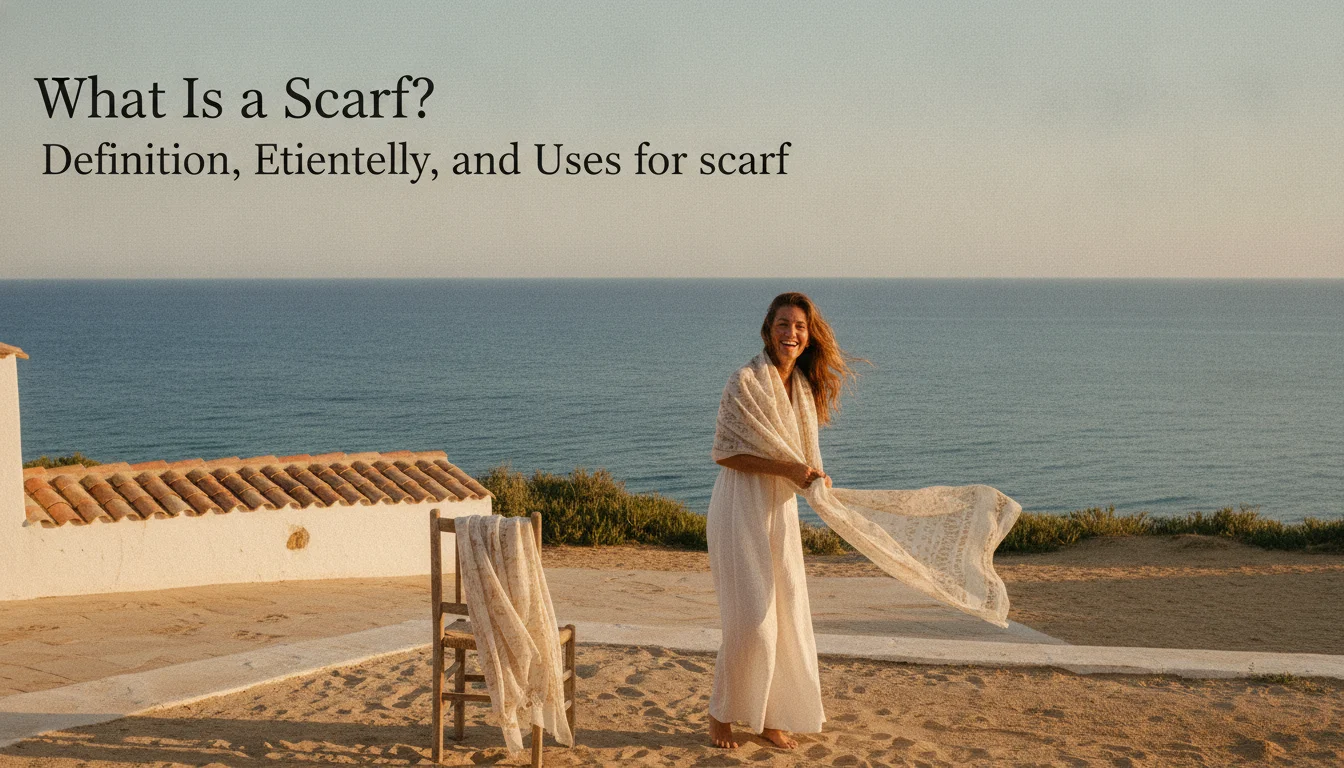
A scarf is a broad band of cloth worn about the shoulders, around the neck, or over the head, according to Merriam-Webster, which also notes that the plural can be either scarves or scarfs. Beyond that clean definition, this piece of fabric has served as a tool of warmth, a signal of faith, a badge of team loyalty, and a canvas for some of fashion’s most iconic prints.
According to Wikipedia, the accessory is used for warmth, sun protection, cleanliness, fashion, religious reasons, or to show support for a sports club or team. That breadth of purpose is exactly why it has never left the style conversation.
Etymology and Word Origins
The English word likely derives from Middle French dialect escreppe or escherpe, meaning a sash or sling, which came from Old French and ultimately from Medieval Latin scrippum, a pilgrim’s shoulder bag. The first known use of the noun form dates to 1555, per Merriam-Webster. The verb form meaning “to wrap or adorn” first appeared in 1598.
The slang verb meaning “to eat quickly” (as in “scarf down a sandwich”) emerged around 1954, according to the same dictionary. It is considered an alteration of scoff, meaning to devour greedily.
Core Functions
This accessory is never just decorative. In hot climates, a lightweight cotton or linen piece wipes sweat and shields the neck from sun. In cold climates, a wool version provides real insulation. In religious contexts, it serves as a head covering or modesty garment. In sports stadiums, team-colored versions create a visual sea of loyalty. These layered functions are why the style has persisted for millennia.
History of the Scarf: From Ancient Egypt to Modern Fashion

The scarf’s history is a story of function meeting fashion across thousands of years. Evidence of scarf-like garments appears as early as 1350 BC, when Queen Nefertiti of Ancient Egypt reportedly wore a tightly woven headscarf. A 9th-century BC statue of Ashurnasirpal II depicts the emperor wearing a shawl, showing that the style was already a symbol of status in the ancient Near East.
Antiquity and the Middle Ages
In 500 BC Athens, women wore them to enhance their charm, while in India during the same period, women used them as headgear. During the reign of Chinese Emperor Cheng (259 to 210 BC), neck wraps served as military markers to identify rank. Many of the Terracotta Warriors are depicted wearing them. In Ancient Rome around AD 10, the garment was called a focale or sudarium (“sweat cloth”) and was used for cleanliness rather than warmth. By the 1200s, Egyptian belly dancers wore a similar belt low on the hips to emphasize movement.
The Modern Era: Cravats, Revolution, and Luxury
Around the 17th century, Croatian soldiers of all ranks wore neck cloths. Officers wore silk while other ranks received cotton. Some Croatian mercenaries serving with French forces brought their style to France, where it became known as the “cravat” (from cravate, meaning “Croat”), the direct precursor to the modern necktie. The British later called this style an “ascot.”
During the French Revolution, women and men wore differently colored versions to display political affiliations. Napoleon Bonaparte admired Egyptian styles and bought them as gifts for Empress Josephine. By the 19th and 20th centuries, silk became the premium fabric of choice for designers and luxury houses, and the accessory became a high-fashion statement.
Fashion Authority Perspective: As Vogue has noted across decades of coverage, the silk neck square is one of the few accessories that has appeared in every major fashion era without interruption. Its ability to signal everything from Parisian polish to bohemian freedom is what keeps it perpetually relevant.
Types of Scarves by Shape and Size
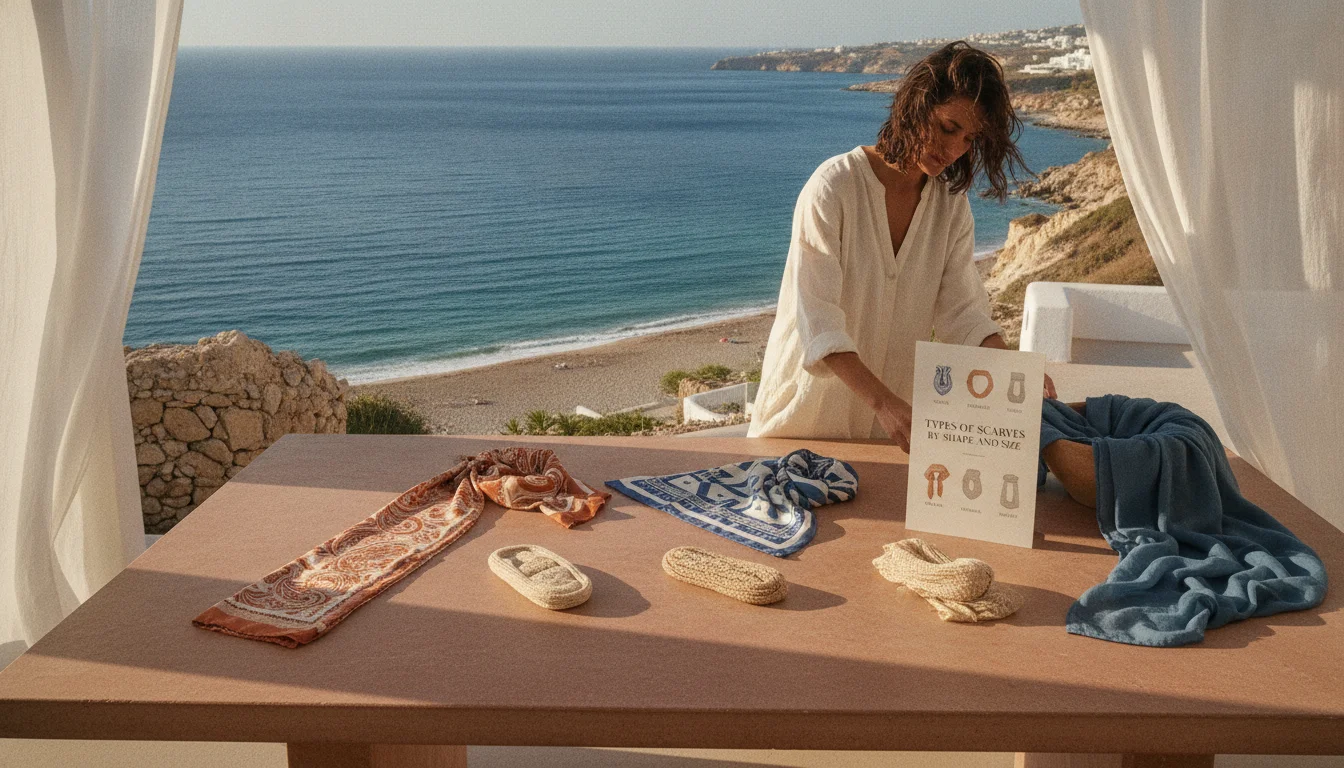
Shape determines how a piece drapes, ties, and frames the face. Retailers like Echo New York categorize their range into seven shapes: bandana, diamond, oblong, ribbon, square, triangle, and wrap. Each has distinct dimensions and styling possibilities.
| Shape | Common Dimensions | Best For | Example Styles |
|---|---|---|---|
| Square | 21″ to 44″ across | Neck knots, head wraps, bag accents | Silk twill squares, bandana squares |
| Oblong / Rectangular | 60″–80″ long, 10″–30″ wide | Draping, wrapping, belt replacement | Cashmere wraps, linen stoles |
| Bandana | 21″ to 26″ square | Headwear, neckerchief, pocket square | Cotton bandanas, silk bandanas |
| Triangle | Cut from squares, often 40″–50″ | Shoulder shawls, hair covers, kerchief ties | Cotton or silk triangle styles |
| Ribbon / Bias | 2″–6″ wide, 30″–60″ long | Neck ties, wrist wraps, hat bands | Silk twill ribbons, bias-cut silk |
| Wrap / Ruana | Oversized, often 55″–80″ square or rectangle | Layering, travel blanket, evening cover-up | Wool wraps, cashmere ruanas |
Square Styles
The square is the most iconic and versatile shape. A 35-inch silk square, as seen at Echo New York, can be folded into a triangle for a classic Parisian neck tie, rolled into a headband, or knotted onto a handbag. Larger squares (44 inches) function as lightweight shawls. The symmetrical geometry allows for dozens of folds and ties.
Oblong and Rectangular Styles
An oblong is longer and narrower, ideal for multiple wraps around the neck or for draping over the shoulders as a stole. This shape is often chosen for winter wool and cashmere because it loops securely without excessive bulk. The Smithsonian Store offers several oblong silk options, including festive plaid designs for holiday styling.
Bandanas and Triangles
A bandana is typically a small square (21 to 26 inches) used as a headpiece, neckerchief, or pocket square. Triangle styles, often cut from a larger square, are pre-folded for easy kerchief ties. Both shapes are lightweight and casual, perfect for summer resort dressing.
Scarf Fabrics: Silk, Wool, Cotton, Linen, and More
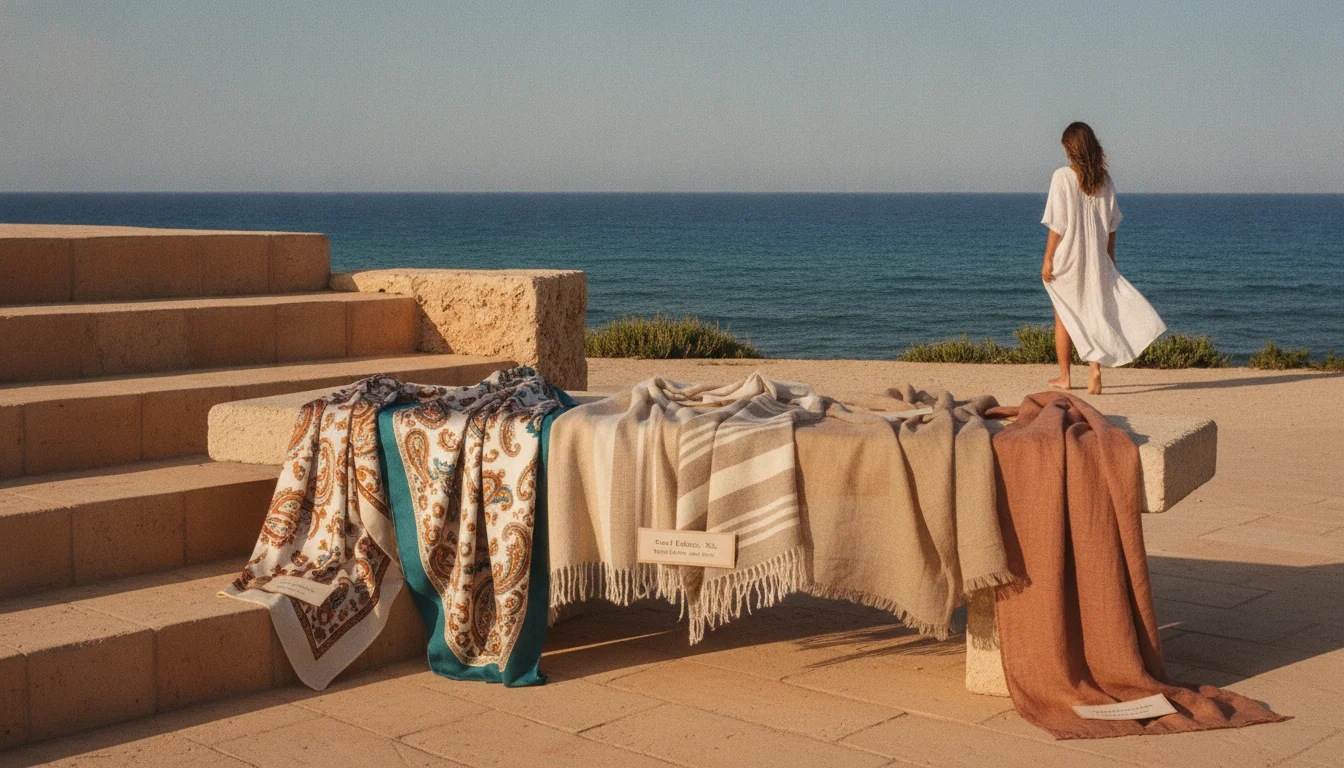
Fabric determines warmth, drape, sheen, and care requirements. According to Wikipedia, these accessories can be made from wool, linen, silk, and cotton, each with distinct properties. High-end brands like Jim Thompson focus exclusively on silk, celebrating Thai weaving traditions and hand-stitched details across 65 products.
Silk
Silk is the gold standard for luxury. It offers a natural sheen, smooth hand feel, and vibrant color retention. Silk is also thermoregulating, cool in summer and warm in winter, making it a year-round choice. Jim Thompson’s silk pieces range from 33-inch squares at $168 to 52-inch statement pieces at $260, while Echo New York’s 35-inch silk squares retail for $179. These are investment pieces that reward the wearer with unmatched elegance.
Wool and Cashmere
For cold-weather warmth, wool is the traditional choice. Wool fibers trap air, providing excellent insulation even when damp. Cashmere, a finer undercoat from cashmere goats, is softer and lighter but more expensive. Many winter styles blend wool with silk or cotton to balance warmth and drape. The Smithsonian Store’s Reversible Blue Ginkgo Leaf style at $79 is a wool-blend option for cooler months.
Cotton and Linen
Cotton is breathable, absorbent, and easy to wash, making it perfect for casual wear and warm climates. Linen, derived from the flax plant, is even more breathable and has a textured, natural look that softens beautifully with wear. These fabrics are ideal for summer headscarves and bandanas. The Smithsonian Store’s Yayoi Kusama bandana starts at $15, while linen styles from specialty retailers typically range from $40 to $80.
Synthetic and Blended Fabrics
Many affordable options use polyester, viscose, or modal blends. These fabrics can mimic silk or wool at a lower price but may lack breathability and longevity. Eco-conscious brands are increasingly offering recycled polyester or Tencel versions. Always check the fabric label to match your priorities: warmth, coolness, ease of care, or luxury feel.
Pros and Cons of Owning a Silk Scarf
Pros
- Thermoregulating: Silk keeps you cool in summer and warm in winter, making it genuinely year-round.
- Versatile styling: One square can become a neck tie, headband, bag accent, wrist wrap, or belt.
- Timeless investment: A quality silk piece from a heritage brand holds its value and never looks dated.
- Lightweight and packable: It takes up almost no space in a carry-on, making it the perfect travel accessory.
- Skin-friendly: Silk is naturally hypoallergenic and gentle against sensitive skin.
Cons
- Delicate care requirements: Silk demands hand washing or dry cleaning and cannot be wrung or machine-dried.
- Higher price point: Quality silk squares from brands like Echo New York or Jim Thompson start at $58 and can reach $272.
- Prone to snagging: Fine silk weaves can catch on jewelry or rough surfaces if not handled carefully.
- Color fading risk: Direct sunlight during storage can dull even the most vibrant prints over time.
How to Choose the Right Style for Your Needs
Selecting the right piece means balancing climate, occasion, personal style, and budget. The Smithsonian Store demonstrates this range beautifully, offering 68 styles from a $15 Yayoi Kusama bandana to a $189 Lost at Sea silk square. Understanding your primary use case narrows thousands of options quickly.
Consider Climate and Season
For winter, choose wool, cashmere, or a thick knit. For summer resort dressing, opt for lightweight silk, cotton, or linen. For transitional seasons, a medium-weight silk twill or cotton-silk blend works well. The piece should neither overheat you nor leave you chilled on a breezy St. Barts evening.
Match Shape to Styling Preference
If you love elaborate neckties, a square or bandana offers the most versatility. If you prefer simple drapes, an oblong or rectangular style is easier to work with. Wraps and ruanas function more like outerwear, providing real coverage for shoulders and arms on a cool coastal evening.
Budget and Quality Trade-offs
Amazon lists over 40,000 results for this category, with options from a few dollars to several hundred. A $15 bandana can be a genuinely stylish accessory, but a $179 silk square from Echo New York, a brand with heritage dating to 1923, offers superior dye quality and hand-rolled edges. Decide whether you value trend-driven affordability or a timeless piece you will reach for for years.
Skin Sensitivity and Ethics
If you have sensitive skin, avoid coarse wool and choose silk, cotton, or bamboo instead. For ethical concerns, look for certifications like GOTS (Global Organic Textile Standard) or OEKO-TEX. Many brands now disclose their sourcing and manufacturing practices openly.
Scarf Styling: 10 Ways to Wear Yours
Mastering a few knots transforms one accessory into many looks. Below is a step-by-step guide for the most popular tie, followed by nine other methods that work beautifully for resort and vacation dressing.
Step-by-Step: The Classic Loop (Parisian Knot)
- Fold the piece in half lengthwise to create a loop at one end.
- Drape it around your neck with the loop on one side and the loose ends on the other.
- Thread the loose ends through the loop.
- Adjust the knot to sit comfortably at your collarbone. This works best with oblong or rectangular styles.
Nine Additional Styling Methods
- The Drape: Place it around your neck with both ends hanging in front. Ideal for showing off a bold print.
- The Shawl: Open a large square or wrap and place it over your shoulders like a cape for a breezy Santorini evening.
- The Headband: Fold a bandana into a triangle, roll it, and tie around your head for a retro-chic summer look.
- The Hair Wrap: Use a long piece to wrap and tie around a ponytail or bun.
- The Belt: Thread a narrow style through belt loops for a bohemian touch over wide-leg linen trousers.
- The Bag Accent: Tie a small square around a handbag handle for a pop of color.
- The Wrist Wrap: Knot a silk ribbon around your wrist as a bracelet.
- The Sarong: In warm climates, a large cotton or silk piece can serve as a beach cover-up over your swimwear.
- The Neck Gaiter: For outdoor activities, wrap a bandana around your neck and pull it up as needed.
Stylist Perspective: According to fashion editors at Elle and Harper’s Bazaar, the silk square is one of the few accessories that genuinely works across every dress code, from a beach club in Tulum to a rooftop dinner in Positano. The key is proportion: match the size of the knot to the neckline of your outfit.
Styling for Different Face Shapes and Body Types
Long, narrow styles elongate a round face. Voluminous wraps balance a long neck. Petite frames should avoid overwhelming oversized wraps, while taller frames can carry dramatic lengths with ease. Let the piece complement your features rather than compete with them.
Caring for Your Scarf: Washing, Storage, and Maintenance
A well-cared-for piece can last decades. The care method depends almost entirely on the fabric. Silk, wool, cotton, and linen each require different treatment to preserve color, shape, and texture.
Washing Guidelines by Fabric
- Silk: Hand wash in cold water with a gentle silk detergent, or dry clean. Avoid wringing. Roll in a towel to remove excess water, then lay flat to dry.
- Wool and cashmere: Dry clean or hand wash in cool water with wool-specific soap. Never agitate or twist, as this causes felting. Lay flat on a towel.
- Cotton and linen: Machine wash on a gentle cycle with like colors, or hand wash. Iron while slightly damp for a crisp finish.
- Synthetic blends: Usually machine washable in cold water, but check the label. Some may require low-heat drying.
Storage Solutions to Prevent Damage
Store pieces flat in a drawer, rolled in a storage box, or hung on a padded hanger. Avoid folding along the same crease repeatedly, as this weakens fibers over time. For silk, use acid-free tissue paper to prevent yellowing. For wool, add cedar blocks or lavender sachets to deter moths. Never store any textile in direct sunlight, which fades colors.
Pilling, Snags, and Repairs
Wool styles may develop pills (small fiber balls). Remove them gently with a fabric shaver or sweater stone. Snags in silk or fine knits can often be pulled back into place with a needle. For major damage, consult a professional textile restorer. Regular care maintains both beauty and resale value.
Scarf Trends and Cultural Significance in 2026
As of summer 2026, this accessory continues to bridge tradition and trend. Heritage brands like Echo New York, with over a century of craftsmanship since 1923, sit alongside newer labels pushing sustainable materials and bold digital prints. The style remains a canvas for artistic expression, political statement, and personal identity.
Art and Museum Collaborations
The Smithsonian Store exemplifies the trend of museum-inspired accessories. Their collection features designs drawn from iconic art and history, including the Declaration of Independence silk piece at $179 and the Cherry Blossom style at $50. These allow wearers to carry art and history with them, blending education with fashion in a way that feels genuinely meaningful.
Cultural and Religious Uses
In many cultures, this accessory is more than a style choice. It is a symbol of modesty, faith, or community. Headscarves are worn by Muslim women as hijab, by Christian women in some traditions, and by Jewish women as tichel. In sports, team versions create a visual sea of loyalty in stadiums. The ability to signal belonging is something few other accessories can match.
Sustainable and Ethical Production
Consumers increasingly demand transparency, and brands are responding with organic cotton, peace silk (where silkworms are not harmed), and recycled fibers. The Smithsonian Store’s Sustainable Crinkle style at $24.99 is one example of eco-conscious design. When shopping, look for certifications like GOTS or OEKO-TEX to ensure your purchase aligns with your values.
Why Every Resort Wardrobe Needs One
This is the most adaptable accessory you can pack. It protects, adorns, communicates, and transforms. From a $15 cotton bandana to a $272 hand-stitched Thai silk square from Jim Thompson, there is a style for every budget, climate, and occasion. Whether you drape it, tie it, wrap it, or gift it, you are participating in a tradition that spans millennia and cultures.
Invest in quality fabrics, learn a few key knots, and care for your pieces properly. They will serve you for years and travel with you everywhere, from a morning market in Positano to a candlelit terrace in Santorini.
Shop the collection at lexazi.com – free shipping on orders over $75.
Frequently Asked Questions
What is the definition of a scarf?
A scarf is a broad band of cloth worn about the shoulders, around the neck, or over the head, according to Merriam-Webster. It can be made from wool, linen, silk, or cotton and serves purposes ranging from warmth and sun protection to fashion and cultural expression.
What does “scarf” mean as a verb?
As a verb, “scarf” can mean to wrap, cover, or adorn with one. Informally, it also means to eat something quickly or greedily, as in “scarf down a sandwich.” A third meaning is to join two pieces of wood with a scarf joint.
What is scarf slang for?
In slang, the word often refers to eating quickly or in large quantities. For example, “She scarfed the entire bowl” means she ate it rapidly. This usage dates to around 1954 and is derived from “scoff,” per Merriam-Webster.
What is a scarf called in other languages or contexts?
Depending on shape and use, it may be called a neck wrap, shawl, stole, bandana, cravat, or ascot. In French it is écharpe or foulard; in Italian, sciarpa; in Spanish, bufanda for winter styles or pañuelo for a silk square.
How do I choose the right size?
Choose based on your intended use. For neck ties, a small square (21 to 35 inches) or bandana works well. For draping and warmth, go for an oblong or rectangular style (60 or more inches long). For shoulder coverage, select a large square (44 or more inches) or a wrap.
Can I wear a silk scarf in summer?
Yes. Silk is thermoregulating and breathable, making it genuinely suitable for warm weather. A lightweight silk square protects your neck from sun while adding elegance without overheating. Opt for lighter colors and smaller sizes for the hottest days.