The best sandals for walking combine cushioned arch support, adjustable straps, and durable outsoles to keep your feet happy over long distances. Picture yourself strolling a sun-warmed promenade in Positano, linen dress catching the breeze, feet completely at ease in a pair that looks as good as it feels.
Key Takeaways
- Arch support is non-negotiable: Contoured footbeds reduce fatigue and protect the plantar fascia on long vacation days.
- Adjustable straps prevent blisters: Multiple fit points keep sandals secure on cobblestones and uneven terrain.
- Quality walking sandals range from $50 to $180: The sweet spot for travel-ready pairs is $80 to $150.
- Break them in before your trip: Gradually increase wear time over one to two weeks to mold the footbed and avoid rubbing.
- Style and support coexist: Brands like Birkenstock, Vionic, and Chaco offer pairs that move from sightseeing to sunset dinner without a wardrobe change.
- Proper care extends sandal life: Simple cleaning and conditioning routines can keep your investment looking fresh for multiple summer seasons.
Best Sandals for Walking: Our Top Picks
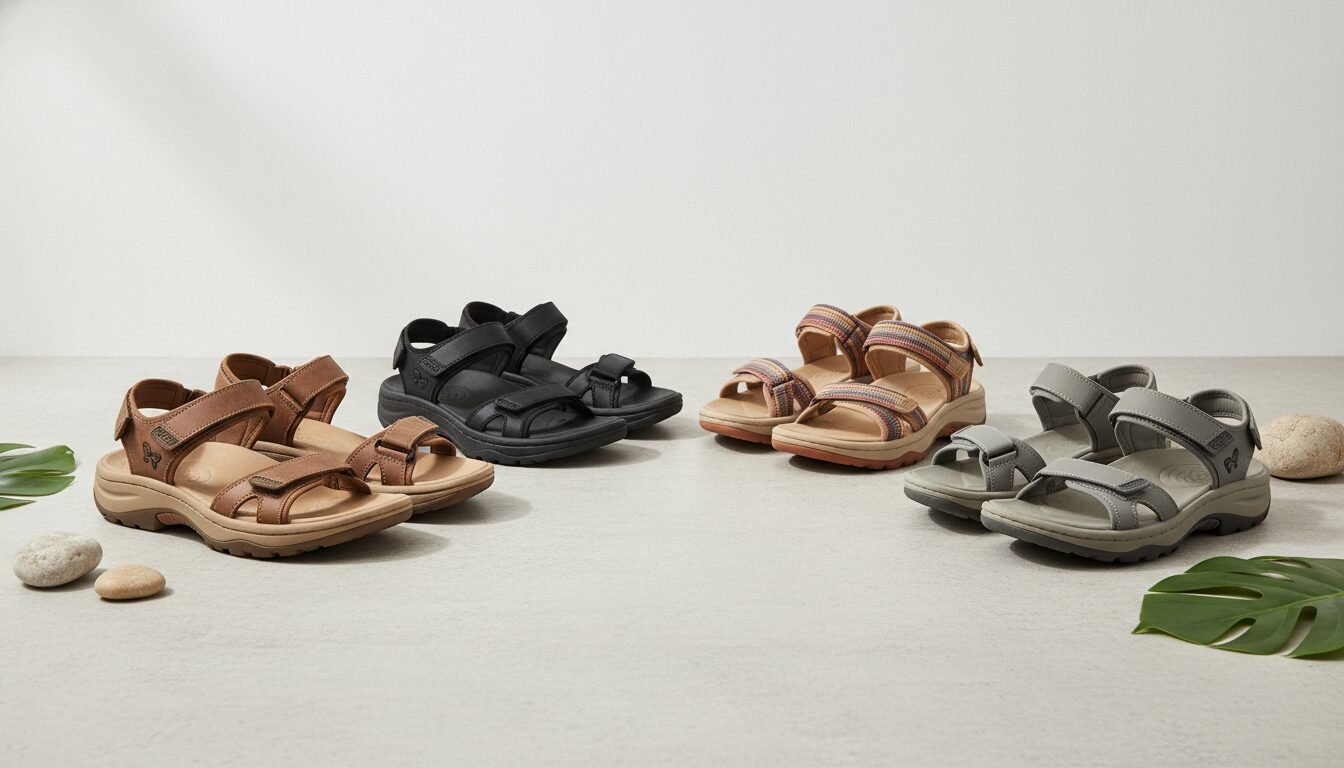
The best sandals for walking earn their place in your travel bag by delivering real support across real terrain, whether that’s ancient city streets in Athens or a sandy boardwalk in St. Barts. After analyzing expert reviews from sources including CNN Underscored, OutdoorGearLab, and Switchback Travel, these five pairs consistently rise to the top for support, durability, and vacation-ready style.
| Sandal | Best For | Key Features | Price | Review Highlight |
|---|---|---|---|---|
| ABEO Oasis Sandal | Everyday walking, all-day comfort | Built-in arch and heel support, cushioned footbed, multiple colors | $139.95 | Rated 4.9/5 from 227 reviews (The Walking Company) |
| Vionic Walk Max Wanderer | Long distances, plantar fasciitis relief | Podiatrist-designed, deep heel cup, orthotic arch support, APMA Seal of Acceptance | $180 | ‘Perfect combination of cushioning, flexibility and support’ – Dr. Anne Sharkey, CNN Underscored |
| Birkenstock Arizona Soft Footbed | Classic style, molding footbed | Cork-latex footbed conforms to your foot over time, adjustable straps, suede lining | ~$100 | Named ‘best sandal for women’ by OutdoorGearLab |
| Chaco Z/Cloud | Hiking, adventure travel | Podiatrist-approved, adjustable Z-strap system, high-traction outsole, PU footbed | ~$105 | ‘Best overall hiking sandal’ (Switchback Travel) |
| Teva Original Universal | Budget-friendly, water activities | Quick-drying webbing, hook-and-loop straps, EVA foam midsole | ~$50 | ‘Best budget hiking sandal’ (OutdoorGearLab, Switchback Travel) |
What to Look for in the Best Sandals for Walking
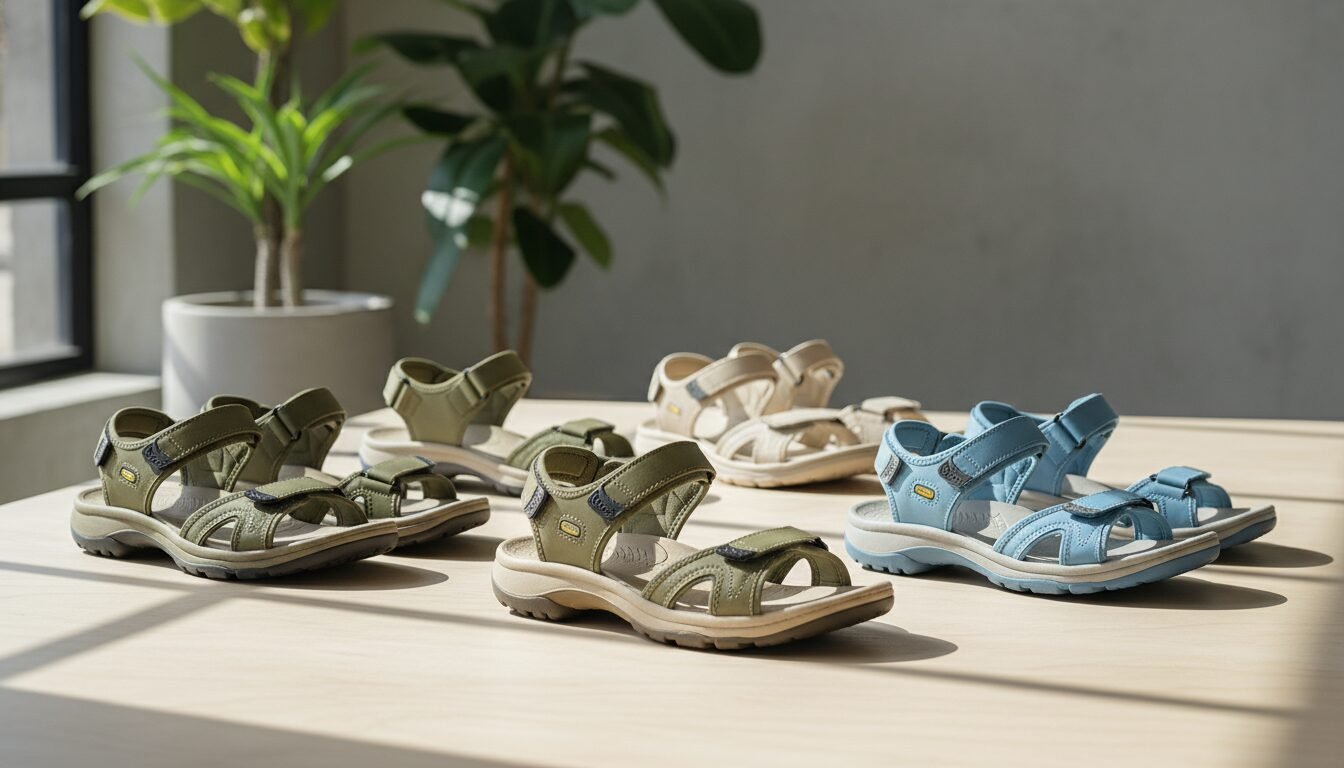
The best sandals for walking share five design elements that separate a truly supportive pair from a pretty one that leaves you limping by noon. Podiatrists and seasoned travelers agree on every point below.
Arch Support and Cushioning
Arch support is the contoured elevation in the insole that distributes body weight and reduces strain on the plantar fascia. According to CNN Underscored, board-certified podiatrist Dr. Saylee Tulpule recommends sandals with built-in arch support for all-day comfort. Look for a cupped heel (a deep heel seat that stabilizes the foot) and cushioned midsoles made of EVA or polyurethane. The Vionic Walk Max Wanderer, priced at $180, features a deep heel cup and orthotic support that earned the American Podiatric Medical Association’s Seal of Acceptance, one of the most credible endorsements in footwear.
“The best walking sandals offer a perfect combination of cushioning, flexibility, and support – the same principles we apply in clinical footwear recommendations.” – Dr. Anne Sharkey, podiatrist, as cited by CNN Underscored
Adjustable Straps and Fit
A secure fit prevents rubbing and blisters on long walks, full stop. Multiple points of adjustability, like those on the Chaco Z/Cloud with its signature Z-shaped strap system, let you customize the fit across your forefoot and ankle. This matters most when feet swell in hot weather, which they inevitably do on a July afternoon in Santorini. Switchback Travel notes that the best hiking sandals offer at least two points of adjustment to lock the foot in place on uneven surfaces.
Outsole Grip and Durability
A rugged outsole is essential for navigating cobblestone streets, rocky trails, and slick marina docks. The ABEO Oasis Sandal, available at The Walking Company for $139.95, uses a durable rubber outsole that delivers excellent stability on varied terrain. The Teva Original Universal employs a non-marking Spider Rubber outsole that holds fast on wet boardwalks, making it a reliable choice for beach-to-town days around $50.
Breathability and Weather Suitability
In Mediterranean climates, the best sandals for walking need to keep feet cool and dry from morning market to evening aperitivo. Breathable materials like full-grain leather or quick-drying webbing are ideal. Cork-latex footbeds, found in the iconic Birkenstock Arizona at around $100, naturally wick moisture and mold to your foot’s shape over time. For water-centric days, opt for synthetic uppers that drain quickly and resist odor, essential for beach-to-town versatility in Tulum or the Algarve.
Price Range and Value
Quality walking sandals span a wide range, from around $50 to $180, so you can find excellent support at almost any budget. The Teva Original Universal at roughly $50 delivers reliable performance for casual use. Mid-range choices in the $80 to $150 bracket, like the Birkenstock Arizona at $100 or the Chaco Z/Cloud at $105, offer premium materials and enhanced support. The Vionic Walk Max Wanderer at $180 justifies its price with podiatrist-designed orthotics and APMA approval. Many retailers, including The Walking Company, offer free shipping on orders over $75, which helps stretch your budget further.
Sizing for Wide and Narrow Feet
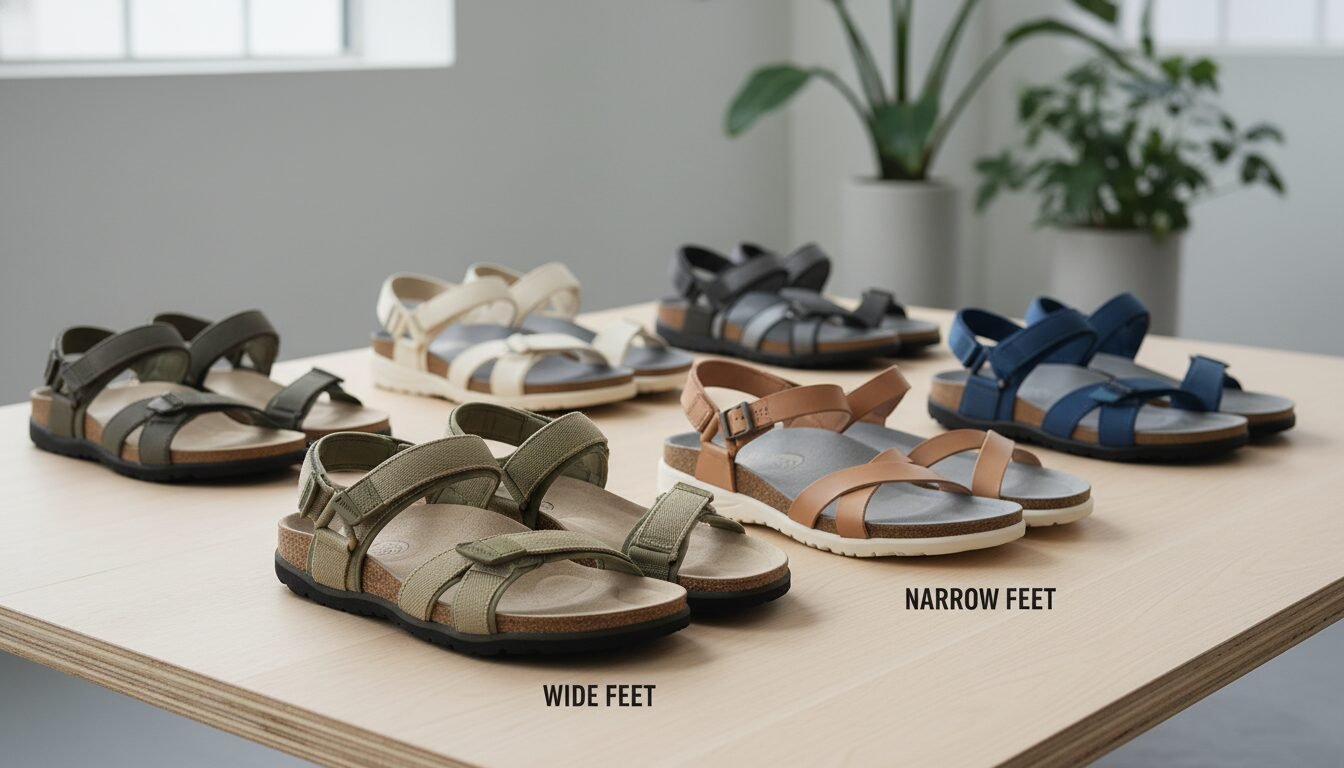
Finding the right width is just as important as finding the right size, and the best sandals for walking are only as good as their fit. Brands approach width differently, so knowing your options saves you from a painful first day in Mykonos.
If you have wide feet, look for brands that explicitly offer wide or extra-wide sizing. ABEO builds several styles with a wider toe box, and Birkenstock’s two-strap Arizona naturally accommodates a broader foot thanks to its open design and fully adjustable buckles. Chaco’s Z-strap system also works well for wider feet because the webbing can be loosened across multiple points simultaneously.
For narrow feet, the challenge is preventing heel slip. Vionic and Teva both offer styles with hook-and-loop closures that cinch down tightly enough to hold a slimmer foot in place. Stylists recommend sizing down half a size in open-toe styles if you find the footbed shifting underfoot. As a general rule, there should be no more than a thumb’s width of space between your longest toe and the sandal’s edge.
Women’s footbeds are also increasingly designed with gender-specific geometry in mind. According to fashion industry data, women’s feet tend to have a higher arch, a narrower heel relative to the forefoot, and a wider ball of foot than men’s lasts traditionally accommodate. Brands like Vionic and ABEO build their women’s lines around these proportions, which is part of why their podiatrist endorsements skew toward female wearers.
Pros and Cons of Walking Sandals for Travel
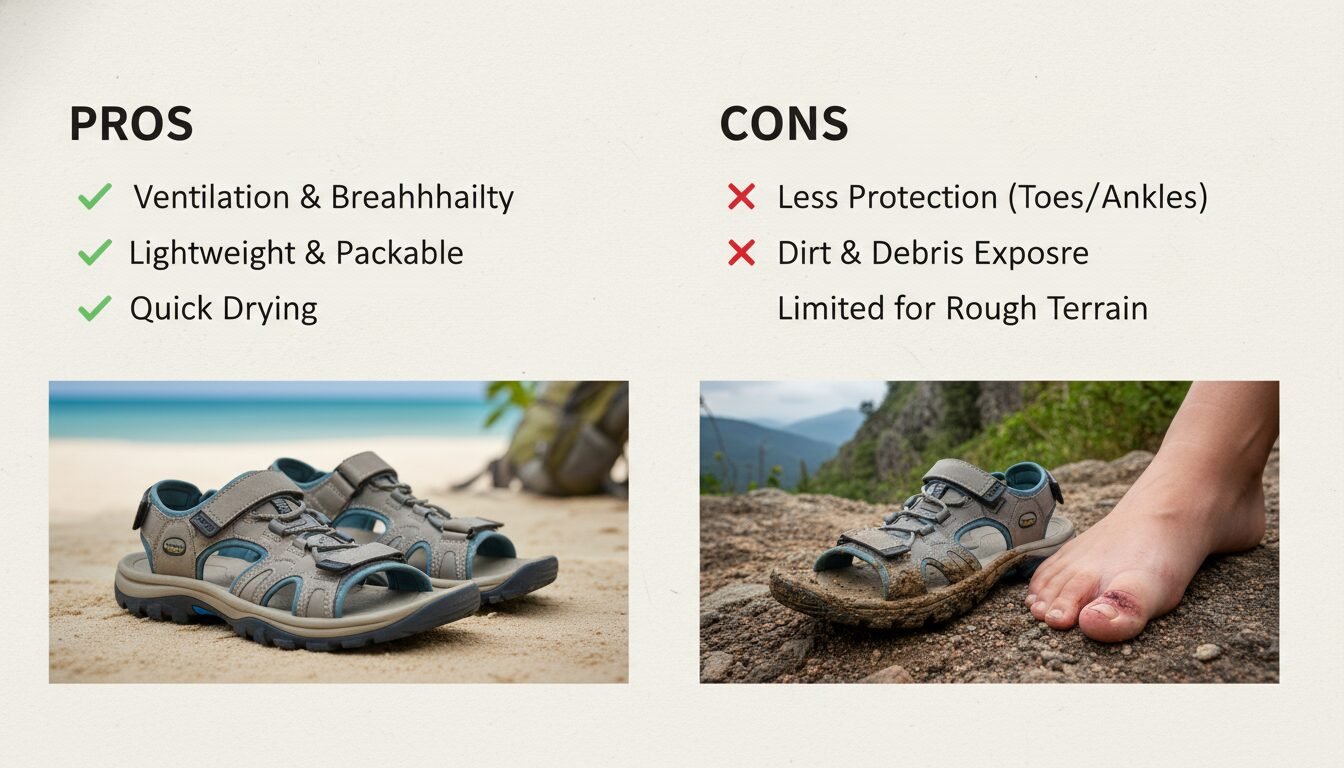
Pros
- Breathability: Open construction keeps feet cool in warm climates, reducing sweat and odor on long sightseeing days.
- Versatility: The right pair transitions from beach to cobblestone street to candlelit terrace without a shoe change.
- Packability: Flat sandals take up minimal suitcase space compared to sneakers or boots, leaving room for that extra linen dress.
- Style range: From sporty Chaco straps to polished Birkenstock leather, there’s a walking sandal for every aesthetic.
- Podiatrist-approved options: Brands like Vionic (APMA Seal of Acceptance) and ABEO offer clinically endorsed support at accessible price points.
Cons
- Break-in period required: Cork and leather footbeds need one to two weeks of gradual wear before they feel truly custom.
- Limited toe protection: Open-toe styles leave feet vulnerable on rocky trails or crowded city streets.
- Not ideal for all weather: Sandals are a warm-weather tool; they offer no insulation for cool evenings or unexpected rain.
- Strap maintenance: Leather straps require conditioning every few months to stay supple and avoid cracking.
How to Style Walking Sandals for Mediterranean Vacations
The best sandals for walking don’t ask you to choose between comfort and style. The right pair anchors a chic vacation wardrobe with zero effort. Think warm-weather elegance: linen dresses, cotton shorts, and flowy palazzo pants paired with supportive yet sleek sandals that feel as good at hour eight as they did at hour one.
For daytime sightseeing, choose a flat, neutral-toned sandal like the ABEO Oasis in tan or cognac. The minimalist design complements everything from striped shirtdresses to cropped wide-leg trousers. If your itinerary includes ancient ruins or cobblestone lanes, prioritize a secure strap system. The Chaco Z/Cloud‘s sporty silhouette works surprisingly well with a casual sundress and a woven tote.
Transitioning from a museum tour to an al fresco dinner? Swap to a metallic or braided leather style. The Birkenstock Arizona Soft Footbed in antique bronze adds subtle polish to a linen maxi dress without adding a single gram of discomfort. For a more romantic, Grecian-inspired silhouette, a pair of embellished flat sandals with ankle ties is all you need.
For an evening passeggiata along the waterfront, a pair of metallic sandals with a slight wedge, like the Taos Trophy 2 with its cork footbed and wide-width options, adds polish without sacrificing arch support. Pair with cropped linen pants or a flowy midi skirt and you’re dressed for anywhere the night takes you.
Recovery matters too. After a long day of sightseeing, slip into Oofos Ooahh Slides back at the hotel. The brand’s proprietary OOfoam technology is designed to absorb impact and reduce stress on feet and joints, making them a favorite recovery tool for high-mileage travel days.
For more outfit inspiration, explore our guides on how to style a maxi dress for vacation and what to pack for a Mediterranean resort trip.
Care and Maintenance for Long-Lasting Walking Sandals
Proper upkeep extends the life of your investment, especially after exposure to saltwater, sand, and sun. Follow this routine to keep your best sandals for walking looking fresh trip after trip.
- Step 1: Remove loose dirt. Use a soft brush or damp cloth to wipe down leather and synthetic uppers after each wear.
- Step 2: Spot clean with mild soap. For stubborn stains, mix a drop of gentle soap with water and dab with a cloth. Never soak leather, as it can dry out and crack.
- Step 3: Air dry away from heat. Let sandals dry naturally at room temperature. Direct sunlight or heaters can warp midsoles and fade colors.
- Step 4: Condition leather and cork. Apply a leather conditioner every few months to keep straps supple. For Birkenstock cork footbeds, use a cork sealant to prevent crumbling, which is critical for longevity.
- Step 5: Store smartly. Keep sandals in a dust bag or shoebox when not in use, and stuff the toe box with tissue paper to maintain shape. Avoid stacking heavy items on top.
Many walking sandals can also be resoled when the upper remains in good condition. Birkenstock and Chaco both support resoling through authorized repair services, which can extend the life of your pair by years and make the original $100 to $180 investment go much further.
“Investing in quality footwear and maintaining it properly is one of the smartest things a traveler can do for their feet and their wardrobe budget. A well-cared-for sandal can last three to five years of regular seasonal use.” – footwear care guidance from Elle Travel
By following these steps, your best sandals for walking can easily last multiple summer seasons, even with daily wear on your travels.
Closed-Toe vs. Open-Toe Walking Sandals
Choosing between closed-toe and open-toe styles depends entirely on where you’re going and what you’re doing once you get there. Both have a place in a well-packed travel bag.
Open-toe sandals are the go-to for city walking, beach days, and resort settings. They maximize breathability, dry quickly after water exposure, and look polished with vacation dressing. The Birkenstock Arizona, Chaco Z/Cloud, and Teva Original Universal are all open-toe designs that handle everything from Positano’s steep steps to a St. Barts beach club.
Closed-toe sandals offer extra protection for rocky trails, crowded markets, and any terrain where stubbed toes are a real risk. If your trip includes hiking or exploring rugged coastlines, a closed-toe style with a reinforced toe cap adds meaningful protection without the weight of a full hiking shoe. As of Summer 2026, trend reports show growing demand for hybrid styles that blend closed-toe protection with the breathability of open sandal construction.
The practical answer: pack one of each if space allows. An open-toe pair handles 80 to 90 percent of vacation activities, while a closed-toe option covers the adventurous days.
Frequently Asked Questions
Are walking sandals good for cobblestone streets?
Yes, provided they have a sturdy outsole with good traction. Look for deep, multi-directional lugs like those on the Chaco Z/Cloud, which grip uneven surfaces and prevent slips. A cushioned midsole also helps absorb the impact of hard cobblestones, which matters a great deal after several hours of sightseeing.
How do I break in new sandals before a trip?
Wear them for short intervals around the house, starting at 30 minutes to 1 hour, and gradually increase time over one to two weeks. Use moleskin or blister patches on any rubbing points, and take them on a few local walks to soften the footbed. For cork models like Birkenstocks, the footbed molds to your feet over time, so patience genuinely pays off.
Which walking sandals do podiatrists recommend for plantar fasciitis?
Brands like Vionic, ABEO, and Oofos are frequently recommended because their built-in arch support and deep heel cups reduce strain on the plantar fascia. The Vionic Walk Max Wanderer, priced at $180, carries the APMA Seal of Acceptance and is specifically designed to alleviate heel pain. CNN Underscored consulted four podiatrists in their walking sandal review, and Vionic appeared on every list.
Can I wear walking sandals with custom orthotics?
Some sandals, like certain ABEO models, feature removable footbeds that can accommodate custom orthotics. Always check the product specifications or consult with a specialist to ensure proper fit and support before your trip.
How often should I replace walking sandals?
Monitor the outsole tread and midsole compression. If the tread is worn smooth or the footbed no longer provides adequate cushioning, typically after 300 to 500 miles of walking, it’s time for a new pair. For daily travel use, this often translates to one summer season or roughly six months of heavy wear.
Do I need closed-toe sandals for walking?
Not necessarily, but closed-toe styles offer extra protection against rocks and debris if you plan to hike or explore rugged areas. For city walking and resort settings, open-toe sandals are perfectly fine as long as they provide secure straps and solid arch support.
Ready to find your perfect pair? Shop the sandals collection at lexazi.com – free shipping on orders over $75.