The best sandals for walking long distances are footwear engineered with shock-absorbing footbeds, contoured arch support, and secure straps to keep your feet stable and pain-free for miles. Picture yourself on the sun-warmed cobblestones of Positano or a long afternoon at a Santorini cliffside market: the right pair carries you through every step without a single wince.
Key Takeaways
- Shock absorption is non-negotiable: Cork, memory foam, or multi-density rubber footbeds cushion every heel strike on pavement and cobblestones.
- Arch support prevents fatigue: Contoured, podiatrist-recommended designs maintain foot alignment and reduce heel pain over long distances.
- Adjustable straps secure the fit: Buckle or velcro closures eliminate toe-gripping, blisters, and mid-walk instability.
- Top picks span every budget: Reliable options run from under $80 (Oofos, Teva) to premium leather styles around $200 (Antelope cork wedges).
- Style and support coexist: Cork wedges, flatforms, and leather slides all come in versions built for all-day wear without sacrificing vacation aesthetics.
- Break-in time matters: Leather and cork sandals need a few short walks before a big trip to soften straps and mold the footbed to your foot.
What Makes a Sandal the Best for Walking Long Distances?
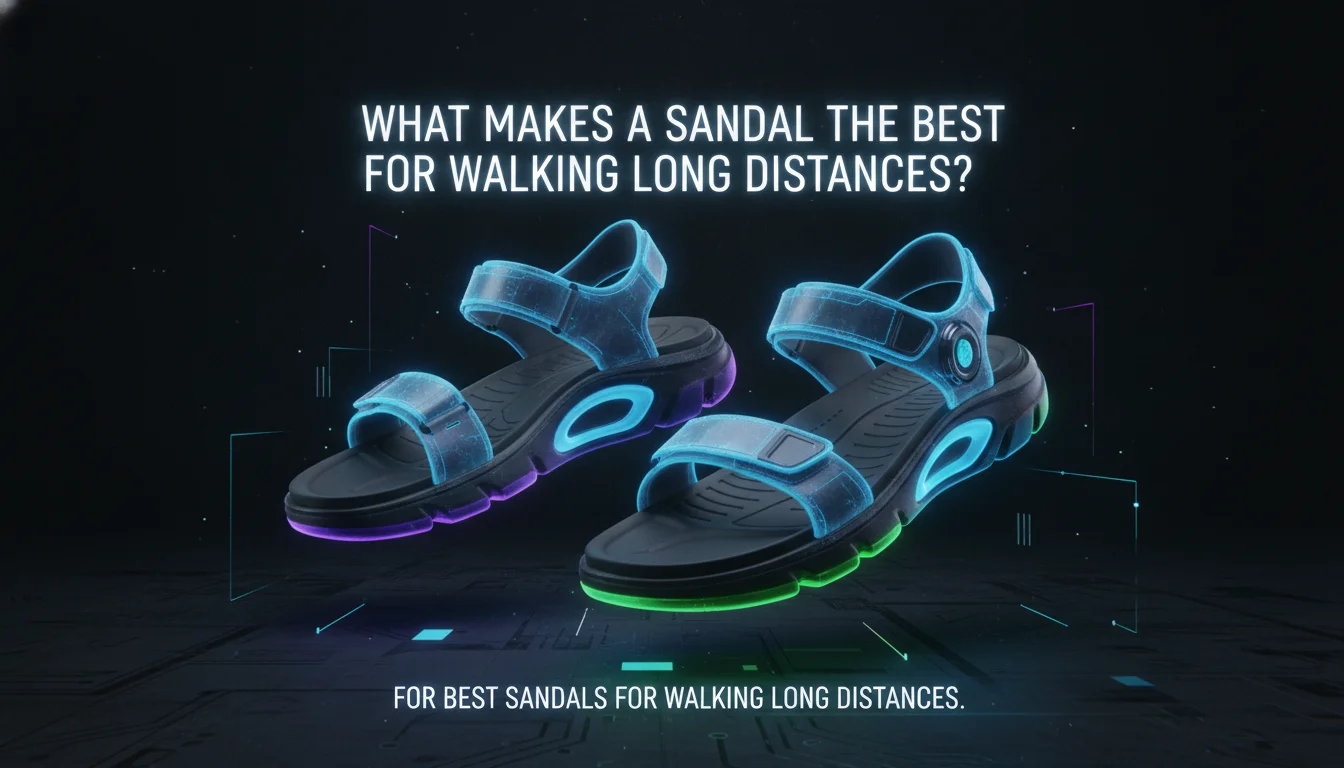
The long distances share a specific anatomy that fashion sandals simply don’t have. According to the Antelope Shoes all-day comfort guide, every step generates impact force equal to 1.5 times your body weight. A true walking sandal absorbs that force before it reaches your heels, knees, and lower back. Fashion sandals, with their thin soles and decorative straps, transfer all of it straight to your joints – which is why your feet are screaming by mile three of a Rome sightseeing day.
Podiatrists consulted by CNN Underscored point to three core pillars: contoured arch support to prevent plantar fasciitis, secure straps that eliminate toe-gripping, and durable outsoles for varied surfaces. Get all three right, and you can walk from a morning market to a sunset dinner without ever thinking about your feet.
Shock Absorption: Your Distance Essential
Shock absorption is the footbed’s ability to disperse the impact of each stride before it travels up your body. Cork, a natural and resilient material, compresses slightly with each step and rebounds, as seen in the Antelope H34 Aly wedge. Multi-density EVA and memory foam work similarly. A thin, flat sole offers virtually no protection and is the fastest route to sore heels on cobblestone streets.
Arch Support That Fights Fatigue
A contoured footbed cradles the arch and keeps the plantar fascia from over-stretching. Without it, inflammation and sharp heel pain follow. Vionic sandals, built with podiatrist-designed orthotic footbeds, are frequently recommended for this reason. Even casual-looking options like the Birkenstock Arizona Soft Footbed hide a deep heel cup and raised arch that promote natural alignment through thousands of steps.
Secure Straps, No Toe-Grip
Sliding inside a sandal forces your toes to clench, leading to cramps and rapid fatigue. Adjustable straps lock the foot onto the footbed so your muscles can relax. Chaco’s Z/1 Classic uses a single pull-through strap that wraps the heel and forefoot for a custom fit, while ABEO’s Oasis collection features three-point adjustability for narrow to wide feet.
Durable Outsoles for the Real World
City walking means uneven pavement, wet cobblestones, and polished museum floors. A deep-tread rubber outsole grips and wears slowly. Hiking-inspired sandals like the Keen Newport H2 or Teva Hurricane XLT2 use rugged lug patterns, while cork-wedge outsoles rely on a shock-absorbing midsole to compensate for a smoother tread.
Pros and Cons of Walking Sandals
Pros
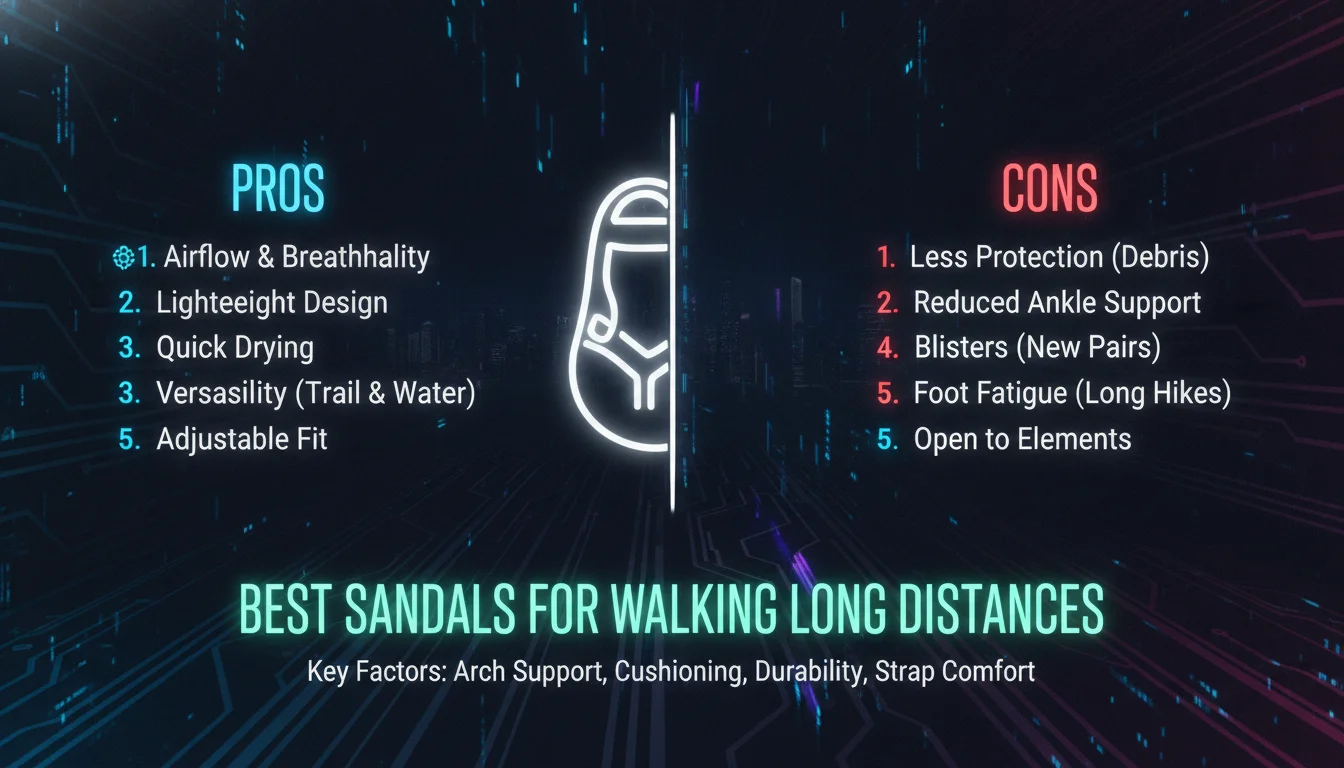
- Engineered footbeds absorb impact and reduce fatigue over long distances
- Adjustable straps accommodate foot swelling throughout the day
- Versatile styles transition from beach to dinner without a shoe change
- Breathable materials (leather, cork, open mesh) keep feet cooler than closed shoes
- Many podiatrist-approved options are available at accessible price points
Cons
- Leather and cork styles require a break-in period before long trips
- Open construction offers less toe protection on rough or rocky terrain
- Sport-support sandals can look too casual for upscale resort dinners
- Quality walking sandals in the mid-to-premium range represent a real investment ($100-$200+)
Types of Walking Sandals and Their Strengths
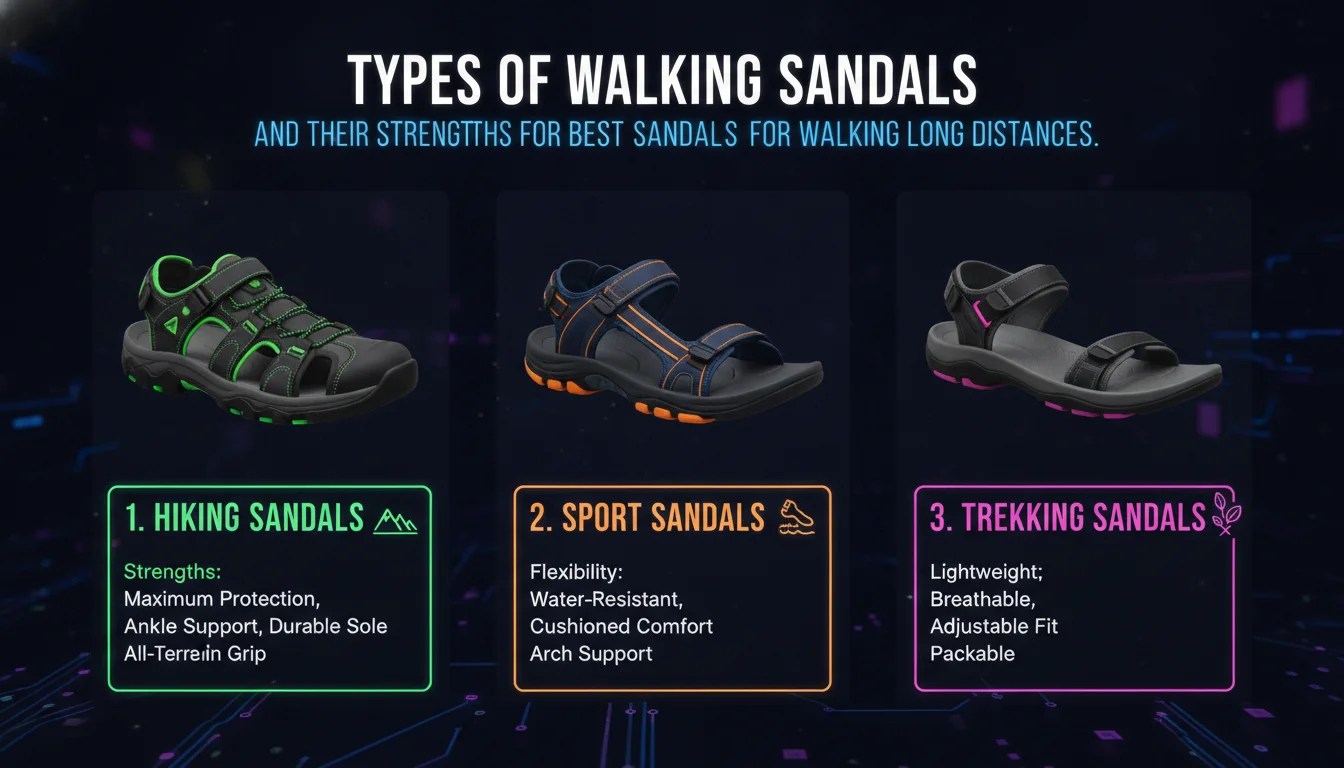
Not every pair of the best sandals for walking long distances looks the same. The type you choose depends on your terrain, style preference, and foot needs. Here are the main categories that consistently deliver all-day comfort.
Cork Wedges
Cork wedges offer elevated style without compromising support. The cork footbed compresses slightly to absorb shock and forms a personalized mold over time. Antelope’s H34 Aly ($199) is a standout, with a 4.9-star rating and a platform that reduces ankle strain. These are ideal for summer events or sightseeing when you want a dressier look, the kind of sandal that reads as intentional on the streets of Amalfi.
Flatform and Platform Sandals
A flatform has a uniform height from heel to toe, minimizing the incline that tires your feet on long days. The B41 Clara ($109) from Antelope pairs multi-density cushioning with a secure ankle strap, making it a strong choice for all-day museum visits. Look for genuine leather uppers that soften with wear rather than dig in.
Sport-Support Sandals
For active days navigating cobblestone streets or standing in line at a gallery, sport-support sandals are hard to beat. The Chaco Z/1 Classic ($95-$105) offers chunky tread, a contoured polyurethane footbed, and a wrap-it-yourself strap system. The Teva Hurricane XLT2 ($75) provides similar ruggedness with velcro closure points and quick-dry materials. Outdoor guide and writer Madeline Marquardt lists both among her top picks for women who need trail-ready traction.
Recovery and Contoured Slides
For warm-weather casual walks, recovery slides bridge the gap between flip-flops and full support. Oofos Ooahh Slides (under $100) use a proprietary OOfoam formula that the brand claims absorbs significantly more impact than traditional foam. Birkenstock Arizona Soft Footbed ($100-$135) adds a layer of latex foam under the signature cork, molding to your foot over time. Both are beloved by long-distance walkers who need a slip-on option after a full day on their feet.
“I swear by Vionic brand. They’re great for people who need arch support in sandals. I’ve walked 10 or more miles in a day in them, all over the world.” – Jenni Rosenberg, via Switzerland Travel Tips community
Hiking Sandals with Toe Protection
If your itinerary includes anything rougher than city streets, a hiking sandal with toe protection is worth considering. The Keen Newport H2 wraps the toes in a rubber bumper guard, making it one of the safest options for rocky coastal paths or uneven terrain. Outdoor guide Madeline Marquardt also highlights the Bedrock Cairn Adventure Sandal for its excellent wet-surface traction and minimalist build. These styles sacrifice a little resort polish for serious grip and durability, a trade-off worth making on an active trip to Tulum or the Greek islands.
Our Top 5 Women’s Picks for the Best Sandals for Walking Long Distances

After reviewing podiatrist recommendations and real-world travel feedback, these five sandals rise to the top for women who want both comfort and style. Comparison table first, then the details on each.
| Sandal | Price | Footbed Type | Best For | Strap Style |
|---|---|---|---|---|
| Chaco Z/1 Classic | $95-$105 | Contoured PU | Hiking, city tours | Single pull-through |
| Birkenstock Arizona Soft Footbed | $100-$135 | Cork + latex foam | Casual all-day wear | Two buckle |
| Vionic Tide II | $70-$90 | Orthotic EVA | Plantar fasciitis relief | Thong with adjustable strap |
| ABEO Oasis Sandal | $139.95 | Dual-density cushion | Built-in arch and heel support | Three adjustable points |
| Oofos Ooahh Slide | $60-$70 | OOfoam recovery | Post-activity or light walks | Slip-on |
Chaco Z/1 Classic
Board-certified podiatrist Dr. Saylee Tulpule recommends the Z/1 Classic, per CNN Underscored, for its dense arch support and adjustable strap system. The lug outsole grips wet stone, and the webbing dries quickly after water crossings. Sizes go up to women’s 12 with wide options, which is critical for long-distance walkers who need a truly snug fit. Multiple travelers report wearing them for 10-plus miles through Italy without issue.
Birkenstock Arizona Soft Footbed
The Arizona has been a European walking staple for decades. The soft footbed version adds a layer of latex foam under the cork, giving immediate cushion while still conforming to your foot over time. It’s a favorite for long city days in St. Barts or Barcelona where you want style and support without looking like you’re on a trail. Many travelers report walking 5-8 miles daily in them once broken in.
Vionic Tide II
For wearers with plantar fasciitis or flat feet, Vionic’s orthotic footbed is a genuine lifesaver. The Tide II looks like a casual flip-flop but hides a deep heel cup, contoured arch, and a flexible forefoot. Community members in travel groups on Facebook report walking 10-plus miles in Vionics without pain, all over the world.
ABEO Oasis Sandal
The Walking Company’s in-house brand ABEO integrates built-in arch and heel support into its Oasis sandal. With a 4.9-star rating from over 239 reviews, it strikes a balance between sporty and sleek. The three-point adjustable straps accommodate narrow to wide feet, and the dual-density cushioning holds up through a full day of sightseeing.
Oofos Ooahh Slide
While not a traditional walking sandal, the Ooahh Slide excels for recovery days or light sightseeing. Its OOfoam formula is endorsed by podiatrists for reducing load on joints, and CNN Underscored lists it as a top under-$100 pick. It’s the ultimate grab-and-go for sore feet after a long travel day.
What to Look For When Buying Walking Sandals
Shopping for the best sandals for walking long distances means prioritizing five factors that separate a sandal you’ll love at mile eight from one you’ll regret at mile two.
Material and Cushioning
Genuine leather, cork, and high-density memory foam mold to your foot and breathe. Avoid rigid synthetics that blister. The footbed should feel plush yet supportive. A hard, flat bed is a red flag, no matter how beautiful the strap.
Arch Support
Look for a pronounced arch contour you can actually feel when standing. If you can’t feel it, it’s probably insufficient. Brands like Vionic and ABEO build their entire reputation on podiatric support, and it shows in the engineering.
Strap Adjustability
Fixed straps are the enemy of comfortable long-distance walking. Velcro or buckle systems let you fine-tune fit as feet swell during the day. A heel strap or full ankle wrap adds extra stability on uneven terrain, which matters on cobblestone streets in Positano or Dubrovnik.
Outsole Traction
Aim for a rubber outsole with directional treads. Smooth leather soles look chic but can be slippery on wet surfaces. Hiking-oriented sandals from Chaco and Teva offer the best grip, while cork-wedge outsoles at minimum need a rubber toe-cap for durability.
Price Range Expectations
You can find reliable options for the best sandals for walking long distances at every budget:
- Budget ($30-$80): Crocs, Oofos slides, Skechers foam sandals. Basic cushioning, minimal arch support.
- Mid-range ($80-$150): Birkenstock Arizona, Teva Hurricane XLT2, Vionic Tide II. Excellent support and materials for most travelers.
- Premium ($150-$250): Antelope cork wedges, ABEO and Dansko styles. Handcrafted leather, advanced shock absorption, and superior durability for serious walkers.
How to Style Walking Sandals Without Sacrificing Comfort
A supportive sandal doesn’t mean abandoning your vacation aesthetic. These outfit ideas let you walk from museum to dinner without a shoe change, which is the whole point of resort dressing done right.
With Linen Dresses
A cork wedge like the Antelope H34 Aly slips perfectly under a midi linen sundress. The natural texture echoes Mediterranean elegance, while the hidden support keeps you going through a full afternoon of exploring. This is the combination that makes you look effortless in every photo from Santorini.
Cropped Pants and a Blouse
Pair sport-support sandals (Chaco Z/1 in a neutral color) with cropped wide-leg trousers and a silk cami for a modern urban look. Keep the pants short enough to show the ankle strap. It looks intentional, not touristy, and it’s one of the most comfortable outfits you’ll ever walk 10 miles in.
Matching Slide and Tote
Build your outfit around a leather slide like the Birkenstock Arizona. Choose a matching leather tote and a flowy maxi dress. The simplicity reads as minimalist chic, while the footbed does the heavy lifting. This is the kind of look Elle and Vogue both champion for effortless resort dressing.
Sock-and-Sandals, Tastefully
It’s no longer a faux pas. A sheer ankle sock under a flatform sandal (B41 Clara) with a knitted midi skirt creates a trendy, editorial vibe that also prevents blisters on long days. Fashion editors have been doing this for two seasons running.
“The best walking sandal is one you forget you’re wearing. Arch support, a secure heel strap, and a cushioned footbed are the three things podiatrists consistently point to for all-day comfort.” – CNN Underscored, citing podiatrist recommendations, March 2026
Walking Sandals for Europe: What Actually Works
Europe’s cobblestone streets are a specific challenge that deserves its own answer. The best sandals for walking long distances in European cities need extra shock absorption for uneven stone surfaces, secure straps that won’t loosen on inclines, and a sole grippy enough for wet piazzas after a summer rain. Travelers in the Switzerland Travel Tips community on Facebook consistently name Chacos and Vionics as their go-to picks for Italy, Switzerland, and beyond. The Birkenstock Arizona is another perennial favorite for city days, once broken in. Avoid thin-soled fashion sandals entirely: cobblestones amplify every impact, and your joints will feel it by afternoon.
Care and Maintenance: Making Your Sandals Last
Proper care extends the life of your walking sandals and preserves their supportive properties through many seasons of travel.
Cleaning Leather and Cork
Wipe leather straps with a damp cloth and mild soap, then condition periodically to prevent cracking. For cork footbeds, use a soft brush and diluted vinegar solution, then reseal with a cork-specific sealant once a year. Never submerge cork in water.
Deodorizing and Drying
After a long day, sprinkle baking soda inside and leave overnight. Always dry sandals away from direct heat. Radiators can warp footbeds. Stuffing with newspaper helps absorb moisture and maintain shape.
When to Resole or Replace
Watch for tread wear. If the outsole is slick or the footbed has deep indentations, it’s time to resole (if the brand offers it) or replace. A worn footbed no longer provides shock absorption, even if the straps look fine.
Finding the best sandals for walking long distances is about matching your foot shape, style, and activity level with sandals engineered for endurance. Whether you choose a podiatrist-approved sport sandal or a cork wedge with hidden support, the right pair lets you walk miles without pain. Prioritize shock absorption, arch support, and adjustable fit. Your feet will thank you at the end of the longest, most beautiful day.
Shop the full sandals collection at lexazi.com – free shipping on orders over $75.
Frequently Asked Questions
Can I really walk all day in sandals?
Yes, if they are specifically designed for distance. The best sandals for walking long distances, with arch support, cushioning, and secure straps, can handle 8-plus hours of wear. Podiatrists agree that the right sandal prevents the fatigue and pain caused by flat, flimsy styles.
What sandals do podiatrists recommend for walking?
Podiatrists frequently recommend the Chaco Z/1 Classic, Vionic with Orthaheel technology, Birkenstock Arizona Soft Footbed, and ABEO sandals, per CNN Underscored’s 2026 guide. These brands focus on contoured arch support, deep heel cups, and stable straps that reduce strain on the plantar fascia.
What sandals should I wear walking around Europe all day?
For European cobblestone streets, choose sandals with extra shock absorption and a grippy rubber outsole. The Birkenstock Arizona, Chaco Z/1 Classic, and Vionic Tide II are all proven favorites among travelers who log 10-plus miles a day in cities like Rome, Paris, and Dubrovnik.
Are Birkenstocks good for long distances?
Birkenstocks are excellent for long city walks once broken in. The cork footbed molds to your foot, offering custom support, and the soft footbed version shortens the break-in period with immediate cushioning. Many travelers report walking 5-8 miles daily in them without discomfort.
What’s the difference between hiking sandals and walking sandals?
Hiking sandals like the Keen Newport H2 or Teva Hurricane XLT2 have aggressive tread, toe protection, and quick-dry materials for trails and water crossings. Walking sandals prioritize all-day cushion and style for urban use, often with leather or cork and a more refined look. Both can work as the best sandals for walking long distances depending on your terrain.
How do I stop sandals from rubbing on long walks?
Leather softens with wear, so condition straps and use moleskin on hot spots until they break in. For synthetic straps, adjust them so they’re snug but not tight, and apply anti-chafe balm before a big day. Breaking in sandals with short walks before your trip prevents most blister issues.