Key Takeaways
- Back heels pain stems from Achilles tendinitis, bursitis, or bone deformities , proper footwear transforms discomfort into effortless steps.
- Resort-worthy shoes need arch support, heel cushioning, and adjustable straps to keep you dancing from Santorini to St. Barts.
- Wedge sandals and espadrilles deliver Mediterranean chic without sacrificing therapeutic comfort.
- Early care , ice, rest, stretching , helps, but persistent pain beyond 2-3 weeks needs professional attention.
- Custom orthotics range from $300-$600, while quality over-the-counter inserts cost $20-$50.
- Less than 5% of heel pain cases require surgery , most respond beautifully to conservative treatment.
Back heels pain is persistent discomfort at the posterior heel caused by inflamed tendons or bursae. Picture this: you’re stepping off the ferry in Positano, ready for aperitivos and sunset strolls, but every step sends a sharp reminder that your dream vacation might become a painful memory.
Understanding Back Heels Pain
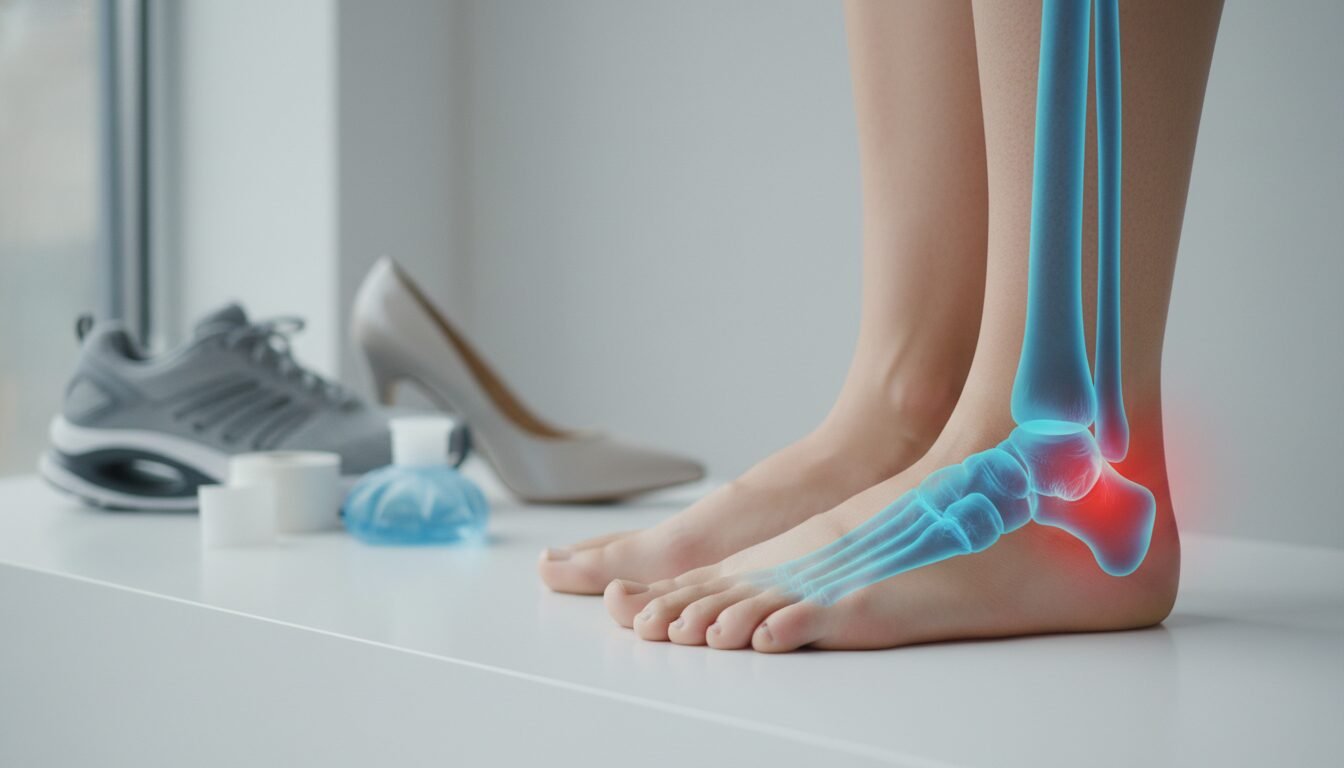
The back of your heel is where poetry meets anatomy , the graceful curve where your Achilles tendon meets bone, cushioned by delicate bursae that should glide like silk. When these structures rebel against stiff sandals or sudden increases in walking, heels pain transforms cobblestone streets from charming to challenging.
Achilles Tendinitis
Your body’s largest tendon , that strong cord connecting calf to heel , can become inflamed from overuse. Think of it as your tendon’s protest against too many steps in unsupportive shoes. The pain typically sharpens when you push off your toes or take those first morning steps on cool marble floors.
Retrocalcaneal Bursitis
Between your Achilles tendon and heel bone sits a small, fluid-filled cushion called the retrocalcaneal bursa. When repeatedly squeezed by rigid shoe backs or prolonged standing at scenic overlooks, it swells and creates that deep, bruise-like ache that makes every step a reminder.
Haglund’s Deformity
Chronic rubbing can create a bony prominence , the infamous “pump bump” that earned its name from high-heel devotees. This enlargement irritates surrounding tissues, causing redness, swelling, and sharp these pain that turns evening wedges into torture devices.
Sever’s Disease
In active children aged 8-14, the heel’s growth plate can become inflamed from running and jumping. While adults don’t develop Sever’s disease, understanding it helps parents choose better vacation footwear for young travelers.
“Achilles tendinopathy is a common cause of posterior heel pain; other tendinopathies result in pain localized to the insertion site of the affected tendon.” , American Family Physician
How to Choose Resort-Ready Shoes That Alleviate Back Heels Pain
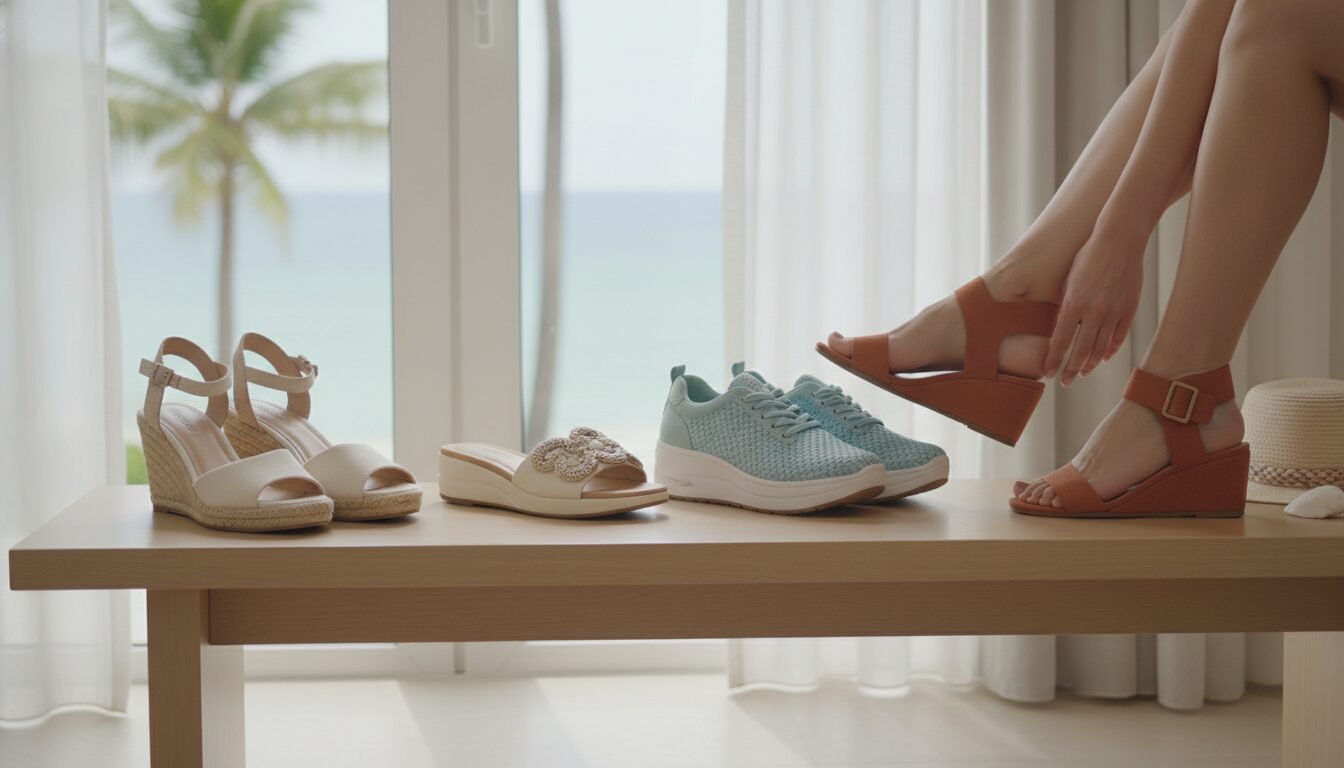
When curating your Mediterranean wardrobe, don’t let back heels pain dictate your itinerary. The right shoes should feel like a gentle embrace , supportive yet breathable, stylish yet therapeutic. Here’s what to seek in every pair, from morning market sandals to sunset dinner wedges.
Arch Support
A contoured footbed that mirrors your arch height distributes pressure away from your heel like a skilled masseuse. Look for the APMA (American Podiatric Medical Association) Seal of Acceptance , it’s your assurance that the shoe promotes healthy foot mechanics while you explore ancient ruins or seaside promenades.
Heel Cushioning
A deep heel cup paired with responsive midsole materials , think cork or EVA foam , absorbs impact like a personal shock absorber. Even a modest 10-15mm heel lift can reduce Achilles tension, transforming each step from painful to pleasurable.
Adjustable Straps and Soft Counters
Velcro straps or buckles let you customize fit around your heel’s unique contours, preventing the friction that aggravates tender areas. Seek padded collars and suede linings that caress rather than chafe , your heels deserve luxury, not punishment.
Heel Height and Pitch
A stable heel under 2 inches minimizes Achilles strain while maintaining elegance. Completely flat sandals can actually increase tendon pull, so embrace a gentle wedge that offers the perfect compromise between Mediterranean style and therapeutic wisdom.
Top Shoe Styles for Pain-Free Mediterranean Vacation
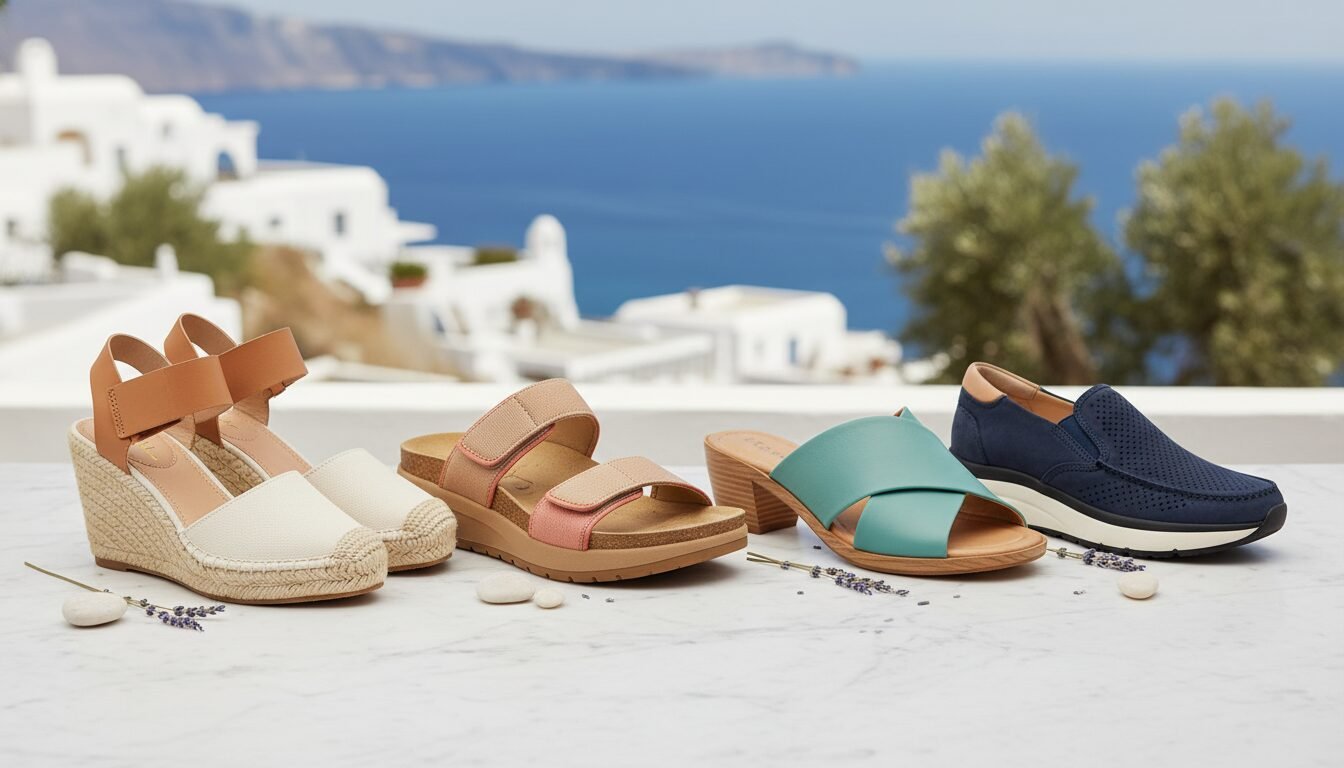
| Shoe Type | Support Level | Key Feature | Price Range | Best For |
|---|---|---|---|---|
| Orthopedic Sandals | High | Deep heel cup, adjustable straps | $80–$150 | All-day sightseeing |
| Wedge Espadrilles | Medium-High | Cork midsole, ankle-wrap strap | $70–$200 | Seaside dinners, boardwalks |
| Platform Sandals | Medium | Even height distribution, padded insole | $50–$120 | Casual strolls, market tours |
| Slip-On Sneakers | High | Removable insole, breathable knit | $90–$180 | Travel days, cobblestone towns |
The most exquisite resort collections now hide orthotic-grade comfort beneath fashion-forward uppers. Seek sandals that marry Mediterranean flair , woven leather, braided jute, metallic accents , with therapeutic features that keep you exploring from sunrise to starlight.
How to Style Supportive Footwear for a Mediterranean Vacation
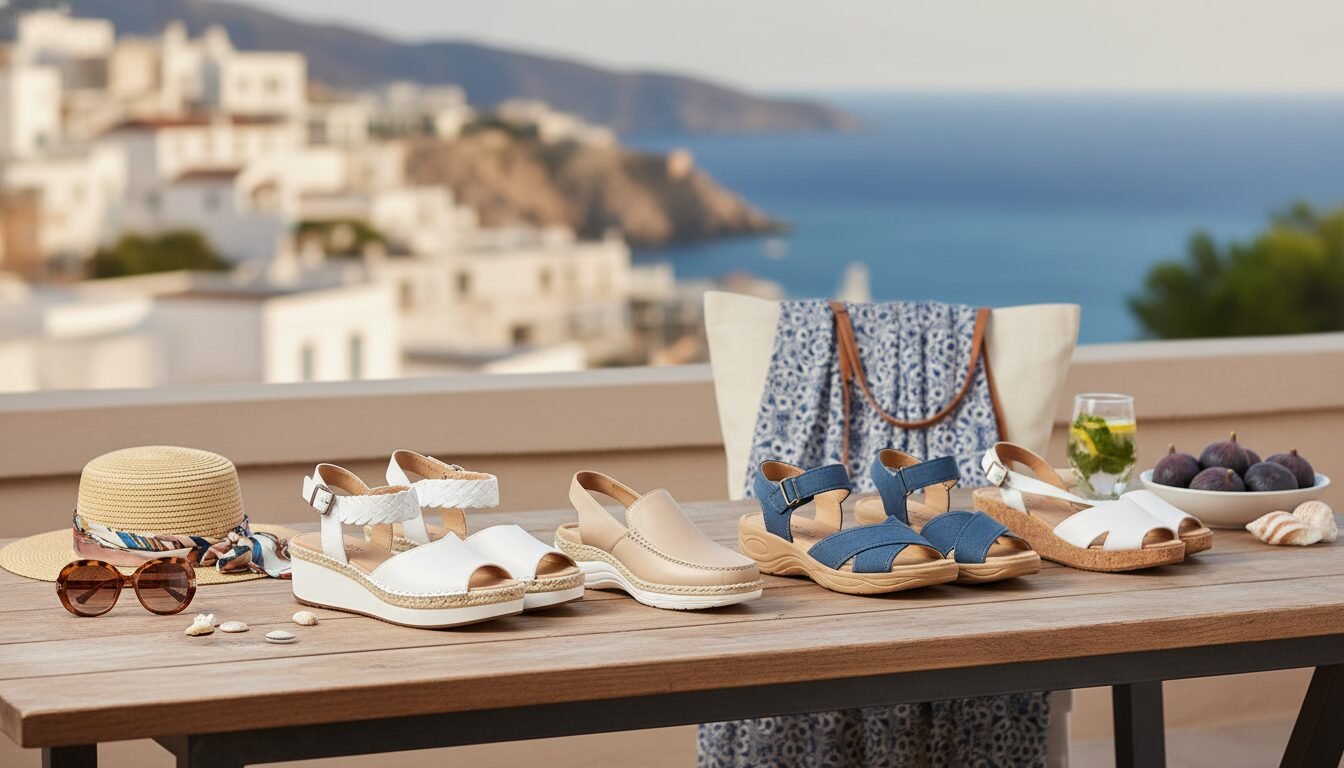
Managing posterior heel discomfort never means sacrificing your signature style. These three chic combinations prove that therapeutic and beautiful aren’t mutually exclusive , they’re perfectly complementary.
- The Riviera Look: Slip into metallic wedge sandals with cushioned heel pads, paired with a midi linen skirt in sage green and an off-the-shoulder silk blouse. Perfect for Monte Carlo evenings where comfort meets couture.
- Amalfi Coast Casual: Choose low-platform espadrilles with built-in arch support, styled with cropped white cotton trousers and a navy striped top. Add a wide-brim straw hat for effortless sun protection.
- Santorini Sunset: Strappy leather sandals with soft heel backing complement a flowing maxi dress in sunset coral. Neutral metallic tones let the evening’s natural palette take center stage.
Pro Tip: Pack foldable ballet flats with memory foam insoles in your tote , they’re your secret weapon when any elevation becomes too much, ensuring you never miss a magical moment.
A 5-Minute Daily Routine for Posterior Heel Pain Relief
Whether you’re poolside in Mykonos or preparing for an evening passeggiata, this gentle sequence keeps heel discomfort from stealing your vacation joy.
- Ice Roll (1 minute): Place a frozen water bottle on your terrace floor and roll your arch and heel back and forth , it’s like a mini spa treatment that reduces inflammation.
- Calf Stretch (2 minutes): Face your hotel room wall, step one foot back, and press the heel down. Hold for 30 seconds each side, feeling the gentle release through your entire posterior chain.
- Towel Stretch (1 minute): Sit on your bed with legs extended, loop a towel around your foot’s ball, and gently pull toward you until you feel that satisfying stretch in your calf.
- Heel Raises (1 minute): Rise slowly onto your toes, then lower with control. Complete 10-15 repetitions to strengthen your Achilles tendon for tomorrow’s adventures.
Pros and Cons
Pros
- Supportive resort footwear prevents back heels pain from limiting vacation activities
- Modern therapeutic shoes offer Mediterranean style without compromising comfort
- Early intervention with proper footwear often prevents the need for medical treatment
- Quality supportive sandals last 300-500 miles, making them excellent travel investments
Cons
- Therapeutic footwear typically costs $70-$200, more than basic vacation sandals
- Some orthopedic features may limit ultra-minimalist styling preferences
- Breaking in new supportive shoes requires 1-2 weeks before major travel
- Persistent pain may still require professional treatment despite proper footwear
Care & Maintenance: Extend the Life of Your Shoes and Your Stride
Even the most beautiful therapeutic sandals won’t help your back heels pain if they’re worn beyond their prime. Replace footwear every 300-500 miles of walking , roughly one season of regular vacation wear. Rotate between 2-3 supportive pairs during extended trips, allowing cushioning materials to recover between wears. Apply leather conditioner monthly to prevent heel counters from hardening and creating new pressure points. For optimal foot health, maintain nightly calf stretches and 10-minute ice massage sessions on tender areas.
“Often, people think heel spurs are a cause of plantar fasciitis, but that’s not true. We have more and more evidence that shows plantar fasciitis is related to tightness, tension, and stress on… the Achilles tendon and calf muscles.” , Dr. Sean Peden, Yale Medicine
When to See a Specialist
If back heels pain persists beyond 2-3 weeks despite rest, ice therapy, and supportive footwear, consult a podiatrist or orthopedic specialist. Warning signs include significant swelling, difficulty bearing weight, or visible deformity. Treatment options range from physical therapy and shockwave therapy (typically 3-5 sessions) to custom orthotics. Surgery remains rare , less than 5% of heel pain cases require surgical intervention , but early professional assessment prevents minor issues from becoming major limitations.
Frequently Asked Questions
What’s the fastest way to relieve back heels pain at home?
Ice the affected area for 15 minutes after activity, massage with a frozen water bottle, and perform gentle calf stretches twice daily. Avoid barefoot walking, even in your hotel room, to maintain proper Achilles tendon support.
Can I still wear heels if I have back heels pain?
High heels increase Achilles strain and typically worsen posterior heel discomfort. Choose low wedges under 2 inches with padded heel cups when dressier footwear is necessary for special occasions.
Are custom orthotics worth the investment for back heels pain?
For chronic or recurring pain, custom orthotics ($300-$600) provide personalized biomechanical correction that over-the-counter inserts ($20-$50) cannot match. A podiatrist can determine if your specific condition warrants this investment.
How do I distinguish between Achilles tendinitis and bursitis?
Achilles tendon pain typically worsens with toe pointing or stair climbing, while bursitis creates a constant, deep ache resembling a bruise. Diagnostic ultrasound can definitively differentiate between these conditions.
What shoe materials best prevent back heels pain?
Breathable, flexible materials like genuine leather, suede, or stretch knit minimize friction and pressure points. Avoid rigid, unyielding heel counters that can aggravate sensitive areas or existing deformities.
Does LEXAZI offer shoes specifically for back heels pain?
LEXAZI’s resort collection emphasizes Mediterranean elegance with therapeutic features , cushioned footbeds, arch support, and adjustable straps that prevent and alleviate heel discomfort. Browse our curated selection to find your perfect pain-free vacation companion.