Acid wash jeans are denim garments treated with chlorine-soaked pumice stones to produce a bold, marbled fade that looks like decades of sun and salt air. That mottled contrast, deep indigo bleeding into bleached-out streaks, is exactly the kind of effortless vintage energy that feels right at home on a cobblestone street in Positano or a rooftop bar in Tulum.
Key Takeaways
- Acid wash jeans use chlorine-soaked pumice stones, not actual acid, to create their signature marbled pattern.
- The style traces back to 1960s surf culture, peaked in the 1980s, and is thriving again in 2026.
- Today’s acid wash jeans range from under $20 at Old Navy to over $390 at designer boutiques like Rhoan.
- DIY acid washing is achievable at home with bleach, pumice stones, and rubber bands in under an hour.
- Proper care means washing inside-out in cold water and air drying to preserve the finish.
- Modern cuts, from wide-leg to slim straight, make acid wash jeans flattering for every body type.
What Are Acid Wash Jeans?
Definition and Basic Characteristics
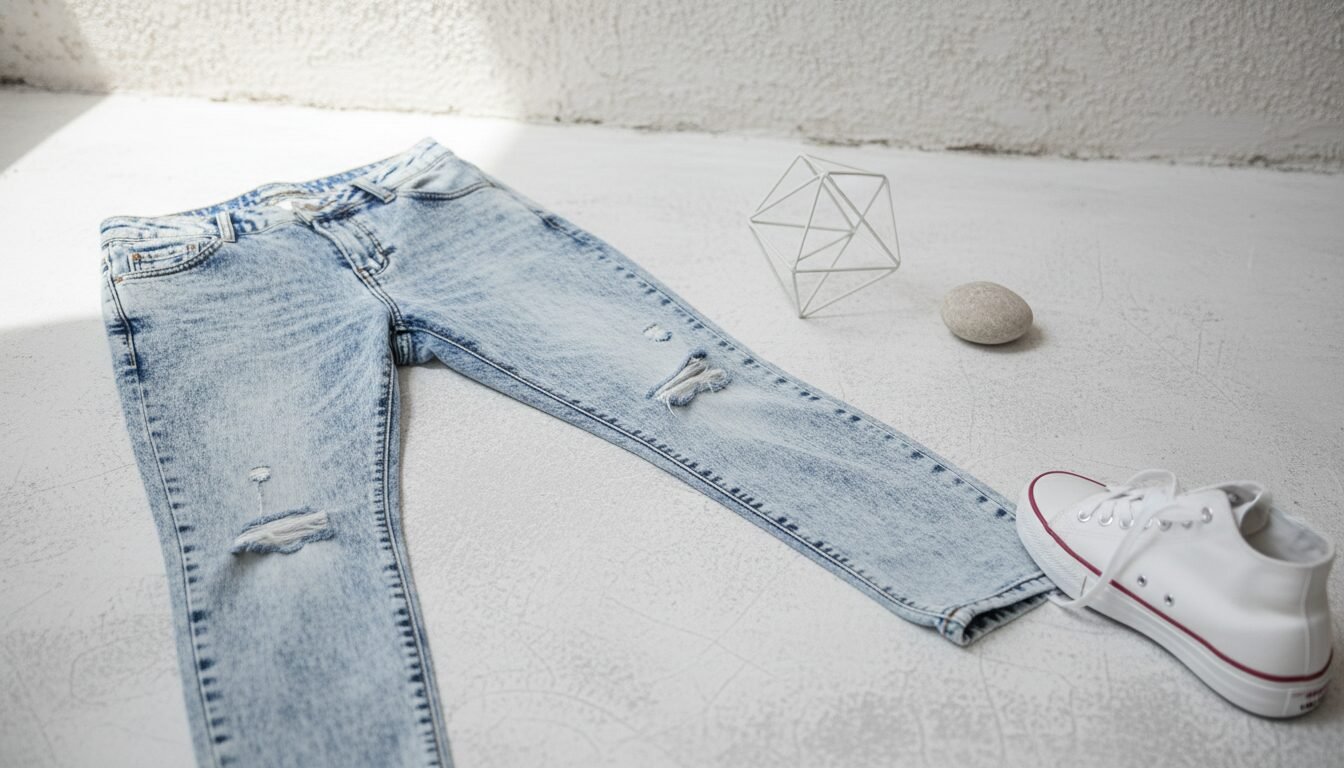
Acid wash jeans are a specific denim finish created by tumbling fabric with chlorine-soaked pumice stones, producing a sharp, cloudy pattern where deep indigo surrounds bleached-out streaks and spots. Unlike standard stone washing, which simply softens denim into a uniform fade, acid washing creates high contrast. The result is bold and retro, carrying the rebellious energy of 1980s punk and pop culture. Today’s versions maintain that nostalgic appeal while incorporating modern stretch fabrics, so you get the attitude without sacrificing comfort. The technique works on any denim silhouette, but jeans remain the most iconic canvas.
The Chemical Process Behind the Wash
Despite the name, no acid is involved. Pumice stones are soaked in a chlorine solution, typically household bleach, then tumbled with dry denim inside industrial washing machines. As the stones bounce against the fabric, the bleach eats away at the indigo dye in an irregular pattern. The wash cycle typically runs 15 to 45 minutes, and the concentration of bleach determines how dramatic the contrast becomes. After tumbling, the jeans are rinsed thoroughly, treated with hydrogen peroxide to neutralize the bleach, and washed again to remove residual grit. Because the process can reduce the tensile strength of denim, modern manufacturers often add 1 to 2% elastane or polyurethane to restore durability without sacrificing that authentic vintage feel.
The History of Acid Wash Jeans
Origins in the 1960s Surfer Scene
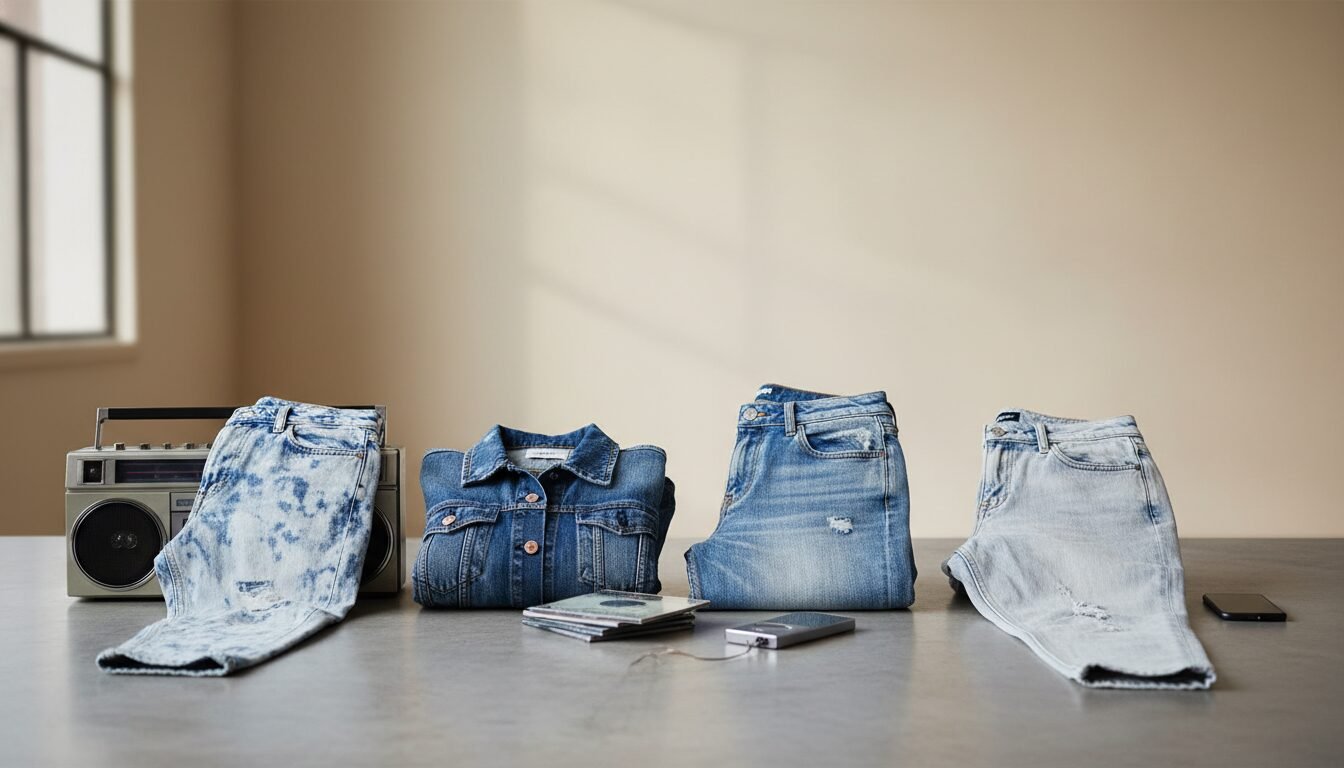
Acid wash jeans trace their roots to 1960s California surf culture, where sun-bleached, worn-in denim was practically a uniform. Surfers wanted softer, more broken-in jeans, and early experiments with raw pumice stones tumbled against denim delivered exactly that. According to Wikipedia’s entry on stone washing, this coastal culture laid the groundwork for the more aggressive chemical finishing techniques that would follow. The desire for sharper contrast, something that looked like years of ocean exposure compressed into a single wash cycle, pushed manufacturers toward chemical enhancements.
Mainstream Popularity in the 1980s
Acid wash jeans exploded into mainstream fashion in the early 1980s, becoming the uniform of rock bands, breakdancers, and anyone who wanted to signal a little rebellion. Brands like Levi’s, Guess, and Rifle Jeans Company all capitalized on the trend. Levi Strauss & Co. credits Donald Freeland, an employee of Great Western Garment Company, with inventing stone-washing in the 1950s, a direct precursor to the acid wash technique. French designers Marithé + François Girbaud then industrialized the method, and by 1986, Rifle Jeans Company had patented the acid wash process. A pair of acid wash jeans in 1985 cost roughly $50, equivalent to over $140 today, and were a wardrobe essential for both men and women. The look paired naturally with oversized tops, leather jackets, and high-top sneakers.
The Decline and 21st Century Revival
After overexposure in the late 1980s, acid wash jeans faded from favor in the 1990s, replaced by cleaner, darker washes. Fashion’s cyclical nature brought them back in the late 2010s, and by the mid-2020s the revival was undeniable. Searches for “acid wash jeans outfit” on Pinterest have reached 19,000, and Amazon lists over 1,000 results for the style. Contemporary versions range from subtle, light marbling to extreme high-contrast patterns. Premium brands like Ksubi, founded in Sydney in 1999, and Rhoan now offer acid wash jeans with updated silhouettes, while mass-market retailers like Old Navy provide accessible options starting under $25.
How Acid Wash Jeans Are Made

Industrial Manufacturing Techniques
Modern mass production of acid wash jeans follows a scaled version of the original method. Raw denim is cut and sewn, then placed in large rotary washers along with pumice stones soaked in a chlorine solution. The drum rotates for 20 to 45 minutes. After tumbling, the jeans are extracted, neutralized in a peroxide bath, and rinsed multiple times to remove stone dust. A final softening cycle with enzymes adds that supple hand feel. Industrial facilities use significant water per garment, though water recycling systems are increasingly common as brands respond to sustainability pressure.
DIY Acid Wash Methods
You can create acid wash jeans at home with a bucket, bleach, rubber bands, and pumice stones. Celebrity stylist Mikel Welch demonstrated a simple version of this technique on The Drew Barrymore Show in 2021, bringing the DIY approach to a new generation.
“Acid wash jeans are back in a big way because they blend nostalgia with modern edge,” says celebrity stylist Mikel Welch.
Here is the DIY process:
- Soak pumice stones in a 50/50 mix of water and bleach for 10 minutes.
- Twist and secure the jeans with rubber bands to create resist patterns.
- Place the jeans in a plastic container and scatter the wet stones on top.
- Cover and let sit for 20 to 60 minutes, checking regularly for desired contrast.
- Rinse in cold water, remove the bands, and wash separately in a machine with mild detergent.
- Air dry away from direct sunlight.
How to Style Acid Wash Jeans

Women’s Styling Inspiration
Acid wash jeans for women are one of those rare pieces that work as hard as you need them to, from a morning market stroll to a candlelit dinner. For a relaxed daytime look, pair high-waisted acid wash skinny jeans with a tucked-in graphic tee and white sneakers. Heading somewhere after sunset? Swap the sneakers for ankle boots and add a silk camisole. Pinterest boards consistently show oversized blazers layered over cropped tanks as a top combination, and chunky knit sweaters with relaxed-fit acid wash jeans are a natural pairing for cooler coastal evenings. Ripped details amplify the edgy energy, while clean hems keep the look versatile enough for almost any occasion. As of summer 2026, wide-leg and barrel-fit acid wash jeans are the silhouettes getting the most editorial attention, according to trend coverage in Vogue and Elle.
Men’s Styling Inspiration
Men’s acid wash jeans work best in slim or straight cuts that let the wash do the talking. A heavy acid wash effect, like on the Buffalo David Bitton Ash Slim Jeans (currently $44.99, down from $99.00, with 918 reviews and a 4.3-star rating), adds real depth to a simple outfit. Pair them with a plain white tee and a leather jacket for a classic rebel look straight out of 1985, or layer with a hoodie for a streetwear feel. Ksubi recommends balancing statement jeans with clean basics and premium tees. The rule is simple: let the jeans be the focal point and keep everything else quiet.
Acid Wash vs. Other Denim Finishes
Acid wash jeans occupy a distinct space in the denim spectrum. Stone washing produces a soft, uniformly faded look with no chemical contrast. Whiskering adds subtle crease lines at the thighs and knees to mimic natural wear. Sandblasting, now largely phased out due to serious health risks to workers, created a similar high-contrast fade but with a smoother, more uniform distribution than acid washing. Acid washing remains the most dramatic of the group, delivering that mottled, high-contrast pattern that reads as unmistakably vintage. If you want a quieter nod to the aesthetic, a lightly stone-washed pair gives you the worn-in feel without the full retro statement.
Choosing the Right Fit: A Comparison of Cuts and Fabrics
Popular Silhouettes and Their Features
Acid wash jeans come in nearly every modern cut, and the right silhouette makes all the difference. The table below compares common fits to help you match your body type and personal style.
| Fit | Rise | Leg Opening | Best For |
|---|---|---|---|
| Skinny | Mid to high | 10″-12″ | Petite frames, elongating legs |
| Straight | Mid | 14″-16″ | Balanced proportions, versatile |
| Relaxed/Boyfriend | Low to mid | 16″-18″ | Casual, comfortable wear |
| Flare/Wide Leg | High | 20″+ | Retro statement, balancing hips |
Fabric Composition and Comfort Features
Modern acid wash jeans almost always include stretch for comfort. Buffalo’s Ash Slim Jeans use a super-stretch fabric blend, while Rhoan’s Storm Jean contains 98% cotton and 2% polyurethane for subtle shape retention. All-cotton denim offers the most authentic vintage feel but can run rigid, especially in heavier weights. Look for 1 to 2% elastane for everyday mobility. The original acid wash jeans of the 1980s were 100% cotton and notoriously stiff. Today, even budget options like Old Navy’s Rockstar Super-Skinny (starting at $17.99) include spandex for 360-degree stretch, so you never have to choose between the look and the comfort.
Pros and Cons of Acid Wash Jeans
Pros
- Instant personality: The bold, marbled pattern does the styling work for you, turning a simple outfit into a statement.
- Wide price range: Accessible options start under $20 at Old Navy, while investment pieces from Ksubi and Rhoan sit in the $150 to $395 range.
- Versatile silhouettes: Available in every cut from skinny to wide-leg, so every body type has a flattering option.
- Trend longevity: The style has cycled back every decade since the 1980s, making it a reliable wardrobe investment rather than a one-season risk.
- DIY potential: Unlike most denim finishes, you can recreate or customize the look at home with basic supplies.
Cons
- Environmental footprint: Traditional acid washing uses significant water and chemical inputs, though eco-friendly alternatives like laser etching are growing.
- Fabric vulnerability: The bleaching process can reduce denim’s tensile strength, so cheaper pairs may wear out faster than standard jeans.
- Styling commitment: The high-contrast pattern is bold by nature. It demands a quieter approach to the rest of the outfit, which can feel limiting.
- Care sensitivity: They require more careful washing than standard denim to preserve the finish over time.
Caring for Your Acid Wash Jeans
Washing and Drying Guidelines
To keep the marbled pattern sharp, wash acid wash jeans inside out in cold water on a gentle cycle. Avoid bleach entirely: the existing finish is already the result of bleaching, and further exposure weakens the fabric. Use a mild detergent, skip fabric softener (it coats fibers and dulls the contrast), and skip dry cleaning. After 10 to 15 washes, some softening of the pattern is normal, but a gentle approach extends the life of the garment significantly.
Preserving the Faded Finish
Air drying is non-negotiable. A hot dryer risks shrinking the fabric and blurring the crisp light-dark boundaries that make acid wash jeans so distinctive. Lay them flat or hang them indoors, away from direct sunlight, which can yellow the bleached areas over time. If you must use a dryer, select the lowest heat setting available. Store them folded rather than hung: hangers can distort the waistband and stretch heavier denim out of shape.
Sustainability and Environmental Considerations
The Environmental Impact of Acid and Stone Washing
The traditional acid wash process is resource-intensive. As noted in Wikipedia’s overview of stone washing, the process releases grit into wastewater that can clog waterways and requires additional filtration. The chlorine bleach used in acid washing produces chemical byproducts that must be carefully treated before release. Repeated rinse cycles consume substantial water per garment in many facilities, and the pumice stones themselves break down into sludge, contributing to solid waste. These are real costs worth knowing before you buy.
Eco-Friendly Alternatives and Innovations
Many manufacturers have responded with cleaner methods. Laser etching replicates the acid wash look without water or chemicals, reducing water usage by up to 80% compared to traditional processes. Ozone washing uses oxygen gas to fade denim in a closed-loop system. Levi’s has set industry benchmarks with their Water<Less> initiative, applying such techniques to select styles. When shopping, look for OEKO-TEX or GOTS certifications on the tag as reliable indicators of safer production practices. Even a DIY approach at home, using small batches and cold-water rinsing, uses far less water than industrial methods.
According to Levi Strauss & Co., Donald Freeland invented stone-washing denim in the 1950s, laying the groundwork for the acid wash technique that would define a decade of fashion.
Where to Buy Acid Wash Jeans
Top Brands and Retailers
Acid wash jeans are available across the full pricing spectrum, from accessible everyday options to investment-worthy designer pieces. Here are the key sources worth knowing:
- Old Navy: women’s styles from $17.99 to $49.99, including high-waisted Rockstar and OG Loose fits.
- Buffalo David Bitton: men’s Ash Slim Jeans at $44.99 (originally $99.00), with 918 reviews and a 4.3-star rating.
- Levi’s: classic women’s acid wash jeans inspired by 1960s counterculture, mid-range pricing.
- Ksubi: premium men’s acid wash jeans starting around $150, with free shipping on orders over $150 and a strong Australian heritage identity.
- Rhoan: designer Storm Jean for $197 (down from $395), featuring a wide waist tie, patch pockets, and a 98% cotton construction.
- Amazon: over 1,000 search results covering all genders and budgets.
Price Ranges and Value Comparison
You can find acid wash jeans for under $20, but investing $70 to $100 typically buys better fabric weight and finish durability. Budget pairs from Old Navy use lighter denim (roughly 8 to 10 oz) with heavy stretch, while mid-range options like Levi’s or Buffalo use 10 to 12 oz denim with more controlled elasticity. Premium boutique pairs from Ksubi and Rhoan employ 12 to 14 oz cotton with subtle stretch, ensuring the acid wash pattern stays sharp after repeated wear. Think about how often you’ll reach for them: a trendy iteration might warrant a lower spend, while a classic relaxed straight pair in quality denim justifies the investment.
Ready to add a pair to your rotation? Shop the collection at lexazi.com — free shipping on orders over $75.
Frequently Asked Questions
What is the difference between stone wash and acid wash jeans?
Stone wash uses pumice stones alone to abrade denim, creating a soft, uniformly faded look. Acid wash adds chlorine bleach to the stones, producing a high-contrast, marbled pattern with distinct darker and lighter areas. The visual difference is significant: stone wash reads as quietly vintage, while acid wash makes a bold statement.
Can I make acid wash jeans without real stones?
Yes. Alternative DIY methods include scrunching jeans with rubber bands and spraying bleach directly, or using a sponge to dab bleach onto specific areas. The result is less precisely marbled than the stone method but still delivers a convincing vintage effect with minimal supplies.
Are acid wash jeans still in style in 2026?
Absolutely. As of summer 2026, the trend is thriving across both mass-market and designer collections. Searches for acid wash jeans outfit on Pinterest have reached 19,000, and brands from Old Navy to Ksubi continue releasing new styles each season. Wide-leg and barrel-fit versions are leading the current wave, per recent coverage in Elle and Harper’s Bazaar.
How do I prevent my acid wash jeans from fading further?
Wash them inside out in cold water on a gentle cycle, use a mild detergent with no bleach, and always air dry. Keep them out of direct sunlight during drying and storage, as UV exposure can yellow the bleached areas and soften the contrast over time.
What body type suits acid wash jeans?
Every body type can wear acid wash jeans. The key is choosing the right cut: skinny styles elongate legs, straight fits balance proportions, and relaxed or wide-leg cuts offer comfort and a strong retro silhouette. The bold pattern adds texture and visual interest regardless of size, making it one of the more forgiving statement pieces in denim.