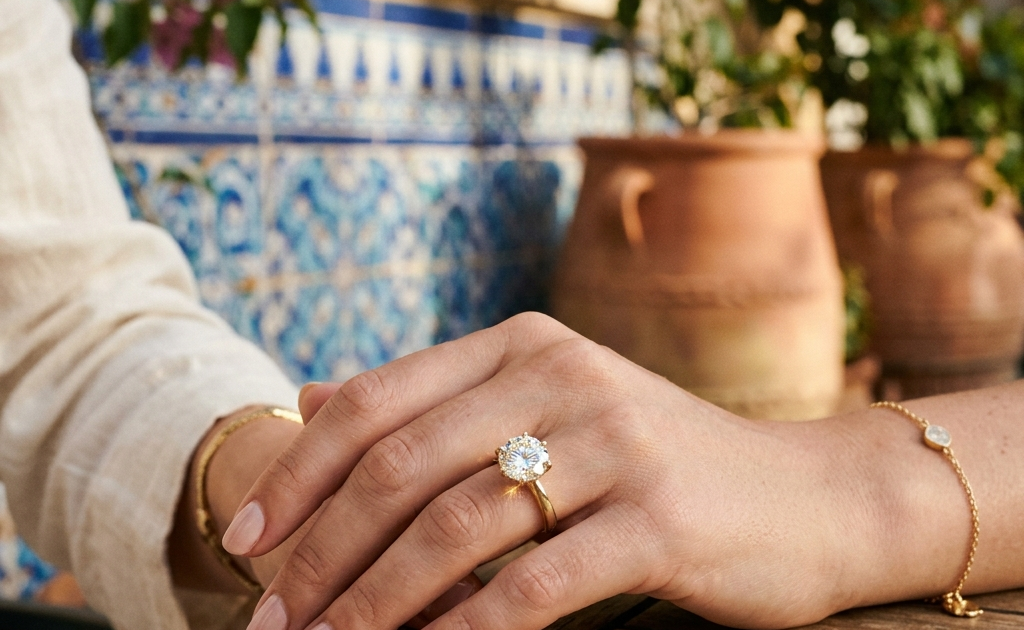
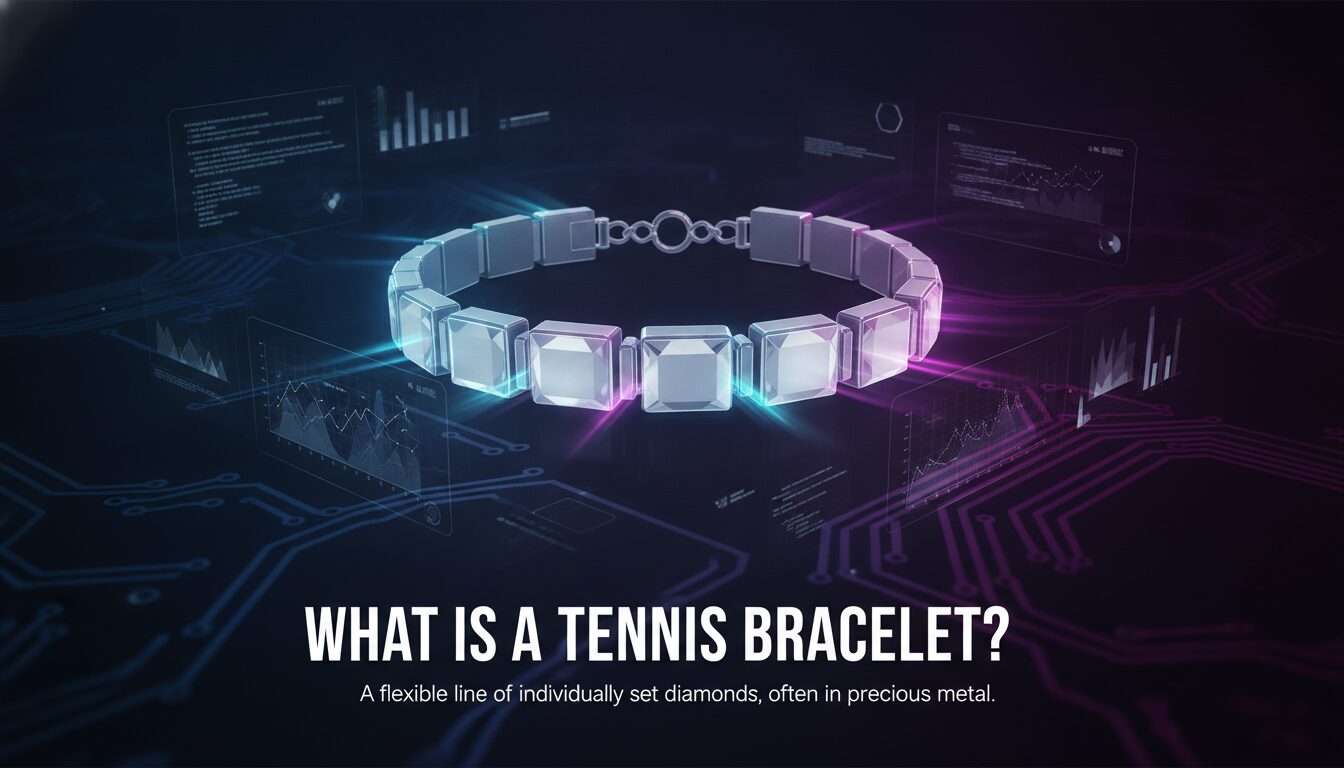
What is a tennis bracelet? A tennis bracelet is a flexible, symmetrical line of individually set diamonds or gemstones linked together in a continuous band around the wrist. Timeless, radiant, and endlessly wearable.
Key Takeaways
- tennis bracelet? It’s a flexible band of matched, individually set gemstones, most often diamonds, forming one continuous sparkling line.
- The name traces back to Chris Evert’s famous bracelet mishap at the 1987 US Open.
- Uniformity across cut, color, clarity, and size is what defines the design and its signature sparkle.
- Setting styles, including prong, bezel, channel, and bar, each affect brilliance, security, and everyday wearability.
- With proper care and annual professional inspection, a well-made tennis bracelet lasts for generations.
- Prices span from a few hundred dollars for simpler designs to tens of thousands for high-quality natural diamond pieces.
What Is a Tennis Bracelet?
The Quintessential Design Defined
What is a tennis bracelet at its core? It’s a single, unbroken line of identical gemstones, each set in its own individual mounting, creating a fluid silhouette that gracefully encircles the wrist. GIA describes this style as a “river of diamonds” because the closely spaced stones reflect maximum light, producing an unwavering sparkle. The uniformity is everything: every diamond or gemstone shares the same shape, size, color, and clarity to maintain a seamless, rhythmic appearance. That commitment to consistency is what elevates the tennis bracelet from a simple wrist accessory to a coveted piece of fine jewelry.
What Sets It Apart from Other Bracelets?
While all bracelets adorn the wrist, what is a tennis bracelet if not a study in refined restraint? Unlike rigid bangles or charm bracelets with dangling ornaments, a tennis bracelet’s flexible chain of individually set stones offers a continuous, fluid display. Bangles slide over the hand and hold a fixed shape. Chain bracelets may feature varied links and occasional gemstones, but they lack the uniform stone coverage that defines this style. The tennis bracelet carries an air of understated luxury, a statement of meticulous craftsmanship worn close to the skin. Given as a gift, it often marks milestone occasions: anniversaries, birthdays, or professional achievements, making it a piece loaded with personal meaning.
Why Is It Called a Tennis Bracelet? The Origin Story
The Chris Evert Incident at the 1987 US Open
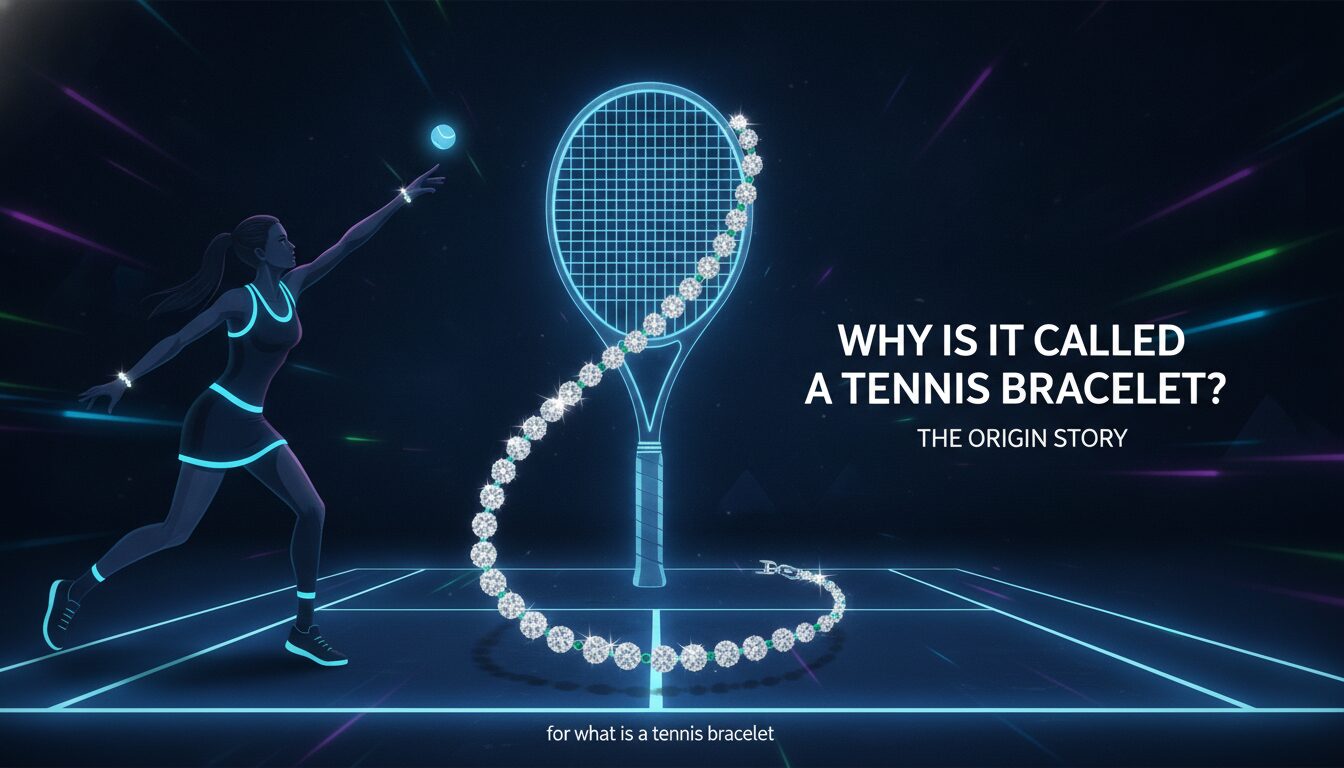
The answer to “why is it called a tennis bracelet?” is famously tied to a moment of high drama on the court. Tennis legend Chris Evert was mid-match at the 1987 US Open when her diamond bracelet flew off her wrist, scattering across the court. Evert, known for always wearing this delicate diamond style during matches, immediately stopped play and requested officials pause the game so she could recover her lost jewelry. The incident, broadcast to millions of viewers, captivated audiences worldwide. From that moment forward, the symmetrical line-bracelet style was forever dubbed the “tennis bracelet.”
How a Jewelry Mishap Shaped Fine Jewelry Design
This highly publicized moment not only named an entire jewelry category but also drove real innovation in how bracelets are made. The broken clasp that caused Evert’s loss underscored the need for more secure fastenings. According to the Gemological Institute of America (GIA), today’s tennis bracelets typically feature robust clasps with safety latches to prevent similar accidents. The incident also sparked a surge in the bracelet’s popularity, transforming it from a niche luxury into a mainstream fine jewelry essential. In the decades since, tennis bracelets have appeared on red carpets, at galas, and in everyday settings, proving the style’s appeal is genuinely enduring.
“Tennis bracelets blend the brilliance of diamonds or gemstones with a design that is both elegant and practical. Defined by a continuous line of individually set stones, they are cherished for their simplicity, versatility and timeless appeal.” – Gemological Institute of America (GIA)
The Anatomy of a Tennis Bracelet: Key Design Elements
Gemstone Choices: Diamonds and Beyond
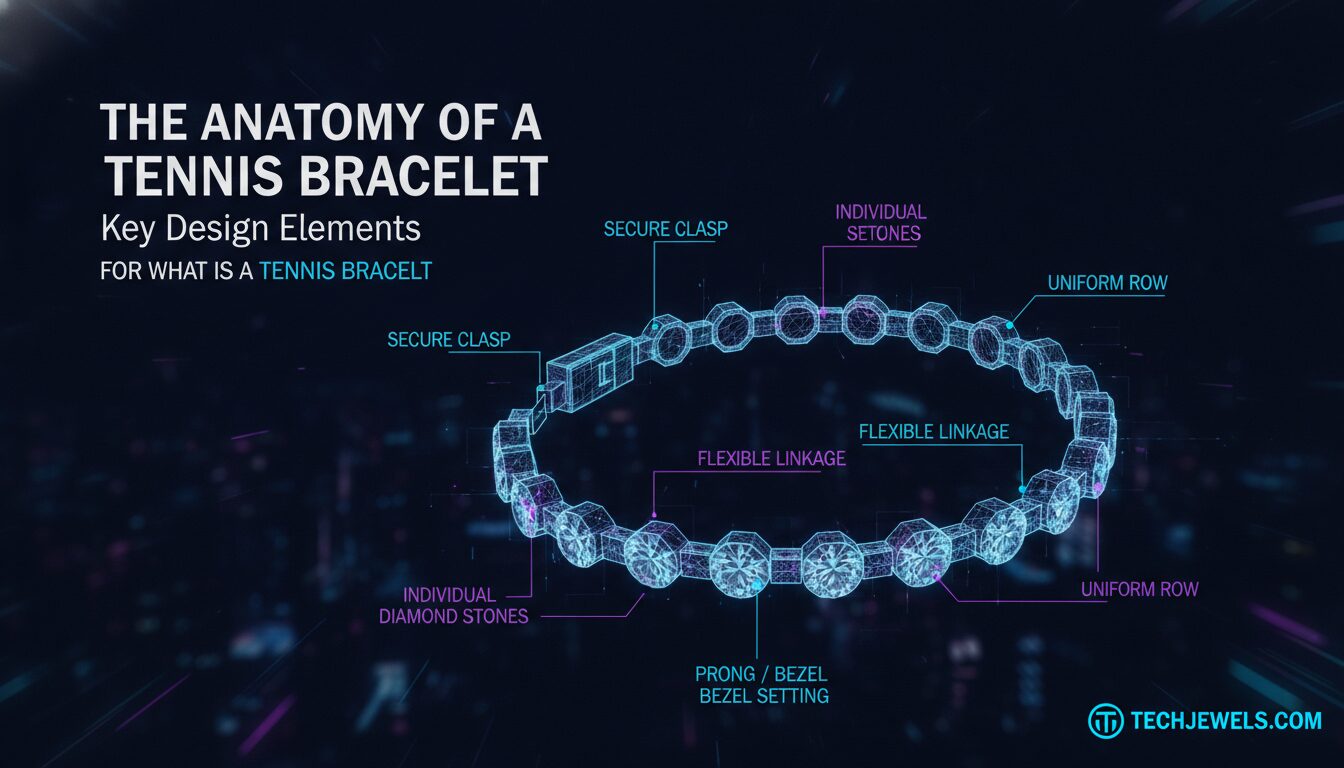
Diamonds remain the quintessential choice for what is a tennis bracelet in its most classic form, prized for their brilliance and durability. Colored gemstones like sapphires, available in royal blue, pink, and yellow, offer vivid alternatives with strong durability. Rubies bring warmth and intensity, while emeralds evoke vintage glamour, though they require gentler care and protective settings. For those seeking sustainability or a lower price point, lab-grown diamonds and moissanite are increasingly popular choices that don’t compromise on sparkle. Each stone type brings its own character to the design.
Precious Metal Settings: Gold, Platinum, and Silver
The metal backdrop shapes the bracelet’s overall aesthetic and longevity. Yellow gold offers a warm, classic glow that pairs beautifully with diamonds, as Monica Vinader notes in their design philosophy. White gold provides a sleek, modern canvas that enhances diamond brilliance, while rose gold brings a romantic blush tone. Platinum is dense, naturally white, hypoallergenic, and exceptionally durable, making it ideal for securing precious stones over a lifetime of wear. Sterling silver is a more accessible entry point but may tarnish over time. Metal purity, measured in karats for gold or fineness for platinum, affects both cost and durability. For everyday wear, 14K or 18K gold strikes the best balance between strength and purity.
Understanding Clasps and Security Features
The clasp is the unsung hero of any tennis bracelet. As the Chris Evert incident made clear, a reliable fastener is non-negotiable. The most traditional design is the box clasp with a figure-eight safety latch, a secondary lock that hooks into place. Lobster claw clasps are self-locking and easy to operate. Spring ring clasps appear on lighter, more delicate designs. Monica Vinader takes security further with a double-lock mechanism: a lever that locks the bracelet in place, plus a tongue secured inside the lock box that only releases with a button press. When shopping, always test the clasp’s ease of use and ensure it feels genuinely secure.
Pros and Cons of a Tennis Bracelet
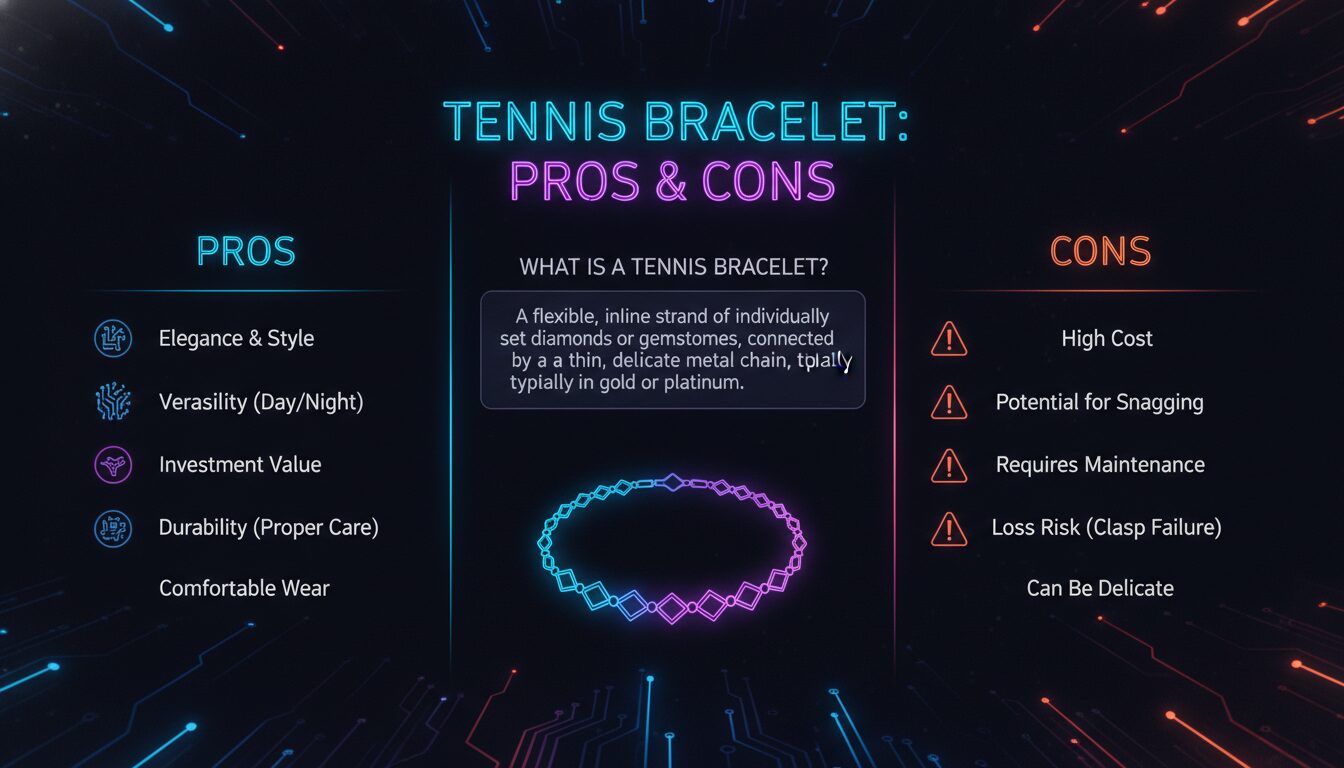
Pros
- Timeless design: The continuous line of matched stones never goes out of style and works across decades of fashion.
- Versatility: What is a tennis bracelet if not the one piece that moves effortlessly from a beach lunch to a candlelit dinner? It works for casual and formal occasions equally well.
- Stackable: Pairs beautifully with bangles, fine chain bracelets, and watches for a personalized layered look.
- Wide range of price points: From accessible sterling silver designs to investment-grade platinum and diamond pieces, there’s a tennis bracelet for most budgets.
- Meaningful gift: Its association with milestones makes it one of the most emotionally resonant pieces in fine jewelry.
Cons
- Clasp vulnerability: As Chris Evert discovered, a poor-quality clasp can fail. Always prioritize bracelets with safety latches.
- Requires maintenance: Prong settings need regular professional inspection to prevent stone loss. Annual check-ups are essential.
- Not ideal for all activities: Rigorous exercise, swimming, or work with harsh chemicals can damage both the stones and the metal over time.
- Sizing limitations: Channel-set designs can be difficult to resize, so getting the fit right at purchase matters.
How to Buy a Tennis Bracelet: A Step-by-Step Guide
Step 1: Set Your Budget
Before exploring gemstone grades and metal types, establish a realistic budget. As Brilliant Earth’s buying guide emphasizes, setting a clear budget at the start helps you focus on designs that fit your preferences without feeling overwhelmed. Tennis bracelet prices span a vast spectrum, from a few hundred dollars for simpler designs with synthetic stones to tens of thousands for high-end natural diamond bracelets set in platinum. Knowing your ceiling prevents decision paralysis and guides you toward honest trade-offs: perhaps you prioritize stone quality over total carat weight, or choose a lower-karat gold to allocate more toward diamond clarity.
Step 2: Choose Your Gemstone Type and Quality
If diamonds are your choice, focus on uniformity over individual stone perfection. Since what is a tennis bracelet is fundamentally about collective harmony, the matched appearance of all stones together matters more than any single stone’s specs. The GIA’s 4Cs (Cut, Color, Clarity, Carat) apply, but here’s how they translate for this specific style:
- Cut: All stones should share the same shape and proportions for consistent light performance. Round brilliants are the most popular choice for their fire and versatility.
- Color: Diamonds are graded on a scale from D (colorless) to Z (light yellow or brown). For a tennis bracelet, near-colorless grades in the G-H range offer an excellent balance of brightness and value.
- Clarity: Eye-clean stones at SI1-SI2 or better ensure no visible inclusions. Because each individual stone is small, slight imperfections are rarely noticeable to the naked eye.
- Carat: Total carat weight (TCW) reflects the combined weight of all diamonds. A delicate bracelet might carry a TCW of 2-3 carats, while a bolder statement piece can exceed 10 carats.
For colored gemstones, prioritize even color distribution and clarity. Sapphires and rubies are durable choices for daily wear, but emeralds are more fragile and prone to chipping. A bezel setting offers emeralds better protection.
Step 3: Select the Setting Style and Metal
The setting dictates the bracelet’s profile, light performance, and security. Below is a comparison of the most common setting styles found in tennis bracelets:
| Setting Style | Description | Pros | Cons |
|---|---|---|---|
| Prong Setting | Metal claws (typically 4 or 6) grip each stone, minimizing metal presence. | Maximizes light entry and brilliance; classic appeal. | Prongs can snag on clothing; requires regular inspection for looseness. |
| Bezel Setting | A metal rim fully or partially surrounds the gemstone. | Excellent protection for stone edges; sleek, modern look; very secure. | Less light reaches the stone, slightly reducing brilliance; more metal visible. |
| Channel Setting | Stones are suspended between two metal channels without metal dividers. | Creates an uninterrupted line of sparkle; smooth and snag-free; secure for small stones. | Difficult to resize; dirt can accumulate in the channel. |
| Bar Setting | Metal bars separate each stone on two sides, leaving open spaces between. | Allows light from multiple angles; modern geometric look; secure. | Bars can add width; may be less flexible than other settings. |
Metal choice interacts with setting style. Platinum is ideal for prong settings due to its strength, while gold works beautifully in bezel settings for a warm, luminous tone. Consider your lifestyle: if you’re active, a bezel or channel setting offers greater peace of mind for daily wear.
Step 4: Determine the Right Length and Fit
A well-fitting tennis bracelet sits comfortably and stays in place without sliding over your hand. To measure your wrist, wrap a flexible tape measure or a strip of paper around your wrist just above the wrist bone, mark the meeting point, then measure the length. Add half an inch to one inch for a standard comfortable fit. Monica Vinader offers detailed sizing guides on their website to help you choose with confidence from home. If the bracelet feels too tight, it strains the clasp. Too loose, and it catches on things. Also consider the bracelet’s flexibility: designs with larger stones or more rigid connections may feel bulkier, so trying on in person is always ideal when possible.
Diamond Quality in Tennis Bracelets: What to Look For
The Importance of Uniformity in the 4Cs
When evaluating what is a tennis bracelet from a quality standpoint, the guiding principle is “matched, not perfect.” The beauty of this style lies in its rhythmic sparkle, so all diamonds must be cut to the same precise angles to reflect light in sync. A single off-color or poorly cut stone disrupts the visual flow immediately. While a GIA report for each small individual stone is rare, reputable jewelers provide a certificate of authenticity stating the approximate color and clarity range for the full bracelet. For a seamless look, aim for near-colorless grades and eye-clean clarity. The stones are small, so minor imperfections are invisible to the naked eye and don’t affect the overall brilliance.
Diamond Certification and Ethical Sourcing
Ethical considerations are increasingly central to fine jewelry purchases. Many jewelers now offer lab-grown diamonds, which have identical physical and optical properties to mined diamonds but are created in controlled environments, reducing environmental and social concerns. The GIA grades lab-grown diamonds to the same standards as natural ones. When buying natural diamonds, look for certifications that track provenance, such as those from the Kimberley Process. Brands like Brilliant Earth specialize in ethically sourced diamonds and use recycled metals throughout their collections. Asking about a jeweler’s sourcing policy is a straightforward step to ensure your tennis bracelet aligns with your values.
“Monica Vinader crafts tennis bracelets from gold vermeil, layering 18ct gold onto a base of recycled sterling silver, with two secure locking mechanisms so you won’t have a repeat of the 1987 US Open.” – Monica Vinader
Styling Your Tennis Bracelet for Every Occasion
Everyday Casual Elegance
A tennis bracelet’s understated sparkle makes it perfect for elevating the simplest looks. Pair a delicate diamond tennis bracelet with a crisp white linen shirt and your favorite jeans for a touch of effortless polish. Rose gold or silver versions blend beautifully with cool-toned casual wear. Wearing it solo on an otherwise bare wrist keeps the focus entirely on the bracelet itself, proving that true luxury doesn’t need to shout to be noticed.
Formal and Evening Glamour
For formal events, what is a tennis bracelet if not the perfect finishing touch? A high-carat diamond bracelet in platinum or white gold becomes a natural partner to an evening gown, echoing chandelier sparkle at every turn. A colored gemstone version, say sapphires in a deep royal blue, introduces a subtle pop of color that coordinates beautifully with your outfit. Worn alongside diamond stud earrings and a simple pendant necklace, the bracelet contributes to a cohesive, refined look. Meghan Markle, Duchess of Sussex, has worn a diamond tennis bracelet that belonged to Diana, Princess of Wales, at notable events, drawing fresh attention to the style’s enduring elegance.
Stacking and Layering Techniques
Stacking is a modern way to make what is a tennis bracelet feel entirely your own. Monica Vinader suggests pairing your tennis bracelet with understated gold bangles and fine chain bracelets for a mixed-texture effect that feels personal rather than precious. Avoid stacking with bracelets that have sharp edges or large pendants, as they could scratch the metal or stones. If you wear a watch, place the tennis bracelet on the opposite wrist, or stack it carefully alongside a slim watch in a matching metal tone for a harmonious layered look. Start with the tennis bracelet as your anchor, then add one or two simpler bands, letting the diamond line remain the clear focal point.
Caring for Your Tennis Bracelet: Maintenance and Longevity
Cleaning and Storage Best Practices
Regular maintenance preserves the brilliance that makes what is a tennis bracelet so captivating in the first place. Clean it monthly by soaking in a solution of warm water and mild dish soap, then gently brushing with a soft-bristled toothbrush, paying special attention around the settings. Rinse thoroughly and pat dry with a lint-free cloth. Avoid harsh chemicals like chlorine and bleach, which can degrade metal alloys over time. When not in use, store the bracelet in a fabric-lined jewelry box or pouch, separate from other pieces to prevent scratches. Never leave it loose in a drawer where stones could knock against each other.
When to Seek Professional Servicing
At least once a year, have a professional jeweler inspect your tennis bracelet. They’ll check the prongs for tightness, the clasp for secure closure, and the overall structure for any signs of wear. If your bracelet features white gold, it may have rhodium plating that wears over time. Re-plating restores its bright finish quickly. For platinum, minor scratches can be polished out. If you notice any loose stone or hear it rattle, take it for repair immediately to avoid loss. A reputable jeweler will also professionally clean the bracelet using ultrasonic or steam machines, removing built-up grime from hard-to-reach areas around the settings.
The Investment and Resale Value of Tennis Bracelets
Beyond their beauty, tennis bracelets made with natural diamonds and precious metals hold their value well over time. Natural diamond pieces in platinum or high-karat gold tend to retain the strongest resale value, particularly those with certified stones and well-documented provenance. Lab-grown diamond versions offer a lower entry price but typically depreciate more quickly on the secondary market. If you’re purchasing with longevity in mind, prioritize quality over quantity: a bracelet with fewer, higher-quality stones in a durable setting will outlast and outperform a piece with many lower-grade stones. As with all fine jewelry, condition, craftsmanship, and brand reputation all factor into resale potential.
Frequently Asked Questions
Why do they call it a tennis bracelet?
The name traces back to the 1987 US Open, when tennis player Chris Evert’s diamond bracelet flew off her wrist mid-match. She paused the game to search for the lost jewelry, and the incident attracted widespread attention from spectators and television viewers alike. From that moment, the symmetrical line bracelet became universally known as a tennis bracelet.
What is the difference between a bracelet and a tennis bracelet?
What is a tennis bracelet versus a regular bracelet? All tennis bracelets are bracelets, but not all bracelets are tennis bracelets. A tennis bracelet is specifically characterized by a continuous, flexible line of individually set, identical gemstones, usually diamonds, that encircle the wrist uniformly. Other bracelets may feature chains, charms, bangles, or beaded strands without that consistent, matched stone layout.
What does it mean when someone gives you a tennis bracelet?
Gifting a tennis bracelet often signals a meaningful milestone or deep affection. Because of its timeless design and inherent value, it may represent enduring love, commitment, or a celebration of a significant achievement. It’s a classic choice for anniversaries, landmark birthdays, and professional accomplishments.
Why is the tennis bracelet so popular?
The tennis bracelet’s popularity comes from its versatility and genuinely timeless elegance. It transitions smoothly from day to night, complements virtually any outfit, and appeals across a broad age range. Its iconic origin story adds a layer of cultural intrigue, while endless variations in gemstones, metals, and settings keep the style feeling fresh and personal season after season.
How much should I expect to spend on a tennis bracelet?
Prices range from a few hundred dollars for sterling silver and synthetic stone designs to tens of thousands for high-quality natural diamonds set in platinum. The total cost depends on gemstone type, total carat weight, metal purity, and brand. Setting a budget early in your shopping process helps narrow options effectively and keeps trade-offs clear.
Can I wear a tennis bracelet every day?
Yes. A well-crafted tennis bracelet with durable settings, such as bezel or channel, and quality metals like platinum or 14K gold is designed for daily wear. That said, it’s wise to remove it during rigorous physical activity, swimming, or when working with harsh chemicals to protect both the stones and the metal over the long term.
Ready to find your perfect piece? Shop the collection at lexazi.com, with free shipping on orders over $75.