What does a safety pin necklace mean? It’s a small pendant that signals solidarity with marginalized groups, mental health resilience, or punk-rooted rebellion, depending on context and wearer intent.
If you’ve ever caught a glint of metal at someone’s collarbone and wondered necklace mean, you’re asking a question that’s been circulating for years, from Reddit threads to TikTok comment sections. The honest answer is layered. This tiny accessory carries history, activism, personal struggle, and pure style, all coiled into one small clasp. We’re going to unpack this type of mean from every angle, so the next time you spot one, you’ll understand the story behind it.
Key Takeaways
- A safety pin necklace most often signals solidarity with marginalized communities, including immigrants, minorities, and anyone feeling unsafe.
- It carries a strong mental health connection, functioning as a quiet promise of support or a personal reminder of resilience, similar to a semicolon tattoo.
- The 1970s punk movement first turned safety pins into rebellious fashion, and that legacy still shapes the accessory today.
- Meaning shifts by context, so understanding the history behind what does a safety pin necklace mean helps you avoid misreading someone’s intent.
- Whether worn for activism, personal healing, or pure style, the safety pin necklace remains a small but genuinely powerful piece.
What Does a Safety Pin Necklace Mean? A Direct Answer
A safety pin necklace most commonly represents solidarity with marginalized communities and mental health resilience, while also nodding to its punk rock roots. According to Tresor Jewelry Inc., safety pin necklaces have been used as a sign of support for marginalized communities, a symbol of toughness through hard times, and a rebellious nod to punk rock culture. Brite.co adds that today these pendants most commonly signal solidarity with people who’ve struggled with their mental health or suicidal thoughts. There’s no single correct interpretation, and that ambiguity is part of what makes the piece so quietly powerful.
The story behind what does a safety pin necklace mean starts long before punk or hashtags. What began as a humble fastener invented in the 1800s has become a canvas people wear on purpose. In this piece, we’ll trace that history, explain the modern layers of meaning, and show you how to wear one thoughtfully, whether you’re drawn to it for its symbolism or simply love the industrial-chic look.
The Many Meanings of a Safety Pin Necklace at a Glance
Symbolism Across Different Contexts
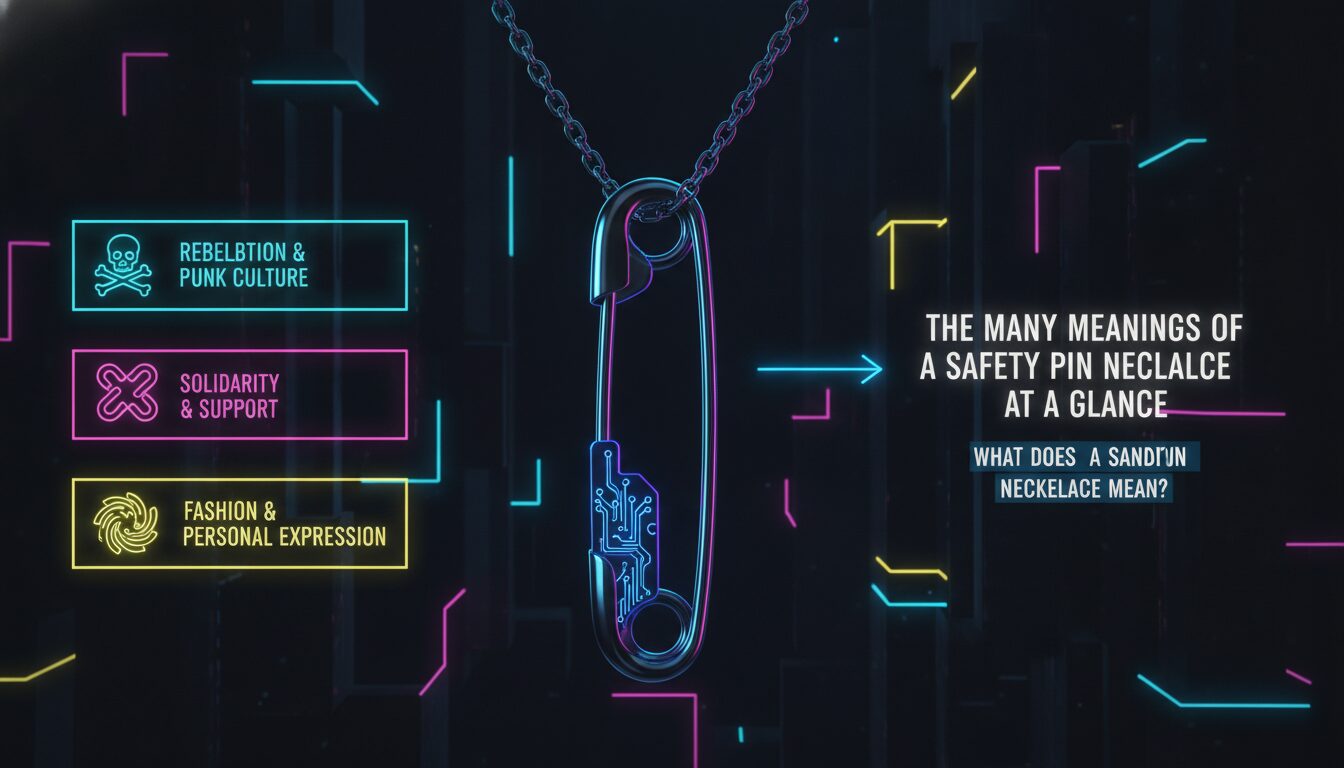
A safety pin necklace shifts meaning depending on the wearer’s intent and the community reading it. It’s not a fixed symbol. The table below summarizes the most recognized interpretations, each tied to the community or era that embraced it.
| Context | Primary Meaning | Origin/Peak Period |
|---|---|---|
| Punk Subculture | Rebellion, anti-establishment, DIY fashion | 1970s UK/US |
| Social Justice Movements | Solidarity with marginalized groups, safe space signal | Post-2016 globally |
| Mental Health Awareness | Resilience, suicide prevention, personal struggle | 2010s to present, echoes the semicolon project |
| Fashion Accessory | Edgy style, minimalist aesthetic | Mainstreamed in the 2020s |
| Personal Empowerment | Individual strength, overcoming adversity | Ongoing |
How to Interpret What You See
Because meaning isn’t fixed, you can’t always assume intent from a glance. A teenager wearing a safety pin choker on TikTok might be signaling mental health awareness, while someone from the original punk generation wears it as a nostalgic badge of rebellion. Context matters here. Pay attention to companion symbols, like a semicolon charm, or simply ask if you’re close enough to the wearer. As jewelry writers at Be Seen Jewelry put it, the necklace carries layers that are “historical, cultural, personal,” making it nearly impossible to define with one sentence.
What Does a Safety Pin Necklace Mean? The Historical Journey
Ancient Roman Fibulae: The First Status Pins
Safety pins aren’t a modern invention. Ancient Romans used fibulae, bronze fasteners that eventually evolved into ornate gold status pieces. These brooches secured togas while signaling military rank or noble standing, marking one of the earliest examples of a pin treated as fine jewelry rather than a mere fastener. That precedent, turning a utility object into a personal marker, set the stage for everything the safety pin necklace would come to represent.
Walter Hunt’s 1849 Invention: From Debt to Dress-Pin
The modern safety pin was born out of pure necessity. American mechanic Walter Hunt patented his design in 1849, famously inventing it in about three hours to pay off a $15 debt. His coiled spring and protective clasp kept fingers safe while fastening garments, a design so practical it barely changed for over a century. For decades, the safety pin stayed strictly functional, tucked into sewing kits with zero symbolic weight.
Punk Revolution of the 1970s: DIY Defiance
Everything shifted with punk. As Be Seen Jewelry describes it, “When the punk movement erupted in the 1970s, safety pins took on a new life as a bold emblem of defiance and nonconformity.” Punk style rejected polished luxury in favor of torn clothing and safety pins, turning household junk into jagged, DIY armor that pushed against mainstream beauty standards. Icons like Sid Vicious and designer Vivienne Westwood carried the safety pin from sewing basket to runway, cementing its place as a rebel signal in accessory form.
Fashion historians at the Victoria and Albert Museum note that punk’s appropriation of everyday items like safety pins was a deliberate act of subversion, turning the mundane into a statement of anger and creative freedom, a spirit that still shapes how we read safety pin jewelry today.
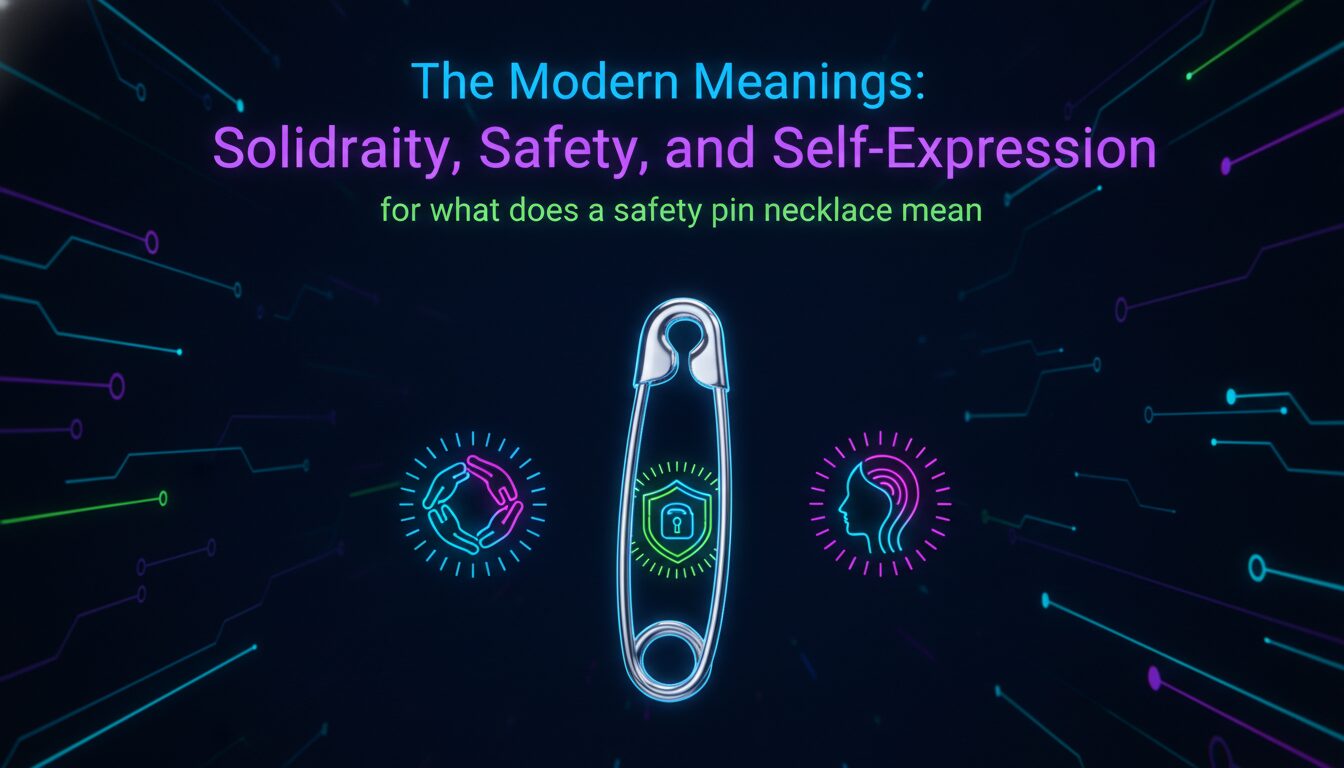
The Modern Meanings: Solidarity, Safety, and Self-Expression
A Symbol of Solidarity and Safe Space
In recent years, the safety pin necklace has been reclaimed as a quiet signal of support for marginalized groups. This practice gained momentum after the 2016 political events in the UK and US, when people began wearing actual safety pins to show allyship with immigrants, minorities, and anyone feeling threatened. As Pompeii3 explains, individuals began putting safety pins on to showcase their support for marginalized communities, calling it “a silent yet powerful statement.” Turning that gesture into a necklace made the promise more permanent and more visible than a temporary lapel pin ever could.
Mental Health Awareness and Personal Resilience
Beyond activism, the safety pin necklace has become a deeply personal emblem tied to mental health. Much like the semicolon tattoo, it signals that the wearer has struggled, perhaps with suicidal thoughts, depression, or anxiety, and chosen to keep going anyway. TikTok creator skyyjade illustrates this trend in a DIY tutorial captioned “Please keep on living guys,” describing the safety pin necklace as the “new semicolon tattoo.” Brite.co confirms these pendants most commonly signal solidarity with people who’ve struggled with mental health or suicidal thoughts. Wearing one can be a quiet way of saying, I’ve been there, and I’m still here.
Mental health advocates discussing the trend on forums like r/kpoprants describe the safety pin necklace as a way of externalizing an internal story of survival, a quiet declaration that the wearer chose to keep going, and for those who recognize it, an invitation to talk.
Fashion Meets Activism
Not every safety pin necklace carries heavy emotional weight. Some are simply fashion statements, though even then, the piece keeps its edge. Designers have reinterpreted the motif in precious metals, gemstones, and minimalist settings, letting wearers blend purpose with aesthetics. Pompeii3 notes that models and influencers wearing safety pin necklaces have only boosted their popularity. Whether you’re channeling punk rebellion or you just love the industrial-chic look, this piece moves easily between accessory and statement.
What Does a Safety Pin Necklace Mean for Mental Health?
The Semicolon Connection
To understand the mental health layer of what does a safety pin necklace mean, look at the semicolon project, which began in 2013 to encourage people with mental illness and suicidal thoughts to see their story as unfinished. The safety pin necklace has picked up a similar role. On TikTok, users have explicitly compared the two, calling the safety pin necklace the “new semicolon tattoo,” a comparison that spread widely across TikTok content in 2025 and 2026, cementing the necklace as a marker of hope and survival for a new generation.
Recognizing the Signs: What If Someone Stops Wearing It?
A common question follows naturally: what does it mean if someone stops wearing their safety pin necklace? There’s no universal answer here. For some, it might mark a positive milestone, they no longer need the outward reminder because they’ve reached steadier ground. For others, it could reflect a harder stretch, but that’s not automatically the case either. Experts caution against reading too much into a change in someone’s accessories. If you’re genuinely concerned, the better move is simply asking how they’re doing. The necklace works as a conversation starter, not a stand-in for a real check-in.
The Power of a Subtle Signal
In a world where mental health struggles often stay invisible, a physical token can bridge that gap. The safety pin necklace lets wearers communicate without saying a word. Per Brite.co, the pieces are “a subtle way to say ‘I’m a safe space’ or ‘I stand with marginalized groups.'” For someone struggling, spotting that tiny symbol on a colleague or a stranger can offer a small but real moment of recognition. That’s the quiet power behind wearing a safety pin necklace.
Safety Pin Necklace in Popular Culture and Media
Punk Icons and Runway to Real Life
The punk era’s embrace of safety pins set a precedent that high fashion later followed. Vivienne Westwood, often called the godmother of punk, sold ripped shirts held together with safety pins at her London boutique SEX. Sid Vicious wore them as necklaces and earrings. Decades later, luxury houses have released their own safety pin collections, proving the motif’s staying power. This runway-to-street crossover means today’s safety pin necklace can be a low-cost DIY project or a genuine investment piece, and either version carries its own story.
2016 and the Rise of Political Solidarity Accessories
The 2016 Brexit vote and the U.S. presidential election sparked a wider movement of wearing safety pins to signal safe spaces for immigrants and minorities. According to Tresor Jewelry Inc., safety pins were “one of the many punk fashion statements in the 1970s and later became symbols of social justice after the political events of 2016.” The gesture drew both praise and criticism over performative allyship, a debate that continues today. Even so, it embedded the safety pin firmly in the modern activist’s toolkit, often in necklace form for durability beyond a simple lapel pin.
TikTok and Gen Z Revival
As of 2026, TikTok has reignited interest in the safety pin necklace. Videos with huge view counts show DIY tutorials, styling tips, and personal testimonials tied to mental health. The trend blends Gen Z’s love of statement jewelry with mental health advocacy, and creators keep finding new ways to explain what does a safety pin necklace mean to their followers. This digital revival keeps the symbol alive, constantly reshaped by whoever picks it up next.
Choosing and Styling Your Own Safety Pin Necklace
Materials and Design Options
Safety pin necklaces come in a genuinely wide range of materials and price points. You’ll find them in gold, silver, and stainless steel, with some designs featuring a single minimalist pin and others clustering multiple pins or adding gemstone charms. Tresor Jewelry Inc. lists gold, silver, and stainless steel as the most popular choices, each affecting the piece’s durability and overall look. Higher-end versions sit firmly in investment-piece territory, while a DIY approach can cost next to nothing. Think about your intent going in: a precious metal pin tends to lean fashion-forward, while a basic steel pin often signals a more grassroots, activist-minded choice. Browse similar layering pieces in our jewelry collection if you want to pair yours with something equally meaningful.
How to DIY a Safety Pin Necklace in 5 Steps
Making your own is simple and surprisingly personal. Here’s how:
- Gather materials: a medium or large safety pin (ideally rust-resistant), a chain in stainless steel or gold-tone, jump rings, and jewelry pliers.
- Open the safety pin’s clasp. If you want beads or a charm on it, slide them onto the pin before fastening it shut.
- Open a jump ring with your pliers and thread it through the loop at the top of the safety pin.
- Attach the chain by feeding it through the jump ring, then close the ring securely.
- Adjust length and wear it. Try a few chain lengths to see how it falls against your outfit.
This DIY method, popularized on TikTok by creators like skyyjade, lets you build personal meaning into every piece, from bead color to a tucked-in inscription charm.
Styling Tips for Everyday Wear
Wear your safety pin necklace with intention, since it does carry symbolic weight. Let it sit over a plain tee or a lightweight sweater where it’s visible, or pair it with other meaningful jewelry like a semicolon pendant. For a more elevated look, try layering a delicate gold safety pin necklace over a blazer or a linen shirt, similar to how you’d style pieces from our resort dresses when traveling somewhere like Santorini. If you’re wearing it as a mental health signal, keep it visible. If it’s purely a style choice, feel free to tuck it in or go bold. Personal comfort and authenticity matter more than any rulebook here.
Controversies and Criticisms
Performative Activism Accusations
The safety pin symbol, especially after 2016, faced real backlash for feeling performative. Critics argued that wearing a safety pin could give the wearer a sense of moral credit without any actual action behind it. That debate extends fully to the necklace version. As Brite.co notes, it matters to wear such symbols with care and back them up with real action, donating, volunteering, or simply educating yourself. Without that follow-through, a safety pin necklace risks becoming an empty gesture.
Appropriation of the Symbol
Some voices within punk culture and the LGBTQ+ community have raised concerns about appropriation. Punk, born from working-class rebellion, used safety pins because they were cheap and subversive. When luxury brands sell gold safety pin necklaces for hundreds of dollars, it can feel like a grassroots symbol getting repackaged for profit. Likewise, someone wearing a safety pin necklace purely as a trend, with no awareness of its mental health or solidarity roots, risks diluting what it actually stands for. Context and a little homework go a long way here.
Misinterpretations in Different Cultures
While the safety pin necklace is widely recognized in Western contexts through punk and social justice movements, its meaning isn’t universal. Within some K-pop fan communities, safety pins carry a different weight tied to fandom loyalty or a promise within a fan group, rather than activism. On Reddit threads like r/kpoprants, users discuss how a safety pin necklace can represent a personal promise within fan circles, separate from the Western activist reading entirely. If you’re traveling and wearing one, it’s worth knowing the local context so your intent lands the way you mean it.
Safety Pin Necklace vs. Other Symbolic Jewelry
Semicolon Necklace
The semicolon necklace is the closest relative to the safety pin. Both represent mental health journeys, but the semicolon points directly to the Project Semicolon message: your story isn’t over. The safety pin necklace covers more ground, blending solidarity with others alongside personal resilience. While the semicolon stays focused on mental health, the safety pin can lean activist or purely fashion. Plenty of wearers layer both together, doubling down on the message of hope.
Awareness Ribbons and Charm Bracelets
Colored awareness ribbons, pink for breast cancer, red for HIV/AIDS, spell out their cause clearly, while the safety pin necklace leaves more room for interpretation. That ambiguity cuts both ways: it invites conversation but can also cause confusion. Some wearers actually prefer the subtlety of a safety pin over a ribbon that announces one specific cause. Charm bracelets offer a similar layered storytelling approach, and a safety pin can act as one charm among several.
What Sets the Safety Pin Necklace Apart?
Unlike a tattoo or a fixed-color ribbon, the safety pin necklace is easy to remove, swap out, or reinterpret. Its industrial origin contrasts sharply with traditional fine jewelry, giving it a built-in rebellious edge. It also grows with the wearer: one season it might read as a punk aesthetic, the next as a mental health milestone. Few single accessories carry this wide a historical and emotional range.
Pros and Cons
Pros
- Versatile symbolism means one piece can represent activism, personal resilience, or pure style, depending on the day.
- Widely available across price points, from a DIY project to an investment-grade gold pendant.
- Works as a genuine conversation starter for mental health and solidarity topics that are often hard to bring up directly.
- Easy to layer with other meaningful jewelry, like semicolon pendants or delicate chains.
Cons
- Ambiguous meaning can lead to real misinterpretation, especially across different cultural contexts.
- Risk of being read as performative if worn without any follow-through action or understanding of its roots.
- Some punk and LGBTQ+ voices see luxury versions as appropriating a grassroots symbol for profit.
- Not everyone recognizes the symbolism at all, so the intended message doesn’t always land.
Frequently Asked Questions
What does it mean if someone stops wearing a safety pin necklace?
There’s no single meaning behind this. It could point to personal growth and no longer needing the outward symbol, or simply a shift in style preference. It’s best not to assume anything; if you’re worried about someone, ask kindly instead of guessing.
What is the meaning of safety pin in mental health?
In a mental health context, it represents solidarity with people who struggle, especially with suicidal thoughts, and serves as a reminder of resilience and the choice to keep going. It functions much like the semicolon symbol in that sense.
What is the symbolic meaning of a safety pin?
The symbolic meaning ranges from rebellion in punk culture to solidarity in social justice movements to resilience in mental health awareness. It’s essentially visual shorthand for