Types of bracelets are the different bracelet styles, from rigid bangles and cuffs to flexible chains and beaded strands, each defined by structure, material, and closure. Some clink together in a stack; others sit solo like jewelry made for a single spotlight moment.
Key Takeaways
- Types of bracelets span rigid designs (bangles, cuffs), flexible pieces (chains, beaded, wrap), and statement styles (tennis, charm, pearl).
- Slim chain bracelets and stacking bangles are the most-worn everyday styles, according to jewelry retailers we reviewed.
- The 3-5-7 rule, odd numbers of bracelets stacked together, reads as more intentional than even pairs.
- Choosing the right bracelet type comes down to wrist measurement, lifestyle, closure security, and metal finish.
- Many bracelet types carry centuries of history, from Egyptian cuffs to Roman pearl regulations.
The Most Common Types of Bracelets
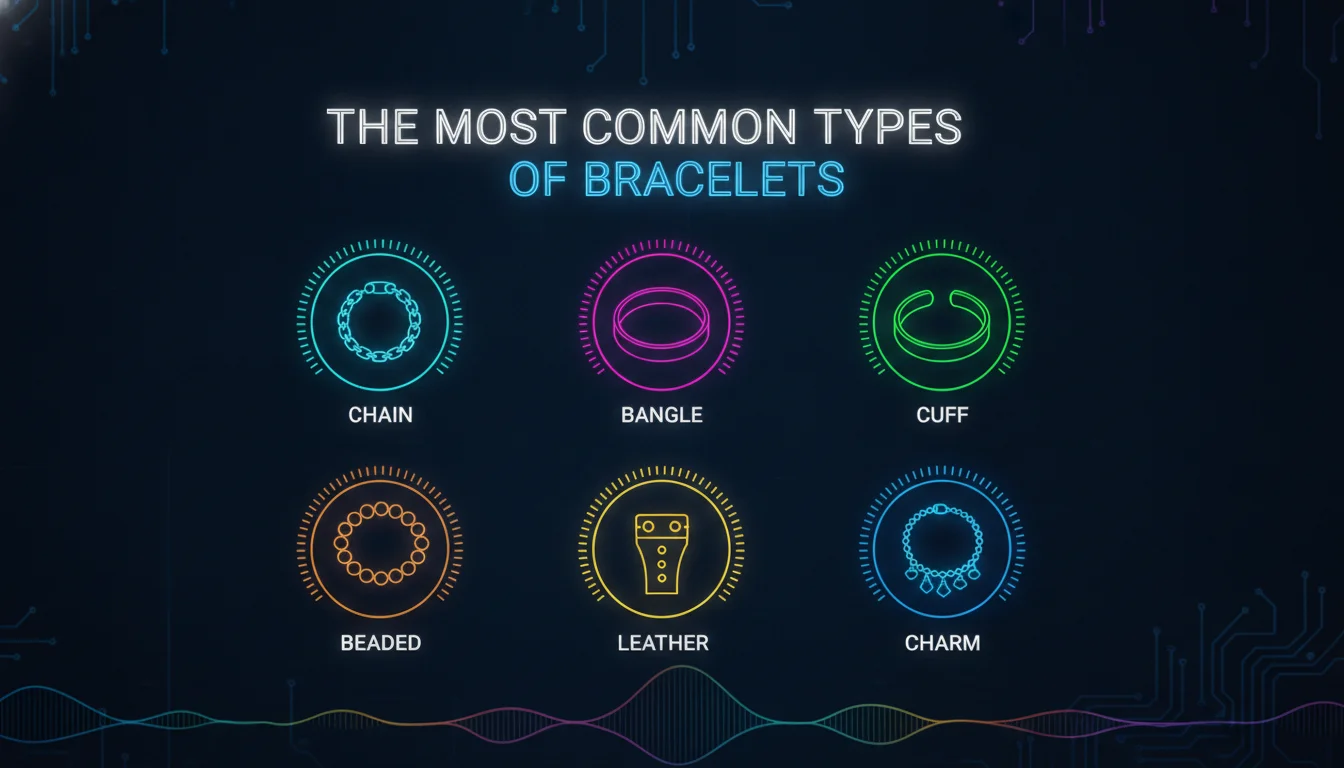
The most common types of bracelets are bangles, cuffs, and chains, distinguished by whether they’re rigid or flexible and how they close around the wrist. Bracelets have been worn for roughly 40,000 years. The oldest known example is a green stone bracelet discovered in a Siberian cave, according to The Pearl Expert. Today, the sheer number of types of bracelets can feel like a lot to sort through, but grouping them by structure, material, and closure makes the whole thing much easier. Broadly, bracelets fall into rigid pieces (bangles, cuffs), flexible designs (chains, beaded strands), and open-ended silhouettes, each one lending itself to a different mood on your wrist.
Bangle Bracelets
A bangle is a rigid, solid ring, traditionally circular with no clasp, that slides right over the hand onto the wrist. Originating from the Indian subcontinent, bangles are often worn in sets of three, five, or seven, creating that signature clinking sound you hear on a breezy market walk in Jaipur or a resort morning in Positano. Materials span precious metals like gold and silver to wood, resin, and glass. Bangles are one of the few bracelet styles that can be stacked in large numbers without tangling, which makes them a favorite for bohemian and bridal looks alike. For daily wear, we love slim 2 to 4mm stacking bangles in gold vermeil, the kind of understated gleam that looks right whether you’re at your desk or on a beach in Tulum.
Cuff Bracelets
Cuffs are wide, rigid bracelets with an open gap that slips over the wrist without a clasp. Unlike bangles, they can often be gently adjusted for a more custom fit. Widths range from narrow 10 to 15mm bands to dramatic 25mm-plus statement pieces. Because of their bold presence, cuffs are usually worn alone as a focal point rather than piled into a stack. According to Wikipedia’s Bracelet entry, hinged cuff bracelets date back to ancient Egypt, around 1479 to 1425 BCE. Modern cuffs show up in polished metals, hammered silver, or carved wood, which makes them ideal for editorial and minimalist looks.
“A cuff’s open-back design makes sizing forgiving. You can gently bend most cuffs to adjust the fit, which is part of why they’ve stayed relevant across decades of jewelry trends,” note the editors at AJLuxe in their bracelet styling guide.
Chain Bracelets
Chain bracelets are made of interconnected metal links, offering flexibility and a wide design vocabulary. Common patterns include cable (oval links), curb (flattened, interlocked links), box (square links), rope (twisted strands), and figaro (alternating long and short links). Most feature closures like lobster claw clasps, and they look just as good solo as they do layered. Thin cable chain bracelets in yellow gold are perennial favorites for daily wear because they catch light subtly without stealing the show. Because chain bracelets adjust so easily via links and clasps, they’re among the simplest bracelet types to fit precisely to your wrist.
Specialty Types of Bracelets for Personal Expression
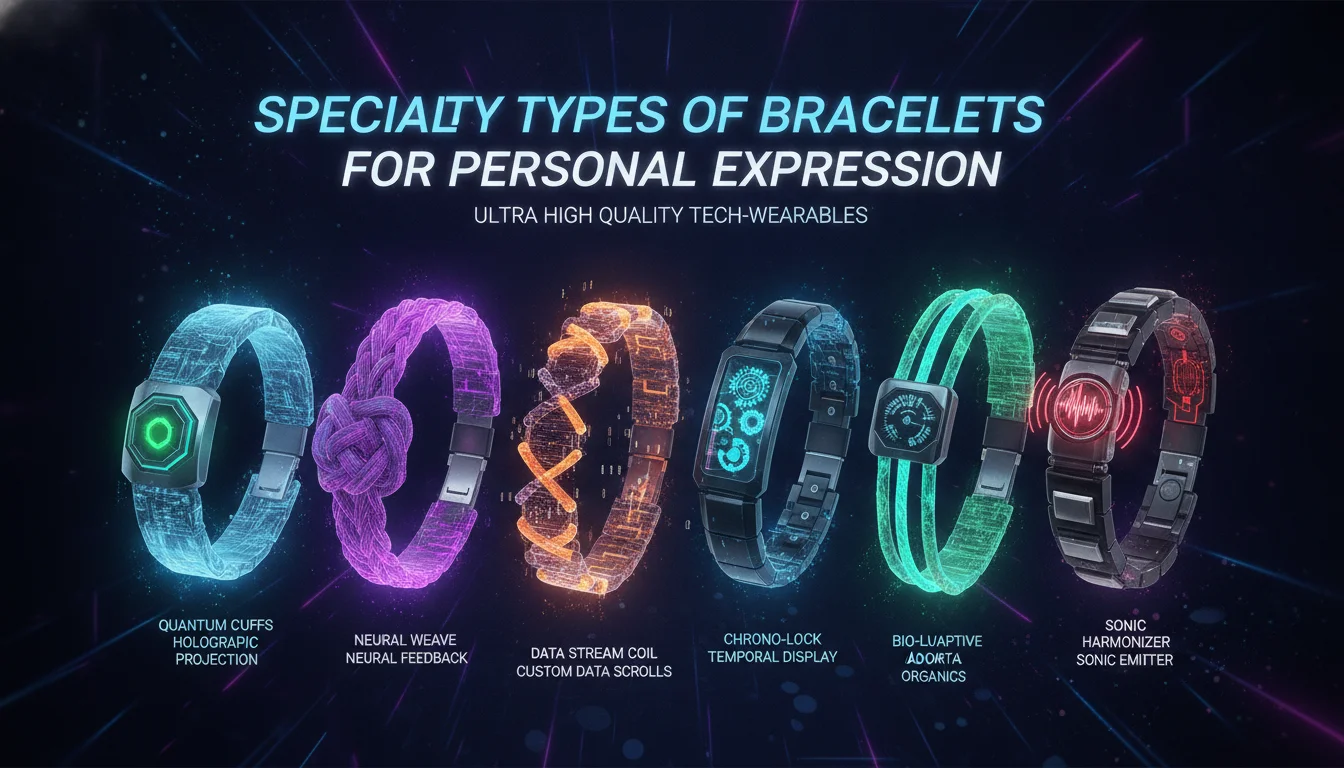
Specialty bracelet types serve as vehicles for personal storytelling, gemstone appreciation, and trend-driven styling rather than pure structure. This category includes charm bracelets, tennis bracelets, and beaded or pearl designs that ask for a bit more care but deliver outsized visual payoff.
Charm Bracelets
Charm bracelets feature a chain or base band from which small trinkets, or charms, dangle. Each charm often carries meaning: a birthstone for family, a travel memento, a tiny initial. That customization makes charm bracelets inherently sentimental. Traditionally crafted in sterling silver or gold, they can be inherited and added to over a lifetime. When stacking, keep your charm bracelet as the hero piece and pair it with one simple chain to avoid tangling.
Tennis Bracelets
The tennis bracelet is defined by a single, flexible row of identically sized diamonds or gemstones set closely together. Legend has it the style earned its name after tennis star Chris Evert’s diamond bracelet broke during a US Open match, and the design has been called the “tennis bracelet” ever since. Most are crafted in precious metals with a box clasp and safety latch. While traditionally reserved for evening wear, modern versions with smaller stones or cubic zirconia get worn casually, stacked with a leather wrap or a thin bangle.
Beaded and Pearl Bracelets
Beaded bracelets string together glass, stone, wood, or plastic beads, often on elastic for a comfortable, one-size-fits-most fit. Pearl bracelets typically use individually knotted cultured pearls (freshwater, Akoya, Tahitian, or South Sea) for both security and drape. According to The Pearl Expert, in ancient Rome pearl jewelry was such a powerful status symbol that Julius Caesar passed a law limiting pearl wear to the ruling class. Today, a single strand of white pearls feels like classic elegance, while mixed-gemstone beaded bracelets bring an earthy, bohemian energy, the kind you’d want stacked on a sun-warmed wrist in Santorini.
Bracelet Types by Material and Texture
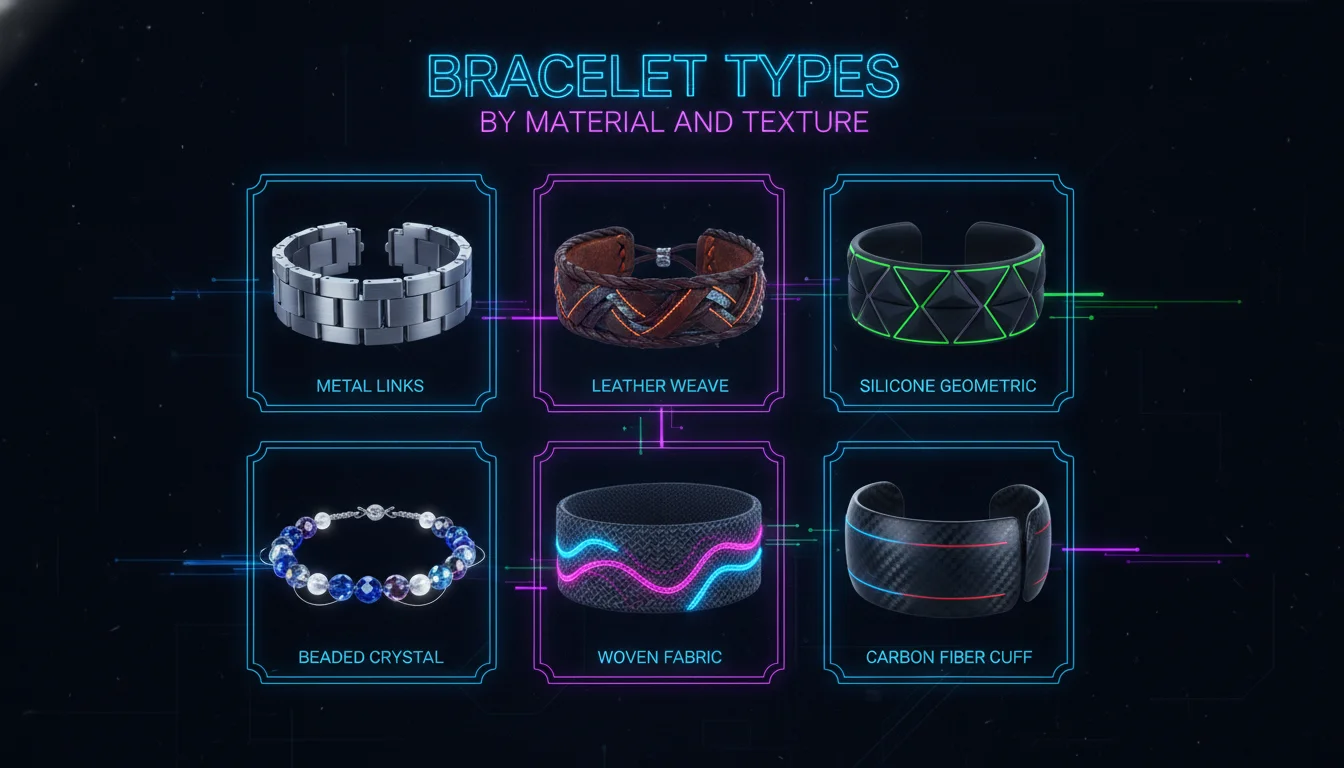
Material shapes a bracelet’s visual weight, durability, and where it fits into your life. Leather, woven textiles, and mixed media open up additional types of bracelets that bridge fine jewelry and casual, everyday accessories.
Leather Bracelets
Leather bracelets range from flat stamped bands with embedded metal studs to braided cords with magnetic clasps. They’re universally accepted as a gender-neutral option and pair just as well with a linen shirt as a chunky knit sweater. For a rugged look, choose a wide cuff with tooled patterns; for something quieter, try a thin wrap with metallic end caps. Leather does need some care: avoid water and store it away from direct sunlight to prevent fading.
Wrap Bracelets
Wrap bracelets are long strands of leather, fabric, or beaded cord that circle the wrist multiple times, creating a stacked illusion from a single piece. They often fasten with a button or an adjustable sliding knot. The layered effect adds texture and works beautifully with breezy, bohemian outfits, think linen dresses and bare shoulders. Many wrap bracelets weave in small beads or charms, landing somewhere between leather and beaded styles.
Friendship and Adjustable Bracelets
Friendship bracelets, traditionally knotted from embroidery thread, carry nostalgic, handmade charm. Modern versions may use a slider or adjustable knot closure for easy on-and-off wear. These are perfect for casual days and often given as small tokens of affection. Adjustable bracelets, ones with sliding mechanisms or pull-through cords, rank among the most practical types of bracelets for gifting since they fit a wide range of wrist sizes without measuring.
Pros and Cons
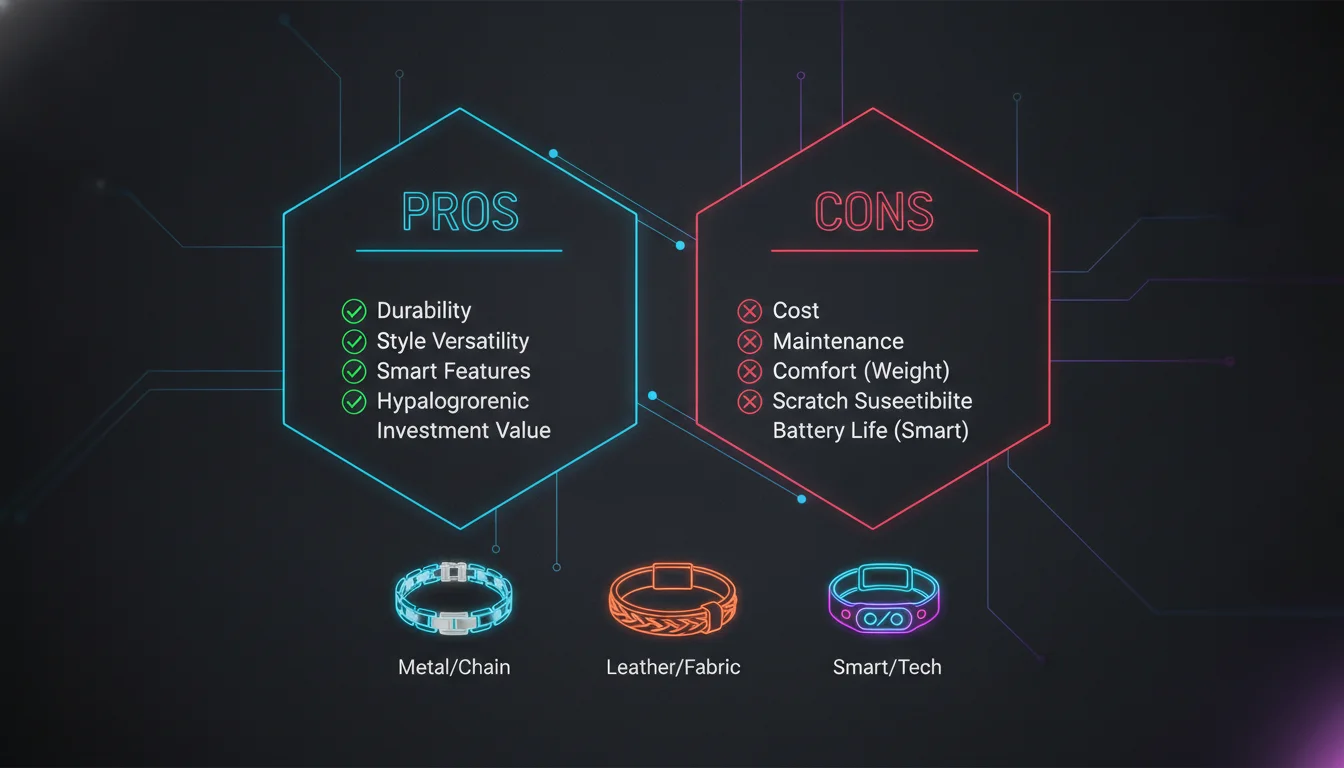
Pros
- Bracelets offer endless styling flexibility, from a single statement cuff to a seven-piece stack.
- Many materials (leather, gold vermeil, beaded strands) are accessible luxury, often under $100.
- Bracelets work across genders, ages, and occasions, from beach days to black-tie events.
- Stacking lets you build a collection gradually rather than buying one expensive piece.
Cons
- Delicate styles like pearl strands or fine chains require gentler care around water and activity.
- Rigid bangles and cuffs can be trickier to size correctly than adjustable chains.
- Clasp failure is the most common complaint with tennis and charm bracelets over time.
- Building a well-curated stack takes some trial and error before it looks intentional.
Bracelet Types by Material and Texture Compared
The table below summarizes key features of the most common types of bracelets to help you compare structure, closure, stackability, and best uses at a glance.
| Bracelet Type | Structure | Typical Closure | Stackability | Best For | Common Materials |
|---|---|---|---|---|---|
| Bangle | Rigid, solid ring | None (slip-on) | High (3-7 stacked) | Bohemian, bridal, everyday stacking | Metal, wood, resin, glass |
| Cuff | Rigid, open gap | Open-ended (sometimes adjustable) | Low (worn alone) | Statement looks, editorial minimalism | Metal, leather, wood |
| Chain | Flexible metal links | Lobster claw, spring ring | Medium | Daily wear, subtle shimmer | Gold, silver, stainless steel |
| Tennis | Flexible row of gemstones | Box clasp with safety latch | Low to medium | Evening elegance, special occasions | Precious metals, diamonds, gemstones |
| Charm | Chain with dangling trinkets | Lobster claw | Medium (hero piece) | Personalized storytelling | Sterling silver, gold |
| Beaded | Strung beads | Elastic or toggle clasp | High | Casual, bohemian, spiritual | Gemstone, glass, wood, plastic |
| Leather | Band or braided cord | Buckle, magnetic, or knot | Medium | Casual, rugged, unisex | Leather, metal accents |
| Pearl | Knotted strand | Filigree clasp | Low | Classic refinement, bridal | Cultured pearls, silk thread |
How to Choose the Right Bracelet Type: A Step-by-Step Process
Choosing the right bracelet starts with measuring your wrist, then working through lifestyle, outfit, metal, and clasp considerations. Follow these five steps to land on the type of bracelet that actually fits your life.
Step 1: Measure Your Wrist and Hand
Use a flexible tape measure or a strip of paper to measure your wrist circumference at the bone. For bangles, also measure your hand circumference at its widest point, thumb pressed to fingers. Most chain bracelets allow some adjustment, but rigid pieces have to slide over the hand comfortably. Getting this right means your bracelet sits well without sliding off or pinching.
Step 2: Determine Your Lifestyle Suitability
Think about what your days actually look like. If you type at a keyboard for hours, a chunky bangle or a charm bracelet with lots of dangle might be more distracting than delightful. If you swim or work out often, skip porous materials like leather and unsealed beads, and reach for waterproof metals like stainless steel or solid gold instead. A delicate chain bracelet tends to hold up better to daily wear than an ornate cuff that catches on sleeves.
Step 3: Match the Bracelet to Your Outfit
For office days, slim chain bracelets in gold or silver add polish without distraction. For evening wear, a tennis bracelet or a single pearl strand elevates a simple dress instantly. Casual outfits welcome texture: leather wraps, beaded strands, stacked bangles. According to AJLuxe, the 3-5-7 rule works beautifully here: odd numbers of bracelets look more intentional, so start with three thin bangles or one chain plus one beaded piece for a balanced stack.
Step 4: Select the Right Metal and Finish
Metal choice shapes both durability and how cohesive your stack feels. Sterling silver flatters cool skin tones, while yellow gold warms up fair and olive complexions. Rose gold brings a romantic blush, and mixed-metal stacks are having a real moment right now. Finish matters too: high polish reflects light, matte feels understated, hammered textures read artisan. If you’re planning daily wear, solid gold or platinum will outlast gold-plated pieces by a long shot.
Step 5: Test the Closure Mechanism
A bracelet is only as good as its clasp. Lobster claw and spring ring clasps are secure and easy to work one-handed, which makes them ideal for everyday wear. Box clasps with safety latches, common on tennis bracelets, add extra security for high-value pieces. Magnetic clasps are convenient for anyone with dexterity challenges but can come undone during heavy activity. Elastic closures give you no-fuss, slip-on ease but may stretch with time.
Types of Bracelets for Every Occasion and Wearer
Bracelets extend well beyond womenswear, with strong dedicated options for men, kids, and specialized stacking approaches. Understanding how different bracelet types adapt to different wearers makes gift shopping, and building a genuinely versatile jewelry wardrobe, so much easier.
Men’s Bracelet Types
Men’s bracelets have grown far past the simple ID tag. Popular choices include leather wraps with metal accents, beaded strands of natural stone like onyx, hematite, and lava, and curb chain bracelets in sterling silver or stainless steel. Widths tend to run thicker, around 8 to 10mm, to keep proportions masculine. A single leather bracelet worn on the wrist opposite a watch creates a balanced, modern look. Brands like John Hardy offer artisan-crafted men’s bracelets that blend tradition with a more contemporary design language.
Bracelets for Kids and Teens
For children, safety and adjustability come first. Elastic beaded bracelets in fun colors, charm bracelets with child-safe trinkets, and adjustable friendship bracelets top the list. Many kids’ bracelets use sliding knot closures that expand as a child grows. Teens often embrace stackable styles, mixing beaded, cord, and chain bracelets to express their identity in real time. Birthstone bracelets make meaningful gifts for this age group, pairing personal significance with a delicate look.
Stackable Bracelets and the Art of Layering
Stacking means wearing multiple bracelets together on one wrist, building a curated, collected-over-time look. The trick is mixing textures (smooth metal plus beaded plus leather) and varying widths while sticking to a color theme. The 3-5-7 rule (odd numbers) keeps the stack from looking accidental. Among the best types of bracelets for stacking are slim bangles (2 to 4mm), thin chain bracelets, and delicate gemstone strands. Start with a watch or a wide cuff as your anchor, then layer progressively smaller pieces above it.
Stylists consistently point to restraint as the real skill in bracelet stacking: pick one hero piece, then let two or three supporting pieces do quiet work around it rather than competing for attention.
Frequently Asked Questions
What are the most popular types of bracelets?
The most popular types of bracelets include tennis bracelets, pearl bracelets, charm bracelets, chain bracelets, and bangle bracelets. These styles have wide appeal and suit everything from casual weekends to formal evenings.
How many types of bracelets are there?
There are dozens of distinct bracelet styles when you categorize by structure, material, and design, including bangles, cuffs, chains, beaded, leather, wrap, tennis, and charm bracelets, among others. Most style guides list somewhere between 10 and 24 common types, though the exact count depends on how granular the classification gets.
What is the difference between a bangle and a cuff bracelet?
A bangle is a rigid, completely closed circle that slides over the hand, while a cuff has an open gap on one side that lets it slip onto the wrist without a clasp. Cuffs often have a more adjustable fit and run wider, while bangles are typically designed with stacking in mind.
Which bracelet type is best for everyday wear?
A thin chain bracelet in gold or silver works best for everyday wear because it’s lightweight, durable, and versatile enough for any outfit. Slim bangles are a solid everyday choice too, as long as they’re made of sturdy metal that resists bending.
Can men wear bracelets? What types are suitable?
Absolutely. Leather wraps, beaded stone bracelets, and chain bracelets in thicker widths are popular picks for men. A simple leather band or a curb chain bracelet worn opposite a watch adds subtle style without feeling fussy.
How do I stack bracelets without looking cluttered?
Stick to odd numbers (3, 5, or 7), mix textures like metal, leather, and beads while keeping a unified color palette, and vary widths from thin to medium. Anchor the stack with a watch or a wider cuff, then place smaller pieces above it toward the hand.
A Final Word on Choosing Your Bracelet Types
From the ancient bangles of the Indian subcontinent to the precision-set diamonds of a modern tennis bracelet, the many types of bracelets we’ve covered reflect centuries of craftsmanship and personal expression. Whether you’re drawn to the minimalist gleam of a chain bracelet, the sentimental charm of a personalized charm bracelet, or the boho ease of stacked bangles, there’s a style that fits your wardrobe and your story. This season, use our step-by-step process to match the right bracelet type to your lifestyle, and keep the 3-5-7 rule in your back pocket for a stack that reads effortlessly curated. As of this update for 2026, our own collection leans into exactly this mix, pairing everyday chains with statement cuffs for a wardrobe that moves easily between a coastal morning and a candlelit dinner. Browse our jewelry collection and pair your favorite bracelet with a flowing sundress or a pair of woven sandals for a look that feels finished from morning to evening. Shop the collection at lexazi.com, free shipping on orders over $75.