A travel sickness bracelet is a wearable band designed to relieve nausea and vomiting caused by motion sickness, morning sickness, or other triggers. These drug-free bands use gentle pressure or electrical pulses on a specific wrist point, offering a portable alternative to medications.
Key Takeaways
- sickness bracelets provide a drug-free alternative to anti-nausea medications.
- They work by stimulating the P6 acupressure point on the inner wrist, or via electrical nerve stimulation.
- Effectiveness varies: some studies show benefit for motion sickness and morning sickness, but results are inconsistent.
- Popular options include acupressure bands like Sea-Band and electronic devices like Reliefband.
- Acupressure bands typically cost $8 to $20; electronic devices range from $149.99 to $299.99.
- Always consult a healthcare provider before use, especially during pregnancy or chemotherapy.
What Is a Travel Sickness Bracelet?
The Basics: Definition and Common Names
A this type of bracelet is a wearable band, typically worn around the wrist, that aims to prevent or reduce nausea without drugs. Also known as motion sickness wristbands, anti-nausea bands, or sea bands, these accessories apply constant, gentle pressure on the inner wrist. The concept draws from traditional Chinese medicine, where stimulating the P6 (Pericardium 6) acupressure point is believed to calm the stomach. Modern versions range from simple elastic bands with a plastic button to sophisticated electronic devices that emit low-level electrical pulses.
The P6 Point: Where Theory Meets Practice
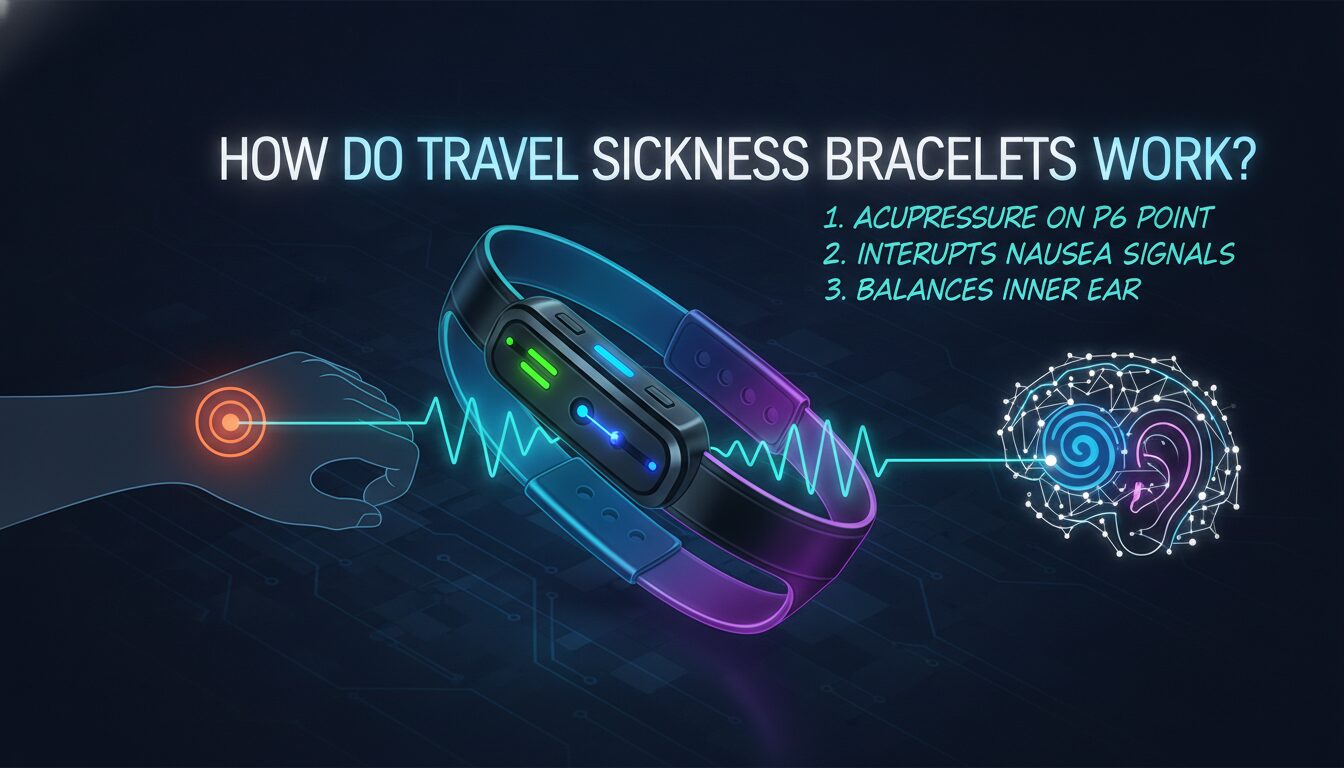
The effectiveness of a this kind of bracelet hinges on precise placement over the P6 point, located approximately three finger-widths below the crease of the wrist, between the two central tendons. Pressing on this spot aims to interrupt nausea signals sent from the brain to the stomach. This principle applies not only to motion sickness but also to morning sickness, post-operative nausea, and chemotherapy-induced vomiting.
How Do Travel Sickness Bracelets Work?
Acupressure Bands: The Traditional Approach
Most travel sicknesss on the market are acupressure bands. They consist of an adjustable wristband with a built-in plastic stud that exerts continuous pressure on the P6 point. The theory is that this pressure stimulates nerves traveling to the brain stem, influencing the vomiting center and blocking nausea signals. Brands like Sea-Band and CVS Morning & Motion Sickness Bands are classic examples. These bands are reusable, washable, and require no power source. You simply need to ensure the button is positioned correctly for the band to work.
Electronic Neuromodulation Devices: The High-Tech Upgrade
A more advanced type of sickness bracelet uses electrical nerve stimulation, a technique known as neuromodulation. Devices like the Reliefband series and the EmeTerm Explore deliver precisely controlled electrical pulses to the underside of the wrist. According to Reliefband, their FDA-cleared technology “turns off” feelings of nausea by sending signals through the nervous system to the part of the brain that controls vomiting. Unlike acupressure bands, these devices offer adjustable intensity levels so you can customize the sensation. The Reliefband lineup ranges from the Classic ($149.99) to the Premier+ ($299.99), with features like rechargeable batteries, digital displays, and IPX7 waterproofing.
How Nerve Stimulation Translates into Relief
When an electronic this type of bracelet activates, it generates tiny electrical impulses that travel along the median nerve. These impulses reach the hypothalamus and the vomiting center in the brain stem, effectively blocking the nausea reflex. The process happens quickly, often within minutes. Because it relies on no chemicals, it avoids the common side effects of anti-nausea drugs, such as drowsiness or dry mouth.
Self-Massage: The Manual Alternative
You don’t always need a band to stimulate the P6 point. According to guidance from Memorial Sloan Kettering Cancer Center (referenced via the Walgreens Blog sources), you can press the P6 point with your own thumb for 2 to 3 minutes to achieve a similar effect. Position three fingers below your wrist crease, then press firmly with your thumb on the spot just beneath your index finger. This technique is useful when you’ve forgotten your band or want to supplement its action mid-journey.
Do Travel Sickness Bracelets Really Work?

What the Science Says About Acupressure
The efficacy of an acupressure-based this kind of bracelet remains a topic of debate. Some clinical trials have shown modest benefits. A Cochrane review examined wrist P6 acupressure for post-operative nausea and found it comparable to antiemetic drugs in some cases. However, other studies, particularly on motion sickness, have produced mixed results. According to Dr. Robert A. Fried, MD, writing for the Walgreens Blog, “The efficacy of wrist bands for motion sickness is still unclear. Some scientific research studies have investigated whether acupressure helps with nausea and vomiting. More research is needed to understand if using wrist bands for nausea is as effective as standard anti-nausea drugs.” A portion of users, especially pregnant women, report relief even where the overall evidence is inconsistent.
Clinical Evidence for Electronic Bands
Electronic travel sicknesss have a slightly stronger clinical backing. The Reliefband is FDA-cleared as a Class II medical device for the treatment of nausea related to motion sickness, migraines, morning sickness, chemotherapy, and post-operative nausea. According to Reliefband, the device was originally developed for use in hospitals and oncology clinics, making it the only over-the-counter wearable with that kind of institutional track record. Several studies published in medical journals have shown that electrical stimulation of the P6 point can reduce nausea severity. While more high-quality research is needed, the available data suggests electronic bands may offer more consistent relief than acupressure bands alone.
User Experience: A Subjective Verdict
Despite mixed scientific reviews, many travelers swear by their sickness bracelet. Reviews for products like Sea-Band and Reliefband are overwhelmingly positive. Common sentiments include “a miracle for car trips” and “allowed me to enjoy my cruise.” One verified Reliefband buyer wrote: “I suffer from severe motion sickness and this helped me to go on plane, bus rides, gondolas and through every single ride without any sickness. Kind of a miracle!” This anecdotal evidence shouldn’t be dismissed, especially for people who cannot tolerate medications.
Pros and Cons of Travel Sickness Bracelets
Pros
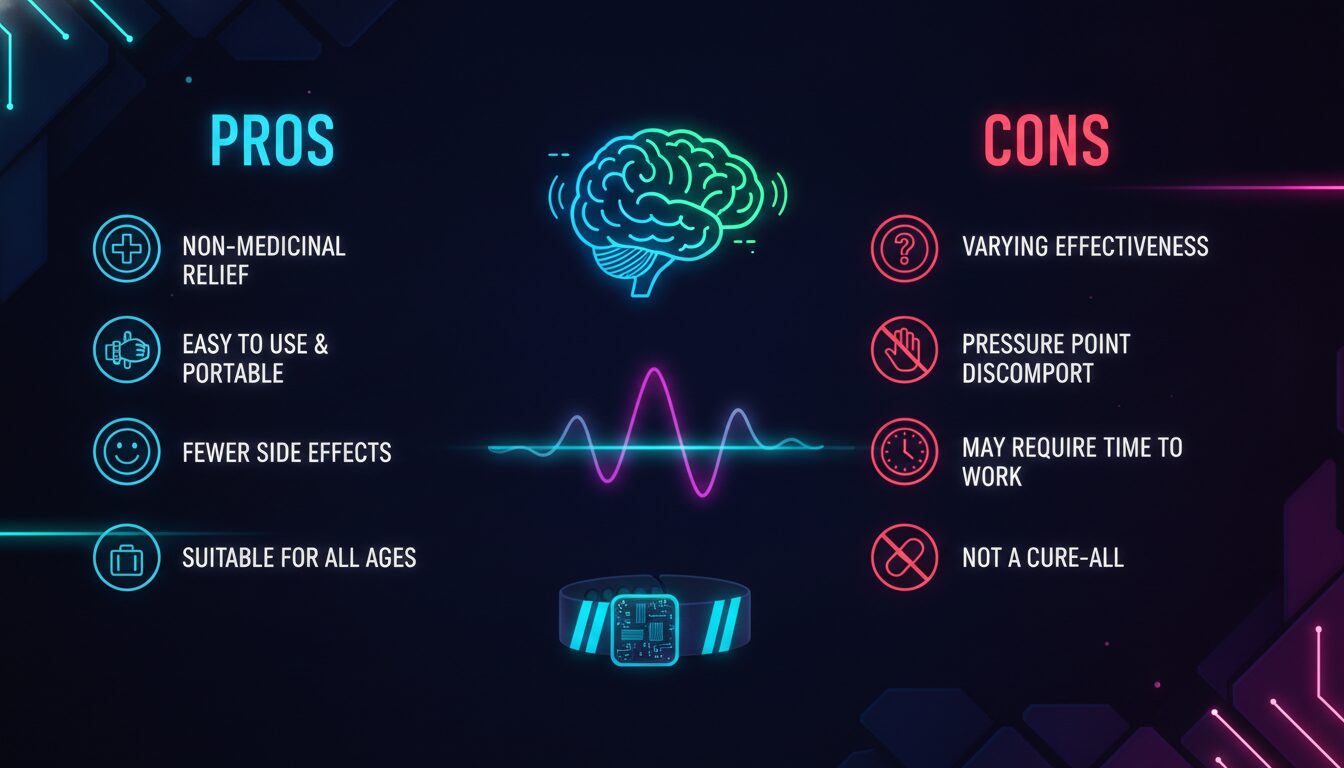
- Drug-free: No chemicals means no drowsiness, dry mouth, or blurred vision.
- Portable and discreet: Slip one on before boarding and forget it’s there.
- Reusable: Acupressure bands are washable and last indefinitely; electronic models recharge via USB.
- Safe for pregnancy: Reliefband states the device will not interact with other medications and is suitable for pregnant women.
- Wide price range: Options from under $10 (acupressure) to $299.99 (premium electronic) suit every budget.
- Compatible with other remedies: Bands don’t interact with medications, so you can use them alongside ginger supplements or prescription patches.
Cons
- Inconsistent evidence: Clinical results for acupressure bands are mixed, and more research is needed across all types.
- Placement-dependent: Incorrect positioning over the P6 point significantly reduces effectiveness.
- Skin irritation risk: Prolonged wear can cause local redness, itching, or discomfort, particularly if the band is too tight.
- Electronic devices are expensive: Premium models like the Reliefband Premier+ cost $299.99, which is a significant investment.
- Not suitable for everyone: People with pacemakers or implanted electronic devices should consult a doctor before using electronic bands.
Types of Travel Sickness Bracelets: A Complete Comparison
Manual Acupressure Wristbands
These are the most common and affordable this type of bracelets. Brands include Sea-Band, CVS Health, and Three Lollies Queasy Wrist Bands. Sold in pairs for bilateral use, they feature a simple plastic button that presses on the P6 point. Prices generally range from $8 to $20. They are reusable, washable, and require no batteries. Effectiveness depends heavily on correct placement and consistent pressure. Some users report mild skin irritation if worn too tightly.
Electronic Neuromodulation Devices
High-end this kind of bracelets like the Reliefband and EmeTerm Explore represent the technological frontier. They deliver precise electrostimulation with multiple intensity settings. The Reliefband lineup covers a range of price points: the Classic at $149.99, the Flex at $179.99, the Sport at $249.99, the Premier at $279.99, and the Premier+ at $299.99. Key advantages include faster onset (within minutes), adjustable power, rechargeable batteries, and waterproofing. These are ideal for frequent travelers, pregnant women with severe morning sickness, and people undergoing chemotherapy.
Reliefband Model Comparison
Choosing between Reliefband models comes down to how often you travel and how severe your symptoms are. The Classic ($149.99) is a solid entry point for occasional use. The Sport ($249.99) adds IPX7 waterproofing, making it a smart pick for cruises or water activities. The Flex ($179.99) is a slimmer, everyday-wear option. The Premier ($279.99) and Premier+ ($299.99) include a digital display and longer battery life, suited to frequent travelers or those managing chemotherapy-related nausea. All models are FDA-cleared and drug-free.
Rechargeable vs. Reusable Acupressure Options
Most acupressure bands are reusable indefinitely with a simple wash. Electronic travel sicknesss like the Reliefband Sport and Flex recharge via USB. The EmeTerm Explore, available at Walmart for $139.99, is a rechargeable electronic option at a lower price point than the Reliefband range. This distinction matters for extended trips: rechargeable units offer long-term value, while simple acupressure bands suit short journeys or first-time testers.
| Feature | Acupressure Bands (e.g., Sea-Band) | Electronic Devices (e.g., Reliefband) | Motion Sickness Patches |
|---|---|---|---|
| How It Works | Constant pressure on P6 point | Electrical nerve stimulation | Transdermal drug delivery (scopolamine) |
| Onset of Action | 15 to 30 minutes | 2 to 5 minutes | 4 hours |
| Side Effects | Mild skin irritation, discomfort | Tingling sensation, localized irritation | Drowsiness, dry mouth, blurred vision |
| Reusable? | Yes, washable | Rechargeable or reusable | No, single-use |
| Average Price | $8 to $20 per pair | $139.99 to $299.99 | $20 to $40 per patch |
| Best For | Occasional travelers, pregnancy | Severe motion sickness, chemotherapy | Long trips (cruises, expeditions) |
Step-by-Step: How to Wear a Travel Sickness Bracelet Correctly
Step 1: Prepare the Band
Before putting on your sickness bracelet, confirm the right size. Many bands come in adjustable, one-size-fits-most designs, with children’s sizes also available. For acupressure bands, ensure the plastic button is clean and secure. Electronic devices should be fully charged before you leave.
Step 2: Locate the P6 Point
Place three fingers horizontally just below the wrist crease, with your index finger touching the crease. The P6 point sits under the edge of your middle finger, between the two prominent tendons. When you press this spot with your thumb, it should feel slightly tender. Getting this right is the single most important factor in how well the band performs.
Step 3: Secure the Band
- Position the button: Center the plastic stud or electrode directly over the P6 point.
- Adjust tightness: Pull the band until it’s snug but not cutting off circulation. The pressure should be firm yet comfortable.
- Test the fit: If using an electronic this type of bracelet, start with the lowest intensity and gradually increase until you feel a gentle tapping sensation.
- Wear both wrists: For best results, wear one band on each wrist. If you only have one, place it on the wrist that feels most sensitive.
- Check regularly: Re-adjust the band every few hours to ensure the pressure point hasn’t shifted.
Step 4: Time It Right
For motion sickness prevention, put on your this kind of bracelet before you start feeling queasy. Aim to wear it 15 to 30 minutes before travel begins. The bands can be worn continuously for hours, but give your skin a break every 3 to 4 hours to prevent irritation.
Travel Sickness Bracelets vs. Other Remedies
Bracelets vs. Motion Sickness Patches
Transdermal scopolamine patches are a popular prescription option for preventing nausea on cruises or long flights. They work by releasing a medication that blocks acetylcholine receptors, but they take hours to become effective and can cause significant drowsiness, dry mouth, and blurred vision. A travel sickness, by contrast, offers immediate, drug-free relief with minimal side effects. For those sensitive to antihistamines, bracelets are a safer starting point. That said, patches provide more reliable protection for severe, prolonged motion sickness when non-invasive methods fall short.
Bracelets vs. OTC Anti-Nausea Drugs
Over-the-counter remedies like dimenhydrinate (Dramamine) or meclizine (Bonine) are effective but often cause sedation. A sickness bracelet avoids these side effects entirely, making it preferable for activities that require alertness, like driving or sightseeing. The trade-off is reliability: medications work systemically and have a higher success rate in clinical trials. Many travelers combine both, using a bracelet for mild symptoms and carrying medication as backup.
Combining Bracelets with Natural Techniques
For optimal nausea control, pair your travel sickness bracelet with behavioral strategies. Fix your gaze on the horizon, avoid heavy meals before travel, and consider ginger supplements, which have their own evidence base for nausea relief. Acupressure bands are also compatible with prescription medications, as they don’t interact with drugs.
How to Choose the Best Travel Sickness Bracelet for Your Needs
Key Factors to Consider
- Severity of nausea: Occasional mild car sickness may only need a simple acupressure band, while severe sea sickness or chemotherapy nausea might warrant an electronic device.
- Frequency of need: Daily commuters or frequent flyers will benefit more from a rechargeable electronic model’s longevity. Occasional travelers can save with a one-time purchase of acupressure bands.
- Budget: Acupressure bands are very affordable ($8 to $20). Electronic devices are a significant investment ($149.99 to $299.99) but may be covered by FSA or HSA accounts if medically necessary.
- Comfort and fit: Look for adjustable straps, breathable fabric, and skin-friendly materials. Some electronic bands are bulkier and may not fit all wrist sizes.
Top Picks for Specific Situations
- For occasional travel: Sea-Band Anti-Nausea Acupressure Wristbands are the classic choice, available at most pharmacies and online for around $12 to $15.
- For pregnancy-related morning sickness: CVS Morning & Motion Sickness Bands offer a washable, reusable, non-drowsy solution at under $20.
- For cruises and severe motion sickness: The Reliefband Sport provides waterproof, rechargeable neuromodulation at $249.99, with rapid relief and no side effects.
- For chemotherapy patients: The Reliefband Premier, originally developed for hospital and oncology clinic use, is FDA-cleared for chemotherapy-induced nausea and priced at $279.99.
- For kids: P6 Motion Sickness Bands for Kids are sized for children’s wrists, available in multiple colors, and start from $9.99.
- For budget-conscious shoppers: Three Lollies Queasy Wrist Bands are available at Walmart for $8.92 per pair, making them one of the most accessible options on the market.
Potential Side Effects and Precautions
Common Side Effects of Acupressure Bands
Side effects from a travel sickness bracelet are usually mild and limited to the contact area. According to the Walgreens Blog, local skin reactions, mild discomfort, and swollen wrists have been reported in some studies. These reactions typically resolve after removing the band. To minimize risk, avoid wearing the band for more than 3 to 4 hours at a stretch, and clean it regularly to prevent bacterial buildup.
Safety of Electronic Stimulation Devices
Electronic travel sickness bracelets like Reliefband are considered safe for most people. The electrical impulses are low-level. However, individuals with pacemakers or other implanted electronic devices should consult a doctor before use. Reliefband states the device is suitable for pregnant women and will not interact with other medications. Manufacturer guidelines recommend starting at the lowest intensity and avoiding use near the throat or chest.
When to Avoid Travel Sickness Bracelets
There are situations where a travel sickness bracelet might not be appropriate. If you have a skin condition like eczema or psoriasis on your wrists, constant pressure could trigger a flare. People with sensory processing sensitivities may find the sensation uncomfortable. If nausea persists or worsens, stop relying on the band and seek professional medical evaluation, as persistent vomiting can lead to dehydration.
“The efficacy of wrist bands for motion sickness is still unclear. Some scientific research studies have investigated whether acupressure helps with nausea and vomiting. More research is needed to understand if using wrist bands for nausea is as effective as standard anti-nausea drugs.” – Robert A. Fried, MD, via Walgreens Blog
“Originally developed for use in hospitals, our patented technology turns off feelings of nausea and vomiting without any drugs or side effects. Reliefband is the only OTC wearable device that has been used in hospitals and oncology clinics to treat nausea and vomiting.” – Reliefband
Frequently Asked Questions
Do travel sickness bracelets actually work?
Results vary by person and product type. Acupressure bands show mixed results in clinical trials, though many users find them effective for mild nausea. FDA-cleared electronic bands like Reliefband have more robust evidence for motion sickness and chemotherapy-related nausea. As Dr. Robert A. Fried, MD notes via the Walgreens Blog, more research is still needed to draw firm conclusions.
What is the best bracelet for motion sickness?
The best travel sickness bracelet depends on your needs and budget. For occasional use, Sea-Band Acupressure Wristbands are affordable and widely available from around $12. For severe symptoms or frequent travel, the Reliefband Sport ($249.99) offers fast, adjustable electrical stimulation with IPX7 waterproofing.
How do bracelets for motion sickness work?
Acupressure bands press on the P6 point on the inner wrist, which is thought to inhibit nausea signals. Electronic bands send gentle electrical pulses along the nerves to the brain’s vomiting center, blocking nausea more directly. Both approaches are drug-free and carry minimal side effects for most users.
What is better, motion sickness patches or bracelets?
A travel sickness bracelet works without drowsiness and takes effect faster, making it safer for driving or short trips. Scopolamine patches take hours to activate and cause dry mouth and blurred vision, but they offer proven prevention for extended voyages like cruises. Many travelers keep both on hand.
Can I use a travel sickness bracelet during pregnancy?
Yes, acupressure bands are a popular drug-free option for morning sickness. According to the Walgreens Blog, some pregnant women report relief, though scientific evidence is inconclusive. Reliefband also states its device is suitable for pregnant women. Always consult your OB-GYN before starting any new treatment.
How long can I wear a travel sickness bracelet?
For acupressure bands, take breaks every 3 to 4 hours to avoid skin irritation, as recommended by the Walgreens Blog. Electronic bands can be worn for longer periods, but follow the manufacturer’s instructions. Remove any band immediately if you notice redness, swelling, or discomfort.
A travel sickness bracelet is a versatile, drug-free tool that can help many people manage nausea on the go. The wide range of options, from simple acupressure bands under $15 to advanced electronic devices, means there’s likely a solution that fits your travel style and budget. Shop the collection at lexazi.com – free shipping on orders over $75.