A tote bag pattern is a set of instructions and templates that guide you in cutting fabric and sewing a finished bag. From free PDF downloads to detailed video tutorials, the right pattern simplifies the bag-making process for beginners and seasoned sewists alike.
Key Takeaways
- Patterns come in free, paid, PDF, and paper formats, each suited to different skill levels and budgets.
- Beginner-friendly designs often require minimal fabric and simple straight seams – no curved cuts needed.
- Sites like SewCanShe, The Folk Art Factory, and AllPeopleQuilt offer quality free options you can finish in an afternoon.
- Fabric weight, interfacing, and handle material all affect how durable your finished bag will be.
- Many designers allow small-scale selling of finished bags – always read the license before you list.
- As of Summer 2026, the market for downloadable sewing patterns has never been more accessible or varied.
What Is a Tote Bag Pattern?
A bag pattern is a blueprint for sewing a bag, typically including measurements, cutting diagrams, and step-by-step instructions. Whether you’re a first-time sewist or an experienced crafter, following a tested design ensures accurate sizing, neat construction, and a professional finish. The right template can turn a few simple cuts of fabric into a sturdy, stylish accessory you’ll reach for every day.
Definition and Components
A standard design usually includes piece dimensions for the bag body, handles, and any pockets or linings. Some come with video tutorials – like the Medium this type of pattern from Tamara’s Joy – while others rely on clear written instructions and illustrations. Components you’ll typically find include:
- Front and back panels
- Side or bottom gussets for depth
- Handle straps
- Pocket pieces (optional)
- Lining panels (if lined)
- Interfacing recommendations
Why Use a Pattern Instead of Freestyling?
A tested design takes the guesswork out of proportions, seam allowances, and handle placement. Beginners get a guided experience, and even seasoned sewists use them to save time and achieve consistent results. According to many sewing instructors, working from a tested template reduces fabric waste and ensures the bag’s weight capacity suits the materials you’ve chosen.
Pros and Cons of Using a Tote Bag Pattern
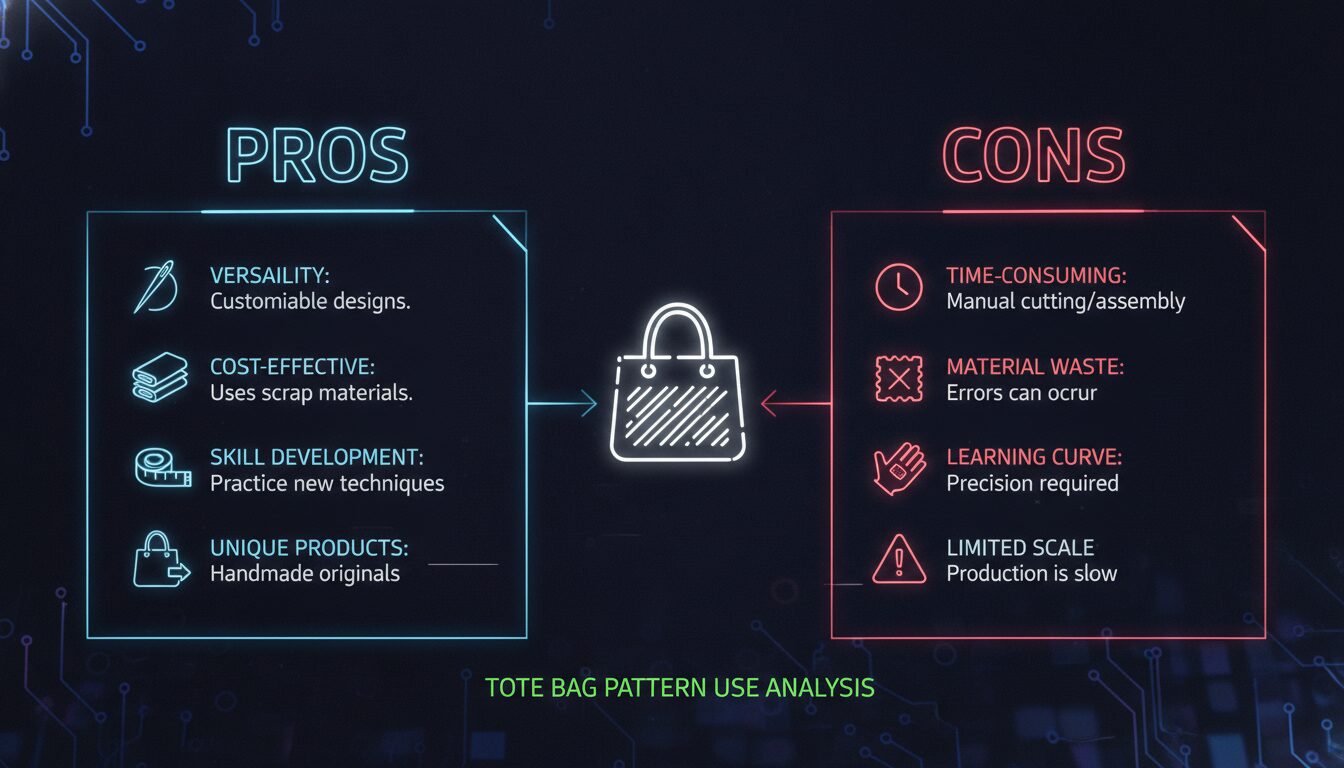
Pros
- Eliminates guesswork on sizing, seam allowances, and handle placement
- Free options are widely available – no cost barrier for beginners
- Paid designs often include video walkthroughs and professional-grade instructions
- PDF formats are instant, printable, and easy to resize or archive
- Tested patterns reduce fabric waste by getting proportions right the first time
Cons
- PDF patterns require printing and taping multiple sheets, which takes time
- Some designs assume you already own specific tools (rotary cutter, cutting mat, interfacing)
- Licensing restrictions may limit selling finished bags commercially
- Beginners can feel overwhelmed by patterns with many pieces or specialized notions
Types of Tote Bag Sewing Patterns
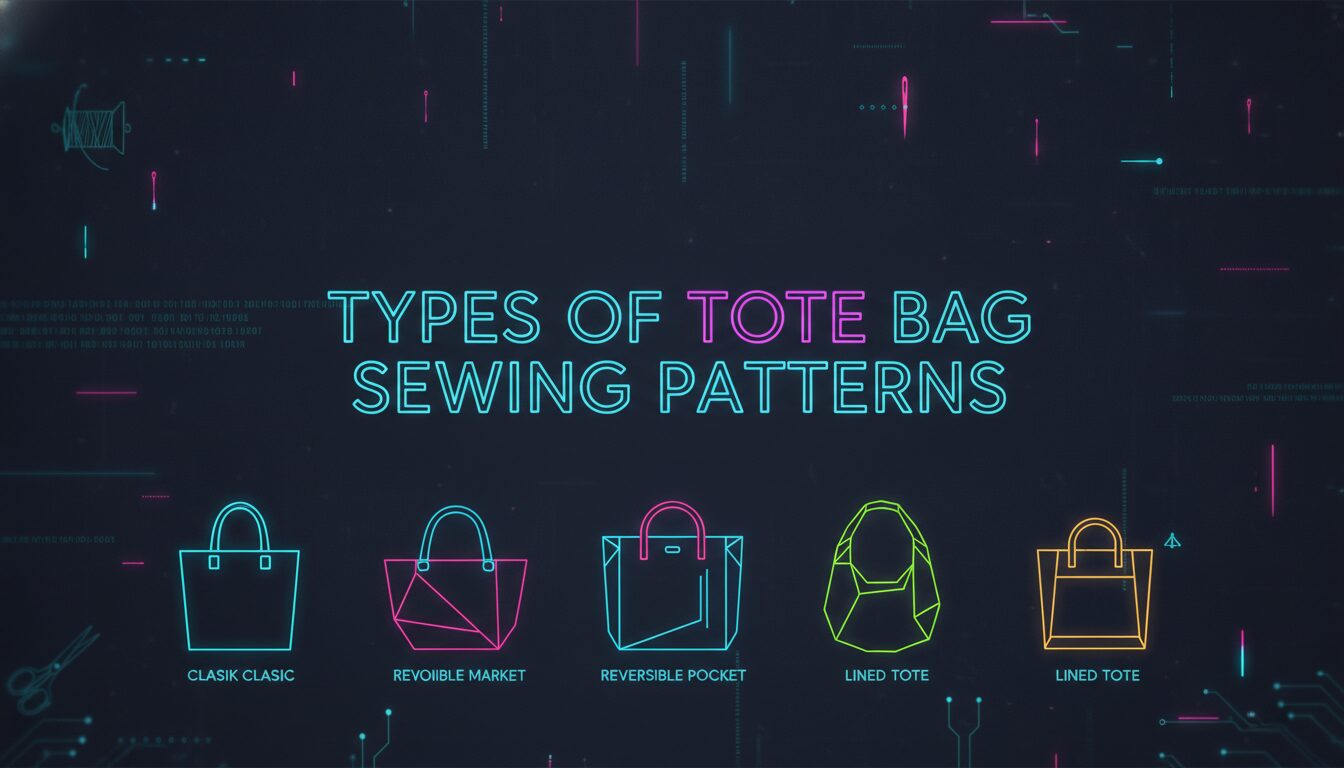
Sewing patterns for tote bags range from simple cut-and-sew guides to multi-piece designer styles. Understanding the categories helps you pick one that matches your skill set and project goals.
Free Tote Bag Patterns
Free designs are abundant online, offered by sewing blogs, fabric manufacturers, and community platforms. SewCanShe.com curates 17 free options you can sew in a day, including the popular One Yard Magic Hobo Bag and Easy Fold Over Messenger Bag. American Patchwork & Quilting offers 44 free bag designs, many of which are tote styles like the Market Fresh Tote and the Fish School Tote. These free resources typically require basic sewing supplies and come with printable templates.
Paid Tote Bag Patterns
Investing in a paid design often grants you more detailed instructions, video walkthroughs, and professional-grade construction guidance. The Medium this kind of pattern by Tamara’s Joy, for example, includes a video tutorial and costs $10. Etsy is a hotspot for unique downloadable designs from independent makers – a search reveals thousands of results, often featuring add-ons like zipper closures, multiple pockets, and convertible straps. Amazon lists over 1,000 results for “tote bags for sewing,” ranging from physical pattern envelopes to instant-download PDFs.
PDF vs. Paper Tote Bag Patterns
A PDF design is a digital file you download and print at home, typically on A4 or letter paper, then tape together. This format is instant and often cheaper than pre-printed paper versions. Paper patterns come ready to cut, printed on tissue paper. Both formats are widely available, and many PDF options also include a video tutorial link – making them especially beginner-friendly. When searching for a “bag pattern PDF free download,” you’ll find numerous options on sewing blogs and Pinterest boards.
Where to Find Free Tote Bag Patterns
Free designs are easier to find than ever, thanks to a generous community of makers. Below are the most reliable sources at no cost.
Sewing Blogs and Websites
Sewing bloggers regularly publish free designs as a way to build community and showcase techniques. SewCanShe offers a roundup of patterns that have been tested and photographed for clarity. The Folk Art Factory provides a “Perfect First Tote Bag” designed for absolute beginners, requiring only ½ yard of canvas and ½ yard of lining. AllPeopleQuilt compiles patterns from Quilting Magazine, each with clear photos and cutting charts. Instructables features an Easy Cloth Tote Bag that doesn’t even require a formal printed template – it’s all measured and cut with a ruler, making it a top choice for a no-fuss first project.
Video Tutorials on YouTube
Many sewists prefer a video-led approach. YouTube channels like Tamara’s Joy (Lined Tote Bag tutorial) and Sewing Tutorials by Fabric Designer Tara Reed (reversible canvas tote) offer free, in-depth walkthroughs. These videos often include an optional link to purchase a downloadable version for future reference. The visual guidance is especially helpful for tricky steps like attaching handles or creating a clean bag lining.
Pinterest and Community Boards
Pinterest is a visual search engine perfect for discovering new ideas. The Sew Modern Bags’ Tote Bag Sewing Patterns board curates thousands of pins linking to free and paid designs, organized by style and difficulty. You can quickly scan for something that matches your fabric stash or gift-giving deadline.
Popular Paid Tote Bag Patterns
Paid designs often deliver higher production value, size variety, and advanced features. Here are standout options worth the investment.
Tamara’s Joy Medium Tote Bag Pattern
This $10 design yields a finished bag of 14″ tall by 14″ wide with a 5″ depth. It includes a video tutorial, 6 pages of instructions, and teaches you how to add a perfect lining and front pocket. Fabric requirements are: 1 yard for the exterior, ½ yard each for two accent fabrics, plus 2½ yards of fusible interfacing and 3 yards of 1″ webbing for handles. The design is measure-and-cut rather than traditional printable templates, which many sewists find faster and more flexible.
Etsy’s Independent Designs
Etsy is where indie designers sell downloadable bag-making guides at prices typically ranging from $5 to $15. You’ll find everything from minimalist farmer’s market totes to designer-inspired sack bags, often including step-by-step photo guides. Many sellers offer a PDF that includes professional finish techniques like French seams and lined inner pockets.
Comparison Table of Popular Tote Bag Patterns
| Pattern Name | Source | Difficulty | Fabric Required | Features | Cost |
|---|---|---|---|---|---|
| Medium Tote Bag Pattern | Tamara’s Joy | Beginner/Intermediate | 2½ yds total | Lined, front pocket, video | $10 |
| One Yard Magic Hobo Bag | SewCanShe | Beginner | 1 yd | Unlined, fast sew | Free |
| Perfect First Tote Bag | The Folk Art Factory | Beginner | ½ yd canvas + ½ yd lining | Lined, pocket options, leather trim | Free |
| Easy Cloth Tote Bag | Instructables | Beginner | 1 yd canvas + contrast | Webbing handles, bias tape | Free |
| Market Fresh Tote | AllPeopleQuilt | Beginner | Fat quarters | Patchwork style | Free |
How to Choose the Right Tote Bag Pattern
Not every design suits every project. Assess your needs before downloading to avoid frustration mid-sew.
Skill Level and Complexity
If you’re new to sewing, choose something labeled “beginner” or “easy.” These designs minimize curved seams, zippers, and interfacing layers. The One Yard Magic Hobo Bag, for instance, uses just straight seams and no interfacing – a perfect first project. Intermediate options may introduce lining, darts, or external pockets, but still guide you carefully through each step.
Finished Size and Functionality
Consider what you’ll carry. A beach tote might call for 18″ x 18″ panels with a deep 6″ gusset, while a purse-sized version could be 10″ x 12″. Always check the finished dimensions before you start cutting. Some designs, like those from AllPeopleQuilt, include multiple size options within one download.
Fabric and Notion Requirements
Read the materials list carefully. Some designs assume you have fusible interfacing, webbing, or specific hardware on hand. A design that specifies “woven fusible interfacing” (like the Tamara’s Joy medium bag) will produce a stiffer result than one without. Ensure you have all supplies before cutting. A quick project requiring only cotton canvas and thread is ideal for stash-busting.
How to Make Your Own Tote Bag Pattern
Creating a custom template from scratch is simpler than you think, and it guarantees a one-of-a-kind result. Here’s how to draft a basic design.
Step 1: Decide on Finished Size
For a medium everyday bag, aim for 14″ wide x 15″ tall with a 4″ boxed bottom. These proportions fit most everyday carry needs without feeling oversized.
Step 2: Draw Your Body Rectangle
On paper, draw a rectangle where width = finished width + 2 × depth + seam allowance. For example: 14″ + 2×4″ + 1″ = 23″. Height = finished height + depth + 1″, so 15″ + 4″ + 1″ = 20″.
Step 3: Draft Handle Pieces
Handles typically run 22″–28″ per strap, 2″–3″ wide, plus seam allowances. Cut two identical pieces for symmetry.
Step 4: Create Lining and Pocket Pieces
Lining panels match the body dimensions exactly. Add pocket rectangles in any size you need – a simple slip pocket works beautifully for most everyday bags.
Step 5: Mark Fold Lines and Grainlines
Mark fold lines and grainline arrows clearly on every piece. This DIY template can be saved as a multi-size master and adjusted for depth, strap length, or pocket configuration with any fabric.
Adjusting an Existing Design
Many sewists start with a free option and tweak it. You can widen the Tamara’s Joy medium design by a few inches, or add a zipper closure by inserting a zipper panel between lining and exterior. Always test modifications on muslin first before cutting into your good fabric.
“Cutting and applying interfacing can take up much of your bag-making time. That’s why the fastest bags to make have no interfacing and almost no cutting.” – Caroline Fairbanks, SewCanShe
Tips for Pattern Customization
- Use ½” seam allowance for most woven fabrics; reduce for thick fabrics.
- Transfer markings clearly onto fabric with tailor’s chalk.
- Photocopy or scan PDF designs so you don’t cut the original.
- Write notes directly on the pieces for future reference.
Step-by-Step: Sewing a Tote Bag Using a Pattern
Here is a general process you’ll follow with most designs. Adjust specifics per your chosen instructions.
Tools and Materials You’ll Need
Gather your chosen design, fabric (as specified), matching thread, sewing machine, scissors, pins, iron, and any required hardware. A rotary cutter and mat make cutting faster and more accurate, especially for a measure-and-cut design like Tamara’s Joy.
Cutting Out Pattern Pieces
- Prewash and press your fabric to prevent shrinkage later.
- Follow the layout guide: place pieces on the fabric, aligning grainlines.
- Pin or weigh down the pieces, then cut carefully.
- If using interfacing, fuse it to the corresponding pieces now.
- Transfer any pocket placements or handle marks onto the fabric with chalk.
Sewing the Body and Handles
- Pockets first: fold, press, and topstitch the pocket hem, then stitch it to the lining or exterior as indicated.
- Assemble the exterior: place exterior panels right sides together, sew side and bottom seams. Box the bottom corners by pulling apart the side and bottom seams to form a triangle, then stitch across at the depth mark (e.g., 2″ in from the point). Trim excess.
- Assemble the lining: repeat the same steps for the lining, leaving a turning gap in one side seam.
- Attach handles: position straps on the exterior, raw edges aligned, and baste in place.
- Join lining and exterior: with right sides together, sew around the top edge, then turn the bag right side out through the lining gap. Press well.
- Finish: topstitch around the top edge to close the turning gap and give a crisp finish.
This sequence is common across many free designs, including those on Instructables and The Folk Art Factory. Always refer to your specific instructions for exact steps.
Understanding Fabric and Notion Requirements
Fabric choice can make or break your project. Your chosen design will specify recommended materials, but here’s how to interpret them confidently.
Choosing the Right Fabric Weight
Most bag-making designs call for medium- to heavy-weight fabrics like cotton canvas (duck cloth), denim, or home-dec fabrics. A lightweight quilting cotton will likely require interfacing for structure. According to the Easy Cloth Tote Bag guide on Instructables, 100% cotton duck canvas is an ideal starter fabric. If your design is unlined (like the Canvas Book Bag on SewCanShe), choose a fabric that looks good on both sides.
Interfacing and Stabilizers
Interfacing adds stiffness and helps your finished bag hold its shape. Many designs, like the Medium Tote from Tamara’s Joy, ask for “woven fusible interfacing.” Some use foam stabilizers (Style-vil) for a puffy, protective effect. Check whether your design specifies fusible or sew-in interfacing – fusible is easier for beginners and produces a clean, consistent result.
Handles, Closures, and Hardware
Handle options are diverse: cotton webbing (most common), fabric straps, leather strips, or rope. The Instructables tote uses 3 yards of 1¼” cotton webbing. Some designs include snap or magnetic closures, which you can omit or add based on preference. Always confirm the hardware size matches your strap width – a 1″ wide strap needs 1″ wide webbing or D-rings.
“The construction is so simple that there is no pattern required and it can easily be customized by just changing the fabric or altering the size or pocket design.” – MikaelaHolmes, Instructables
Adding Zippers and Advanced Features
Once you’re comfortable with a basic design, adding a zipper closure is the most popular upgrade. Insert a zipper panel between the lining and exterior at the top edge, or add a zippered exterior pocket by stitching a zip between two pocket fabric layers before attaching the pocket to the bag body. Stylists who teach bag-making recommend practicing on a scrap pouch first – zippers become intuitive quickly. Convertible designs that transform from tote to backpack (like the Trailblazer Convertible Backpack pattern featured on Sew Modern Bags’ Pinterest board) are a popular next step once you’ve mastered the basics.
Selling Bags Made from Tote Bag Patterns
Selling finished bags is a natural next step for many makers. Many designers allow small-scale handmade sales – Tamara’s Joy, for example, permits selling items made from her design as long as you credit Tamara’s Joy Sewing Patterns in your written description. Always read the license before listing anything on Etsy or at a craft fair. Commercial patterns may restrict mass production, so the fine print matters. According to the Sew Modern Bags community on Pinterest, choosing the right design is one of the biggest factors in success at craft fairs and online stores.
Tips for Sewing Your First Tote Bag Pattern
Ready to start? These tips from experienced makers will smooth the process from cutting table to finished bag.
Start with Simple Designs
Select something with no more than 5 pattern pieces and minimal notions. The One Yard Magic Hobo Bag or the Easy Cloth Tote Bag are excellent starters. They use a single main fabric and have forgiving construction – ideal for building confidence.
Test Your Fabric and Machine
Before cutting into your final fabric, sew a few test seams on scraps. Adjust thread tension and needle size for the fabric weight. Many bag-making experts recommend a size 14/90 or 16/100 needle for canvas.
Finishing Touches for a Professional Look
- Press every seam as you sew – it makes a significant difference in the final shape.
- Use a coordinating topstitching thread and a longer stitch length (3–3.5 mm) for a polished finish.
- When using a PDF design, ensure your printer is set to 100% scale and measure the test square to confirm accuracy.
- If your design includes a lining, press the bag well before topstitching to achieve crisp edges.
Find Your Perfect Tote Bag Pattern
With countless free and paid options available, there’s a design out there for every style, skill level, and fabric stash. Whether you download an instant PDF from Etsy, follow a step-by-step video from Tamara’s Joy, or draft your own custom template, the process is genuinely rewarding. Take the time to match your chosen design to the fabrics you love and the purpose you intend – from market trips to beach days. Start simple, and soon you’ll be sewing lined beauties with pockets, zippers, and closures that look like they came from a boutique.
Shop the collection at lexazi.com – free shipping on orders over $75.
Frequently Asked Questions
How to make a pattern for a tote bag?
To draft your own tote bag pattern, decide the width, height, and depth you want, then add seam allowances (typically ½”) and draw rectangular pieces for the body, handles, and any pockets. Many sewists measure an existing bag they love as a starting guide. Transfer all pieces to paper or card stock, mark grainlines, and you’re ready to cut.
How much fabric do I need to make a tote bag?
Fabric requirements vary by design. A small unlined bag might need only ½ yard, while a lined, pocketed design like the Tamara’s Joy medium tote uses up to 2½ yards total across exterior, accent, and lining fabrics. Always check the specific supply list before you shop.
Where can I find free tote bag patterns?
Free designs are available on sewing blogs (SewCanShe, The Folk Art Factory), quilting sites (AllPeopleQuilt), video platforms (YouTube), and community boards (Pinterest). These resources often come with step-by-step photos or video tutorials to guide you through every step.
What is the best tote bag pattern for beginners?
The best beginner option uses straight seams, minimal pieces, and no interfacing. Designs like the One Yard Magic Hobo Bag, the Instructables Easy Cloth Tote, or The Folk Art Factory’s Perfect First Tote Bag are all excellent choices that experienced makers recommend for first-timers.
Can I sell bags made from tote bag patterns?
Many designers allow small-scale handmade sales, but always check the license first. Tamara’s Joy, for example, permits selling items made from her design if you credit Tamara’s Joy Sewing Patterns in your listing description. Some commercial patterns restrict mass production, so reading the fine print before you list is essential.