A squash blossom necklace is a Native American jewelry piece built from three signature elements: round silver beads, flared petal-like blossom beads, and a crescent pendant called a naja. Picture it draped over a cream linen caftan at a Capri beach club, the silver catching afternoon light while turquoise stones hold every shade of the Aegean.
Key Takeaways
- Definition: A blossom necklace features round silver beads, flared blossom beads, and a naja pendant, first crafted by Navajo silversmiths in the late 1870s.
- Authenticity: Look for sterling silver (92.5% purity), natural turquoise, artist hallmarks, and a substantial handmade feel weighing 150–250 grams.
- 2026 Trend: Fashion editors and resort travelers are pairing these statement pieces with linen, silk caftans, and wide-leg trousers for a collected, artisanal look.
- Investment: Prices range from $500 to over $15,000; vintage pieces, especially old pawn, carry the strongest long-term value.
- Ethical Sourcing: Buying from reputable galleries like Toh-Atin or Garland’s ensures your purchase directly supports Indigenous artisans.
- Care: Use a soft silver cloth, store flat, and have the piece re-strung by a professional every 3–5 years.
What Is a Squash Blossom Necklace?
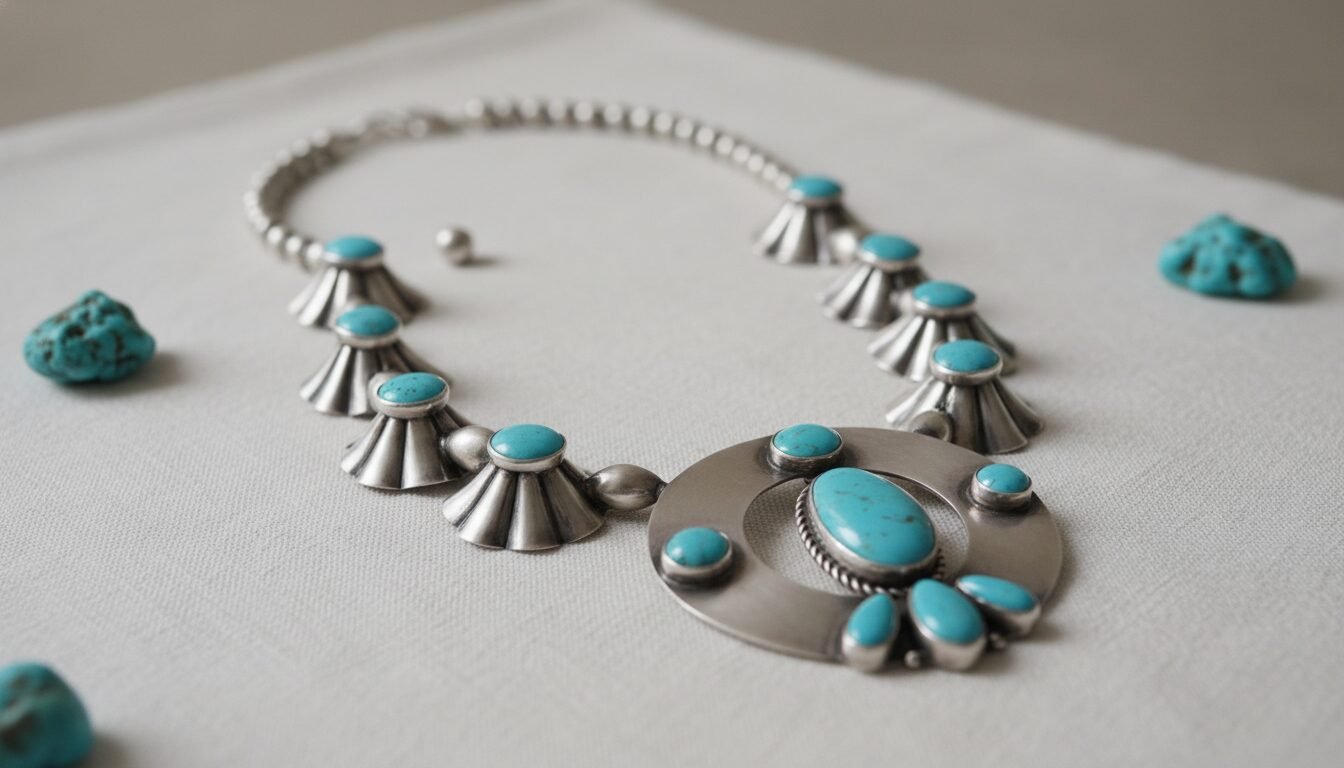
A this type of necklace is a distinctive type of Native American jewelry composed of three main elements: round silver beads, flared beads resembling blossoming flowers, and a central crescent-shaped pendant called a naja. First crafted by Navajo silversmiths in the late 1870s, it is now an iconic symbol of Southwestern artistry and one of the most recognizable jewelry forms in the world.
The Distinctive Components
Every authentic piece follows a recognizable structure. The strand features a string of handmade sterling silver beads, each worked from coin silver or sheet silver. Interspersed among these are the signature blossom beads: hollow, petal-like forms that flare outward at one end. According to Garland’s, these beads truly mirror the bloom of a flowering squash plant, a staple crop of the Southwest. Run your fingers along a genuine strand and you feel the slight irregularities that only a silversmith’s hands can produce.
The Naja Pendant’s Symbolism
Hanging at the center, the naja is a heavy, crescent-shaped pendant that originally derived from Moorish horse bridle ornaments brought to the Americas by the Spanish. Over time, it became a talismanic symbol of protection and prosperity among the Navajo and neighboring tribes. Today, artisans embellish the naja with turquoise, coral, or intricate stamp work, making each one a small sculpture in its own right.
The History and Cultural Significance of the Design
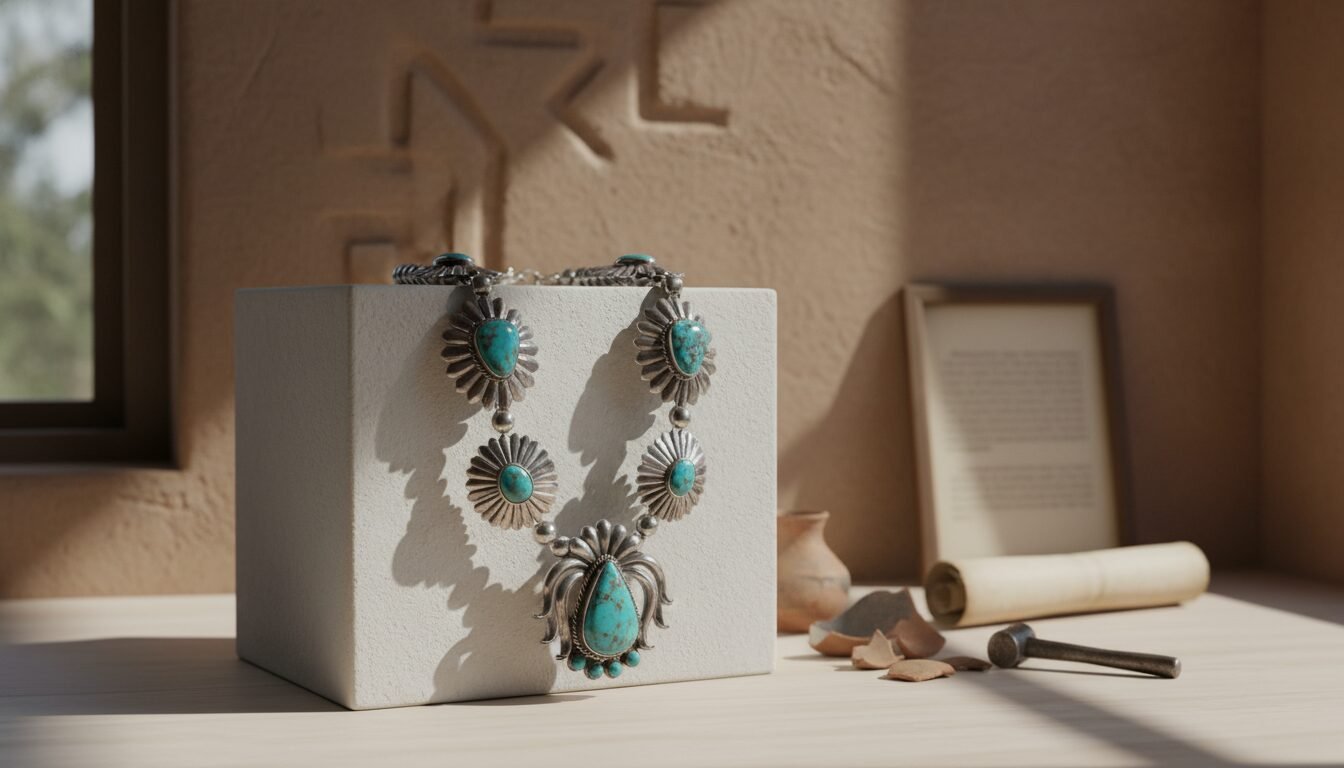
The this kind of necklace traces its origins to the Navajo (Diné) people, who began creating these pieces around 1880 after learning silversmithing from Spanish Mexican artisans. Understanding that history makes wearing one feel like more than a style choice.
Origins with the Navajo
Scholars generally credit the Navajo with creating the first squash blossoms around 1880, shortly after they learned silversmithing from Spanish Mexican craftspeople. As Navajo silversmiths melted down silver coins to form beads and pendants, the necklace became a wearable expression of prosperity. A 2018 article in National Jeweler notes that early photographs show Navajo people wearing these necklaces with pride, underscoring their deep cultural value. From the very beginning, this was jewelry that meant something.
Adoption by Other Tribes
By the early 1900s, neighboring groups including the Zuni, Hopi, and Santo Domingo Pueblo had embraced the design, each adding their own stylistic signatures. Zuni artists often inlaid small turquoise stones in intricate needlepoint or petit point patterns along the blossom beads. Hopi silversmiths applied their distinctive overlay technique to the naja, creating graphic, two-dimensional designs that feel almost architectural. The result is a family of related pieces, each with its own tribal voice.
From Wearable Wealth to Art Form
Originally, these necklaces functioned as portable wealth. Silver and turquoise could be traded in times of need, making the necklace a kind of wearable savings account. Over the decades, they evolved into prized art objects. Today, a vintage blossom necklace from the 1920s or 1930s can fetch thousands at auction, and institutions like the Heard Museum in Phoenix hold exemplary pieces in their permanent collections, a testament to how far this jewelry has traveled from the trading post to the gallery wall.
“The this type of necklace was created in the late 1870s or early 1880s after the native people made contact with Spanish Mexicans,” said Lois Sherr Dubin, author of North American Indian Jewelry and Adornment, in an interview with National Jeweler.
How to Verify an Authentic Squash Blossom Necklace
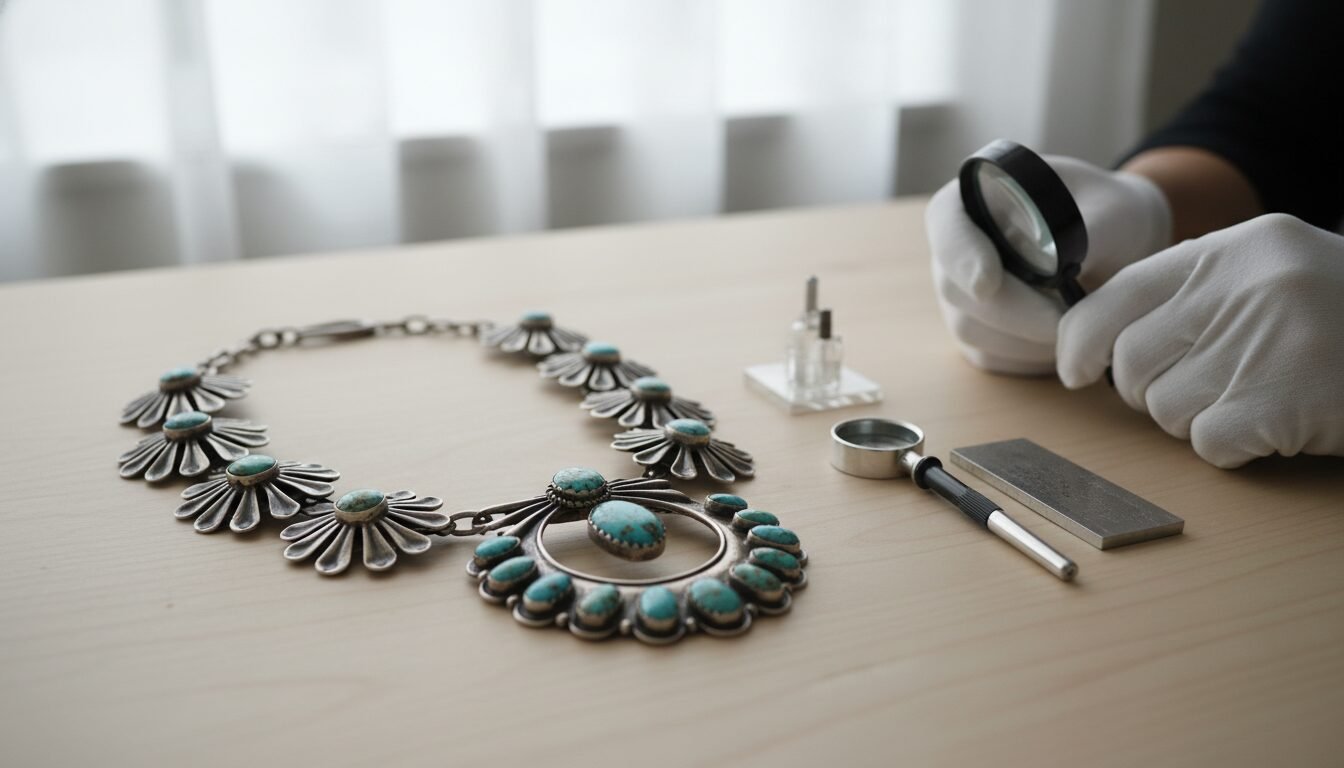
Verifying an authentic this kind of necklace comes down to four checkpoints: silver quality, stone integrity, hallmarks, and physical weight. Get all four right and you have the real thing.
Hallmarks and Maker’s Markings
Genuine Native American-made pieces usually bear a hallmark: a stamp indicating the artist’s name, clan symbol, or workshop initials. Some early necklaces (pre-1930s) may lack marks, but most from the mid-20th century onward include them. When shopping, look for “Sterling” or “925” stamps as a baseline silver purity indicator. The absence of any mark on a piece claiming to be post-1940 is a red flag worth investigating.
Stone Quality and Setting Techniques
Authentic pieces use natural turquoise, coral, lapis lazuli, or other semi-precious stones, never plastic or dyed howlite imitations. In Zuni work, stones are often cut into tiny geometric shapes and set in precise bezels with no glue residue visible. According to National Jeweler, renowned Zuni artist Leekya Deyuse created squash blossoms featuring turquoise frog fetish carvings around 1939, demonstrating the extraordinary detail found in genuine work. That level of craft simply cannot be faked at a mass-production price point.
Silver Purity and Patina
Most authentic necklaces are made from sterling silver (92.5% silver), which naturally develops a soft, darkened patina over time. This oxidation enhances the piece’s character rather than diminishing it. A bright, perfectly uniform silver surface can signal a modern replica or a heavily polished original. Run your fingers over the beads: authentic handmade beads show slight irregularities, while machine-made copies are perfectly uniform in a way that feels almost too neat.
| Feature | Authentic squash blossom | Replica/Fake |
|---|---|---|
| Silver | Sterling silver (925), often with patina | Silver-plated, nickel, or low-grade alloy; no natural oxidation |
| Beads | Hand-fabricated; slight irregularities in shape | Machine-stamped; perfectly identical beads |
| Stones | Natural turquoise, coral, lapis; variations in color | Dyed howlite, plastic, or resin; overly uniform color |
| Hallmarks | Artist’s stamp, “Sterling”, sometimes clan or tribe marks | Missing or generic “silver” stamps without artist info |
| Weight | Substantial; a full-size necklace often weighs 150–250 grams | Light and hollow feeling |
| Price | $500–$15,000+, depending on age, artist, and materials | $50–$200 for mass-produced imports |
Pro Tip: Always ask the seller for a written guarantee of authenticity and details about the artist or tribe of origin.
Turquoise Mines and Why the Stone Source Matters
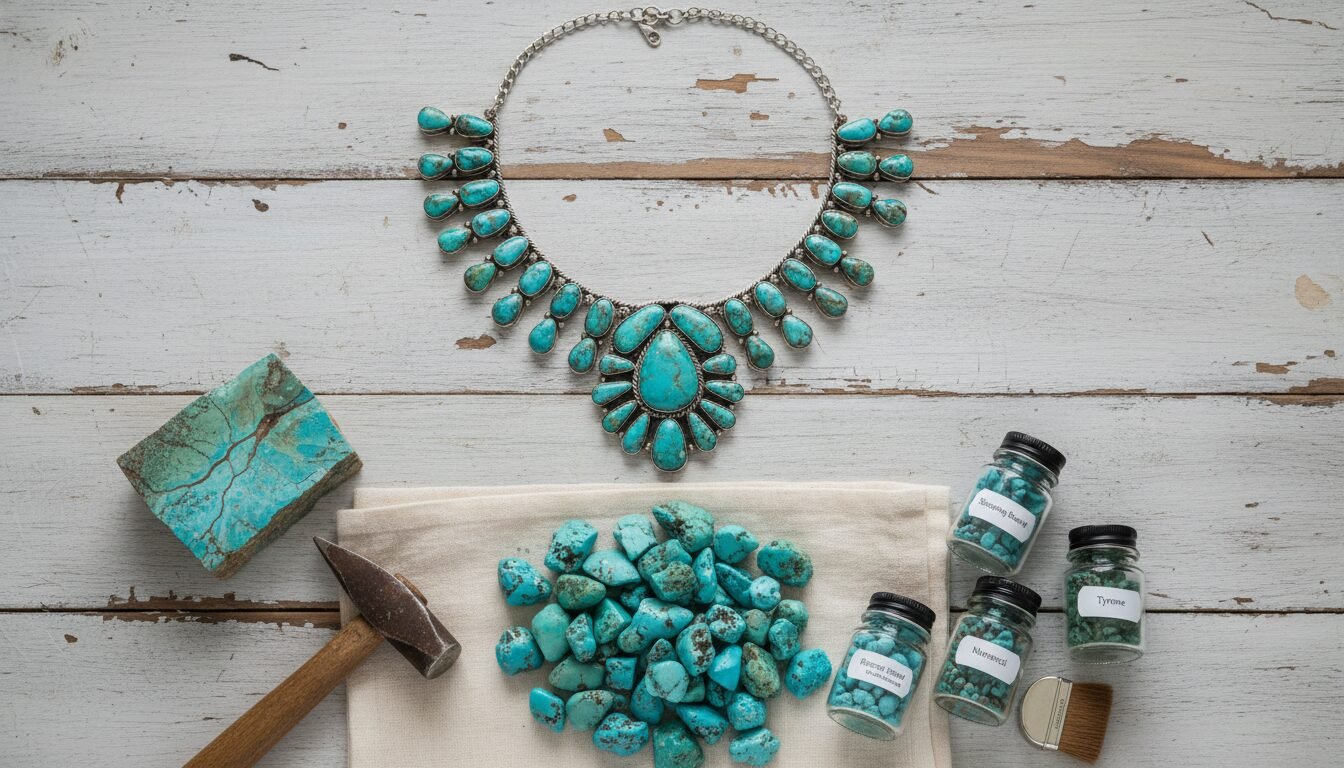
The turquoise in a blossom necklace is not interchangeable. Where the stone was mined shapes its color, hardness, and long-term value in ways that serious collectors track closely.
Sleeping Beauty vs. Kingman Turquoise
Sleeping Beauty turquoise, mined in Globe, Arizona, is prized for its pure, sky-blue color with minimal matrix. The mine closed in 2012, making existing stones increasingly rare and valuable. Kingman turquoise, from the Mineral Park Mine in northwestern Arizona, tends toward a brighter blue-green with a distinctive spiderweb matrix pattern. Both are considered high-quality American stones and appear frequently in vintage this type of necklaces from the mid-20th century.
Bisbee and Other Storied Sources
Bisbee turquoise, from the Lavender Pit copper mine in Bisbee, Arizona, is among the most coveted of all. Its deep blue color with a chocolate-brown matrix is immediately recognizable to experienced collectors. The mine is now closed, so Bisbee stones command a significant premium. A this kind of necklace set with verified Bisbee turquoise can fetch prices at the higher end of the $3,000–$15,000+ range, sometimes well beyond it. When a seller specifies the mine source, that detail is worth verifying with a gemologist.
Squash Blossom Necklaces in 2026 Resort Fashion
The squash blossom is one of the standout accessories of resort season 2026, moving well beyond Southwestern boutiques and into the wardrobes of style-conscious travelers from Tulum to Santorini.
Pairing with Linen and Silk: A Mediterranean Edit
Fashion-forward travelers are styling these substantial silver pieces with breezy linen tunics, silk caftans, and wide-leg trousers for a look that bridges Santa Fe artisanal heritage with the easy calm of Capri or Mykonos. The contrast between rustic silver and fluid resort fabrics creates a curated, collected aesthetic that feels both personal and timeless. As of June 2026, trend reports from Vogue and Elle both highlight statement jewelry as the defining accessory category of the resort season, and the blossom necklace fits that brief perfectly.
Day-to-Night Transition with One Necklace
A single statement piece can anchor a day look over a white cotton sundress, then carry you through to evening with a black maxi and heeled sandals. Its weight and luster instantly elevate simple resortwear, removing the need for multiple jewelry changes. For a lighter touch, a mini this type of necklace, a scaled-down version with smaller beads and fewer blossom elements, offers a more casual alternative that layers beautifully with longer chains.
Wedding and Formalwear Styling
Beyond resort dressing, the this kind of necklace has found a place in bridal and formalwear. Bohemian brides are choosing vintage pieces over traditional pearl strands, pairing them with flowing silk or linen wedding dresses for a ceremony that feels personal rather than prescribed. For black-tie events, a large naja set with deep blue Bisbee turquoise against a simple column gown creates the kind of statement that needs nothing else. Stylists recommend keeping the rest of the jewelry minimal: let the necklace speak.
Celebrity and Influencer Inspirations
Social media feeds this season are full of images showing vintage squash blossoms layered over open-back linen dresses or worn as the sole accessory with a sleek one-piece swimsuit at Amalfi Coast beach clubs. The necklace’s cultural story and artisanal weight add depth to any outfit, making it a favorite among those who value craft over fast fashion. It photographs beautifully, too: the silver catches light in a way that synthetic jewelry simply cannot replicate.
Pros and Cons of Owning a Squash Blossom Necklace
Owning a blossom necklace offers genuine rewards, but it also comes with responsibilities worth understanding before you buy.
Pros
- Investment potential: Vintage pieces, particularly old pawn examples with natural turquoise, have consistently appreciated in value over decades.
- Versatility: One statement necklace works across resort, casual, and formal looks, from beach clubs to wedding ceremonies.
- Artisanal quality: Each piece is handmade, meaning no two are identical. You own something genuinely one-of-a-kind.
- Cultural depth: The history behind the design adds meaning that mass-produced jewelry cannot offer.
- Durability: Sterling silver and natural stone, properly cared for, last generations.
Cons
- Price barrier: Authentic pieces start at $500 and can exceed $15,000, making entry-level investment significant.
- Weight: A full-size necklace weighing 150–250 grams can feel substantial during long wear.
- Counterfeit risk: The market has a high volume of fakes, requiring careful vetting of sellers and pieces.
- Care demands: Natural turquoise and sterling silver require specific cleaning and storage practices to maintain condition.
- Cultural sensitivity: Wearing a piece with deep Indigenous significance calls for awareness and respect for its origins.
Sustainability and Ethical Sourcing in Native American Jewelry
Ethical sourcing is the foundation of responsible this type of necklace ownership. Buying from the right seller is as important as the piece itself.
Why Ethical Sourcing Matters
Buying a squash blossom necklace means supporting traditional Native American artisans and their communities. Many pieces are made in small workshops on reservations in Arizona, New Mexico, and Utah, often with materials mined in the United States. The market has been flooded with imported fakes that undermine authentic craftsmanship and deprive Indigenous artists of income. Seeking out reputable dealers like Toh-Atin Gallery or Garland’s ensures your purchase directly benefits the people whose culture created this art form.
Recognizing Fair Trade and Authentic Labels
Look for sellers who provide artist biographies, tribal affiliation, and transparent sourcing. Some galleries participate in the Indian Arts and Crafts Act, which legally protects buyers from misrepresented goods. Choosing a genuine piece means investing in living culture rather than a disposable trend, and that distinction matters more in 2026 than ever before.
Caring for a Heritage Piece
Ethical ownership also means caring for the necklace responsibly. Avoid harsh chemical dips that strip patina, and consider passing the piece down as a family heirloom. Vintage squash blossom necklaces, especially old pawn examples, carry layers of history that deserve preservation rather than neglect.
“When you buy directly from a Native American artist or a gallery that represents them transparently, you’re participating in the continuation of a living art tradition,” notes the Indian Arts and Crafts Association, which has advocated for authentic Indigenous craftsmanship since 1974.
Caring for Your Squash Blossom Necklace
Caring for a squash blossom necklace properly preserves both its beauty and its value. Follow these five steps and your piece will last generations.
Cleaning and Polishing Silver
To clean your necklace properly, follow these steps:
Storing to Prevent Damage
Store your piece flat in a lined jewelry box or cloth pouch, away from direct sunlight and humidity. Never hang it by the naja, as the weight can strain the stringing material over time. If the necklace is strung on leather or cord, inspect it annually for signs of wear. Many serious collectors have their pieces re-strung by a professional every 3–5 years, a small investment that protects a much larger one.
When to Seek Professional Restoration
If a stone is loose, a bead is dented, or the silver has developed deep cracks, take the necklace to a jeweler experienced in Native American pieces. Restoration should be minimal to preserve the original character. An expert can also assess whether the piece qualifies as old pawn, a designation that affects both its story and its market value.
Investment Value of Squash Blossom Necklaces
A squash blossom necklace can be a genuine investment, particularly when you understand which factors drive long-term value.
Vintage vs. Contemporary: Which Holds Value?
Vintage pieces from the early-to-mid 20th century, particularly those set with natural turquoise from now-depleted mines like Bisbee or Sleeping Beauty, have consistently appreciated over time. A 1920s piece in good condition can sell for $3,000 to $5,000 or more, while contemporary works by master artisans command similar prices for exceptional craftsmanship. According to gallery data from Toh-Atin, they typically hold 50 to 70 pieces in stock at any given time, reflecting steady collector demand that shows no sign of softening.
Factors That Increase Resale Price
Several factors influence value: the reputation of the artist, the quality and rarity of the stones, the complexity of the beadwork, and the condition of the silver. Provenance elevates a piece further. Necklaces with documented old pawn history or those featured in museum exhibitions often fetch premiums above standard market rates. Always retain receipts and any appraisals to support future resale, and photograph the piece from multiple angles when you first acquire it.
Old Pawn Jewelry Explained
“Old pawn” refers to jewelry pawned at trading posts on the Navajo reservation, typically in the early to mid-1900s. These pieces were often well-loved daily-wear items rather than tourist souvenirs, and they carry a beautiful, earned patina. Because pawn was a form of collateral, old pawn pieces represent authentic Indigenous life rather than objects made for outside consumption. Old pawn squash blossom necklaces are highly sought after by serious collectors for exactly that historical integrity, and prices reflect it.
Frequently Asked Questions
What makes a squash blossom necklace authentic?
Authenticity hinges on three factors: sterling silver construction (92.5% purity), natural stones such as turquoise or coral, and handmade beads with slight irregularities. Look for hallmarks from known Navajo or Zuni artists and a substantial weight of 150–250 grams. Reputable dealers provide written certificates of authenticity and artist details.
How much does a real squash blossom necklace cost?
Prices range widely depending on age, artist, and materials. A simple contemporary piece might start at $500, while an elaborate vintage necklace with rare Bisbee or Sleeping Beauty turquoise can exceed $15,000. Weight, stone quality, and artist reputation are the primary price drivers.
Can men wear squash blossom necklaces?
Absolutely. Historically, both men and women in Native communities wore these necklaces as expressions of wealth and identity. In 2026’s fashion landscape, they are a unisex statement piece seen on men at music festivals, gallery openings, and as part of layered, artisanal looks.
How do I know if my squash blossom necklace is old?
Examine the patina: authentic age produces a warm, uneven darkening in the silver’s crevices. Check the clasp style, as early pieces often use a simple hook rather than a box clasp. If possible, consult a specialist who can assess construction techniques such as hand-filed beads or sandcasting marks on the naja.
What is a mini squash blossom necklace?
A mini squash blossom necklace is a scaled-down version featuring smaller beads, fewer blossom elements, and a more delicate naja. It typically runs shorter in length, making it ideal for everyday wear or layering with longer chains. The style became widely popular in 2025 and carries forward strongly into 2026 resort collections.
Are squash blossom necklaces still in style for 2026?
Yes, they are experiencing a significant revival. As of mid-2026, they appear in fashion editorials styled for Amalfi Coast, Tulum, and Santorini settings. Their artisanal quality and cultural story align perfectly with the broader slow-fashion movement that is shaping resort dressing this season.
Final Thoughts
Whether you’re drawn to its storied past or its modern versatility, a squash blossom necklace is more than an accessory. It’s a piece of living history, a wearable connection to centuries of Indigenous craft, and one of the most striking things you can put on before a sunset dinner in Positano or a morning stroll through a Tulum market. Learn to identify authentic craftsmanship, style it with 2026’s relaxed resort silhouettes, and you honor its heritage while making it entirely your own.
Shop the collection at lexazi.com – free shipping on orders over $75.