Key Takeaways
- A red string bracelet is a talisman worn on the left wrist to deflect the evil eye and attract luck, love, or protection.
- Its roots span Jewish Kabbalah, Hinduism, and Chinese folklore, each adding layers of symbolism.
- Materials range from traditional wool to silk, nylon, and precious metal chains, affecting durability and price.
- Properly tying it with 7 knots by a loved one enhances its spiritual intention.
- Prices vary widely: from under $10 for wool sets to over $400 for gold-accented pieces.
A red string bracelet is a slim cord worn on the left wrist to ward off the evil eye and attract good fortune. It combines ancient Jewish mysticism with global fashion, available in wool, silk, nylon, or gold chains.
“The string bracelets these women are hawking are part of a whole genre of folk traditions having to do with ayin hara, or the evil eye.” – My Jewish Learning
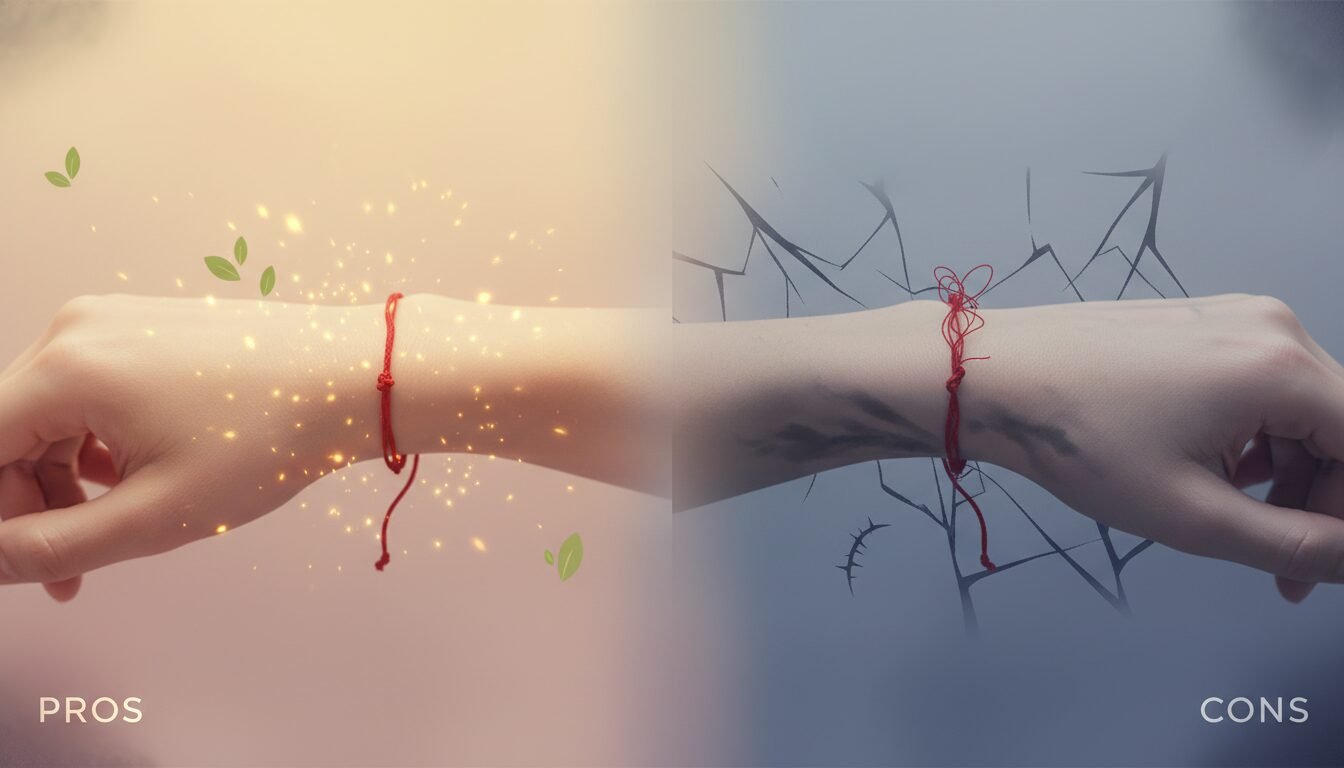
Pros and Cons of Wearing a Red String Bracelet
Pros
- Rich cross-cultural symbolism spanning thousands of years of tradition
- Accessible price points: basic wool sets start under $10, making the tradition open to everyone
- Wide material variety: wool, silk, wax nylon, and 14K gold to suit every lifestyle
- Doubles as a meaningful fashion accessory that pairs with resort, casual, and fine jewelry looks
- Makes a thoughtful, intentional gift for a loved one
Cons
- Wool and silk versions fray quickly: expect to replace them every 3-4 weeks with daily wear
- Spiritual significance can be misunderstood or stripped away by purely trend-driven purchasing
- Quality varies enormously across the 6,000+ Amazon listings: not all are made with care
- Fine gold versions ($115-$480) require a real investment for what is essentially a cord bracelet
Ancient Origins: Where Did the Red String Tradition Begin?
Biblical Roots and Kabbalistic Practice
The earliest recorded use of a red string appears in Genesis 38:28, where a midwife ties a scarlet thread around a newborn’s wrist to mark the first twin. In Hebrew, this is called khutt hashani. According to My Jewish Learning, the tradition evolved into a folk amulet against ayin hara (the evil eye) within Jewish mysticism. While not mandated in Torah or Halacha, the custom gained traction in the 1490s when Rabbi Abraham Saba encouraged Jews forbidden from wearing tefillin to tie a red string on their hands as a reminder of the commandment. The left wrist is specifically chosen because it is considered the body’s receptive side.
Cross-Cultural Adoption: Hinduism, Buddhism, and Chinese Traditions
The this type of bracelet is not unique to Judaism. In Hindu ceremonies, a kalava or mauli thread is tied for blessing and protection during puja rituals, typically by a priest who wraps it around the right wrist for men and the left for women. Chinese culture associates red with luck and uses red strings in feng shui bracelets to attract prosperity. Wikipedia notes that the practice appears across Hinduism and Chinese folk religion, worn for luck, love, and warding off evil. Brands like Buddha Stones draw on Tibetan Buddhism and feng shui, offering this kind of bracelets with mantras and symbolic beads that blend spiritual purpose with everyday style.
The Global Journey of the Red String

How Madonna and Celebrities Sparked a Frenzy
In the late 1990s, the red string vaulted into pop culture largely through Madonna and other celebrities exploring Kabbalah. Wikipedia lists Leonardo DiCaprio, Michael Jackson, Ariana Grande, and Tucker Carlson among those photographed wearing the scarlet thread. This celebrity halo, linked to Philip Berg’s Kabbalah Centre, transformed the bracelet from a niche religious token into a worldwide fashion statement. By 2006, editors of Changing Fashion documented a surge in red string sales directly tied to Madonna’s influence.
From Jerusalem’s Old City to Online Markets
Today, elderly women still sell scarlet thread to pilgrims at Jerusalem’s Western Wall, but the string bracelet has found a massive digital shelf. A single Amazon search yields over 6,000 results: from simple wool cords at $6.99 to elaborate gold designs approaching $500. This accessibility opens the tradition to anyone who wants to adopt the this type of bracelet as a personal talisman, regardless of faith or background.
What Does a Red String Bracelet Symbolize?
Protection from the Evil Eye
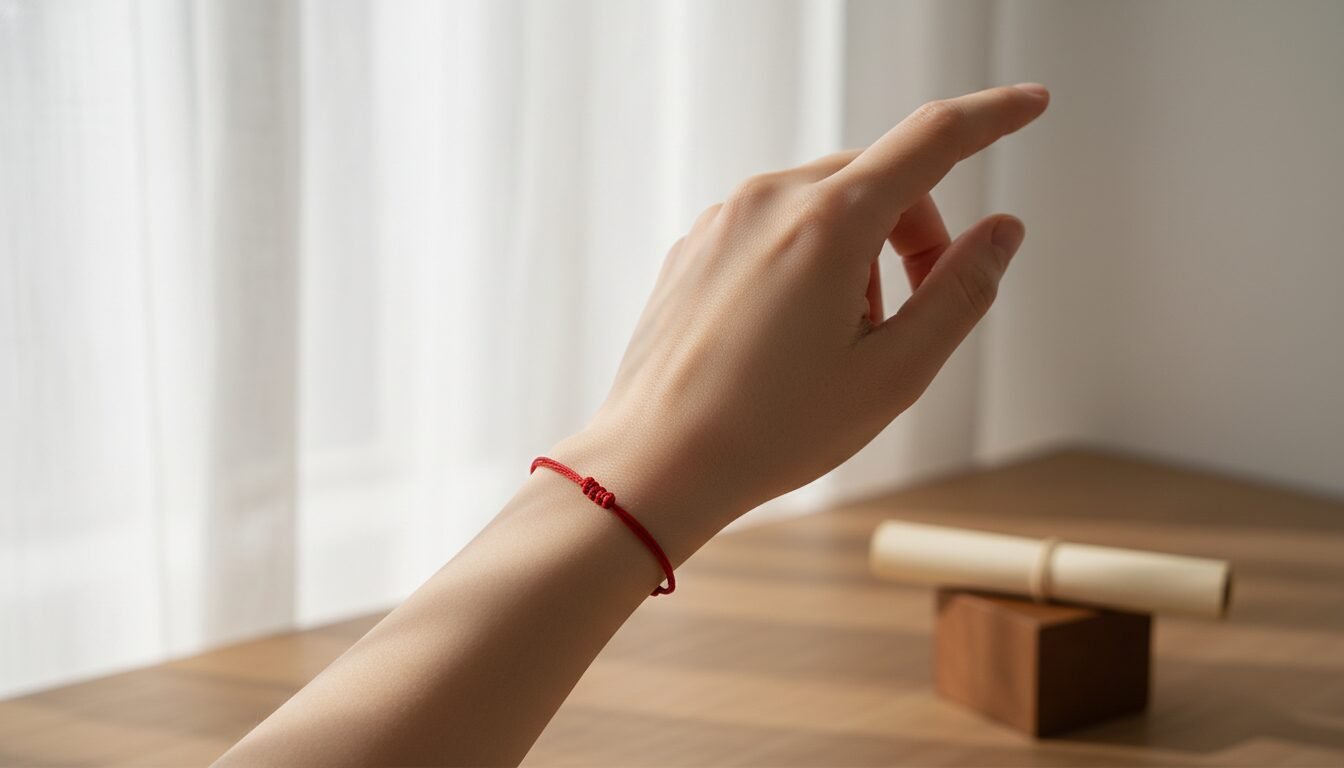
The primary purpose of a this kind of bracelet is shielding against the evil eye, a malevolent glare believed to bring misfortune. The red color absorbs negative energy, while the left wrist’s receptive nature draws in protective forces. A 7-knot version is especially potent: each knot seals a whispered prayer for safeguarding, and the number seven holds deep significance in Jewish mysticism as a symbol of completion.
Love, Fertility, and the String of Fate
Beyond defense, the red string carries romantic connotations. My Jewish Learning notes that some singles wear the bracelet until it falls off naturally, believing they will then meet their soulmate. In Chinese mythology, the “red string of fate” binds destined lovers. Fertility themes also recur: the Genesis passage ties the scarlet thread to childbirth. Brands like Buddha Stones sell couple’s bracelets to symbolize an unbreakable connection, while Luckstrings offers a “soulmate red string of fate” set for partners who want a shared talisman.
Materials and Craftsmanship: What to Look For
Traditional Scarlet Wool versus Modern Threads
The classic string bracelet is made from thin scarlet wool thread, as described by Wikipedia. Wool is breathable and symbolic of humility, but it frays within 3-4 weeks of daily wear. Amanda Deer Jewelry uses red silk thread for a softer texture and longer lifespan. Meanwhile, Luckstrings popularizes wax nylon, which is water-resistant and ideal for active lifestyles. Each material balances tradition with modern practicality.
Adding Gold, Silver, and Charms
Many contemporary designs incorporate precious metals. Amanda Deer’s $38 bracelet pairs red silk with a 14-karat gold vermeil or .925 sterling silver satellite chain accented by a tiny cubic zirconia. Luckstrings elevates the trend with solid 14K gold beads, diamond chips, and infinity motifs, climbing to $480. These additions merge amuletic function with fine jewelry, making the this type of bracelet at home in both a yoga class and a candlelit dinner in Positano.
“Red has been the color of protection and power across nearly every ancient civilization. Wearing it on your wrist is one of the oldest forms of wearable intention.” – Elle, on the enduring appeal of symbolic jewelry
| Material | Typical Price Range | Durability | Water-Resistant | Symbolic Association | Example Brand |
|---|---|---|---|---|---|
| Wool | $6 – $15 | Low; frays within weeks | No | Traditional Kabbalah, evil eye protection | Amazon Kabbalah sets |
| Silk | $25 – $50 | Medium; soft but can fray | No | Luxury, modern talisman | Amanda Deer Jewelry |
| Wax Nylon | $10 – $30 | High; water-resistant | Yes | Active lifestyle, long-term wear | Luckstrings |
| Gold/Silver Chain | $100 – $500 | Very high; resists breakage | Yes | Fashion statement, permanent jewelry | Luckstrings (14K), Amanda Deer (vermeil) |
How to Wear and Tie Your Red String Bracelet
The Significance of 7 Knots and the Left Wrist
Tradition dictates tying a this kind of bracelet in seven knots on the left wrist. The number seven represents completion and divine protection in Jewish mysticism. Each knot is often accompanied by a silent prayer like the Ana Beko’ach, infusing the bracelet with specific intentions. Once tied, the bracelet should be worn continuously: removing it prematurely is believed to release the accumulated protection before it has done its work.
Step-by-Step Guide to Tying a Red String Bracelet
Follow these steps to properly tie a red string:
- Select the bracelet: Choose a red string made from a comfortable material that aligns with your intention: wool for tradition, nylon for durability.
- Position it on your left wrist: Sit with your left hand extended, palm facing up, as this is the receiving side.
- Ask a loved one to tie it: The bond strengthens the energy; someone who cares for you should tie the knots.
- Tie the first knot close to your skin: Keep it snug but not tight. Focus your mind on protection, love, or health.
- Continue tying the remaining six knots: Recite a prayer or affirmation with each. The Ana Beko’ach prayer is a common choice in Kabbalistic practice.
- Trim the excess thread: Leave a short tail so the bracelet stays secure without scratching.
- Wear it daily: Allow the string bracelet to fall off naturally when it has served its purpose.
Choosing the Perfect Red String Bracelet
By Intention: Luck, Protection, or Love
Your reason for wearing a this type of bracelet guides the design. For classic evil-eye protection, a 7-knot wool bracelet from Amazon’s Kabbalah sets (often priced at $6.99 for a five-pack) is authentic and affordable. For love, a red string of fate couple’s set by Luckstrings or Buddha Stones reinforces romantic bonds. Those seeking prosperity might prefer a bracelet with a gold pi yao charm, available in Buddha Stones’ collection of over 780 products in their red string series.
By Material and Longevity
If you wash your hands frequently or exercise daily, a wax nylon this kind of bracelet stands up to moisture and lasts months. Silk offers a glossy, elegant look but may fray sooner: silk-based designs like Amanda Deer’s adjustable 6-7″ bracelet work well for moderate use. Gold and silver chains, such as Luckstrings’ 14K solid gold bead bracelet starting at $115, can become permanent jewelry. Some brands even offer welding services to seal it on your wrist. Balance your lifestyle with the symbolism: a rugged nylon version can endure up to a year, while a delicate wool one needs replacing after 3-4 weeks.
Red String Bracelets for Men
Men wear the red string just as widely as women, and the tradition carries identical spiritual weight regardless of gender. Stylists recommend keeping it minimal for men: a single wax nylon or thin leather-wrapped red cord on the left wrist pairs cleanly with a watch or sits alone as a quiet statement. According to fashion industry data, unisex spiritual jewelry has grown steadily as a category, with red string styles appearing on men’s style boards from GQ to Reddit’s r/jewelry community. For men who prefer a more elevated look, Luckstrings’ 14K gold bead version at $115 reads as fine jewelry rather than a casual cord.
Caring for Your Symbolic Jewelry
Maintaining Your Red String Bracelet
To extend its life, keep your string bracelet away from bleach, chlorine, and harsh chemicals. Remove it before swimming if it is wool or silk, as moisture accelerates fraying. Nylon and metal chain bracelets can be cleaned with a soft cloth. Luckstrings notes that its wax nylon styles are water-friendly, and its 14K gold versions are tarnish-resistant, requiring minimal care.
When to Let It Go
A core belief is that the this type of bracelet should fall off naturally. When it does, tradition says it has absorbed enough negativity and fulfilled its role. Do not re-tie it: replace it with a fresh bracelet. Some modern wearers choose to cut it off after one month to maintain a crisp symbol, though purists prefer the natural cycle. Trust your intuition and the bracelet’s condition.
Frequently Asked Questions
What is the meaning of a red string bracelet?
A this kind of bracelet is primarily a talisman to ward off the evil eye and attract good luck, love, or protection. Its meaning spans cultures, but it universally symbolizes positive energy and spiritual connection.
Which wrist do you wear a red string bracelet on?
The bracelet is traditionally worn on the left wrist, considered the receptive side of the body in Kabbalistic practice. This allows it to absorb protective energy and shield against negativity.
How many knots should a red string bracelet have?
The customary number is seven knots, each representing a spiritual intention. The number seven holds deep significance in Judaism and other mystical traditions, symbolizing completion and divine protection.
Can a red string bracelet get wet?
It depends on the material. Wool and silk threads can fray when wet and should be kept dry. Wax nylon and metal chain versions are water-resistant and can withstand daily handwashing.
Do you have to buy a red string bracelet, or can you make one?
While store-bought bracelets are common, especially those blessed at Rachel’s Tomb, you can make your own using red wool, silk, or nylon cord. The key is to imbue it with your intention during the tying process.
When should you replace a red string bracelet?
Traditionally, the bracelet is replaced after it falls off naturally, signifying that it has fulfilled its protective purpose. Some choose to replace it periodically, such as every month, to refresh its energy.
Ready to find yours? Shop the collection at lexazi.com: free shipping on orders over $75.