Key Takeaways
- A real jade bracelet is made of either jadeite or nephrite, two distinct silicate minerals with different properties and values.
- Type A jadeite is untreated and the most valuable; avoid Type B (bleached, polymer-impregnated) and Type C (dyed).
- Prices range from under $100 for beaded nephrite to over $30,000 for high-quality Burmese jadeite bangles.
- Trusted retailers like Mason-Kay and Baikalla Jewelry offer certificates of authenticity and lifetime guarantees.
- Simple at-home tests (scratch, temperature, sound) can provide clues, but professional lab testing is definitive.
A real jade bracelet is a piece of jewelry crafted from natural jadeite or nephrite stone, free of synthetic materials or dye treatments. Pick one up and you’ll feel it instantly: that cool, glassy weight against your wrist, the subtle swirl of color that shifts from sage to emerald depending on the light.
What Is a Real Jade Bracelet? Jadeite and Nephrite Defined
A jade bracelet is made from one of two distinct minerals: jadeite or nephrite. Both are authentic jade, but their composition, rarity, and value differ significantly. Understanding this difference is the first step toward a purchase you’ll wear for decades.
Jadeite vs. Nephrite: Two Distinct Minerals
Jadeite is a sodium aluminum silicate that forms in metamorphic rocks under high pressure. It is the rarer and more valuable of the two, prized for vivid colors including imperial green, lavender, icy white, and blue, plus a glass-like translucency when polished. On the Mohs hardness scale, jadeite ranks 6.5 to 7, making it resistant to everyday scratches. Nephrite, a calcium magnesium silicate, is slightly softer in luster but tougher overall thanks to its fibrous structure. It typically appears in more muted tones: spinach green, creamy white, and black. Nephrite is far more abundant, which is reflected in its generally lower price point.
A this type of bracelet can be made from either mineral. If you’re seeking a high-end investment piece, though, you’ll likely want jadeite. Retailers such as Mason-Kay specialize in natural jadeite and clearly specify when a piece is nephrite, as with some of their black jade designs.
Type A, B, and C Jade: Understanding Treatments
Not all jade on the market is untreated, and knowing the difference protects your investment. The jewelry industry classifies jadeite into three treatment grades. Type A jade is 100% natural: no bleaching, no dye, no polymer impregnation. It may carry a light wax coating for luster, but that is a traditional finishing step and doesn’t alter the stone’s structure. Type B jade has been bleached to remove impurities and then impregnated with a polymer resin to fill cracks and improve translucency. Type C jade has been dyed to enhance or change its color entirely. Both Types B and C are significantly less durable and valuable, and they should never be sold as a this kind of bracelet without full disclosure.
Reputable dealers like Mason-Kay and Baikalla Jewelry guarantee untreated Type A jadeite on every piece. When buying, always confirm the treatment grade before you commit.
Geographic Origins: Burma, Guatemala, and More
The world’s finest jadeite has historically come from Burma (Myanmar), particularly the mines in the Kachin region. Burmese jadeite commands the highest prices due to its exceptional color saturation and translucency. Guatemala is another important source, producing jadeite with a distinctive blue-green hue, as seen in Mason-Kay’s Guatemalan Blue-Green Jadeite Bangle priced at $2,050. Other origins include Russia, China, and India. Maple & J sources nephrite from mines in India and hand-cuts bangles in Cambay City, offering a genuine piece at an accessible $155.
Burmese vs. Guatemalan Jadeite: A Closer Look
Burmese and Guatemalan jadeite are both authentic, but they read differently on the wrist. Burmese jadeite is widely considered the benchmark for top-tier color: the imperial greens are saturated and even, the icy whites glow from within, and the best pieces carry a translucency that collectors describe as “frozen water.” Guatemalan jadeite tends toward a cooler blue-green, sometimes with a slightly more opaque body. Both origins produce genuinely beautiful stones. The choice often comes down to the specific color palette you love and the budget you’re working with, since Burmese pieces at the top end can reach into the tens of thousands while Guatemalan options like Mason-Kay’s $2,050 bangle offer a more accessible entry into fine jadeite.
How to Tell If Your Jade Bracelet Is Real
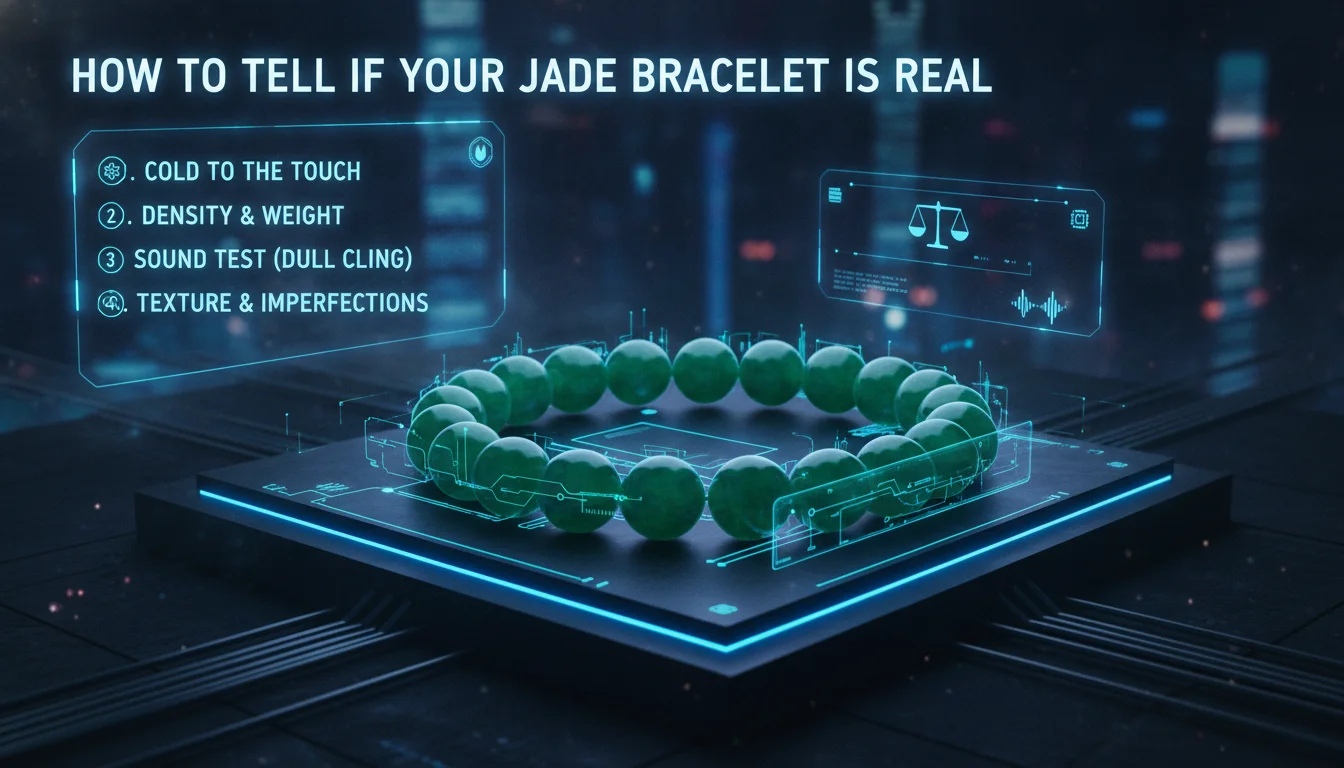
Verifying a real jade matters because the market is full of convincing imitations. While professional testing is the only definitive method, several at-home observations can help you spot obvious fakes before you spend a dollar.
Visual Inspection: Color, Texture, and Inclusions
Examine the bracelet under good lighting. A jade bracelet will rarely be perfectly uniform. Look for slight color variations, swirling cloud-like patterns, or tiny black, white, or brown inclusions. These are natural markers of authenticity. The surface should feel smooth and waxy, not glassy or plastic-like. Hold it up to light: untreated jadeite often shows a soft, glowing translucency at the edges, while nephrite may be completely opaque.
Simple At-Home Tests (and Their Limitations)
Several quick tests can indicate whether your bracelet is likely genuine. Work through these in order:
- Scratch Test: Jadeite is hard enough to resist scratching from a steel knife or scissors. Gently try to scratch an inconspicuous area. If it scratches easily, it’s not jadeite. Note: this can damage the piece, and it does not differentiate nephrite from some simulants.
- Temperature Test: Real jade feels cool to the touch, even on a warm day, because it conducts heat efficiently. Hold the bracelet against your cheek. If it warms up quickly, it may be plastic or glass.
- Sound Test: Suspend the bracelet and tap it gently with a metal object. A this type of bracelet produces a clear, bell-like ring. Imitations often sound dull or clicky.
These tests are not foolproof. Some simulants like green aventurine can pass the scratch test, and high-quality treated jade can still ring clearly. Use them as a preliminary screen, not a final verdict.
Professional Testing and Certification
The definitive way to authenticate a this kind of bracelet is through a gemological laboratory. For high-value jade, a certificate from the Gemological Institute of America (GIA) or the Asian Gemmological Institute (AGIL) is the gold standard. RealJade® Co. includes a complimentary GIA report for any purchase over $10,000. Baikalla Jewelry backs every purchase with a lifetime authenticity warranty, giving you long-term confidence that your real jade is exactly what it claims to be.
“Authentic, natural jadeite jade bangles provide the wearer with a sense of harmony and balance while offering protection and good luck.” – Mason-Kay Jade Jewelry
How Much Does a Real Jade Bracelet Cost?
The price of a jade bracelet spans an enormous range, from under $100 to well over $30,000. This variance is driven by the type of jade, its quality, size, and the seller’s reputation.
Entry-Level Jade Bracelets: $68 to $500
At the accessible end, you’ll find beaded bracelets and simple bangles made from nephrite or lower-grade jadeite. Seree sells the Clara Pearl and Green Jade Beaded Bracelet for $68 and the Agave Classic Jade-Green Gemstone Bangle for $88. Worth noting: some budget-friendly pieces described as “jade” may actually be green aventurine or other stones entirely, so always read the product description carefully. Trace offers carved jade bangles starting at $525, which represent a step up in quality and artisanal finish.
Mid-Range Jade Bangles: $500 to $5,000
In the mid-range, you’ll find solid jadeite bangles with good color and some translucency, as well as carved or hinged designs. Mason-Kay’s natural jadeite bangles start at $620 for a green and red half-round style and reach $8,100 for a vivid green half-round. These pieces typically come with a certificate of authenticity and offer an excellent balance of quality and long-term value. A this type of bracelet in this bracket is often a lifelong purchase, not a seasonal accessory.
High-End Collector’s Jade: $5,000 to $36,990+
For connoisseurs, the top tier is defined by intense imperial green, icy translucent whites, and rare lavender hues. RealJade® Co. lists premium Burmese jadeite bangles at regular prices from $23,890 to $25,780, with sale prices bringing select pieces down to around $16,380. Baikalla’s collection reaches the upper extremes: their High-End Icy Green Jadeite Bangle is priced at $29,600, and an exceptional icy blue-green Burmese piece with a GIA certificate reaches $36,990. At this level, a this kind of bracelet is not just jewelry. It’s a portable asset.
Factors That Determine Jade Bracelet Value
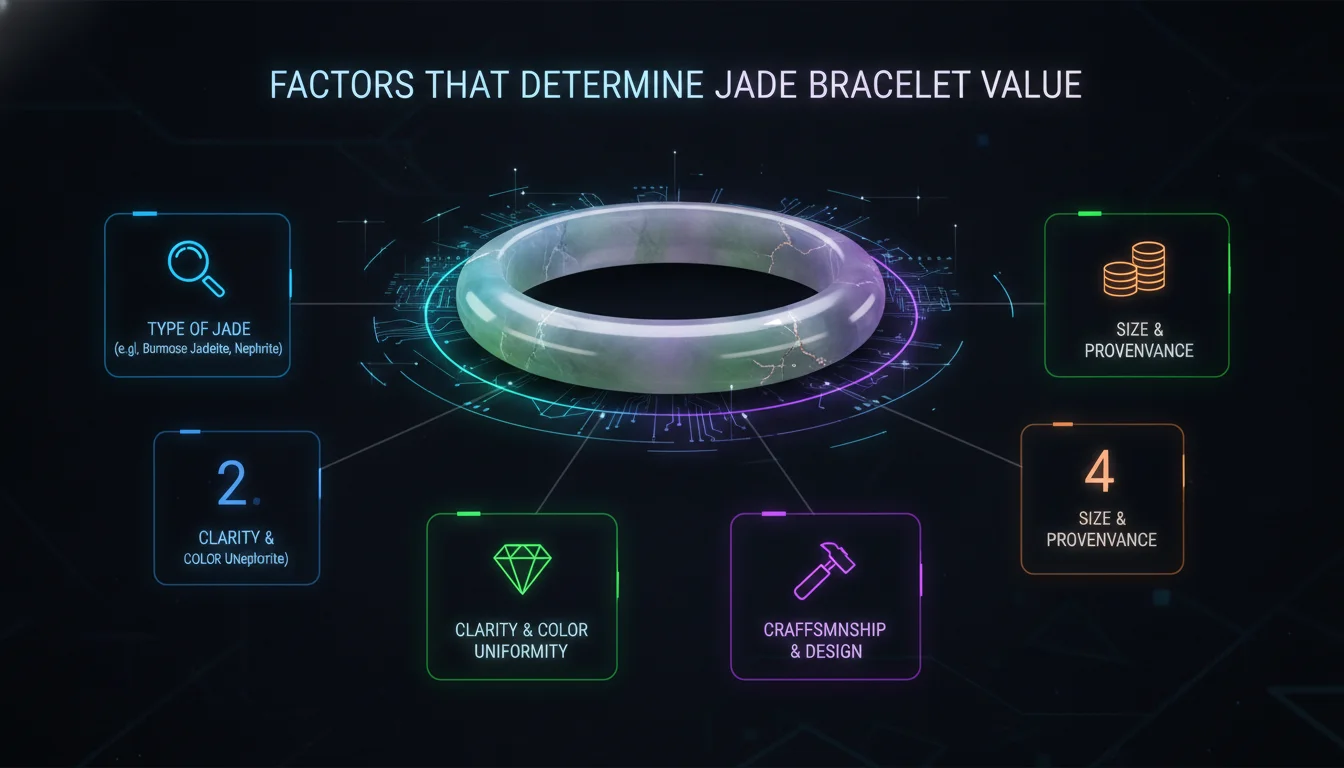
Why does one real jade cost $88 while another costs $30,000? Understanding the value factors helps you assess any piece you encounter with confidence.
Color: The Most Important Factor
In jade, color is everything. The most coveted shade is imperial green: a vivid, evenly distributed emerald hue with a hint of blue. Apple green and spicy green are also highly valued. Uniformity matters too, since patchy or mottled color reduces price. Lavender, icy white, and black jade each have devoted followings, but they generally command lower prices than a top-quality green. For context, a genuine Burmese apple green jadeite bangle at Baikalla is listed at $4,860, while an icy lavender bangle of similar size is priced at $24,860, reflecting how dramatically translucency and rarity shift the numbers.
Translucency and Texture
The best jade appears “icy,” with light penetrating the stone like frozen water. High translucency is rare and can multiply a bangle’s value several times over. Texture is equally critical: a fine-grained, smooth surface feels silky and reflects light evenly. Coarse or granular textures signal lower quality. A real jade bracelet with a flawless, glass-like texture and strong translucency is a find worth treasuring.
Size, Shape, and Craftsmanship
A larger diameter bangle requires a larger, more flawless rough stone, so size drives up cost. Thicker bangles and wider profiles also use more material. Shape plays a role too: a traditional cylindrical bangle with a completely round cross-section is harder to carve than a half-round (flat inside) and is often priced higher. Carved bangles, while intricate, may use jade with imperfections that carving helps disguise, making them more affordable. Hinged bangles with 14K gold clasps, like those offered by Mason-Kay, combine jade with precious metal for added convenience and value.
Popular Styles of Real Jade Bracelets
The market offers a real jade bracelet in numerous forms to suit any taste and lifestyle. The table below compares the most common styles at a glance.
| Style | Description | Price Range | Best For |
|---|---|---|---|
| Traditional Round Bangle | A one-piece cylindrical jadeite bangle, often with a glossy finish and uniform width. Must slide over the hand. | $500 – $30,000+ | Collectors, cultural symbolism, daily wear for a classic look |
| Half-Round Bangle | Flat on the inside, rounded exterior for a comfortable fit. Common in jadeite and nephrite. | $400 – $8,000+ | Those who prefer a lighter, more ergonomic bangle |
| Carved Bangle | Features hand-carved patterns, motifs, or animal symbols. Often more affordable due to use of less transparent jade. | $300 – $2,000+ | Artistic appeal, spiritual motifs, lower budget |
| Beaded Bracelet | Strung jade beads, often mixed with other stones, pearls, or metal spacers. Stretchy or corded. | $50 – $200+ | Everyday wear, stacking, affordable entry into jade |
| Hinged Bangle | A jade bangle cut and fitted with a 14K gold hinge and clasp for easy wear. Offers the look of a solid bangle without the struggle. | $1,000 – $5,000+ | Those with larger hands or arthritis, convenience without compromising authenticity |
| Gold-Accented Bracelet | Jade beads or small jade elements combined with gold or gold-plated chains and findings. | $70 – $300+ | Modern style, blending jade with contemporary jewelry trends |
Traditional Round Bangles
The classic round bangle is the purest expression of a real jade bracelet. Often called a “Cinderella bangle” because it must fit over the hand, this style is prized for its seamless, unbroken circle, symbolizing eternity and protection. It requires careful sizing: measure your palm circumference tightly to find the right diameter. Retailers like Mason-Kay and Baikalla offer detailed sizing guides to help you get it right the first time.
Beaded, Carved, and Hinged Designs
If sliding a solid bangle over your hand is impractical, a beaded jade bracelet is a flexible alternative. Seree’s Pea Beaded Jade Bracelet ($78) shows how small jade beads can create a casual, stackable piece. Carved bangles, such as those from Trace, feature motifs like flowers or dragons, adding cultural depth to the design. Hinged bangles solve the fit issue with elegance: a 14K gold hinge opens the bangle, then locks securely, combining the look of a continuous jade circle with everyday wearability.
Carved Motifs and Their Meaning
Carved jade bangles carry symbolism that goes far beyond decoration. The Pi Xiu, a mythical winged lion, is carved into jade to attract wealth and ward off negative energy. Buddha carvings represent peace, contentment, and spiritual protection. Floral motifs like peonies symbolize prosperity, while the ruyi scepter shape signals good fortune and fulfillment. If you’re drawn to a carved real jade bracelet, the motif you choose adds a personal layer of meaning that a plain bangle simply can’t offer.
Mixing Jade with Gold and Other Gemstones
Modern jewelers blend jade with precious metals and stones to create a fresh aesthetic. Seree’s Isabelle Freshwater Pearl and Green Jade Bracelet ($88) pairs jade beads with luminous pearls for a look that feels both coastal and refined. Gold accents elevate the stone’s green, and many women stack multiple jade bangles with gold bangles for a curated wrist. This approach helps a real jade bracelet move from traditional to contemporary without losing any of its meaning.
Jade Bangle Sizing: How to Find Your Fit
Getting the right size is the single most important step when buying a traditional one-piece jade bangle. Unlike a metal bracelet, jade cannot be resized after purchase.
- Measure your palm: Close your hand as if you’re sliding a bangle over it, fingers together, thumb tucked in. Wrap a soft measuring tape or a piece of string tightly around the widest part of your knuckles.
- Note the measurement in millimeters: This is your minimum inner diameter. Most bangles are sized by their inner diameter in millimeters, typically ranging from 48mm to 65mm.
- Add a little ease: A snug fit is traditional and preferred. The bangle should require a small effort to get on, using soap or lotion to ease it over the knuckles, but it should not slide off the wrist freely.
- Consider the profile: A half-round (flat inside) bangle sits more comfortably on the wrist than a cylindrical bangle of the same diameter, so you may be able to size down slightly.
As Maple & J notes, “a snug fit is ideal – use soap or lotion to slide it over your hand, sometimes with a slight struggle until it’s on.” Mason-Kay and Baikalla both offer detailed online sizing guides if you want to go deeper before committing.
Jade Simulants: What Gets Mistaken for Real Jade
Green aventurine, chrysoprase, serpentine, dyed quartz, glass, and plastic are the most common materials sold as jade or mistaken for it. Green aventurine in particular is widely used in fashion jewelry and can look convincingly jade-like at first glance. The key differences: aventurine has a sparkly, glittery internal shimmer caused by reflective mineral inclusions, while genuine jade has a smoother, more waxy internal glow. Serpentine is softer and will scratch more easily. Glass and plastic warm up quickly against the skin and lack the subtle color variation of natural stone.
“With so much fake and treated jade on the market, RealJade® Co. was created to offer a trusted way to experience natural jadeite jade you can truly love, wear, and pass down.” – RealJade® Co.
According to gemological industry guidance, the only way to be completely certain is a laboratory report from GIA or an equivalent institution. For any purchase above a few hundred dollars, that certificate is worth requesting.
Where to Buy a Real Jade Bracelet Online Safely
The internet is full of jade, but not all of it is authentic. To purchase a real jade bracelet with confidence, you need to know where to look and what to demand from a seller.
Trusted Specialty Jade Retailers
Specialist dealers are your best bet. Mason-Kay has been a leading source for natural jadeite since 1974, offering a wide selection of bangles with a certificate of authenticity on every purchase. Baikalla Jewelry stocks thousands of Type-A bangles in Portland, Oregon, backed by a lifetime authenticity warranty. RealJade® Co. focuses on GIA-certified pieces for high-end investments. For a more artisanal approach, Maple & J sells Indian nephrite bangles that are hand-cut and ethically sourced, with a portion of sales supporting Nai Asha, a safe house for women exiting human trafficking.
What to Look for in a Seller: Certificates and Return Policies
Before clicking buy, verify that the seller clearly states the jade type and treatment grade. A legitimate real jade bracelet listing will specify “Type A jadeite” or “natural nephrite.” Look for money-back guarantees and lifetime authenticity warranties. Reputable sellers also have transparent return policies. If a deal seems too good to be true, it almost certainly is.
Red Flags: Avoiding Fake or Treated Jade
Be wary of vague descriptions like “green jade stone” without a specific mineral name. Extremely low prices for a “jade bangle” are a red flag: genuine jadeite simply costs more. Avoid sellers who cannot provide a certificate or who pressure you to decide quickly. Check customer reviews and look for third-party authentication. A real jade bracelet is an investment in durability and meaning, not a fast-fashion impulse buy.
Pros and Cons of Buying a Real Jade Bracelet
Pros
- Lasting value: High-grade Type A jadeite has historically held and appreciated in value over time, particularly Burmese imperial green pieces.
- Durability: Jade is tough enough for daily wear, resisting scratches and everyday knocks better than many softer gemstones.
- Cultural depth: A real jade bracelet carries centuries of meaning, from luck and protection to harmony and longevity, making it a genuinely meaningful gift.
- Wide price range: Genuine options exist from $68 beaded bracelets to $36,990 collector bangles, so there’s an entry point for almost every budget.
- Heirloom quality: With proper care, jade passes beautifully from one generation to the next.
Cons
- Fragility under impact: Despite its toughness, jade can crack or shatter if dropped onto a hard surface. Unlike metal, it cannot be bent back into shape.
- Sizing is permanent: Traditional one-piece bangles cannot be resized, so getting the measurement right before purchase is critical.
- Market full of fakes: The sheer volume of simulants and treated jade online makes it easy to overpay for something that isn’t what it claims to be.
- High cost at the top end: Investment-grade jadeite requires a significant financial commitment, and the resale market can be illiquid without the right buyer.
How to Care for Your Real Jade Bracelet
With proper care, a real jade bracelet can last for generations. Jade is tough but not indestructible, and a little routine maintenance goes a long way.
Cleaning and Maintenance
Clean your jade with lukewarm water and a mild soap. Use a soft cloth or a gentle brush to remove dirt, then rinse and pat dry. Never use ultrasonic cleaners or steam, as they can fracture treated jade and damage natural stones. If your bracelet has a gold clasp or other metal components, protect them from scratches with a soft polishing cloth to restore the jade’s natural luster.
Wearing and Storing Jade
Jade is ideal for daily wear, but remove it before strenuous activities or contact with harsh chemicals like chlorine. Store each real jade bracelet separately in a soft pouch to prevent scratches from harder gemstones. When putting on a bangle, use soapy water or lotion on your hand to help it slide over the knuckles without forcing it.
Repairing Broken Jade Bangles
In Chinese tradition, a broken jade bangle is believed to have absorbed misfortune for the wearer. Rather than discarding it, many people repair the bracelet with gold bands or pins, a practice that echoes the Japanese art of kintsugi. This not only restores the piece but adds a story. If your real jade bracelet breaks, consult a jeweler experienced in jade repair to bring it back to life beautifully.
Cultural Significance and Symbolism of Jade Bracelets
A real jade bracelet carries deep cultural weight, particularly in East Asian traditions. It is far more than decoration.
Jade in Chinese Culture: Luck and Protection
For centuries, jade has symbolized nobility, purity, and immortality in China. Wearing a jade bracelet is believed to bring harmony, balance, and protection. As Mason-Kay notes, jade provides the wearer “a sense of harmony and balance while offering protection and good luck.” This belief persists today, making a real jade bracelet a popular gift for milestones like birthdays, weddings, and the birth of a child.
Jade as a Meaningful Gift
Giving a jade bracelet is a gesture of love and care. It is thought to absorb negative energy, guarding the wearer’s health and spirit. Many retailers share this ethos: Maple & J donates a portion of its jade sales to Nai Asha, a safe house supporting women exiting human trafficking, adding a layer of social consciousness to an already meaningful gift.
Modern Fashion and Stacking Jade
Today, jade bracelets have been embraced by global fashion. Stylists and influencers stack slender jade bangles with gold chains and beaded bracelets for a contemporary wrist look. The versatility of a real jade bracelet means it pairs with everything from casual linen to evening silk, bridging centuries of tradition and modern personal style without missing a beat.
Frequently Asked Questions
How do I tell if my jade bracelet is real?
Look for natural color variations, tiny inclusions, and a cool, smooth feel that doesn’t warm up quickly against your skin. Simple scratch, temperature, and sound tests can offer useful clues, but the most reliable method is a certificate from a gemological lab like GIA or AGIL. For any piece above a few hundred dollars, always request documentation.
What is the difference between jadeite and nephrite?
Jadeite is rarer and harder, with vivid colors and high translucency that collectors prize. Nephrite is tougher and more common, typically appearing in muted greens, white, or black. Both are authentic jade, and both can be made into a beautiful real jade bracelet at very different price points.
How much does real jade cost?
Genuine jade ranges from around $68 for a beaded nephrite bracelet to $36,990 or more for a top-grade Burmese jadeite bangle with a GIA certificate. The price is driven by color intensity, translucency, size, treatment grade, and the seller’s reputation. Mid-range pieces from $500 to $5,000 offer an excellent balance of quality and value.
How much is an original jade bracelet?
An original, untreated Type A jade bracelet starts at around $155 for a natural nephrite piece from a specialist like Maple & J, and climbs to $8,100 and beyond for fine jadeite from dealers like Mason-Kay. At the collector level, Baikalla and RealJade® Co. offer Burmese jadeite bangles priced from $16,000 to nearly $37,000.
Can I wear my jade bracelet every day?
Yes, jade is durable enough for daily wear. Avoid hard impacts, harsh chemicals, and activities where the bracelet could knock against a hard surface. With consistent care, a real jade bracelet will remain beautiful for decades and can be passed down as a family heirloom.
What gets mistaken for jade?
Green aventurine, chrysoprase, serpentine, dyed quartz, glass, and plastic are the most common simulants. Green aventurine is particularly widespread in fashion jewelry. Always request certification when buying a real jade bracelet, especially online, where descriptions can be misleading.
Ready to find yours? Explore the full collection at lexazi.com – free shipping on orders over $75.