A motion sickness bracelet is a wearable device that uses acupressure or electrical nerve stimulation to relieve nausea without drugs. Drug-free and reusable, these bands help with travel sickness, morning sickness, and more.
Key Takeaways
- sickness bracelets offer drug-free nausea relief through two main methods: pressure on the P6 acupoint or electrical neuromodulation.
- Acupressure bands like Sea-Band are affordable and widely available, but clinical evidence is mixed.
- FDA-cleared electronic bands like Reliefband have shown strong efficacy in studies and thousands of user reviews.
- The right choice depends on your budget, symptom severity, and personal preference.
- According to WebMD, roughly one in three people experience motion sickness at some point in their lives.
- Always consult a healthcare provider if symptoms persist or if you have underlying medical conditions.
What Is a Motion Sickness Bracelet?
A Drug-Free Nausea Solution
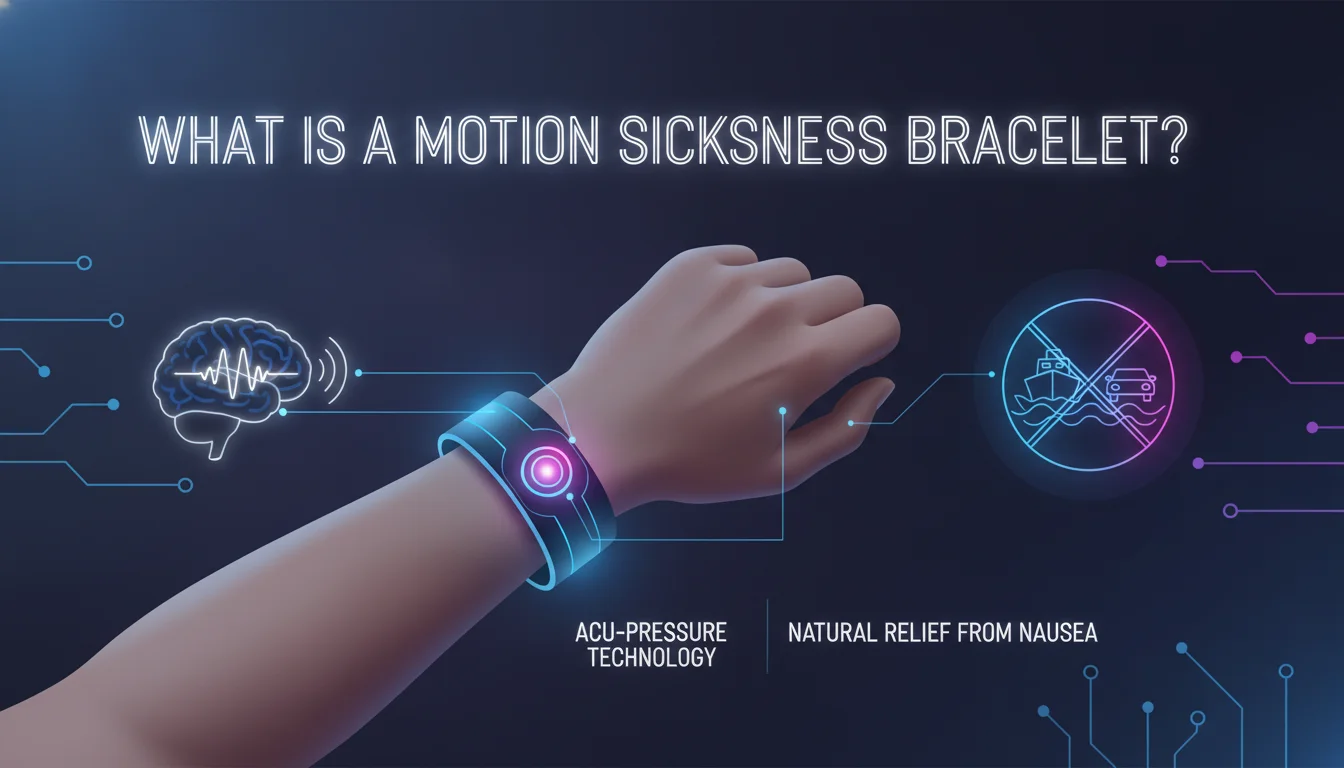
A this type of bracelet is a wearable device designed to prevent or reduce nausea, vomiting, and dizziness tied to motion sickness, morning sickness, chemotherapy, and other conditions. It wraps around the wrist and applies either steady pressure or gentle electrical pulses to a specific point. Unlike medications that can cause drowsiness, these bracelets work without dulling your alertness. They’re reusable, often washable, and give you a portable, always-ready remedy you can toss in a carry-on next to your sandals and sunscreen.
The idea of using wrist pressure to calm nausea traces back to traditional Chinese medicine, where practitioners have long applied acupressure to the P6 point. In the 1970s, companies began turning this idea into simple elastic wristbands with a plastic button. Today, a this kind of bracelet can range from a $5 elastic band to a $300 high-tech device, which means nausea relief is accessible at nearly every budget.
Acupressure Bands vs. Electronic Devices
There are two main categories of motion sicknesss, and the difference comes down to how they trigger relief. The first is the classic acupressure band, which relies solely on mechanical pressure. A small button or bead presses on the inner wrist to stimulate the P6 acupoint. These are non-powered, lightweight, and typically sold in pairs because many users find pressure on both wrists more effective.
The second category is the electronic wearable device, which uses transcutaneous electrical nerve stimulation (TENS) to modulate the nerves responsible for nausea. These bracelets run on batteries, often with adjustable intensity levels, digital displays, and waterproof construction. The most recognized name in this space is Reliefband, an FDA-cleared device. Acupressure bands suit occasional mild queasiness; electronic versions are built for frequent or severe symptoms.
How Does a Motion Sickness Bracelet Work?
Acupressure and the P6 Point
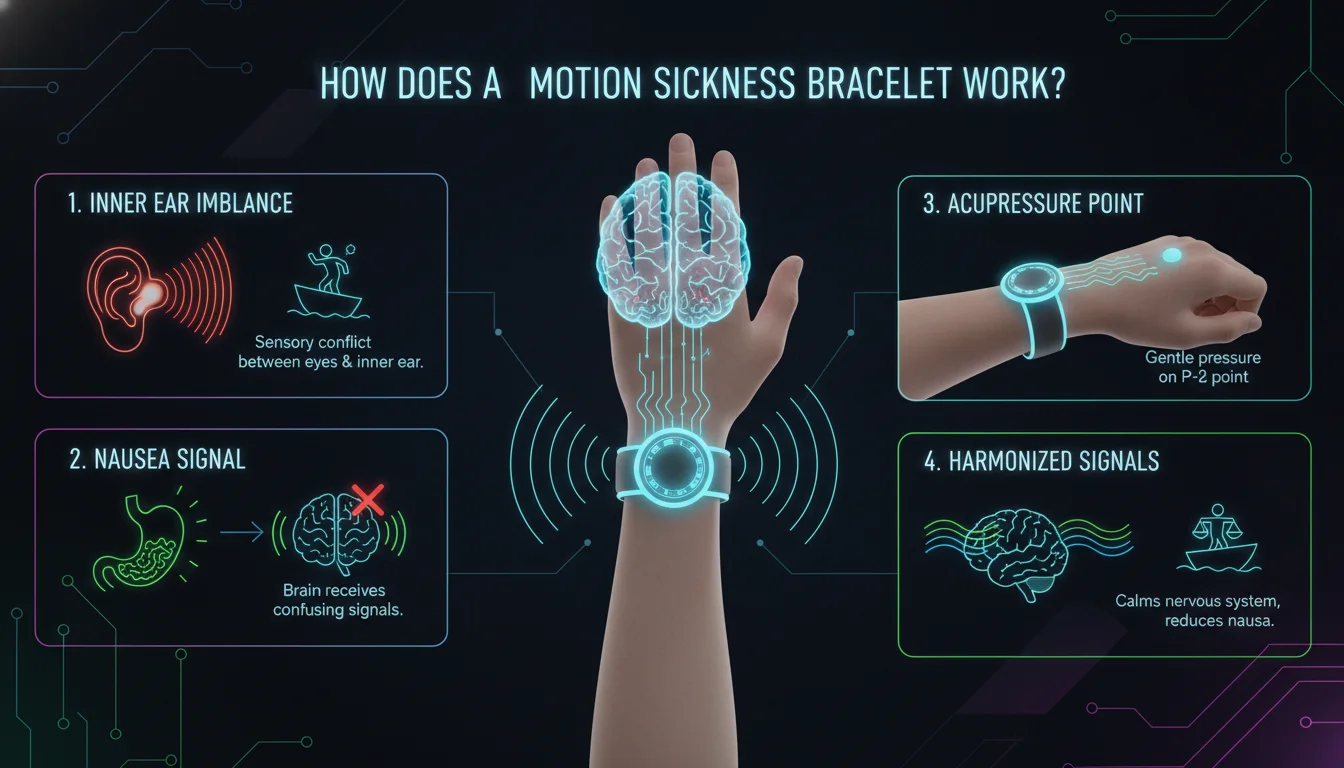
A sickness bracelet that relies on acupressure works by applying steady pressure to the P6 point, an acupoint tied to nausea relief in traditional Chinese medicine. The P6 point (Pericardium 6), also called Nei Guan, sits about three finger-widths below the wrist crease, between two tendons on the inner forearm. According to the Walgreens Health Blog, this point has long been used to ease nausea and vomiting regardless of the cause.
In a bracelet built for acupressure, the plastic button or elastic tension keeps continuous pressure on this spot. The exact mechanism isn’t fully understood, but many researchers believe stimulating the P6 point sends signals to the brain’s vomiting center, interrupting the nausea cascade before it builds. Many users report the bracelet works best when applied before symptoms start, which makes it more of a preventive tool than a rescue remedy.
Neuromodulation Technology in Electronic Bands
Electronic this type of bracelets rely on neuromodulation, a method of altering nerve activity through electrical stimulation. Devices like Reliefband send gentle electrical pulses through the nerves from the wrist toward the brain’s vomiting center. According to the Reliefband website, the technology was originally developed for hospital use and works by essentially turning off the nausea signal before it reaches your stomach.
You control the intensity yourself, dialing it up to a comfortable tingling sensation. Because the pulses target the median nerve running near the P6 point, many people feel the effect within minutes. The device wears like a watch, which makes it discreet enough for all-day wear during travel or medical treatments.
Do Motion Sickness Bracelets Really Work? Examining the Evidence
Scientific Studies on Acupressure Bands
this kind of bracelets that use acupressure show mixed but promising results in clinical research. According to the Walgreens Health Blog, reviewed by Robert A. Fried, MD, some research suggests acupressure may help with nausea and vomiting, though more research is needed to know if wrist bands work as well as standard anti-nausea drugs. The blog notes that while some studies indicate acupressure doesn’t significantly help morning sickness, many pregnant women still report the wristbands as helpful.
“The efficacy of wrist bands for motion sickness is still unclear. Some scientific research studies have investigated whether acupressure helps with nausea and vomiting.” – Robert A. Fried, MD, Walgreens Health Blog
A Cochrane review on wrist P6 stimulation for postoperative nausea found it effective at reducing nausea, though results for motion sickness specifically stay less clear. So the scientific community hasn’t reached full agreement here. This mixed evidence means many healthcare providers frame the motion sickness as a low-risk option worth trying, especially if you’d rather skip medication altogether.
Clinical Research on Electronic Anti-Nausea Devices
Electronic bands stand on stronger clinical footing than their acupressure counterparts. Reliefband devices are FDA-cleared for treating nausea and vomiting linked to motion sickness, morning sickness, chemotherapy, and post-operative recovery. That clearance means the device has been evaluated for safety and effectiveness before hitting the market. On its own site, Reliefband lists the Sport model with a 4.7-star rating from 464 reviews and the Premier+ also holding a 4.7-star rating from 334 reviews.
While detailed trial statistics aren’t laid out in the available data, the combination of FDA clearance and strong customer satisfaction suggests electronic sickness bracelets offer a dependable, clinically backed path to relief. People who don’t respond to acupressure often find electronic stimulation makes the difference.
What Users and Experts Say
Anecdotal evidence from reviews on Amazon, Target, and manufacturer sites backs up the effectiveness of this type of bracelets for many wearers. One Reliefband user shared, “I suffer from severe motion sickness and this helped me to go on plane, bus rides, gondolas and through every single ride without any sickness.” Another reported the device stopped anxiety-induced vomiting that doctors couldn’t resolve. Sea-Band has earned similar praise from travelers and pregnant women for decades.
That said, not everyone finds relief, which highlights just how individual motion sickness management can be. Experts at WebMD, in their feature “Motion Sickness: What Helps,” list wristbands as a potential aid but also stress behavioral strategies like watching the horizon and getting fresh air. The takeaway: a this kind of bracelet is a promising tool, though it may not click for everyone, and it tends to work best paired with other preventive habits.
Types of Motion Sickness Bracelets: A Comparison
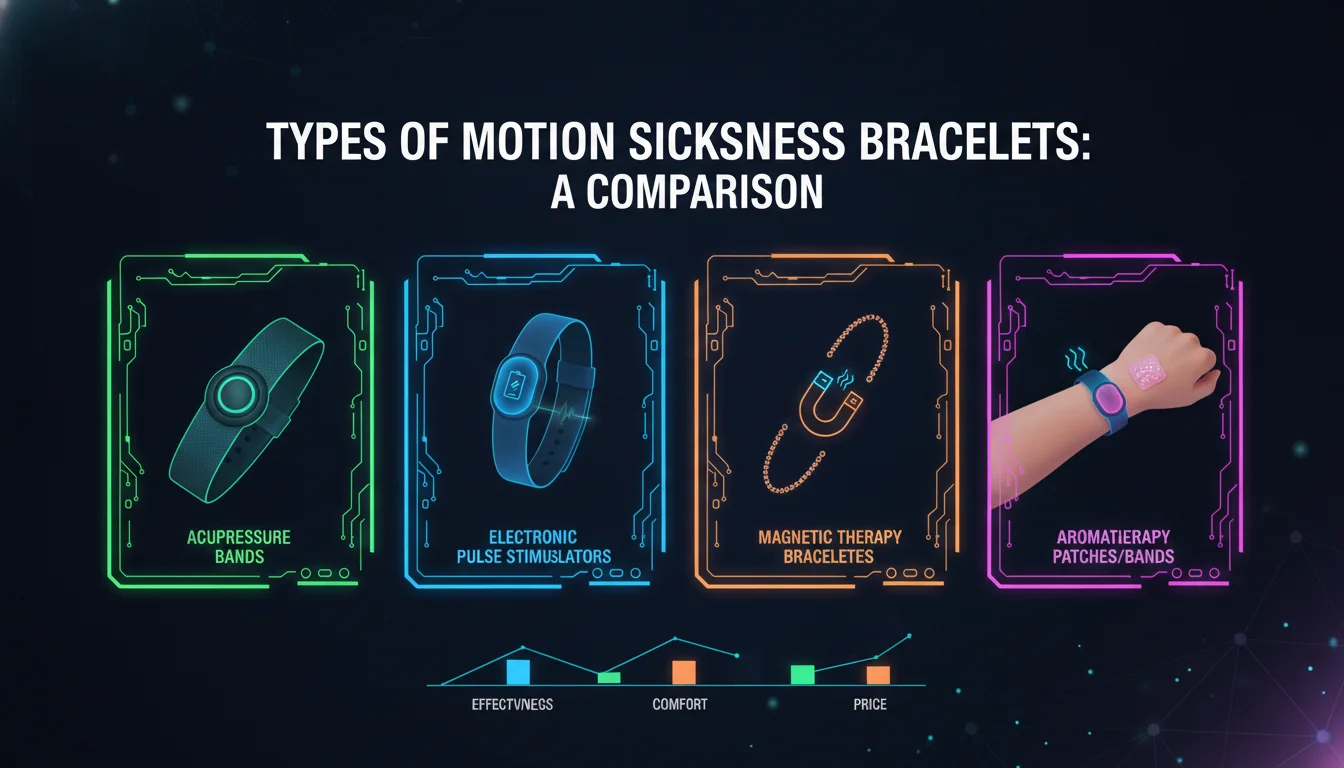
Acupressure Wristbands
The most recognized acupressure motion sickness is the Sea-Band. Available in adult and child sizes, plus pregnancy-specific “Mama” bands, Sea-Band products sell for $5.69 to $9.49 a pair at Target. CVS offers a store-brand alternative, the CVS Morning & Motion Sickness Bands, which are washable, reusable, and drug-free, per CVS product listings. These bands need no batteries and sit on shelves at drugstores, supermarkets, and online retailers everywhere.
Acupressure bands suit mild to moderate nausea and anyone who wants the simplest possible fix. They’re especially popular with parents seeking a child-friendly option and pregnant women looking for a non-pharmacological aid. Because they’re so affordable, they’re often the first sickness bracelet people try.
Electronic Wearable Devices
Reliefband dominates the electronic category. Its lineup ranges from the Classic ($149.99) to the Premier+ ($299.99), with mid-range options like the Flex ($179.99) and Sport ($249.99). These devices are rechargeable (except the Classic, which uses a replaceable battery), waterproof in some models (the Sport is IPX7), and offer multiple intensity levels. Ratings for the Sport and Premier+ on Reliefband’s own site point to high owner satisfaction. All Reliefband products are FSA/HSA eligible, and the company backs them with a 14-day money-back guarantee.
Electronic bracelets suit people dealing with severe or frequent nausea, like chronic motion sickness, migraine-associated nausea, or chemotherapy side effects. Adjustable intensity lets you fine-tune the sensation for maximum relief. The upfront cost runs higher than acupressure bands, but the reusable design and targeted technology can make electronic bands a smart long-term investment piece for frequent travelers.
Comparison Table
| Feature | Sea-Band Adult | Reliefband Sport | Reliefband Premier+ |
|---|---|---|---|
| Technology | Acupressure (button) | Neuromodulation (electrical) | Neuromodulation (electrical) |
| Price (approx.) | $5.69 – $9.49 | $249.99 | $299.99 |
| Power Source | None | Rechargeable battery | Rechargeable battery |
| Waterproof | No (washable band) | IPX7 (immersion) | No |
| Adjustable Intensity | Position only | Multiple levels | Multiple levels, digital display |
| Best For | Occasional travel, mild nausea | Active lifestyles, swimming, frequent use | Daily wear, severe nausea, multiple triggers |
| FSA/HSA Eligible | Not typically | Yes | Yes |
Choosing the Right Motion Sickness Bracelet for Your Needs
For Cruises and Seasickness
The best bracelet for seasickness is generally an electronic band with a waterproof rating, since ship movement is constant and multi-directional in a way that challenges even seasoned travelers. Many cruise forums and product reviews point to the Reliefband Sport as a top choice because of its IPX7 waterproof rating and strong, adjustable stimulation. Being able to wear it on deck, during shore excursions, or even in the pool without a second thought makes it genuinely practical, right alongside the kaftan you packed for evening dinners. Acupressure bands like Sea-Band show up often on cruises too, frequently worn on both wrists for maximum effect.
Whichever type of this type of bracelet you choose, early use is the key to seasickness relief. Put the bracelet on before the ship leaves port, or the moment you feel the first hint of queasiness. Pair it with other cruise-tested habits: book a midship cabin on a lower deck, keep your eyes on the horizon, and skip the heavy meals and alcohol.
For Kids
Motion sickness is especially common in children under 12, and plenty of parents look for drug-free solutions first. Sea-Band offers child-sized wristbands built for smaller wrists with kid-friendly designs. These acupressure bands need no batteries and can stay on all day during road trips, flights, or amusement park visits. Electronic bands aren’t typically marketed for young children, so check with a pediatrician before trying one on a child.
When fitting a this kind of bracelet on a child, make sure the band sits snug enough that the button stays in place, but not so tight it leaves marks or causes discomfort. Explain that the band is there to help their tummy feel better. Positive framing goes a long way toward cooperation. Many parents find that the simple ritual of putting on the band offers a calming reassurance that eases anxiety-related nausea too.
For Pregnancy and Morning Sickness
Pregnant women often lean toward nondrug alternatives for morning sickness, and a motion sickness is an appealing option here. Sea-Band’s “Mama” Bands are designed specifically for this, with a softer fabric and more discreet profile. Per the Walgreens Health Blog, some research indicates acupressure doesn’t significantly help morning sickness, but many women still report the wrist bands as helpful, and there’s essentially no known risk to the fetus.
Reliefband lists morning sickness among the conditions its devices treat, and because it’s drug-free, it’s generally considered a reasonable option during pregnancy. Still, as with any electrical medical device during pregnancy, checking with an obstetrician first is strongly advised. Some women find that pairing a sickness bracelet with ginger tea or small, frequent meals offers the best defense against nausea.
For Chemotherapy and Medical Nausea
Chemotherapy-induced nausea can be debilitating, and many cancer centers now offer acupressure as a complementary therapy alongside standard treatment. A this type of bracelet, whether acupressure or electronic, can be worn during infusions and in the days that follow. Reliefband’s technology was originally built for hospital settings, and the device is FDA-cleared for chemotherapy-related nausea specifically. Some patients find the bracelet helps reduce their reliance on antiemetic drugs, though it should be used alongside, not instead of, prescribed medications.
Both acupressure and electronic bands travel easily, which makes them practical for hospital rooms and home use alike. If you or a loved one is going through chemotherapy, ask the oncology team about adding a this kind of bracelet to the nausea management plan.
How to Use a Motion Sickness Bracelet Correctly: Step-by-Step
Fitting an Acupressure Band
Correct placement makes or breaks how well an acupressure motion sickness performs. Follow these steps:
Step 1: Locate the P6 point. Place your middle three fingers on the inside of your wrist, just below the first crease closest to your hand. The point sits centered between the two tendons under your index finger.
Step 2: Position the band. Slide it onto your wrist so the plastic button sits firmly over the P6 point. The band should feel snug, not painfully tight. You want to feel the button’s pressure without cutting off circulation.
Step 3: Wear a band on each wrist. Most acupressure sets come with two bands, and applying pressure to both wrists proves more effective for many people.
Step 4: Adjust or remove as needed. If you notice numbness, tingling, swelling, or pain, loosen or remove the band. A slight red mark after removal is normal, but broken skin or lingering discomfort means it’s too tight or worn too long.
Operating an Electronic Bracelet (e.g., Reliefband)
Electronic motion sickness bracelets need a bit more setup but reward you with customizable relief.
Step 1: Charge fully before first use. Most models use a USB charger, and a full charge lasts roughly 20 to 30 hours depending on the model and intensity level.
Step 2: Apply conductive gel. A small dab on the electrode contacts ensures proper electrical contact with your skin. Reapply as directed, typically every few hours.
Step 3: Fasten it like a watch. Center the electrodes over the P6 area and secure the band without overtightening.
Step 4: Start low, increase gradually. Turn the device on at the lowest intensity, then raise it until you feel a mild tingling sensation. Aim for a comfortable buzz; if it turns painful, dial it back.
Step 5: Maintain the device. Clean the electrodes regularly with a soft cloth, store it dry, and replace conductive gel periodically. Many people wear it preventively before travel or at the very first hint of nausea.
Motion Sickness Bracelet vs. Other Remedies: Which Is Better?
Bracelets vs. Scopolamine Patches
A motion sickness bracelet works differently than a scopolamine patch, trading potency for a side-effect-free experience. Scopolamine patches (Transderm Scop) are prescription-only and worn behind the ear. They’re highly effective at preventing motion sickness for up to three days, but they carry notable side effects: dry mouth, blurred vision, drowsiness, even disorientation. A bracelet, by contrast, is completely drug-free and skips the systemic side effects, which makes it appealing for short trips, pregnant women, kids, and anyone who needs to stay sharp, like the person driving the car.
For severe, prolonged motion sickness (think a week-long cruise), a patch might be the stronger pick, and some travelers combine a patch with an acupressure bracelet for extra coverage. But since patches require a prescription and advance planning, plenty of people reach for a motion sickness bracelet as the convenient, always-ready option instead.
Bracelets vs. OTC Motion Sickness Medications
Over-the-counter drugs like Dramamine (dimenhydrinate) and Bonine (meclizine) work well for many people but frequently cause drowsiness. Even the “less drowsy” formulas can dull coordination and focus, which is a problem if you’re piloting a plane, driving, or just want to enjoy the view. A motion sickness bracelet sidesteps that trade-off entirely. Cost matters too: a package of Dramamine runs around $4 to $8 and needs replacing after a few trips, while a reusable bracelet is a one-time buy. Sea-Band pairs often sell for under $10 and last for years.
If you want a drug-free approach with more punch, electronic bracelets bridge that gap. They deliver a level of relief that approaches medication without the side effects, which makes them a compelling pick for frequent flyers or anyone managing chronic nausea.
Combining Bracelets with Natural Remedies
Ginger is a well-known natural anti-nausea remedy, and several brands, including Sea-Band, sell ginger gum, capsules, and lozenges to pair with their wristbands. Combining a motion sickness bracelet with ginger can amplify relief while keeping the whole approach drug-free. Other natural strategies worth trying include aromatherapy with peppermint or lavender, acupressure self-massage, and simple breathing exercises to calm the nervous system.
“Motion sickness doesn’t usually cause serious problems, but the symptoms can appear without warning.” Stylists and travel editors alike echo what WebMD notes: prevention beats treatment every time, whether that means packing a bracelet or simply choosing a window seat.
Behavioral habits matter just as much as any device. WebMD recommends sitting in the front seat of a car, focusing on a distant point, keeping good ventilation, and skipping heavy or spicy foods before travel. A motion sickness bracelet works best as one piece of a fuller approach that respects how your particular body reacts to motion.
Virtual Reality and Screen-Induced Motion Sickness
Motion sickness isn’t limited to planes, trains, and boats. It shows up with virtual reality headsets and even prolonged phone or tablet use in a moving vehicle, since your eyes and inner ear send your brain conflicting signals. A motion sickness bracelet can help with this type of sickness too, whether you’re wearing acupressure bands during a VR gaming session or slipping on an electronic band before a long car ride spent scrolling. If VR sickness is a recurring issue, pair the bracelet with frequent breaks and limit session length to give your inner ear time to recalibrate.
Potential Side Effects and Safety Considerations
Acupressure Band Side Effects
Side effects from acupressure bands tend to be mild and short-lived. According to the Walgreens Health Blog, some studies have reported local skin reactions, mild discomfort, and swollen wrists, and these issues usually resolve once the bands come off. To minimize risk, follow the product instructions closely: don’t overtighten the band, wash it regularly to prevent bacterial buildup, and remove it if you notice redness, pain, or numbness.
Because acupressure bands are purely mechanical, nearly anyone can wear them, including pregnant women and children. They don’t interfere with medications or medical conditions. The biggest caution is simply making sure the fit isn’t so tight that it restricts circulation.
Electronic Device Precautions
Electronic motion sickness bracelets carry a strong safety record, especially FDA-cleared models like Reliefband. That said, they shouldn’t be used by anyone with a pacemaker, implanted defibrillator, or other implanted electronic medical device unless a doctor clears it first, since the electrical stimulation could theoretically interfere with such devices. Skin irritation is possible too, particularly if the conductive gel doesn’t agree with your skin or the band sits too tight.
Always start at the lowest intensity setting and work up gradually. The sensation should feel noticeable, never painful. If you notice unusual symptoms, like increased nausea, dizziness, or a rash, stop use and check with a healthcare provider. Electronic bands generally aren’t recommended for young children, since their nervous systems are still developing.
When to Talk to a Doctor
Talk to a doctor if your motion sickness is severe, leads to dehydration, or seriously disrupts daily life. Persistent vomiting could point to an underlying condition that needs prescription-strength antiemetics. A motion sickness bracelet makes an excellent first-line or complementary tool, but it’s not a substitute for professional medical care, especially during pregnancy, chemotherapy, or chronic illness. Always tell your doctor about any complementary therapies you’re using.
Top Motion Sickness Bracelets in 2026
Sea-Band Adult Wristband
The Sea-Band is the original acupressure motion sickness bracelet and remains the most recognizable name in the category. Priced between $5.69 and $9.49 for a pair at Target, it’s also stocked at CVS, Walgreens, and Amazon. The elastic knit band is comfortable, washable, and unisex. Sea-Band also makes a child version and a “Mama” band for morning sickness. If you want to try a motion sickness bracelet without a big investment, this is the place to start.
Reliefband Sport
The Reliefband Sport ($249.99) stands out as an electronic motion sickness bracelet built for active users. It’s IPX7 waterproof, so you can wear it while swimming, sweating, or showering. The rechargeable battery lasts up to 20 hours on a single charge, and the device offers multiple intensity levels to match different nausea severities. On the Reliefband website, it holds a 4.7-star rating from 464 reviews, making it one of the highest-rated electronic anti-nausea wearables around. It’s FSA/HSA eligible and backed by a 14-day money-back guarantee.
Other Notable Options
For a lower-cost entry into electronic bands, the Reliefband Classic ($149.99) delivers the same neuromodulation technology in a non-rechargeable format. CVS Morning & Motion Sickness Bands offer a budget acupressure option for under $10 at drugstores. For kids, Sea-Band Child bands provide a comfortable fit with fun designs. For pregnant women specifically, the Sea-Band Mama kit often bundles in extras like ginger lozenges. Whichever motion sickness bracelet you choose, look for a product with clear instructions and a return policy so you can test it risk-free.
Pros and Cons
Pros
- Drug-free relief with no drowsiness or impaired alertness
- Reusable and cost-effective over time compared to disposable OTC medications
- Safe for most users, including pregnant women, children, and frequent travelers
- Wide range of options across price points, from under $10 to premium electronic devices
Cons
- Scientific evidence for acupressure bands remains mixed and inconclusive
- Electronic devices carry a higher upfront cost than acupressure bands
- Not effective for everyone, and results vary by individual
- Electronic bands aren’t recommended for young children or those with implanted medical devices
Frequently Asked Questions
Do motion sickness bracelets actually work?
For many people, yes, especially electronic bands like Reliefband, which are clinically evaluated and FDA-cleared. Acupressure bands have mixed scientific evidence but are widely used with reported subjective success. Individual response varies, so it may take some trial and error to find the right type.
What is the best bracelet for seasickness?
Severe seasickness often responds best to electronic bands such as the Reliefband Sport, which is waterproof and allows intensity adjustment. Many cruise passengers also report good results with Sea-Band acupressure bands, particularly when worn on both wrists and combined with horizon gazing.
What is the most effective anti-motion sickness agent?
Prescription scopolamine patches are often considered the most effective medical option for preventing motion sickness. Among drug-free choices, FDA-cleared neuromodulation devices like Reliefband are highly rated by users. Effectiveness ultimately depends on personal tolerance and the specific travel situation.
What works better, motion sickness patch or bracelet?
Patches are more potent and consistent but require a prescription and can cause side effects like dry mouth and drowsiness. A motion sickness bracelet offers a reusable, side-effect-free alternative that works well for mild to moderate nausea. Some travelers use both together for maximum protection.
Are motion sickness bracelets safe during pregnancy?
Yes, acupressure bands are widely considered safe during pregnancy and are often marketed specifically for morning sickness. Pregnant women should consult their doctor before using an electronic bracelet, though Reliefband lists morning sickness as a treatable indication and the device is drug-free.
Whether you’re prepping for a Mediterranean cruise, a flight to Santorini, or a bumpy ferry ride to Positano, a motion sickness bracelet deserves a spot in your carry-on right next to your favorite sundress and packable sandals. Shop the collection at lexazi.com. Free shipping on orders over $75.